
What Are The Best Meditation and Mental Health Affiliate Programs


ATTENTION: Want to Learn Affiliate Marketing from Successful Affiliates?
Wellness content doesn’t just help people feel calmer — it can quietly build a real income stream, too. If your audience already turns to you for stress relief, better sleep, or emotional support, you’re sitting on one of the most trusted (and most monetizable) niches on the internet.
The mental health and meditation space has exploded over the last few years, and with it, a wave of affiliate programs from meditation apps, online therapy platforms, and mindfulness brands eager to reach exactly the kind of engaged, caring audience that wellness creators attract. The tricky part isn’t finding a program to join — it’s knowing which ones are actually worth your time, your credibility, and your reader’s trust.
This guide walks through the strongest options on the market right now, what makes each one stand out, and how to weave them into your content in a way that feels helpful rather than like a hard sell.
Why This Niche Is Different (In a Good Way)
Most affiliate niches are built on convincing someone to want something. Mental health content is built on someone already wanting relief — from anxiety, insomnia, burnout, or everyday overwhelm. That changes the entire dynamic of your recommendation.
- Trust does the heavy lifting. Readers researching therapy or meditation apps are often in a vulnerable, decision-ready state, which means a well-placed, honest recommendation converts far better than a generic ad.
- Recurring revenue is common. Many meditation and therapy platforms run on subscriptions, so a single referral can pay out again and again as long as the customer stays subscribed.
- The market keeps growing. Meditation apps and online therapy have both moved from “niche wellness trend” to mainstream healthcare habit, meaning demand — and affiliate budgets — keep climbing.
- Content longevity is strong. An article about managing anxiety or sleeping better doesn’t go stale the way a “best gadgets of the year” post does.
Meditation and Mindfulness App Affiliate Programs
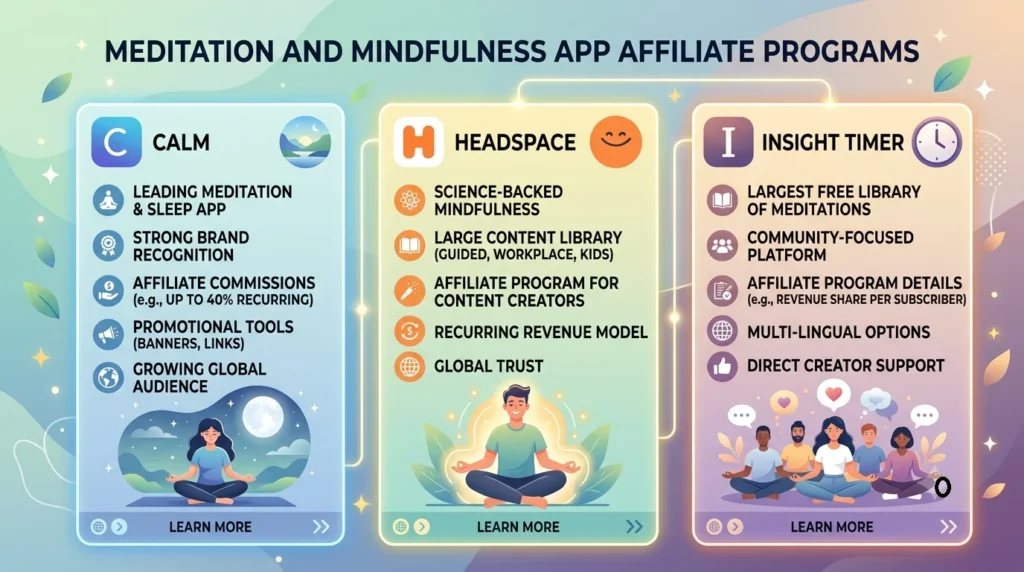
These are the apps your readers already know by name — which makes them some of the easiest affiliate products to recommend without feeling like you’re introducing something unfamiliar.
Calm
Calm is one of the most recognized names in the meditation and sleep space, known for its guided meditations, Sleep Stories, and calming soundscapes. Its affiliate program runs primarily through the Impact network, and while payouts vary by campaign and traffic quality, it’s a strong fit for lifestyle, sleep, and stress-management content thanks to the brand’s near-universal recognition.
- Best suited for sleep, stress, and general wellness content
- Strong brand trust makes conversion easier for cold traffic
- Works well embedded inside “how to fall asleep faster” or “how to manage anxiety” style posts
Headspace
Headspace takes a slightly more clinical, science-forward approach to mindfulness, and in some regions offers coaching, therapy, and psychiatry services alongside its core meditation library. Its affiliate program is typically accessed through partner networks and offers a solid cookie window, giving readers time to convert after clicking through.
- Great for content around focus, productivity, and workplace stress
- Backed by clinical research references, which lends credibility to your recommendation
- A natural fit for corporate wellness or “meditation for beginners” content
Insight Timer
Insight Timer stands out because it’s free at its core, with an enormous free library of guided meditations, and a “Member Plus” premium tier for offline access and specialized courses. Its affiliate program is managed through Impact as well, and the free-to-premium structure makes it especially easy to recommend without any pressure — readers can try before they ever pay a cent.
- Lower barrier to entry means higher click-through and trial rates
- Ideal for yoga, coaching, and holistic wellness creators recommending free resources first
- Appeals to budget-conscious readers who are hesitant about subscription apps
Online Therapy and Counseling Affiliate Programs
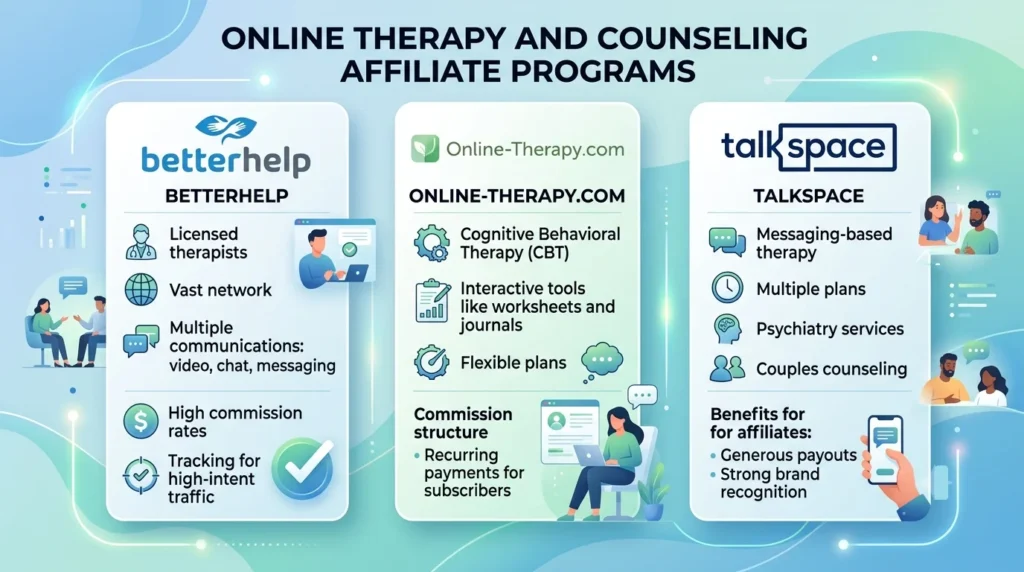
This category tends to carry the highest per-referral payouts in the mental health space, largely because the services themselves involve higher-value, ongoing subscriptions rather than one-time purchases.
BetterHelp
BetterHelp is the largest online counseling platform in the world, connecting users with licensed therapists through video, phone, and messaging. It’s known throughout the affiliate world for genuinely high per-referral commissions, often well above what most wellness products pay, along with a generous cookie duration that gives your readers time to sign up after clicking. The program runs through Impact, and BetterHelp is known to actively support affiliates with creative assets and guidance.
- One of the highest-paying programs in the entire wellness category
- Works especially well with personal storytelling content about therapy or mental health journeys
- Requires extra care with disclosure and avoiding clinical claims, given the sensitivity of the topic
Online-Therapy.com
Online-Therapy.com combines licensed counseling with a structured cognitive behavioral therapy (CBT) toolbox — worksheets, journals, and activity plans — making it a strong option for readers who want more than just a chat window with a therapist. It appeals particularly to readers researching CBT specifically, or comparing structured therapy programs.
- Great fit for content about CBT, anxiety management, or structured self-help programs
- Appeals to readers who want tools alongside therapy sessions, not just conversations
- Often positioned as a lower-cost alternative in therapy comparison content
Talkspace
Talkspace is another major name in online therapy, with a strong emphasis on messaging-based counseling alongside live video sessions, and services that in some cases extend to psychiatry and medication management. It’s a solid alternative or complement to BetterHelp in comparison-style articles, giving readers a second option if the first platform isn’t the right fit for their needs.
- Useful for “BetterHelp vs. Talkspace” comparison posts, which tend to rank and convert well
- Appeals to readers specifically interested in psychiatry or medication support, not just talk therapy
- Strong option to pair alongside a primary recommendation for readers exploring multiple platforms
Mental Health Tools, Journals, and Self-Help Products
Not every reader is ready for an app subscription or a therapy platform. Some just want a smaller, lower-commitment starting point — which is exactly where these categories shine.
- Guided journals and workbooks — physical or digital journals built around gratitude, anxiety management, or CBT exercises tend to convert well with readers who prefer offline tools.
- Online courses and coaching programs — self-paced programs focused on stress management, burnout recovery, or mindfulness training appeal to readers who want structure without a full therapy commitment.
- Wearables and sleep tech — devices designed to track sleep quality or guide breathing exercises pair naturally with meditation content and often carry their own affiliate programs through retailers.
- Books on mental health and mindfulness — Amazon Associates or publisher-specific affiliate programs let you recommend well-known titles that reinforce the credibility of your other product recommendations.
How to Choose the Right Programs for Your Audience
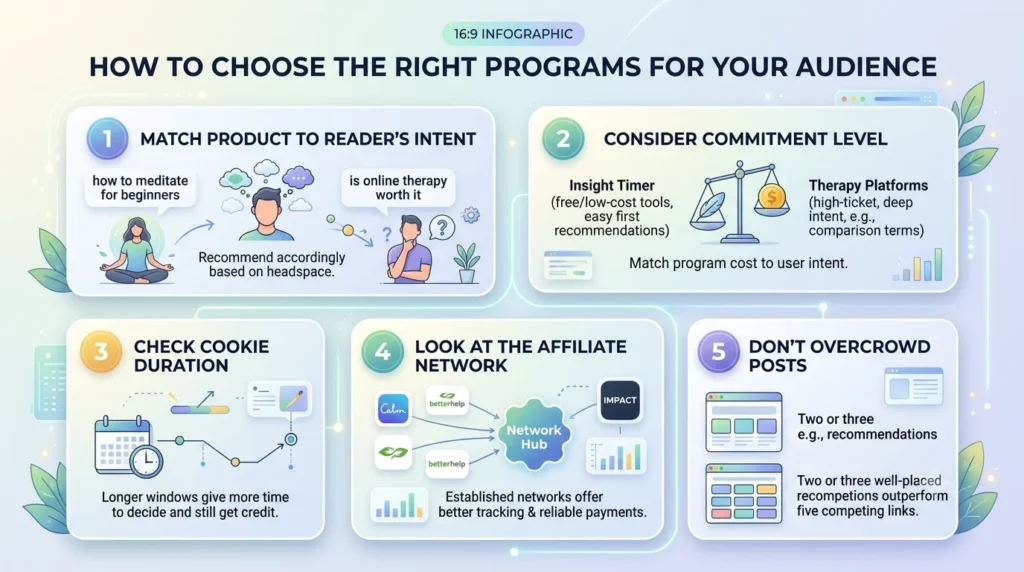
With so many options available, the real skill isn’t finding programs — it’s choosing the two or three that genuinely fit your content and your readers’ stage of readiness.
- Match the product to the reader’s intent. Someone reading “how to meditate for beginners” is in a very different headspace than someone reading “is online therapy worth it.” Recommend accordingly.
- Consider the commitment level. Free or low-cost tools like Insight Timer are easier first recommendations; higher-ticket therapy platforms convert better with readers who’ve already shown deeper intent, like those searching comparison terms.
- Check the cookie duration. Programs with longer cookie windows give your readers more time to think it over and still count as your referral when they finally convert.
- Look at the affiliate network, not just the brand. Programs run through established networks like Impact tend to offer more reliable tracking, reporting, and payment consistency than smaller in-house systems.
- Don’t overcrowd a single post. Two or three well-placed recommendations outperform a wall of five different competing links.
Where to Naturally Place These Recommendations
Placement is everything in this niche, because a recommendation that feels forced can undo the very trust that made your content valuable in the first place.
- Inside “best of” comparison posts — content like “best meditation apps for anxiety” or “best online therapy platforms” is high-intent and naturally suited to direct recommendations.
- Woven into personal stories — an honest account of your own experience with therapy or meditation feels far more authentic than a detached product review.
- At the end of educational content — a post explaining the science of mindfulness or the basics of CBT can close with a gentle “if you want to try this yourself, here’s where to start.”
- In email newsletters — a subscriber who opted into wellness content is already primed for a recommendation delivered with warmth rather than urgency.
- Resource pages — a dedicated “tools I recommend” page lets cautious readers browse recommendations on their own terms, without feeling pushed.
Writing Recommendations That Respect the Topic
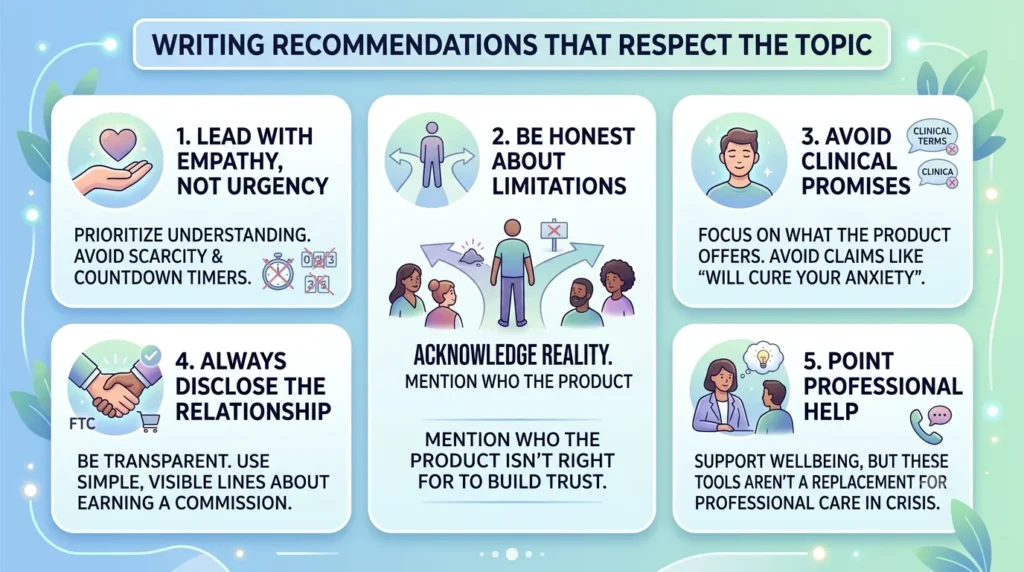
Mental health content carries more responsibility than most affiliate niches, and the way you write about these products matters as much as which ones you choose.
- Lead with empathy, not urgency. Avoid scarcity tactics or countdown timers — they feel deeply out of place next to content about anxiety or grief.
- Be honest about limitations. No app or therapy platform is a perfect fit for everyone; mentioning who a product isn’t right for builds more trust than an all-praise review.
- Avoid clinical promises. Phrases like “this will cure your anxiety” cross a line these brands themselves generally avoid — stick to what the product offers, not guaranteed outcomes.
- Always disclose the relationship. A simple, visible line like “I may earn a commission if you sign up through this link, at no extra cost to you” keeps things transparent and compliant with FTC guidelines.
- Point toward professional help when appropriate. If your content touches on serious mental health struggles, it’s worth noting that these tools support wellbeing but aren’t a replacement for professional care when someone is in crisis.
Tracking What Actually Performs
Once you’ve added a few of these programs to your content, resist the urge to “set and forget.” The mental health affiliate space shifts often — commission rates, cookie durations, and program terms can all change with little notice.
- Revisit your top posts quarterly to confirm links, commission structures, and program terms are still accurate.
- Track click-through and conversion rates per program rather than assuming the “biggest name” brand will always perform best — smaller, freemium options like Insight Timer sometimes convert better with cautious readers.
- Test placement, not just products. The same BetterHelp link might convert very differently placed mid-article versus at the very end.
- Use affiliate tracking tools such as network dashboards or third-party performance tools to see which content is quietly doing the heavy lifting.
Bringing It All Together
The best mental health and meditation affiliate programs aren’t necessarily the ones with the flashiest payout numbers — they’re the ones that genuinely match what your readers need at the moment they’re reading your content. A free meditation library for someone just starting out. A structured CBT platform for someone who wants more than a chat window. A trusted therapy service for someone finally ready to talk to a professional.
Start with one or two programs that align naturally with your existing content, disclose the relationship clearly, and let the honesty of your recommendations do what performance marketing tactics never quite can in this space: build real, lasting trust with people who are looking for genuine help.
Ready to get started?
Apply to a program like Calm or BetterHelp through their affiliate application page, review their promotional guidelines carefully, and weave your first honest recommendation into a piece of content your readers already love.