
SEO Trends Every Marketer Should Know


ATTENTION: Want to Learn Affiliate Marketing from Successful Affiliates?
Staying updated on SEO trends can greatly enhance your marketing strategies. As we move further into 2024, it’s crucial to embrace new approaches that keep you ahead of the competition. Here are essential trends to help you optimize your content strategy and digital presence.
Emphasis on User Experience
User experience (UX) continues to play a significant role in SEO rankings. Google has confirmed that sites providing a superior user experience will enjoy better visibility. Focus on enhancing website speed, mobile responsiveness, and intuitive navigation. Ensure that readers find what they need quickly to improve engagement and reduce bounce rates.
Core Web Vitals
Core Web Vitals are critical metrics regarding user experience. They measure how users perceive the experience of interacting with a web page. The three main components are:
- Largest Contentful Paint (LCP): Measures loading performance. Aim for under 2.5 seconds.
- First Input Delay (FID): Measures interactivity. Aim for less than 100 milliseconds.
- Cumulative Layout Shift (CLS): Measures visual stability. Aim for less than 0.1.
Monitoring these metrics can help you align your site with SEO best practices. Tools like Google Lighthouse can assist in evaluating your site’s performance.
Voice Search Optimization
The rise in smart speakers and voice-activated devices means more people are using voice search. To optimize for voice search, consider the following:
- Use natural language and question-based phrases.
- Focus on local SEO to capture nearby users.
- Implement structured data to help search engines understand context better.
According to Statista, over 50% of households have smart speakers, demonstrating the urgency to adapt your strategies for this trend.
AI and Machine Learning
Artificial intelligence and machine learning are transforming how SEO works. AI’s ability to analyze user behavior and predicting trends can help you create more effective SEO strategies. Leveraging tools like SEMrush or Moz can provide insights into keyword performance, allowing you to adjust your content strategy accordingly.
Visual and Video Content
Visual content has become increasingly vital for SEO. In 2024, prioritize high-quality images, infographics, and videos. Google recognizes that visual content improves user engagement. Here’s how to enhance your visual content:
- Optimize images with relevant keywords and alt text.
- Create engaging video content relevant to your audience.
- Use platforms like YouTube for video hosting, embedding them in your site for better ranking.
Long-Form Content
Long-form content is expected to thrive in 2024. Google prefers content that provides detailed information. Aim for a length of 1,500 words or more to thoroughly cover topics within your niche. Use headings, bullet points, and visuals to maintain reader interest. Create in-depth resources that others want to link back to, improving your backlinks.
Local SEO Strategies
As businesses compete for local visibility, mastering local SEO is essential. Focus on the following:
- Optimize your Google My Business listing.
- Gather customer reviews and respond to them to build trust.
- Utilize local keywords in your content strategy.
Local SEO has a significant impact on business visibility, with around 46% of all Google searches being local.
Link Building and Influencer Collaborations
In 2024, link building remains a crucial SEO strategy. Focus on high-quality backlinks from reputable sources rather than a high quantity of low-quality links. Collaborating with influencers within your industry can help increase your content’s visibility and drive quality traffic. Make sure the influencers align with your brand values for authentic promotion.
The Future of Search: Semantic Search
Understanding semantic search, which focuses on context rather than keywords, is becoming vital. Google’s algorithms enhance their understanding of user intent. Implementing schema markup can improve the way search engines interpret your content.
Embracing these trends will set you on a path to success in 2024. By enhancing user experience, optimizing for voice and visual content, and keeping up with local SEO, your strategies will be more effective. Stay flexible and ready to adapt as the digital landscape continues to evolve!
The Impact of AI on Search Engine Optimization
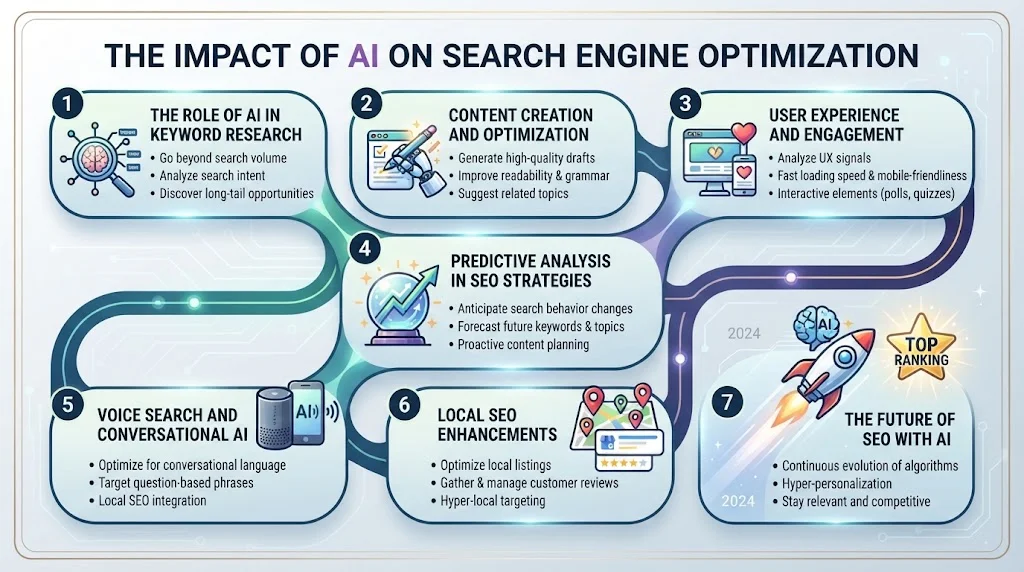
The rise of artificial intelligence (AI) has significantly transformed many industries, and search engine optimization (SEO) is no exception. Marketers and content creators must understand how AI impacts SEO to stay ahead of the curve and boost their online visibility. From optimizing content for search engines to enhancing user experience, AI is reshaping the landscape of digital marketing. Here are some key aspects of AI’s impact on SEO Trends that every marketer should consider.
The Role of AI in Keyword Research
AI-powered tools are revolutionizing keyword research by allowing marketers to analyze search intent more effectively. Rather than relying solely on traditional keyword metrics like search volume and competition, AI can identify broader topics and user behavior patterns. This leads to the discovery of long-tail keywords that can attract specific audiences. Utilizing tools such as SEMrush or Ahrefs can significantly enhance your keyword strategies.
Content Creation and Optimization
AI also plays a crucial role in content generation and optimization. Tools like Grammarly and Jasper help writers create high-quality content tailored to user preferences. These platforms can analyze existing content and suggest improvements based on trends in user engagement and search behavior. Here’s how AI enhances content:
- Improves readability and grammar.
- Suggests related topics for comprehensive coverage.
- Generates automated summaries for quick insights.
User Experience and Engagement
AI algorithms, like those used by Google’s RankBrain, assess user experience signals to determine rankings. Factors such as bounce rates, session duration, and interaction levels significantly influence SEO Trends Every Marketer Should Know. By analyzing user behavior, AI helps marketers tailor their content and layout to improve engagement. Here are important aspects to focus on:
- Fast Loading Speed: Ensure your website loads quickly on all devices.
- Mobile Optimization: With the majority of searches happening on mobile, a responsive design is critical.
- Interactive Elements: videos, polls, and quizzes can enhance user interaction.
Predictive Analysis in SEO Strategies
AI-driven predictive analytics can help marketers anticipate changes in search behavior. By analyzing existing data and trends, AI tools can forecast potential keywords and topics that will drive traffic in the future. This enables a proactive approach to content planning rather than a reactive one. Keeping an eye on platforms like Moz can provide valuable insights into predictive analytics.
Voice Search and Conversational AI
With the popularity of voice-activated devices like Amazon Alexa and Google Home, optimizing for voice search is crucial. AI affects how users interact with these devices, shifting the types of keywords being searched. To optimize for voice search:
- Use natural, conversational language in your content.
- Focus on answering specific questions that users might voice.
- Incorporate local SEO strategies, as many voice searches are local in nature.
Local SEO Enhancements
Local businesses can greatly benefit from AI-driven SEO solutions. AI tools can optimize local listings and gather data to improve search results for nearby users. Using services like Yext can help manage local SEO efforts effectively.
The Future of SEO with AI
As AI technology continues to advance, the SEO landscape will keep evolving. Adapting to these changes ensures that marketers can meet the demands of search engines and the expectations of users. By leveraging AI tools for keyword research, content optimization, and enhancing user experience, you can stay relevant and competitive in the digital space.
Staying informed about the latest AI and SEO Trends Every Marketer Should Know is not just a choice; it’s a necessity for success in the digital marketing arena. Explore resources and updates from SEO-focused platforms to keep your strategies aligned with these innovations.
Voice Search Optimization: Adapting to Changing Consumer Behavior
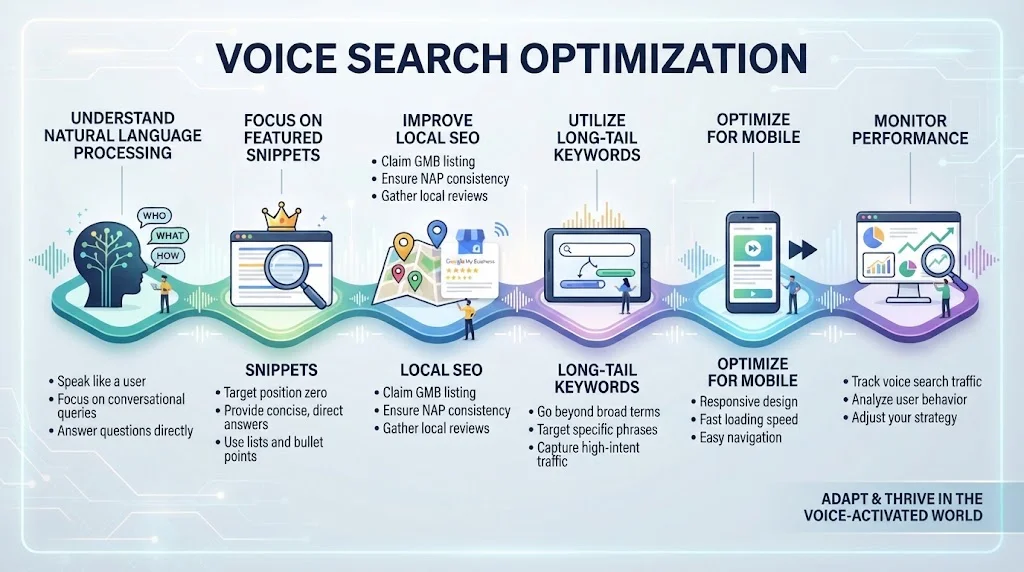
As technology evolves, so does the way people search for information. Voice search is rapidly becoming a preferred method for many users. Understanding how to optimize for this shift is crucial for marketers looking to stay relevant. Given the rise of smart speakers and voice-enabled devices, adapting your SEO Trends strategy is essential for reaching today’s consumers.
Why is voice search growing so fast? Consumers are looking for convenience and speed. When you can ask a device for information instead of typing, it simplifies the process. A recent study highlighted that over 55% of households are expected to own a smart speaker by 2025. This change in behavior means you need to reshape how you think about SEO Trends. Let’s explore key strategies for optimizing voice search.
Understand Natural Language Processing
One of the biggest differences between traditional search and voice search is how users phrase their queries. When typing, users typically use short phrases or keywords. Voice queries, on the other hand, tend to be longer and more conversational. For example:
- Traditional Search: “best coffee maker”
- Voice Search: “What is the best coffee maker for my kitchen?”
To optimize for voice search, think about how your target audience speaks. Create content that answers questions directly and naturally. This will help you capture those longer queries.
Focus on Featured Snippets
Featured snippets are the boxed information that appears at the top of some search results. They are often the answers users get when they use voice search. To increase your chances of being featured:
- Identify common questions in your niche.
- Use clear, concise, and informative answers.
- Format your content with bullet points or numbered lists where relevant.
By making your content more accessible, you can boost its visibility in voice search results. Additionally, tools like Moz can assist in identifying keywords that can help your site rank higher.
Improve Local SEO
Many voice searches are local in nature, especially when users are asking for services near them. To optimize for local searches:
- Claim your Google My Business listing.
- Ensure your NAP (Name, Address, Phone Number) is consistent throughout online platforms.
- Encourage customers to leave reviews.
By focusing on local SEO strategies, you can improve your chances of appearing in voice search results. According to Google, 76% of people who search for something nearby visit a business within a day.
Utilize Long-Tail Keywords
Long-tail keywords are phrases that are more specific and longer than typical keywords. For voice search optimization, these keywords are essential. For example:
| Traditional Keyword | Long-Tail Keyword |
|---|---|
| best headphones | What are the best headphones for noise cancellation? |
| pizza delivery | What pizza delivery options are available near me? |
Integrating long-tail keywords into your content can help you capture voice queries effectively. Tools like Keyword Tool can assist in identifying these specific phrases.
Optimize for Mobile
Voice searches often occur on mobile devices. Therefore, ensuring your website is mobile-friendly is critical. Here are some tips to optimize your site:
- Use responsive design.
- Improve loading speed.
- Ensure easy navigation.
A well-optimized mobile site will not only enhance user experience but also contribute to better rankings on search engines.
Monitor Performance
Once you’ve made these adjustments, tracking your progress is key. Use analytics tools to monitor traffic from voice searches and evaluate which strategies work best. Google Analytics and SEMrush are excellent tools to help you analyze user behavior and search patterns.
By adapting to voice search optimization trends, you can meet the needs of modern consumers and ensure your marketing efforts remain effective. Embrace these changes and position your brand to thrive in an increasingly voice-activated world.
The Role of User Experience in Modern SEO Strategies
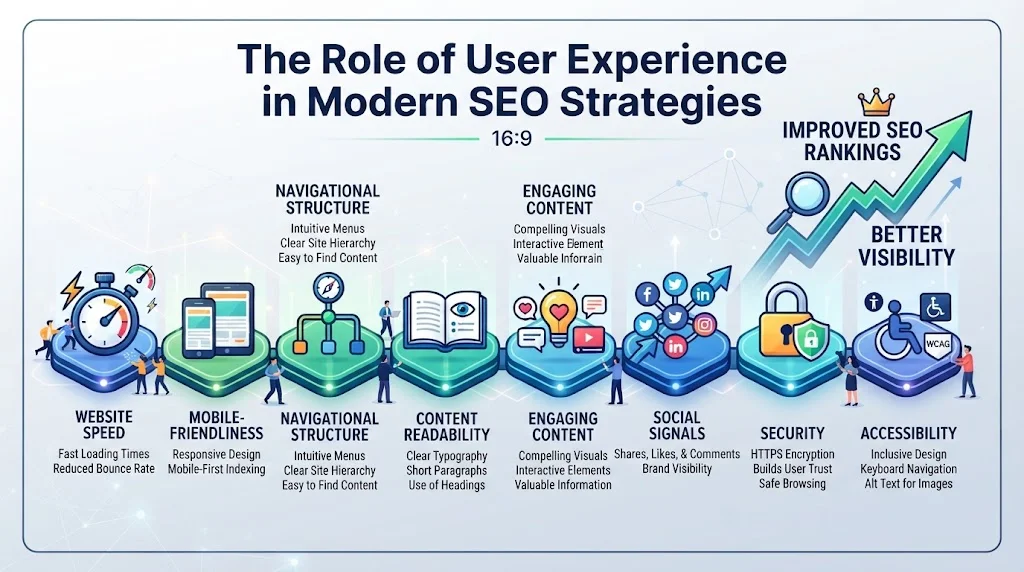
User experience (UX) has become a critical factor in the landscape of SEO Trends. Marketers today must adapt their strategies to not only attract visitors but also ensure that the experience is engaging and satisfying. When user experience becomes a priority, various aspects of SEO management change, leading to improved visibility and higher conversion rates.
Website speed
One of the primary elements of this relationship is website speed. A website that loads quickly provides a better UX and keeps potential customers engaged. Studies have shown that users are likely to abandon sites that take longer than three seconds to load. Optimizing images, minimizing HTTP requests, and leveraging browser caching are just a few tactics that can enhance loading times. Tools like Google PageSpeed Insights can help marketers identify areas for improvement.
Mobile-friendliness
Mobile-friendliness is another crucial component of UX that directly influences SEO Trends Every Marketer Should Know rankings. With more people accessing the web through mobile devices than desktops, having a responsive site design is non-negotiable. Google has shifted to mobile-first indexing, meaning it primarily uses the mobile version of content for indexing and ranking. A site that offers a seamless experience on mobile is likely to rank higher in search results. Testing your site using Google’s Mobile-Friendly Test can reveal how well your site meets this requirement.
Navigational structure
Navigational structure plays a significant role in user experience as well. A clear and intuitive navigation system allows users to find what they’re looking for quickly, thus reducing bounce rates. Key elements to consider in improving site navigation include:
- Logical hierarchy: Ensure content is organized categorically.
- Search functionality: Include a search bar for ease of access to particular content.
- Breadcrumbs: Help users track their location within your site easily.
Content readability
Content readability also impacts user experience. If visitors struggle to read content due to complex jargon or dense paragraphs, they’re likely to leave the site. Here are some strategies to enhance readability:
- Use short sentences and paragraphs.
- Incorporate bullet points for easy scanning.
- Maintain a conversational tone while addressing your audience directly.
Engaging content
Engaging content is also more likely to keep users on your site. This can range from insightful blogs to interactive elements like polls or quizzes. Encouraging audience interaction can lead to a lower bounce rate, which positively influences SEO Trends rankings. By effectively engaging users, you’re not only improving their experience but also increasing the likelihood of shares and backlinks, further enhancing your SEO Trends efforts.
Social signals
Social signals can indirectly affect your SEO Trends strategy as well. When users share your content on platforms like Facebook, Twitter, and LinkedIn, it boosts your visibility and credibility. The more shares you receive, the more likely other websites may link back to your content, which is excellent for SEO Trends. Consider adding social sharing buttons to your content to encourage this behavior.
Security
Security is essential for user experience too. Having an SSL certificate (HTTPS) is important for building trust with users. Google has confirmed that they consider HTTPS in their ranking algorithms. Users are more likely to interact with a secure website, especially when submitting personal information. You can easily implement HTTPS to improve both user trust and SEO Trends effectiveness.
Accessibility
Accessibility is a crucial aspect of UX that can also affect SEO Trends. Making your site accessible means ensuring that it can be navigated and understood by users with disabilities. This can include using alternative text for images, proper heading structures, and ensuring your website is screen-reader friendly. The more inclusive your website is, the wider audience you can reach, and this can lead to increased traffic and improved SEO Trends rankings.
To dive deeper into how UX plays a pivotal role in SEO Trends strategies, reputable resources such as Moz and Search Engine Journal offer insights that can provide more context and actionable strategies.
The integration of user experience into modern SEO Trends strategies is more than just a trend; it is a necessity. By prioritizing UX, marketers can create websites that not only satisfy search engine algorithms but also meet the demands of their users, leading to successful digital marketing outcomes.
Understanding the Importance of Local SEO in a Global Market
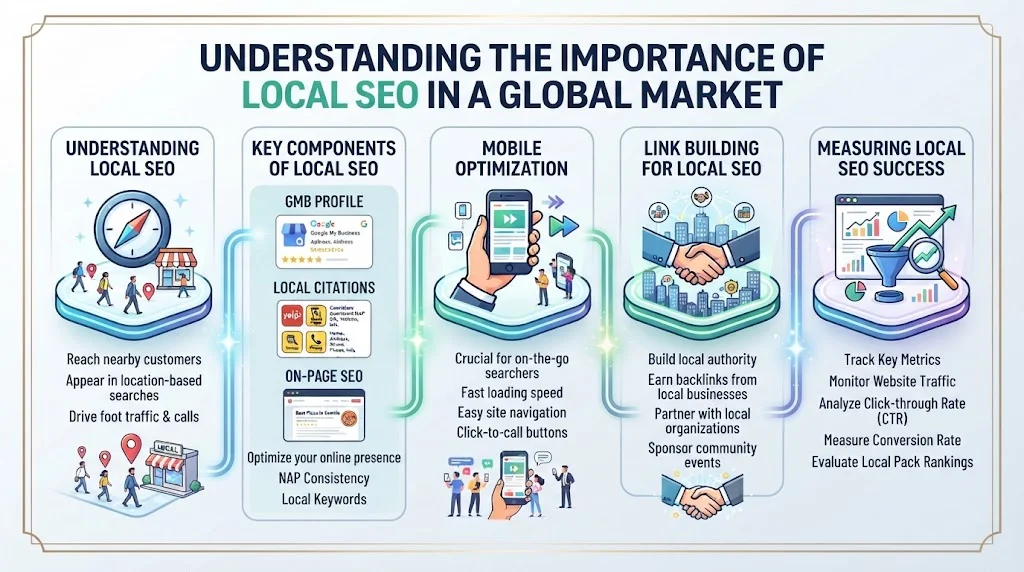
In today’s interconnected world, businesses are no longer limited to local markets. However, for many, local SEO remains a crucial part of their online strategy. Understanding local SEO and its importance can significantly impact your business’s visibility and sales, even in a global market.
Local SEO focuses on optimizing your online presence to attract more business from relevant local searches. With 46% of all Google searches looking for local information, it is vital that marketers grasp why local search matters, even when competing globally.
Understanding Local SEO
Local SEO is unique because it deals with search results that are geographically targeted. It emphasizes keyword usage, content relevance, and various location signals that help your business show up in local search results. Here’s why it’s essential:
- Increased Visibility: Local search optimization can boost your visibility in search engines, meaning more foot traffic to your physical location.
- Higher Conversion Rates: Consumers searching locally are often looking to make immediate purchases, increasing your chances of conversion.
- Community Engagement: Engaging with local consumers fosters a sense of community, which can enhance brand loyalty.
Key Components of Local SEO
To effectively harness the power of local SEO, several components are essential:
- Google My Business (GMB): Claiming and fully optimizing your GMB page is fundamental. Ensure that your information is accurate and up-to-date. This includes your business name, address, and contact details.
- Local Keywords: Incorporate local keywords relevant to your business. For instance, use phrases like “best pizza in [City Name]” to improve your chances of appearing in searches.
- Online Reviews: Encourage happy customers to leave positive reviews. Respond to reviews, both positive and negative, as this contributes to your overall online reputation.
- NAP Consistency: Ensure that your Name, Address, and Phone Number (NAP) are consistent across all online platforms to reinforce trust with search engines and potential customers.
Mobile Optimization
With a majority of local searches occurring on mobile devices, optimizing your website for mobile is a must. A mobile-friendly site leads to better user experience and higher search engine rankings. Make sure your site loads swiftly and is easy to navigate on mobile devices.
Link Building for Local SEO
Effective link building with local businesses and organizations can enhance your local SEO efforts. Consider the following strategies:
- Partner with local influencers: Building relationships can lead to valuable backlinks and referrals.
- Participate in local events: Hosting or participating in local events not only builds community goodwill but can also earn local media coverage and links.
- Local Directories: List your business in reputable local directories like Yelp or Yellow Pages to boost visibility.
Measuring Local SEO Success
To understand the effectiveness of your local SEO strategies, it is essential to track your metrics. Key performance indicators (KPIs) include:
| Metric | Description |
|---|---|
| Website Traffic | Monitor the number of visitors from local searches. |
| Click-through Rate (CTR) | Measure how often people click on your listing in local search results. |
| Conversion Rates | Track how many visits translate into sales or leads. |
| Average Position | Evaluate where your business ranks in local search results. |
With the rapid growth of the digital landscape, local SEO becomes even more valuable. Stay ahead of competitors by understanding and implementing these strategies. Whether you are a small business or a larger enterprise, leveraging local SEO can significantly affect your bottom line in a global market.
For more insights on local SEO, consider visiting Moz and Search Engine Journal. These resources provide a wealth of information to help refine your strategies.
Conclusion
As we move into 2024, staying ahead of the evolving SEO Trends Every Marketer Should Know landscape is crucial for every marketer. The impact of AI on search engine optimization cannot be overstated, as it revolutionizes how we analyze data, predict trends, and tailor content for our audiences. Embracing AI tools will allow you to refine your strategies, making your approach more efficient and data-driven.
Voice search continues to gain momentum, and you need to adapt to how consumers are changing their search habits. Optimizing your content for voice queries will help you reach a broader audience and meet users where they are, further strengthening your visibility in search results.
User experience is also paramount. A seamless, engaging online experience can significantly boost your rankings and ensure that visitors turn into loyal customers. Prioritizing website speed, mobile optimization, and clear navigation must be part of your ongoing strategy to keep users happy and engaged.
Understanding local SEO is essential as businesses compete in a global market. Even if your reach is worldwide, catering to local searchers will enhance your credibility and connect you more personally with your community.
By embracing these SEO Trends Every Marketer Should Know, you’ll be well-prepared to navigate the challenges and opportunities of the digital landscape. Focusing on these areas will not only improve your search rankings but also ensure a better experience for your audience, ultimately leading to greater success in your marketing efforts.