
SEO Keyword Clustering for Content Planning


ATTENTION: Want to Learn Affiliate Marketing from Successful Affiliates?
When planning your content strategy, understanding SEO Keyword Clustering for Content Planning is vital. This approach enhances your visibility on search engines, allowing your content to perform better. Clustering keywords means grouping related keywords together, which helps you create focused, cohesive content that answers specific user queries.
Keyword clustering allows you to identify topics that resonate with your audience. This method not only maximizes relevance but also reduces redundancy across your content. By clustering keywords, you position yourself as an authority on particular topics, improving your chances of ranking higher in search results.
Why Use Keyword Clustering?
There are several reasons to incorporate SEO Keyword Clustering for Content Planning into your content strategy:
- Improved Content Structure: Clustering helps you develop a logical content structure, leading to a better reading experience.
- Enhanced Relevance: With focused keyword groupings, your content becomes more relevant to users’ search intent.
- Boosted SEO Performance: Pages optimized around clustered keywords can rank for multiple search queries, increasing organic traffic.
- Time Efficiency: By knowing which keywords to target together, you can streamline your writing process.
Steps to Implement Keyword Clustering
To effectively implement keyword clustering, follow these steps:
1. Keyword Research
Start with comprehensive keyword research using tools like Moz or Ahrefs. Identify a broad list of keywords relevant to your niche. Look for keywords with varying search volumes and competition levels.
2. Analyze Search Intent
Determining the search intent behind keywords is crucial. Users search with different intentions: informational, transactional, navigation, or commercial. Understanding the intent helps in clustering relevant keywords together.
3. Group Keywords
Once you identify related keywords, group them into clusters. For example, if you are focusing on “digital marketing,” you might group:
| Keyword Cluster | Keywords |
|---|---|
| Social Media Marketing | social media strategy, social media tips, Facebook marketing |
| SEO Techniques | on-page SEO, off-page SEO, keyword optimization |
| Email Marketing | email campaigns, email strategy, newsletter tips |
4. Create Clustered Content
Now it’s time to create content around each cluster. Focus on producing in-depth articles or guides that cover the topic comprehensively. Each piece should target a primary keyword while naturally integrating the cluster keywords. This ensures that you provide valuable information to your readers.
5. Internal Linking
Link between your clustered content. This technique helps search engines understand the connection between your pages and distributes ranking potential across your site. For example, if you write an article on “SEO Techniques,” link to a piece discussing “on-page SEO” within the article.
Monitoring and Adjusting Your Strategy
After implementing your keyword clusters, it’s essential to monitor their performance. Utilize tools like Google Analytics or SEMrush to track traffic and engagement. Adjust your clusters as needed based on how your keywords are performing and adapting to changes in user behavior.
By precisely executing keyword clustering, you can optimize your content planning effectively. This strategy not only helps in SEO but also drives relevant traffic to your website. Remember, the ultimate goal is to create valuable, engaging content that meets your audience’s needs while also meeting search engine criteria.
How to Identify Effective Keywords for Clustering
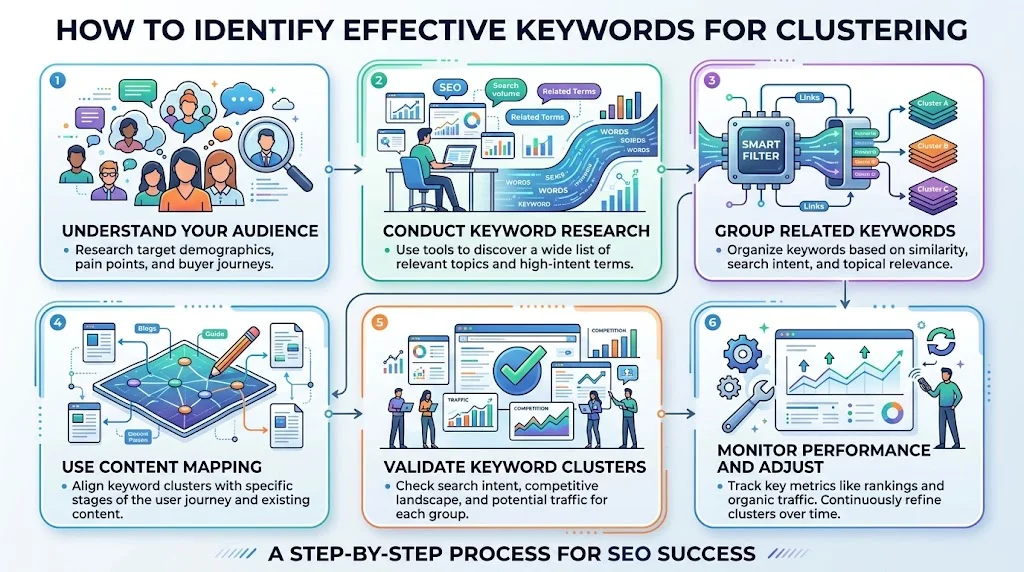
Identifying effective keywords for clustering is essential for creating a focused content strategy. Keyword clustering helps you understand how various topics relate to your overall content vision, allowing you to create a more coherent and engaging user experience. Here’s how to identify those keywords efficiently.
Understand Your Audience
Begin by understanding your audience. This means digging into what problems they need solving, what information they seek, and how they communicate those needs. Use tools like SurveyMonkey or Typeform to create surveys. Ask questions that reveal their preferences and challenges. This data will help you discover the core topics that resonate with them.
Conduct Keyword Research
Once you have audience insights, move on to keyword research. Utilize tools such as Ahrefs, Moz, or Ubersuggest to find keywords relevant to your niche. Look for keywords that have a good balance of search volume and competition.
Factors to Consider in Keyword Research
- Search Volume: Aim for keywords that have a significant number of searches each month.
- Competition: Identify keywords that are not overly competitive yet still relevant to your niche.
- User Intent: Consider the intent behind the keyword. Are users looking for information, products, or services?
Group Related Keywords
After gathering a list of potential keywords, the next step is to group them into clusters. This helps you create focused content that answers the specific needs of your audience. Start by categorizing your keywords based on their similarity.
Methods for Keyword Grouping
- Thematic Clustering: Group keywords based on their themes. For example, “fitness tips,” “healthy diets,” and “workout routines” can form a cluster around fitness.
- Semantic Clustering: Use synonyms or related terms. For instance, “buy shoes online” and “online shoe store” can be linked due to their semantic similarities.
- Search Intent Clustering: Divide keywords based on user intent. Keywords aimed at acquiring information, purchasing products, or seeking services can reside in separate clusters.
Use Content Mapping
With your grouped keywords in hand, it’s time to create a content map. A content map outlines what pages or blog posts you need to develop based on your keyword clusters. For example:
| Keyword Cluster | Content Idea |
|---|---|
| Digital Marketing | How to Develop a Digital Marketing Strategy |
| Search Engine Optimization | Top SEO Tactics for 2023 |
| Content Marketing | Creating Engaging Content for Your Audience |
Validate Keyword Clusters
Before finalizing your keyword clusters, validate them by researching existing content on similar subjects. Look at what competitors are doing and what keywords they are targeting. Use tools like SimilarWeb and SEMrush to analyze their performance. This will give you insights into what works and what doesn’t, helping you refine your approach.
Monitor Performance and Adjust
Keyword clustering is not a one-time activity. Monitor the performance of your clustered keywords using Google Analytics and other tracking tools. Check which keywords are driving traffic and which ones may need further refinement. Adjust your keyword strategies and content to keep improving engagement and rankings over time.
Identifying effective keywords for clustering involves understanding your audience, researching relevant terms, grouping them thoughtfully, utilizing content mapping, validating by checking competitors, and continuously monitoring performance. By following these steps, you can set a solid foundation for impactful content marketing that resonates with your audience.
The Benefits of Keyword Clustering in Content Strategy
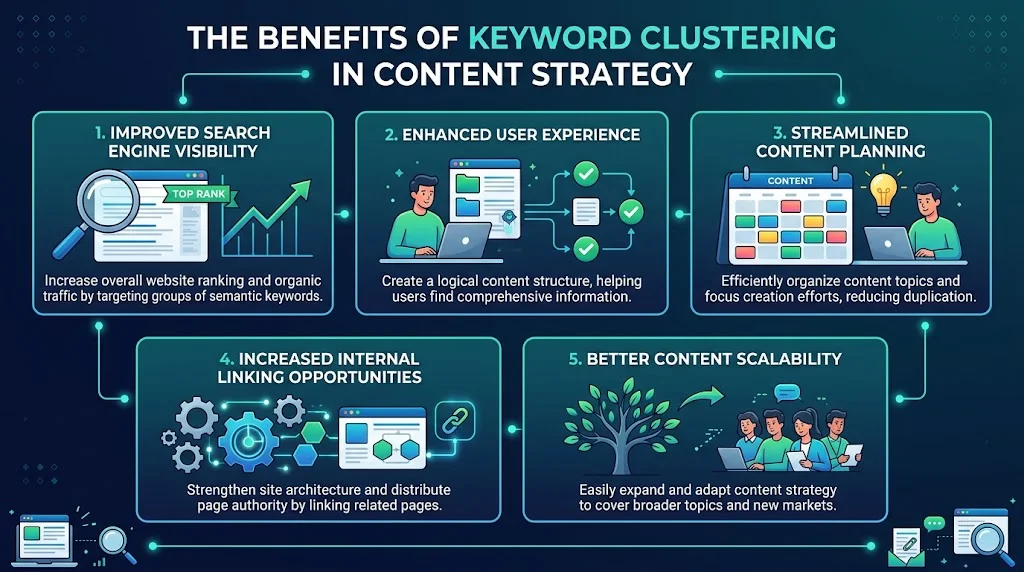
Effective content planning is crucial for businesses and bloggers aiming to rank well on search engines. One highly effective strategy is SEO Keyword Clustering for Content Planning. This approach groups related keywords together based on their semantic relevance. By clustering keywords, you can create comprehensive content that meets users’ search intent. Let’s explore how keyword clustering enhances your content strategy.
Improved Search Engine Visibility
When you use keyword clustering, you create content that is rich in topics users want to learn about. This can lead to greater search engine visibility. Google favors comprehensive, well-structured content that answers users’ queries. When you cluster keywords around similar themes, it helps search engines understand the context of your page. The end result? Higher rankings and more traffic.
Enhanced User Experience
When you focus on keyword clustering, you can develop content that satisfies user intent. By providing content that covers various aspects of a topic, you enhance the user experience. Users appreciate being able to find related information easily, which keeps them engaged on your site longer. When users spend more time on your site, it signals to search engines that your content is valuable, further boosting your ranking. Here are key elements achieving this:
- Relevance: Creating content around clusters that are highly relevant to your audience.
- Engagement: Increasing the chances of user interaction by offering varied content types.
- Satisfaction: Addressing most or all aspects of a query to satisfy the user’s search.
Streamlined Content Planning
Keyword clustering simplifies the content creation process. Instead of endlessly brainstorming topics, you can focus on well-defined clusters of keywords. This strategy allows you to create a content calendar based on these clusters. You can draft articles, blogs, and videos that revolve around specific themes instead of scattered topics. Here’s how to set up your content plan:
- Identify Core Topics: Conduct keyword research using tools like Moz or Ahrefs.
- Group Related Keywords: Cluster your keywords based on common themes and user intent.
- Create Content Calendar: Schedule your content creation focusing on each keyword cluster to maintain consistency.
Increased Internal Linking Opportunities
Keyword clustering paves the way for effective internal linking. By grouping related keywords, you can easily link between various pieces of content on your website. This builds a network of pages that support and enhance one another’s SEO. Here are some advantages of internal linking:
- Improves Navigation: Helps users navigate related content easily.
- Boosts Authority: Distributes link authority throughout your site.
- Encourages Exploration: Reduces bounce rate by leading users to more valuable content.
Better Content Scalability
As your website grows, so does the demand for fresh content. With SEO Keyword Clustering for Content Planning, you can scale content creation efficiently. Instead of creating standalone articles, you can continuously update a cluster with new information, insights, or trends. This approach ensures that your content remains relevant and fresh over time. It also allows for:
- Faster Content Production: Leverage existing clusters to quickly generate new articles.
- Liquidity in Topics: Adding new keywords to existing clusters instead of always starting fresh.
- Authority Building: Establish yourself as a thought leader as you expand on key themes.
Now that you understand the importance of keyword clustering in content strategy, consider implementing this powerful technique. It not only improves SEO but also creates a more engaging experience for your audience. Begin integrating keyword clusters in your content planning and observe the result in your website’s performance.
Tools and Techniques for Efficient Keyword Clustering
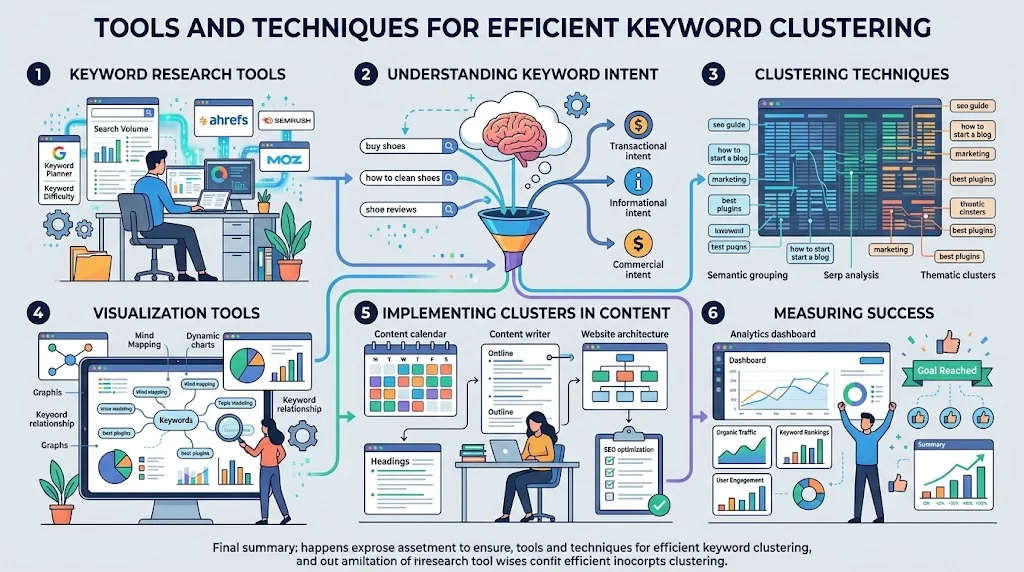
In today’s digital landscape, efficiently clustering keywords can be a game changer for your SEO Keyword Clustering for Content Planning efforts. Not only does it streamline the content creation process, but it also helps search engines understand the relevance and context of your topics. To achieve effective keyword clustering, you can utilize various tools and techniques that enhance your workflow. Let’s dive into some of the best methods.
Keyword Research Tools
Before you can cluster keywords, you need to gather a list of relevant terms. Here are some powerful tools:
- Moz Keyword Explorer – Ideal for discovering new keywords and understanding their metrics.
- Ahrefs Keywords Explorer – Provides valuable insights on keyword competition and volume.
- SEMrush – Offers comprehensive keyword data along with trending topics.
- Ubersuggest – A free tool that generates keyword suggestions based on a seed keyword.
Understanding Keyword Intent
Grouping keywords by intent is crucial. This involves categorizing them into three primary types:
- Informational: Keywords where users seek information, like “how to” guides.
- Navigational: Keywords used when users are looking for specific websites or pages.
- Transactional: Keywords that indicate a desire to purchase or engage, such as “buy shoes online.”
By sorting your keywords according to intent, you can tailor your content to answer your audience’s specific needs effectively.
Clustering Techniques
Once you have your keyword list, you can cluster them using various techniques. Here are popular methods:
- Manual Clustering: This involves sorting keywords into groups yourself based on similarities and themes. Use a spreadsheet to make this process easier. You can employ color coding to visually differentiate clusters.
- Using Software: Tools like KeywordJoy automate clustering based on semantic similarities, saving you heaps of time.
- Google Search Results: Analyze Google’s search results for your keywords to see how they are grouped by related search queries. This gives insights into how to modify your clusters.
Visualization Tools
Visualizing your keyword clusters can enhance understanding. Consider using:
- Mind Mapping Software: Tools like MindMeister can help you visually organize your keyword clusters, making connections clear.
- Spreadsheets: Create a table within Google Sheets or Excel to manage your clusters. You can track various metrics like search volume, competition, and intent in one place.
Implementing Clusters in Content
When it’s time to create content, utilize your clustered keywords effectively:
- Use primary keywords in titles, headers, and subheaders.
- Incorporate related keywords naturally throughout your content for better SEO performance.
- Write focused articles targeting a specific cluster, ensuring in-depth coverage of the topic.
By doing this, you improve the chances of ranking higher in search results, as Google appreciates comprehensive, well-structured content.
Measuring Success
Track the performance of your clustered keywords using metrics from tools like Google Analytics and Google Search Console. Monitor:
- Organic traffic growth
- Keyword rankings
- Bounce rates and session duration
By regularly evaluating these metrics, you can refine your keyword clusters and enhance your content strategies further.
These tools and techniques into your keyword clustering process will significantly enhance your content planning efforts. By understanding your audience’s intent and effectively grouping keywords, you create more meaningful engagement. This fosters a better experience for users while optimizing for search engines.
Real-World Examples of Successful Keyword Clustering in Action
Keyword clustering is a powerful strategy in search engine optimization (SEO) that organizes related keywords into themed groups. This technique not only helps improve content relevance but also enhances website visibility on search engine results pages (SERPs). Let’s delve into some real-world examples where successful keyword clustering has made a difference.
Case Study 1: Healthline’s Approach
Healthline, a leading health information website, utilizes keyword clustering effectively to cater to its vast audience. By grouping keywords around specific health topics, they create comprehensive content that addresses various user queries within the same theme. For instance, they cluster keywords like “healthy diet,” “weight loss foods,” and “nutritional benefits” into a single content strategy. This helps them target multiple related search queries and rank higher collectively.
Case Study 2: HubSpot’s Content Marketing Strategy
HubSpot, a prominent name in marketing software, uses SEO Keyword Clustering for Content Planning to enhance its content marketing strategy. They focus on grouped topics like “email marketing,” “social media marketing,” and “inbound marketing.” The clustered keywords allow them to link multiple articles together. Readers can navigate between related topics easily, which enhances user experience and increases the time spent on the site.
Case Study 3: Moz’s SEO Learning Resources
Moz, a leader in SEO tools, effectively employs keyword clustering in its educational content. By organizing its resources around core SEO concepts such as “link building,” “on-page SEO,” and “technical SEO,” they create an extensive hub of information. This strategy not only strengthens their authority in the SEO domain but also captures diverse search queries from beginners to advanced users.
How Keyword Clustering Enhances Content Planning
Companies utilizing keyword clustering experience several benefits:
- Improved SERP Visibility: Grouping related keywords allows content to cover a wider range of search queries.
- Enhanced User Engagement: By providing comprehensive information on a topic, users are more likely to stay longer on the site and explore additional content.
- Linking Opportunities: Clustering creates natural linking opportunities between articles, boosting internal SEO and user navigation.
Additional Example: Neil Patel’s Blog
Neil Patel has established a blog that exemplifies SEO Keyword Clustering for Content Planning through its structured content around digital marketing strategies. Keywords such as “SEO techniques,” “content marketing tips,” and “social media strategies” are clustered to answer various user inquiries effectively. This not only caters to diverse audience needs but also reinforces the site’s expertise on the subject matter.
A Breakdown of Success Factors
| Website | Clustered Topic | Core Keywords | Benefits |
|---|---|---|---|
| Healthline | Nutrition | healthy diet, weight loss foods, nutritional benefits | Comprehensive content, high ranking |
| HubSpot | Marketing | email marketing, social media marketing, inbound marketing | Improved navigation, increased time on site |
| Moz | SEO | link building, on-page SEO, technical SEO | Established authority, diverse traffic |
| Neil Patel | Digital Marketing | SEO techniques, content marketing tips, social media strategies | Addressing varied inquiries, showcasing expertise |
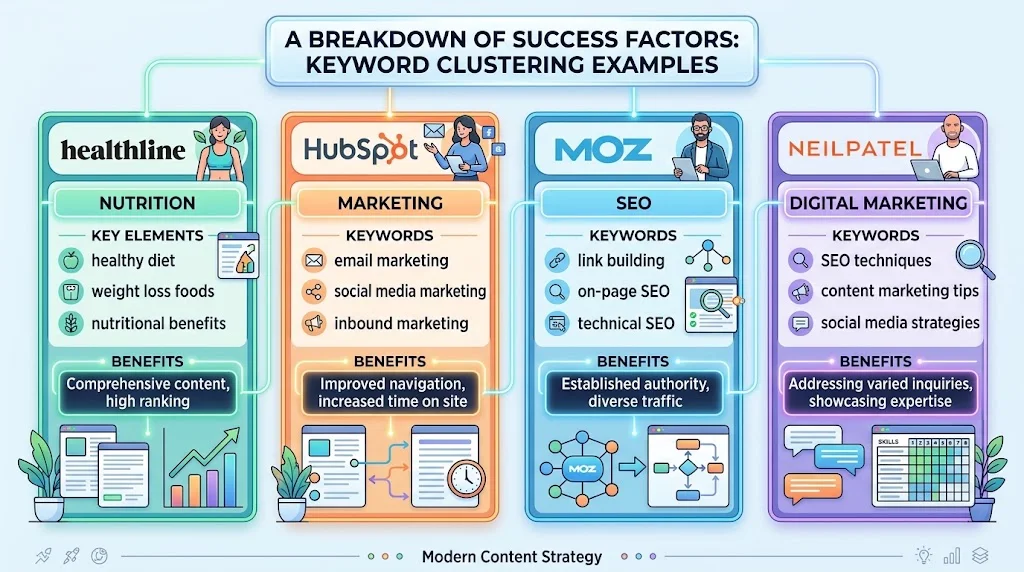
By observing these successful implementations of keyword clustering, it is clear that when done correctly, this strategy can yield significant benefits. Not only does it allow websites to cater to a broader audience, but it also helps them establish authority in their chosen fields.
For more in-depth strategies on keyword clustering and content planning, consider visiting Moz, Neil Patel, and Healthline. These resources can provide additional insights and techniques to enhance your SEO strategy through effective keyword management.
Conclusion
Optimizing your content strategy through SEO Keyword Clustering for Content Planning is not just a trend; it’s a necessity for anyone looking to elevate their online presence. By effectively identifying and grouping related keywords, you can create focused content that truly resonates with your audience and answers their queries. Remember, the goal is to meet user intent, which ultimately drives more traffic and enhances engagement.
The benefits of keyword clustering extend beyond mere organization. They foster a more coherent content strategy that can result in improved search rankings and a better user experience. When you think about it, consumers are looking for specific information, and clustering helps to deliver that succinctly.
Utilizing a variety of tools and techniques for keyword clustering will streamline your process, making it not only easier but also more effective. From search engine results page analysis to keyword suggestion tools, several resources can aid in pinpointing those high-impact keywords, ensuring that your content is both relevant and competitive.
Learning from real-world examples can provide invaluable insights and inspire your own strategy. Successful brands use keyword clustering to connect the dots between various content offerings, leading to a unified voice and authority in their field. By adopting these methods, you position yourself to achieve long-lasting results in your content marketing efforts. Effective planning today means greater visibility and audience connection tomorrow. Stay ahead of the curve, and let keyword clustering guide your content journey.