
Organic Lead Generation Through Content Marketing

ATTENTION: Want to Learn Affiliate Marketing from Successful Affiliates?
In today’s digital landscape, Organic Lead Generation Through Content Marketing has become a vital strategy for businesses seeking sustainable growth. By creating valuable content that resonates with your audience, you can attract potential customers and nurture them until they are ready to purchase. Here are some effective strategies to enhance your content marketing efforts for organic lead generation.
Understand Your Audience
Knowing your audience is the cornerstone of effective content marketing. By understanding their needs, preferences, and pain points, you can create content that speaks directly to them. Utilize tools like surveys, social media insights, and analytics to gather valuable information about your target demographic.
Create Quality Content
The content you produce should be of high quality and provide real value. Focus on various formats such as blogs, videos, podcasts, and infographics. Here’s how you can ensure the quality of your content:
- Conduct thorough research to support your claims.
- Use clear and engaging language.
- Include actionable tips that readers can implement.
Optimize for SEO
Search engine optimization (SEO) is crucial for improving your organic visibility. Implement basic SEO techniques to help your content rank higher in search engines:
- Use relevant keywords naturally throughout the text.
- Optimize your titles and meta descriptions.
- Use header tags to structure your content effectively.
Utilize Social Media
Social media platforms are powerful tools for amplifying your content. Share your blog posts, videos, and other content on various networks to reach a wider audience. Engage with your followers regularly and encourage them to share your content. This sharing creates organic leads as followers discover your brand through their network.
Leverage Email Marketing
Email marketing remains a strong component of content marketing. Use it to send newsletters, updates, and special offers to your subscribers. Here are a few tactics to enhance your email strategy:
- Segment your email list to target specific audiences.
- Provide exclusive content to your email subscribers.
- Use clear and compelling calls-to-action (CTAs).
Offer Lead Magnets
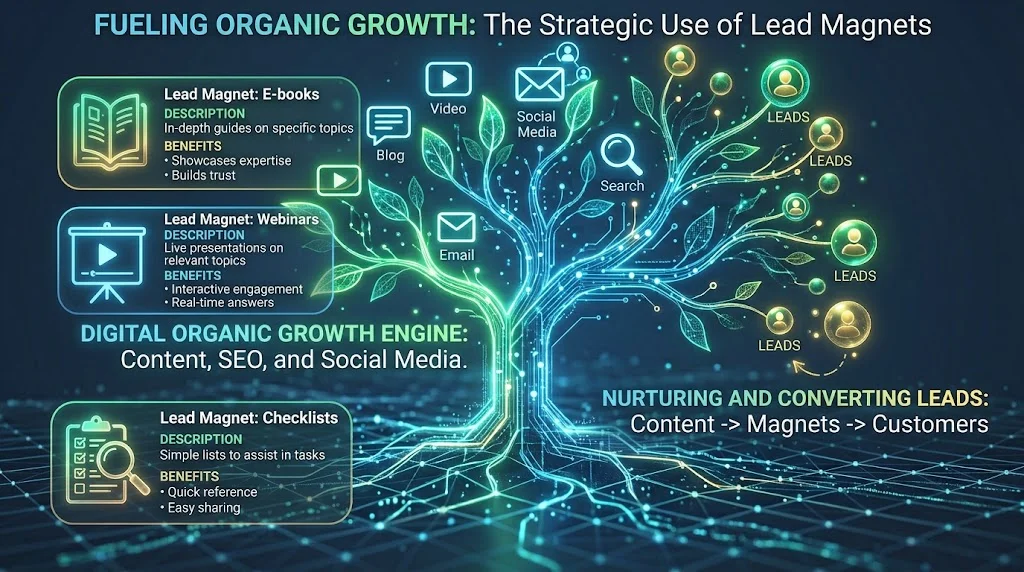
Lead magnets are incentive-based content pieces that attract potential leads. A well-crafted lead magnet could be a free e-book, checklist, webinar, or trial offer related to your products or services. Make sure these resources provide significant value to encourage more downloads and sign-ups.
| Lead Magnet Type | Description | Benefits |
|---|---|---|
| E-books | In-depth guides on specific topics | Showcases expertise, builds trust |
| Webinars | Live presentations on relevant topics | Interactive engagement, real-time answers |
| Checklists | Simple lists to assist in tasks | Quick reference, easy sharing |
Measure and Analyze Your Results
Understanding the effectiveness of your content marketing efforts is vital for ongoing success. Use analytical tools such as Google Analytics to track key metrics like organic traffic, bounce rate, and conversion rates. Assess which types of content generate the most leads so you can refine your strategies accordingly.
Collaborate and Guest Post
Partnering with other businesses or influencers in your niche can effectively extend your reach. Consider guest posting on respected blogs or collaborating on joint content projects. This helps introduce your brand to their audience, driving more organic traffic back to your site.
Implementing these strategies can significantly enhance your capabilities for Organic Lead Generation Through Content Marketing. Remember, the goal is to foster genuine connections with your audience, providing them with valuable information that not only captures their interest but also drives them down the conversion funnel.
For more insights on content marketing, check out resources from Content Marketing Institute and Neil Patel’s Blog.
The Role of SEO in Enhancing Organic Lead Generation
In today’s digital landscape, understanding how to attract and convert leads is critical for business success. One essential strategy is utilizing SEO to enhance organic lead generation. SEO, or Search Engine Optimization, helps your content stand out in search engine results, driving more traffic to your site and converting visitors into leads. By optimizing your website for search engines, you can significantly boost your ability to generate leads organically.
Enhance organic lead generation
The first step to enhancing organic lead generation involves keyword research. Identifying the right keywords ensures that your content resonates with your target audience. You should focus on strategically using long-tail keywords that describe your products or services. These keywords typically have lower competition and a higher conversion rate, providing a better chance of attracting users seeking exactly what you offer. Tools like Moz can help you find valuable keywords.
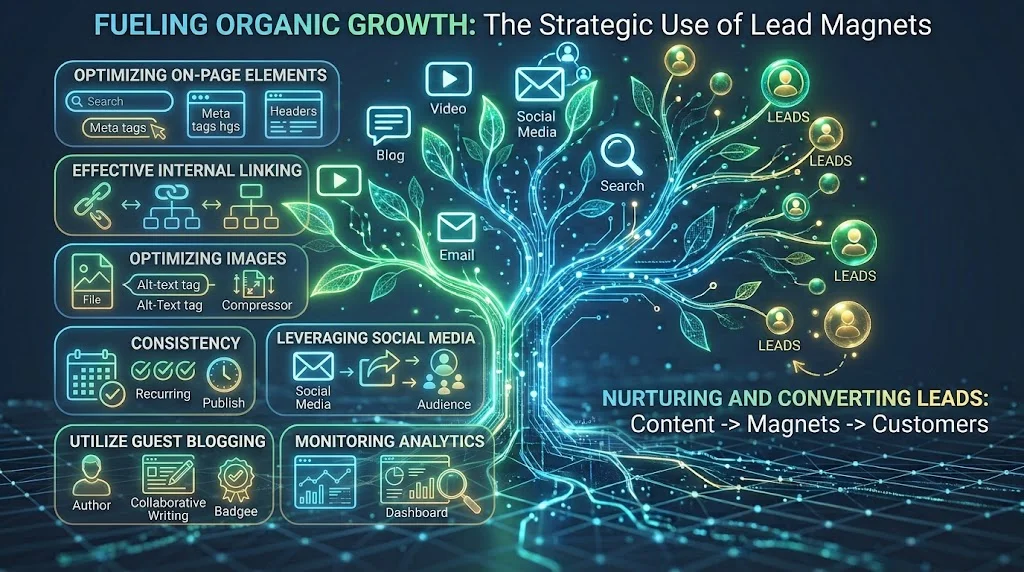
Optimizing on-page elements
Another crucial aspect is optimizing on-page elements. Ensure that each piece of content has a clear focus. Use your target keywords in key areas such as the title, meta description, header tags, and throughout the body of the text. However, always prioritize readability. Make content engaging and easy to understand, so that visitors will spend more time on your page. Well-structured content maintains a natural flow which is essential for user engagement and retention.
Effective internal linking strategies
Moreover, consider employing effective internal linking strategies. This helps to guide visitors through your site and keep them engaged longer. Establish connections between related articles or services within your content. Internal links not only enhance user experience but also guide search engines in indexing your site more effectively. This is essential for improving your overall SEO ranking.
Optimizing images
Additionally, optimizing images and ensuring your website is mobile-friendly can make a considerable impact. Many users access websites via mobile devices, so having a responsive design is vital. Optimize images by using descriptive file names and alt text that contain relevant keywords, as this aids search engines in understanding your content better.
Consistency
Consistency in your content strategy is another key component. Regularly publishing high-quality, relevant content keeps your audience engaged and encourages repeat visits. Consider writing blog posts, articles, or even producing videos that address common questions in your industry. Regular updates signal to search engines that your website is active, which can positively influence your rankings.
| Content Type | Benefits for Lead Generation |
|---|---|
| Blog Posts | Establish authority and drive traffic through valuable content. |
| Infographics | Visual representation of data that can engage and attract backlinks. |
| Videos | Engaging and informative, often resulting in higher conversion rates. |
Leveraging social media
Leveraging social media can further support your organic lead generation efforts. Engage with your audience on platforms like Facebook, Twitter, and LinkedIn. Share and promote your content across these channels to drive traffic back to your website. You can also use social media to gather insights about your audience’s preferences, which helps in tailoring your content to meet their needs.
Utilize guest blogging
Another proposed strategy is to utilize guest blogging. By writing for reputable blogs within your niche, you can reach new audiences and establish credibility. Include links back to your website, which can enhance your authority and draw traffic. Research similar, well-regarded sites such as Search Engine Journal for potential opportunities.
Monitoring analytics
Monitoring analytics is crucial to refine your SEO and lead generation strategy. Use tools like Google Analytics to track your site’s performance. Focus on key metrics such as organic traffic, bounce rates, and conversion rates. By analyzing this data, you can determine what works and identify areas for improvement, which directly impacts your lead generation efforts.
By effectively implementing SEO practices, you can significantly enhance your organic lead generation efforts. It requires consistent effort and a genuine focus on providing valuable content. Remember, the objective is to meet your audience’s needs while also positioning your content favorably in search engines. This comprehensive approach will help you build a robust foundation for generating leads organically.
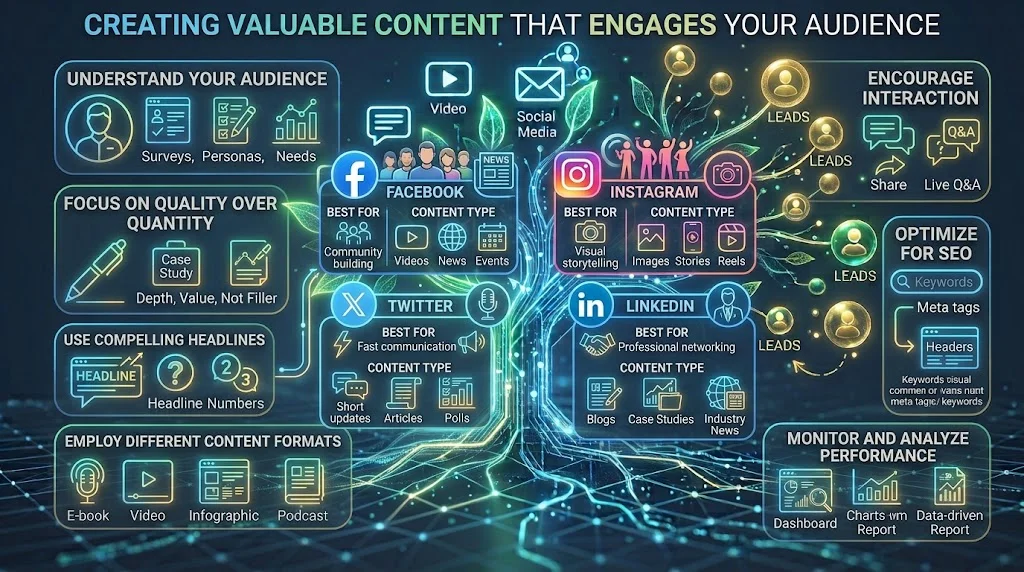
Creating Valuable Content that Engages Your Audience
Creating content that resonates with your audience requires a deep understanding of their needs and interests. When you produce valuable and engaging material, you not only meet their expectations but also build a lasting relationship with them. Here are some essential strategies to consider when developing content that captivates your audience.
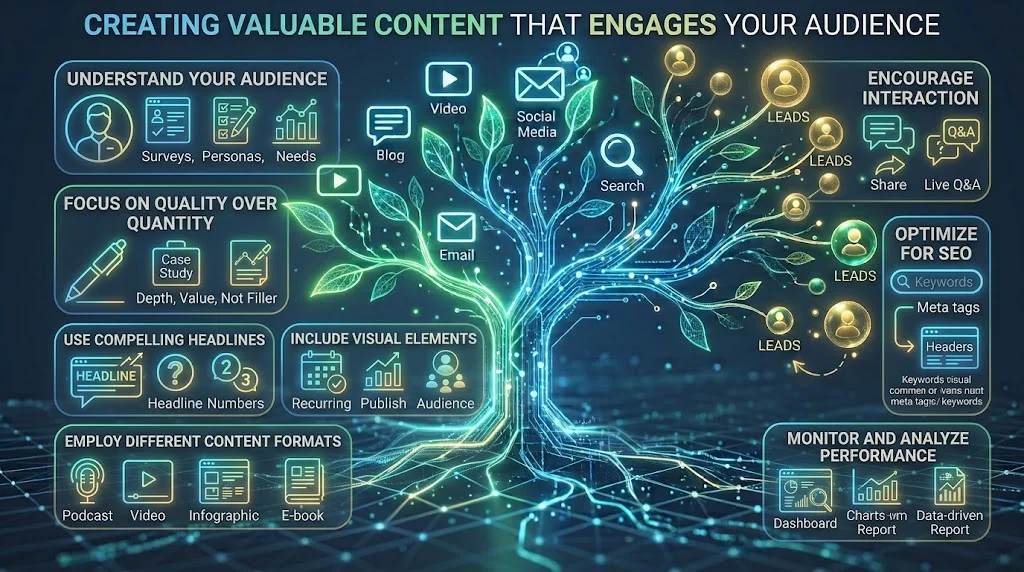
Understand Your Audience
The foundation of valuable content lies in knowing who you’re speaking to. Conduct thorough research to identify the demographics, preferences, and pain points of your target audience. Use surveys, analytics, and social media insights to gather data. This will help you tailor your content to address their specific needs. Ask yourself:
- What problems do they want to solve?
- What information are they seeking?
- What formats do they prefer (videos, blogs, infographics)?
Focus on Quality Over Quantity
It’s essential to prioritize quality in your content creation efforts. High-quality content engages your audience more effectively than excessive, low-value material. Here are a few tips to enhance quality:
- Be clear and concise. Avoid jargon and complex language.
- Incorporate storytelling. Personal stories or case studies can make your content relatable.
- Ensure accuracy. Always fact-check your information and data.
Use Compelling Headlines
Your headline is the first impression you give to your audience. An eye-catching headline not only draws interest but also boosts click-through rates. Try using numbers, posing questions, or making bold promises in your titles. For example, “10 Tips for Effective Lead Generation” can be more appealing than “Lead Generation Strategies.”
Employ Different Content Formats
Diverse content formats can keep your audience engaged. Consider mixing various types such as:
- Blog posts
- Videos
- Podcasts
- Infographics
- Webinars
This variety not only caters to different preferences but also enhances your content marketing strategy’s effectiveness. For instance, a well-researched blog post can be condensed into an engaging video or infographic, catering to different audience preferences.
Include Visual Elements
Visual content is key to engaging your audience. images, graphs, and videos can provide clarity and make the information more digestible. Around 65% of people are visual learners, meaning that visuals can significantly enhance the retention of your message. Always use relevant visuals that complement your text. You can utilize platforms like Canva for creating attractive graphics.
Encourage Interaction
Engagement is a two-way street. Encourage your audience to interact with your content through comments, shares, or questions. End your articles with a thought-provoking question or a call to action, prompting readers to share their views. Consider hosting live Q&A sessions or polls to further boost interaction.
Optimize for SEO
For your content to reach a broader audience, you must optimize it for search engines. Use relevant keywords naturally within your content. Tools like Ahrefs or Ustats can assist you in finding the right keywords. Don’t forget to optimize meta descriptions, images, and internal links as well. The easier it is for search engines to recognize and rank your content, the more visibility it will gain.
Monitor and Analyze Performance
Keep track of how your content performs. Use analytics tools to monitor traffic, engagement metrics, and conversion rates. Look for trends that indicate what types of content resonate best with your audience. Regularly updating and adjusting your strategy based on these insights can lead to even greater success in engaging your audience.
Creating valuable content is an ongoing process that requires attention to detail and a commitment to quality. By understanding your audience, focusing on quality, and optimizing for engagement and SEO, you’ll be able to craft content that not only attracts but retains your audience’s attention.
Consider exploring more about engaging content at HubSpot, which provides a wealth of information on effective content marketing strategies.
Leveraging Social Media for Effective Content Marketing
In the digital age, social media platforms have become essential tools for businesses to reach and engage their audience. Leveraging social media effectively can significantly enhance your content marketing strategies. To be successful, you need to focus on a few key areas that ensure your efforts translate into tangible results.
Understanding Your Audience
Before creating content for social media, it’s crucial to understand who your audience is. Knowing their interests, demographics, and online behavior can help you craft messages that resonate.
Here are steps to identify your target audience:
- Conduct surveys to gather insights.
- Analyze existing customer data using tools like Google Analytics.
- Monitor social media engagement to see what content performs best.
Creating Compelling Content
The heart of content marketing lies in producing high-quality content that captures attention. Your content should aim to educate, entertain, or inspire your audience. Here are types of content that work well on social media:
- Videos: Short videos or live streams can increase engagement dramatically.
- Infographics: Visual representations of data help communicate complex information easily.
- Blog Posts: Share snippets and links to longer articles that provide in-depth information.
- User-Generated Content: Encourage your followers to share their experiences with your brand.
Utilizing Social Media Platforms
Different social media platforms serve different purposes and audiences. Understanding the unique features of each platform will help you distribute your content effectively. Here’s a brief overview:
| Platform | Best For | Content Type |
|---|---|---|
| Community building | Videos, News, Events | |
| Visual storytelling | Images, Stories, Reels | |
| Fast communication | Short updates, Articles, Polls | |
| Professional networking | Blogs, Case Studies, Industry News |
Engaging Your Audience
After publishing your content, the next step is engagement. This means responding to comments, asking questions, and encouraging discussions. Directly interacting with your audience can build a sense of community. Consider these strategies:
- Host live Q&A sessions to connect in real-time.
- Create polls to gather feedback and opinions.
- Encourage users to share your content by offering incentives.
Analyzing Performance Metrics
To improve future campaigns, analyzing performance metrics is essential. Track key metrics like engagement rates, reach, and conversion rates. Using tools such as Sprout Social can provide valuable insights into your social media efforts. Focus on the following metrics:
- Engagement Rate: Indicates how well your content resonates with your audience.
- Click-Through Rate: Measures the effectiveness of your call to action.
- Follower Growth: Tracks the growth of your audience over time.
Adjusting Strategies Based on Data
As you gather data, you’ll notice patterns in what works and what doesn’t. Adjust your strategies based on this information. Don’t be afraid to experiment with new ideas, content formats, or posting times until you find the optimal combination.
Leveraging social media for effective content marketing requires dedication and continuous learning. By understanding your audience, creating meaningful content, and analyzing results, you can enhance your influence online. For more details on optimizing your content marketing strategy, explore resources on Content Marketing Institute. Additionally, consider visiting Neil Patel’s website for tips on driving organic traffic and successful marketing techniques.
Measuring the Impact of Content Marketing on Lead Generation
Effective content marketing is more than just creating engaging articles or eye-catching videos; it’s a crucial approach to generating organic leads for your business. To truly harness the power of content marketing, measuring its impact on lead generation is essential. By tracking relevant metrics, businesses can refine their strategies and improve their overall performance.
Understanding Key Metrics
Before we delve into measuring the impact of content marketing, it’s vital to understand which metrics genuinely reflect lead generation success. here are several key metrics to focus on:
- Website Traffic: Monitor how much traffic your content drives to your website. Use tools like Google Analytics to assess this data.
- Conversion Rates: Track how many visitors to your content take a desired action, such as signing up for a newsletter or downloading a whitepaper.
- Lead Quality: Assess the quality of leads generated from your content. Are they relevant and likely to convert into paying customers?
- Engagement Rates: Measure how users interact with your content. This includes comments, shares, and time spent on the page.
- Return on Investment (ROI): Calculate the ROI of your content marketing efforts by comparing the revenue generated from leads against the costs of producing that content.
Analyzing Traffic Sources
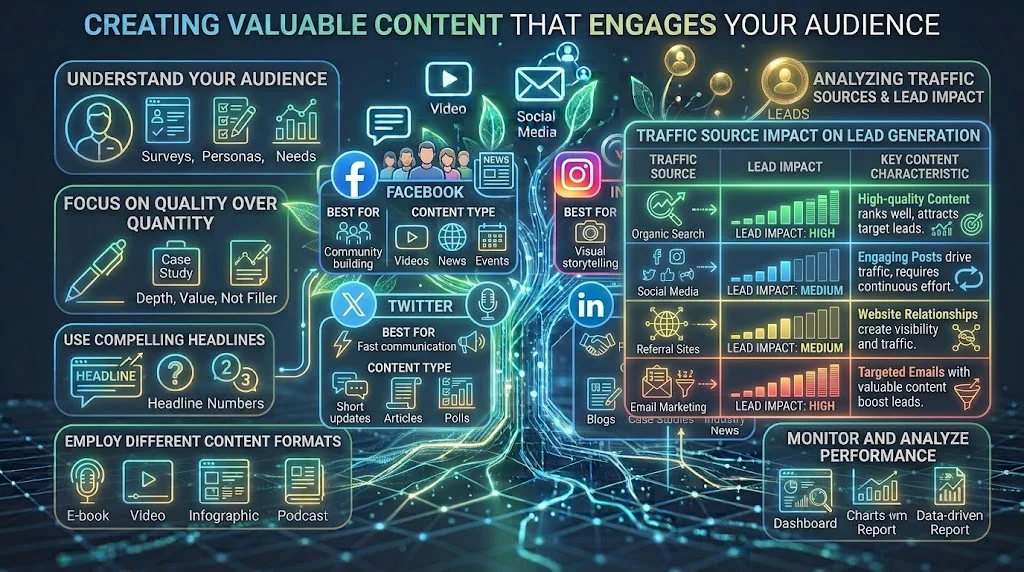
Identifying where your traffic comes from can offer insights into which content resonates most with your audience. Track the following sources:
| Traffic Source | Impact on Lead Generation |
|---|---|
| Organic Search | High – High-quality content ranks well on search engines, attracting more leads. |
| Social Media | Medium – Engaging posts can drive significant traffic, but may require ongoing effort to maintain. |
| Referral Sites | Medium – Building relationships with other websites can lead to more visibility and traffic. |
| Email Marketing | High – Targeted emails with valuable content can significantly boost lead generation. |
Using Conversion Tracking Tools
Implementing conversion tracking tools is crucial to measure how effectively your content converts visitors into leads. Some useful tools include:
- Google Analytics: Allows you to track user behavior and conversions seamlessly.
- HubSpot: Offers extensive analytics and lead tracking integrated into its CRM.
- Kissmetrics: Focuses on customer engagement and lead pathways.
Refining Your Content Strategy
After you have analyzed the data, it’s essential to refine your content strategy based on your findings. Here’s how to do it:
- Identify High-Performing Content: Determine which pieces of content are generating the most leads and create similar content.
- Optimize Underperforming Content: Update and refresh content that isn’t delivering expected results.
- Segment Your Audience: Tailor your content to different audience segments based on their responses.
- Focus on Evergreen Content: Prioritize content that remains relevant over time, continuing to attract leads long after its publication.
Measuring the impact of content marketing on lead generation isn’t just about numbers; it’s about understanding your audience and refining your approach. By paying attention to key metrics and leveraging tracking tools, you can ensure your content marketing strategy is not only effective but continually improving.
For more in-depth insights, consider exploring resources from Content Marketing Institute or Neil Patel’s guide on content marketing.
Conclusion
As you explore the world of Organic Lead Generation Through Content Marketing, it’s essential to grasp the interconnectedness of the strategies discussed. Each element, from crafting high-quality content to leveraging SEO and social media, plays a crucial role in attracting potential leads and cultivating lasting relationships. When you prioritize creating valuable and engaging content, you draw in your audience naturally. This not only builds trust but also encourages them to share your content, further expanding your reach.
SEO enhances this process by ensuring your content is discoverable in search engines, guiding potential customers to your door. By optimizing your website and understanding what your audience is searching for, you increase the likelihood of generating quality leads. Don’t overlook the power of social media either; it serves as a dynamic channel for sharing your content and connecting with your audience in real-time. Engagement on these platforms can lead to meaningful conversations and conversions.
Monitoring and measuring the impact of your content marketing efforts is vital. Analyzing metrics such as website traffic, engagement rates, and lead conversions helps you understand what works and what needs improvement. This data-driven approach allows you to refine your strategies, ensuring your efforts stay aligned with your goals.
Embrace the journey of Organic Lead Generation Through Content Marketing, knowing that it requires continuous learning and adaptation. By focusing on your audience’s needs and providing valuable information, you’re setting your business up for sustainable success in an ever-evolving digital landscape.