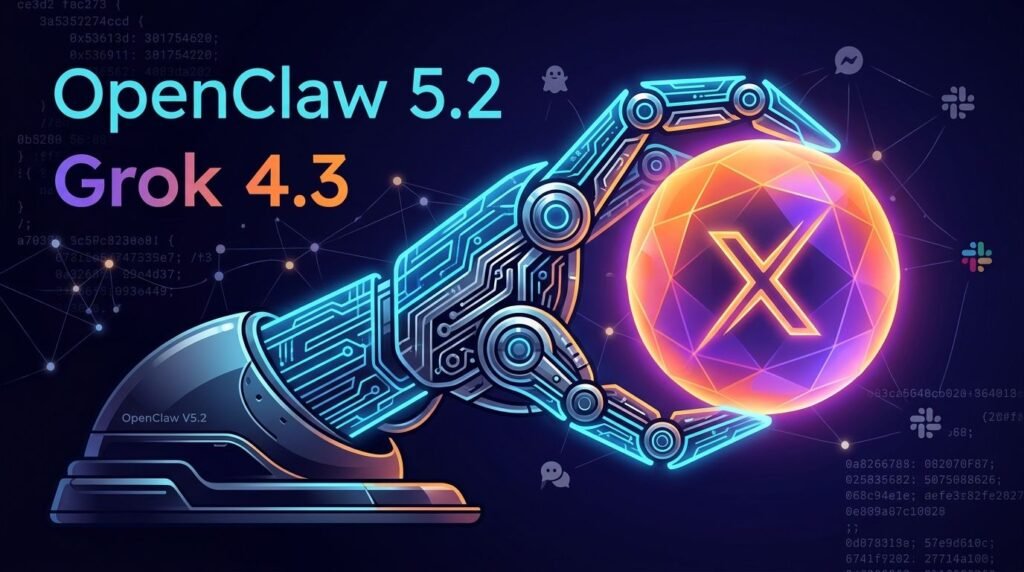
OpenClaw 5.2 Deep Dive: Why the Grok 4.3 Update Changes AI Agents Forever

The landscape of autonomous AI agents is moving at a breakneck pace, and the latest OpenClaw 5.2 release proves it. This isn’t just another minor patch; it is a ground-up stability overhaul that fundamentally changes how developers and business owners deploy open-source autonomous systems. If you have been struggling with flaky plugins, bloated startup times, or disconnected channel integrations, this latest update directly addresses those scaling pain points.
The most notable headline from this release is the automatic integration of Grok 4.3 as the default xAI model within the OpenClaw ecosystem. Rather than requiring tedious manual configurations, anyone utilizing the xAI provider is instantly upgraded to Grok’s fast-moving reasoning capabilities. Alongside this major model shift, the architecture has pivoted to an NPM-first plugin registry model supported by an enhanced “Doctor” repair tool that keeps your custom automations from breaking during subsequent system updates.
However, with great power comes new volatility. While the runtime optimizations, heartbeat loop fixes, and multi-channel upgrades for platforms like Discord, WhatsApp, and Telegram make the gateway incredibly alluring, updating blindly can sometimes introduce unexpected disruption to active client flows. Navigating these performance enhancements carefully is crucial if you want to harness the true potential of modern AI gateways without breaking existing business setups.
Key Takeaways
Grok 4.3 Integration: Grok 4.3 is now the baked-in default model for xAI inside OpenClaw, significantly upgrading the core logic, execution speed, and reasoning capabilities of your active agents automatically.
Plugin Architecture Overhaul: The platform has transitioned to an NPM-first model backed by a comprehensive “Doctor” repair tool, meaning broken plugin dependencies, configuration fallbacks, and payload errors are resolved dynamically.
Gateway Performance & Optimization: Startup memory bloat is dramatically reduced by loading only active tools and configured channels. Furthermore, the notorious “heartbeat bug” that used to throttle event loops has been permanently fixed with a centralized cooldown gate.
Robust Multi-Channel Tracking: Persistent multi-step components ensure that Discord buttons, select menus, and forms remain entirely live across gateway restarts, while Telegram handles oversized messages smoothly via automatic splitting.
Per-Call Voice Memory: Upgrades to Twilio and Google Meet routing now allow specialized session-scoping, meaning separate phone interactions from the exact same phone number will no longer bleed context into each other.
Video Call-to-Action
To see exactly how these groundbreaking features function in real-time and learn if you should risk clicking that update button right now, check out the full embedded breakdown video below.
P.S. If you want to go deeper than just tutorials and actually build a business with AI tools then join the AI Profit Boardroom. Here’s where you will find tons of tutorials, tips, tools and advanced workflows that don’t make it to YouTube. Check out the AI Profit Boardroom here: https://clinthermanlikes.com/aipb