
Local SEO Techniques for Service Businesses

ATTENTION: Want to Learn Affiliate Marketing from Successful Affiliates?
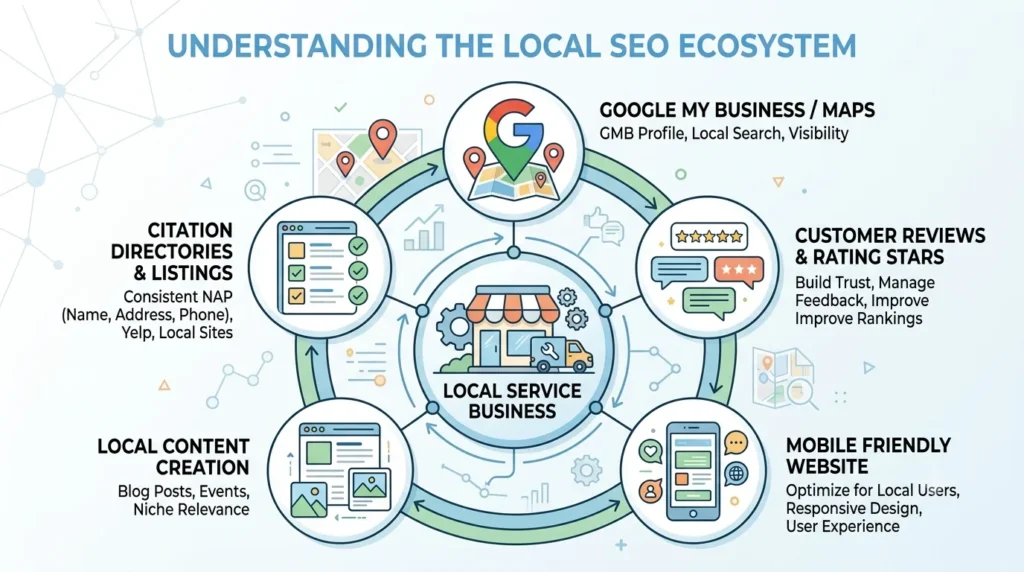
In today’s market, establishing a strong online presence is crucial for service businesses. Local SEO Techniques for Service Businesses specifically cater to this need, allowing companies to attract local customers and enhance their visibility in the community. Let’s dive into effective strategies that can boost your business’s local search visibility.
Optimize Google My Business Profile
Your Google My Business (GMB) profile is one of the most vital tools for local SEO. Make sure to:
- Claim and verify your listing.
- Fill in every field completely, including your business name, address, phone number, and website.
- Add high-quality images of your services and location.
- Encourage satisfied customers to leave positive reviews.
For detailed steps on optimizing GMB, visit Google My Business.
Utilize Local Keywords
Incorporate local keywords throughout your website’s content. Think about what terms customers in your area might use when searching for your services. Include your city or neighborhood name in:
- Website titles and meta descriptions.
- Headings and subheadings.
- Image alt text and URLs.
This practice helps search engines connect your content to local searches, making your website more relevant to nearby customers.
Build Local Citations
Citations are any online references to your business. They typically include your business name, address, and phone number. To enhance your local SEO, focus on building local citations by:
- Submitting your business information to local online directories.
- Ensuring consistency across all listings.
- Leveraging niche-specific directories related to your industry.
For more on local citations, check out Yext.
Create Local Content
Generating content that focuses on local news, events, or activities can draw in a local audience. Consider creating blog posts or articles about:
- Local events your business is sponsoring.
- Collaborations with other local businesses.
- Tips or guides specific to your locality.
This not only helps in targeting local keywords but also establishes your business as a community figure, which can attract more local patrons.
Leverage Social Media Platforms
Social media can be an invaluable tool for local SEO. Engage with your local audience through platforms like Facebook, Instagram, and Twitter. Share local content, respond to customer inquiries, and promote upcoming events or offers. Make sure your social media profiles link back to your website to drive traffic and enhance credibility.
Mobile Optimization
With more users searching on mobile devices, ensuring that your website is mobile-friendly is paramount. To enhance mobile usability:
- Use responsive design to adjust to different screen sizes.
- Optimize images and content for fast loading times.
- Make navigation user-friendly on smaller screens.
Check your site’s mobile performance with tools like Google’s Mobile-Friendly Test.
Monitor Your Progress with Analytics
To fully gauge the effectiveness of your local SEO efforts, it’s essential to track your progress using analytics tools. Monitor key metrics such as:
| Metric | Importance |
|---|---|
| Website Traffic | Indicates how many visitors you are attracting. |
| Conversion Rates | Shows how effective your site is at turning visitors into customers. |
| Keyword Rankings | Helps you see your position in local search results over time. |
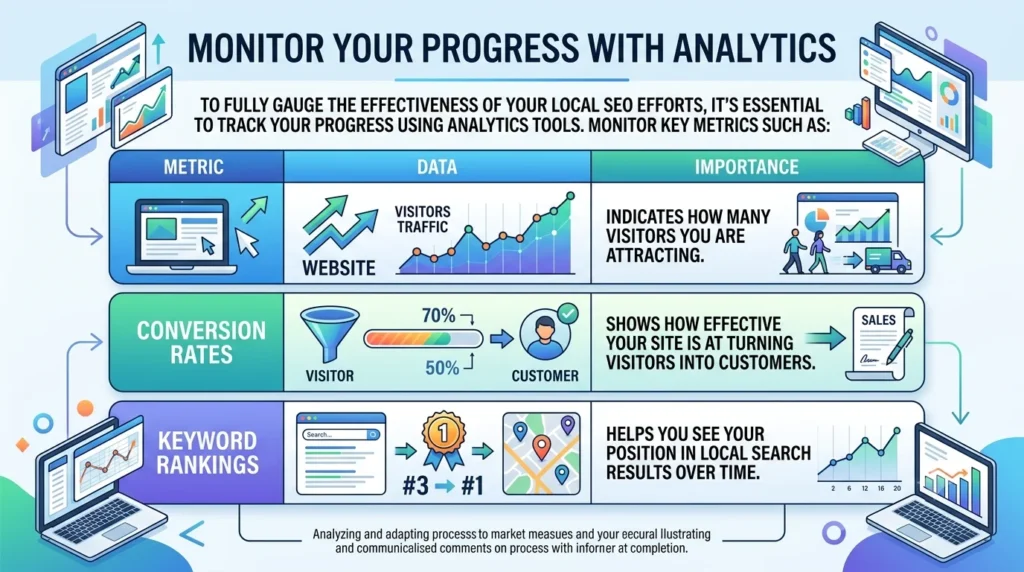
Utilize tools like Google Analytics to track these metrics and adapt your strategies as needed. Implementing these Local SEO Techniques for Service Businesses will not only enhance your visibility but also connect you with potential customers in your area. Remember, the goal is to build trust within your community while maintaining an engaging online presence!
The Importance of Google My Business for Local Visibility
In today’s digital age, having a robust online presence is critical for any business, particularly for those that offer local services. One essential tool for enhancing local visibility is Google My Business (GMB). This platform allows businesses to manage how they appear on Google search results and maps, making it vital for local SEO. By optimizing your GMB listing, your service business can attract more customers right at their moment of need.
Understanding Google My Business
Google My Business is a free tool that helps businesses manage their online presence. It provides essential information such as your business name, address, phone number, website, and operating hours. When someone searches for your services locally, a well-optimized GMB listing can significantly boost your visibility and drive traffic to your website.
The Benefits of Google My Business
Utilizing Google My Business offers several advantages:
- Increased Visibility: A complete listing ensures your business shows up in local searches and on Google Maps.
- Enhanced Customer Engagement: You can interact with customers directly through reviews and Q&A, helping build trust.
- Insights and Analytics: Google provides data on how customers find your listing, which can inform your marketing strategy.
How to Optimize Your Google My Business Listing
To maximize the effectiveness of your GMB listing, follow these optimization techniques:
- Complete Your Profile: Fill out every section of your GMB profile. Include your business name, address, phone number, and website. Accurately representing your information helps Google serve your business to relevant searches.
- Choose the Right Categories: Selecting appropriate categories helps Google understand your business better. Choose primary and secondary categories that best represent your services.
- Update Your Hours: Make sure your operating hours are accurate. If you change your hours for holidays or other events, update them promptly.
- Utilize Quality Images: High-quality photos attract customers. Showcase your products, services, staff, and your business location.
- Encourage Customer Reviews: Encourage satisfied customers to leave positive reviews. Respond to all reviews, whether positive or negative, to show you value customer feedback.
- Post Regular Updates: Use the GMB posts feature to share promotions, events, or new products. Regular updates keep your audience engaged and informed.
- Include Relevant Keywords: Use relevant keywords in your business description to help your listing rank better in search results.
Tracking Performance with Google My Business
Google My Business also offers valuable insights that allow you to gauge your performance. Metrics like how many people called your business directly from search results, how many requested directions, and how many visited your website can provide a clear picture of your online effectiveness.
Best Practices for Service Businesses
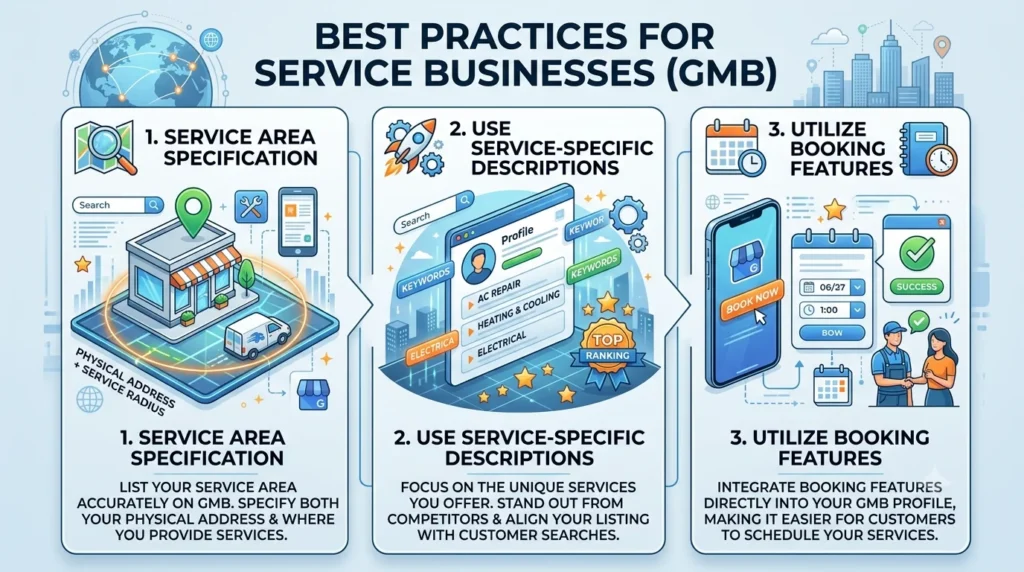
Here are some excellent practices specific to service businesses:
- Service Area Specification: For local service providers, listing your service area accurately on GMB is critical. Specify both your physical address and where you provide services.
- Use Service-Specific Descriptions: Focus on the unique services you offer. This helps you stand out from competitors and aligns your listing with customer searches.
- Utilize Booking Features: If applicable, integrate booking features directly into your GMB profile, making it easier for customers to schedule your services.
Resources for Further Learning
For more detailed strategies and best practices regarding GMB and local SEO, consider visiting:
By optimizing your Google My Business listing, you set your service business up for success in the local market. The increased exposure, enhanced customer interaction, and actionable insights empower you to reach more potential customers and grow your business effectively.
Utilizing Online Reviews to Enhance Local SEO
In today’s digital landscape, utilizing online reviews is crucial for enhancing local SEO, especially for service businesses. Reviews impact a company’s visibility in local search results and can significantly influence customer trust. Here’s how you can leverage online reviews for improved local SEO.
Why Online Reviews Matter for Local SEO
Online reviews serve as a form of social proof. They help potential customers gauge the quality of your service. In fact, around 84% of people trust online reviews as much as personal recommendations. When consumers see positive feedback about your business, they’re more likely to convert into customers. Moreover, search engines like Google take reviews into account when ranking local search results. This means that the more positive reviews you have, the higher your chances of appearing at the top of local search results.
Tips for Encouraging Online Reviews
To make the most out of online reviews, you’ll need to actively encourage customers to leave feedback. Here are some effective strategies:
- Ask Directly: After providing a service, simply ask your customers if they can take a few minutes to leave a review.
- Make It Easy: Provide links to your review profiles in emails, newsletters, or after a service completion.
- Incentivize Feedback: Sometimes, offering a small discount or gift in return for a review can boost your numbers. Just make sure this complies with review platform guidelines.
Responding to Reviews
Engaging with reviews—both positive and negative—is essential for maximizing their impact on your local SEO. Here’s how you can manage your responses:
- Thank Positive Reviews: Express appreciation for customers who leave positive feedback. This shows that you value their opinions.
- Address Negative Feedback: Respond professionally to negative reviews. Offer solutions or ask for more information to resolve issues. This can turn a negative impression into a positive one.
- Keep It Professional: Regardless of the review content, maintaining a professional tone helps protect your brand’s reputation.
Optimizing Your Online Profiles
Ensure that your business listings are fully optimized to capture maximum visibility. Your online profiles on Google My Business, Yelp, and social media should include:
- Current contact details
- Operating hours
- A business description
- Pertinent photos of your service or products
Each of these elements influences the way users perceive your business and can contribute to higher search rankings.
Utilizing Keywords in Reviews
Another advanced technique is to monitor which keywords customers use in their reviews. By gathering common terms associated with your services, you can analyze how to optimize your content. Customers might use phrases or keywords that you didn’t consider. Use these insights to enhance your website and online profiles. For example, if customers frequently mention “emergency plumbing” in their reviews, incorporate that phrase into your website content.
Leveraging User-Generated Content
Encourage customers to share photos or stories about their experiences using your service. This user-generated content can be featured on your website or social media, helping to boost your brand’s authenticity. Moreover, search engines value fresh content, meaning this can also contribute positively to your SEO efforts.
Tracking Performance
To assess the effectiveness of your online reviews strategy, regularly monitor key metrics such as:
- Number of reviews
- Overall star rating
- Engagement on your responses
- Traffic to your website from review platforms
Tools like Google My Business and Yelp for Business offer analytics features to track your performance.
By effectively utilizing online reviews and following these strategies, you can significantly enhance your local SEO efforts. Remember, this isn’t just about manipulating search algorithms; it’s about fostering relationships with your customers and building trust in your community. Engaging with your audience through reviews is a powerful way for service businesses to thrive in a competitive landscape.
Mobile Optimization: A Key Factor for Local Service Engagement
In today’s digital world, mobile optimization is an essential strategy for any local service business looking to engage with customers effectively. Given that countless consumers rely on their mobile devices for local searches, ensuring your website is mobile-friendly is no longer optional; it’s critical. Here are some key components that make mobile optimization vital for your business.
Why Mobile Optimization Matters
Mobile optimization enhances the user experience by ensuring that your website functions well on smartphones and tablets. Statistics show that over 50% of all global web traffic now comes from mobile devices. This means if your site isn’t optimized for mobile, you’re likely to lose out on a significant portion of potential customers.
Key Techniques for Mobile Optimization
Implementing effective mobile optimization techniques can significantly boost your local service engagement. Here are some vital strategies to consider:
- Responsive Design: A responsive website automatically adjusts its layout based on the device used. This ensures a seamless experience for users, regardless of whether they are on a desktop, tablet, or smartphone.
- Fast Loading Pages: Speed is crucial on mobile. Websites that take longer than three seconds to load can drive away potential clients. Use tools like Google PageSpeed Insights to analyze and improve your site’s loading time.
- Clear Call-to-Action (CTA): Make sure your CTA buttons are large enough to touch easily on mobile devices. Using straightforward language and contrasting colors can also enhance their visibility.
- Optimized Images: Images often take longer to load, especially on mobile devices. Use compressed images while maintaining quality. Tools like TinyPNG can help you with image optimization.
- Local Listings and Directory Submissions: Claim and optimize your business listing on Google My Business. Ensure all information such as your address, phone number, and service details is accurate and consistent across all platforms, including Yelp and Yellow Pages.
Utilizing Local SEO for Mobile Engagement
Combining local SEO with mobile optimization maximizes your local visibility. Here are a few effective tactics:
- Incorporate Local Keywords: Use phrases that reflect your local area and services. For instance, if you run a plumbing business in Austin, phrases like “Austin plumber” should be prevalent throughout your content.
- Encourage Customer Reviews: Positive reviews significantly boost your local ranking. Encourage satisfied customers to leave reviews through direct links you can provide in follow-up emails or text messages.
- Mobile-Friendly Content: Use short paragraphs, bullet points, and engaging visuals. This format is easier for mobile users to read and digest quickly.
Importance of Testing for Mobile Optimization
Continuous testing is imperative for effective mobile optimization. Testing allows you to identify any issues that could hinder user experience. Here are critical areas to focus your testing efforts on:
- Usability Tests: Regularly perform usability tests to identify how easily users can navigate your site on their mobile devices.
- Functional Testing: Check all forms, buttons, and links to ensure they work correctly on mobile devices.
- Performance Metrics: Utilize analytics to track user behavior on mobile, such as bounce rates and conversion rates. Tools like Google Analytics can provide valuable insights.
Mobile optimization is more than just a trend; it is a necessity for local service businesses. By implementing these techniques, you will not only improve engagement but also give your customers a smoother and faster experience on their mobile devices. In a competitive market, making your services accessible and easy to interact with can be the difference between gaining a loyal customer and losing one.
Creating Location-Specific Content to Attract Local Customers
If you run a service business, attracting local customers is essential for your success. Creating content that speaks directly to the community you serve can significantly boost your visibility and engagement. This approach not only enhances your website’s SEO but also builds trust and connects with your audience. Here’s how you can craft location-specific content to draw in local customers effectively.
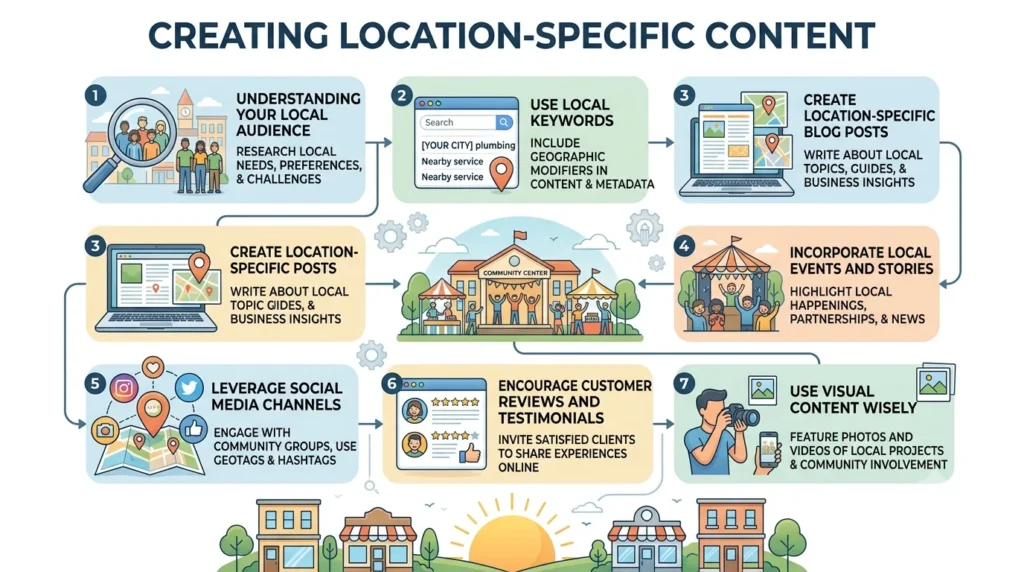
Understanding Your Local Audience
The first step in creating compelling content is understanding your local audience. What are their unique needs? What challenges do they face? Conducting research through surveys, social media interaction, and local forums can offer valuable insights. Knowing what matters to your audience allows you to tailor your content to address their specific concerns.
Use Local Keywords
Incorporate local keywords into your content is essential for optimizing your site for search engines. These keywords should reflect the services you offer, along with geographical modifiers. For example, instead of just using “plumber,” consider “emergency plumber in [Your City].” This specificity helps your content rank better for local search queries.
- Benefit 1: Improves your site’s visibility on search engines.
- Benefit 2: Increases traffic to your site from local customers.
- Benefit 3: Enhances credibility as a local expert.
Create Location-Specific Blog Posts
Your blog can serve as a powerful tool for drawing in local customers. Craft blog posts that revolve around local events, news, or partnerships. For instance, if you run a landscaping service, you might create content around “Best Plants for [Your City’s] Climate.” This not only provides valuable information but also places you as a local authority in your field. Consider collaborating with local organizations or businesses for guest blog opportunities, which can expose your services to a broader audience.
Incorporate Local Events and Stories
Sharing stories about local events or community stories adds a personal touch to your content. These narratives can enhance your brand’s relatability and encourage community involvement. Use your platform to highlight local success stories, partnerships, or sponsoring athletic teams. This content resonates more with local customers, allowing them to feel a connection to your business.
Leverage Social Media Channels
Social media is a goldmine for connecting with local customers. Platforms like Facebook and Instagram allow you to share location-specific content easily. You can create posts about local promotions, events, and community contributions. Engage with local hashtags to broaden your reach, like #ShopLocal[YourCity] or #CommunityCares[YourCity]. This makes your business a part of local conversations and builds a loyal following.
Encourage Customer Reviews and Testimonials
Positive customer reviews significantly impact how potential customers perceive your business. Encourage satisfied clients to leave feedback on platforms like Google My Business or Yelp. You can create a special section on your website to showcase these testimonials. When potential customers see that others in their community trust your services, they are more likely to choose you.
Use Visual Content Wisely
Visual content such as photos or videos can be highly effective in attracting local customers. Share images of your completed projects, or even create a virtual tour of your business. Additionally, consider making videos that highlight community involvement or local events. Make sure to include alt tags with local keywords to assist with SEO. Potential customers are more likely to engage with visual content that reflects their community.
Creating location-specific content is essential for service businesses aiming to connect with local customers. Tailoring your content strategy to cater specifically to your local audience enhances your visibility, fosters community relationships, and ultimately drives growth. For more information on local SEO strategies, visit Moz or Search Engine Journal.
| Strategy | Description | Benefits |
|---|---|---|
| Local Keywords | Integrating geographic terms with your services. | Improved search rankings and visibility. |
| Blog Posts | Creating content related to local events or interests. | Establishes authority and engages readers. |
| Social Media | Sharing location-focused content on platforms. | Enhanced community engagement and brand awareness. |
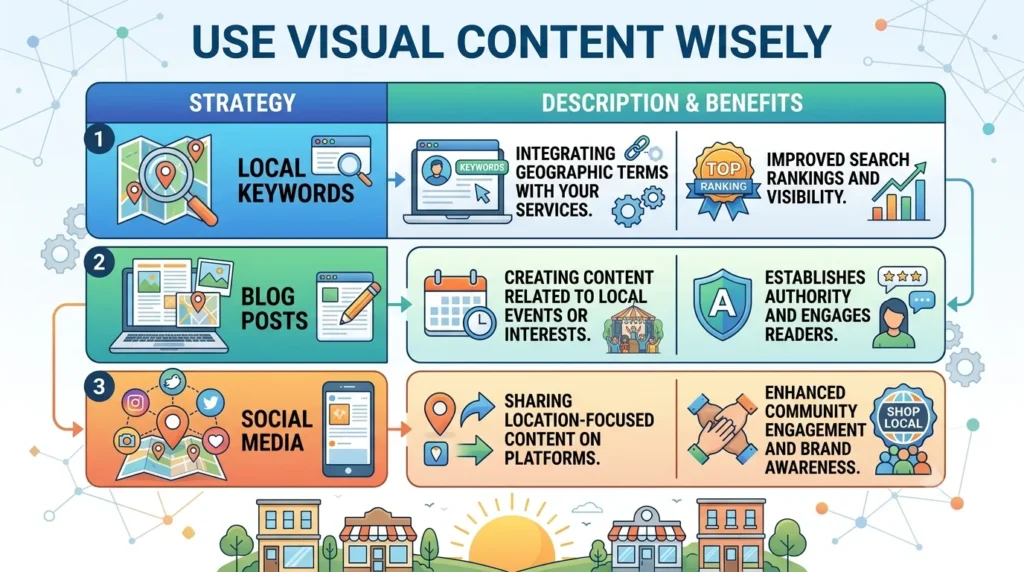
Implementing these strategies can lead to effective engagement with local customers, ensuring your service business thrives in your community.
Conclusion
Implementing effective Local SEO Techniques for Service Businesses is essential for service businesses looking to stand out in their communities. The power of Google My Business can’t be underestimated; it serves as a vital platform for enhancing your local visibility, allowing potential customers to find your business easily. Make sure your profile is complete and regularly updated with accurate information, engaging images, and posts about your services or special offers.
Online reviews are another cornerstone of local SEO. Positive reviews not only improve your search engine rankings but also establish trust among potential clients. Encourage satisfied customers to share their experiences online, as this can significantly influence your local reputation.
Mobile optimization is equally crucial in today’s tech-driven world. With many users searching for services on their smartphones, a mobile-friendly website ensures a seamless experience. Focus on fast loading times, easy navigation, and compelling calls to action to enhance user engagement.
Creating location-specific content allows you to connect with local customers on a more personal level. Write blog posts or guides that reflect the needs and interests of your community, incorporating local keywords and cultural references. This strategy not only boosts your SEO but also positions your brand as an authority in the area.
By weaving together these Local SEO Techniques for Service Businesses, service businesses can dramatically increase their online presence, attract the right customers, and ultimately drive more revenue. Every step taken towards optimizing local visibility brings you closer to fostering lasting relationships within your community.