
How to write a “Review Roundup” for multiple affiliate offers?

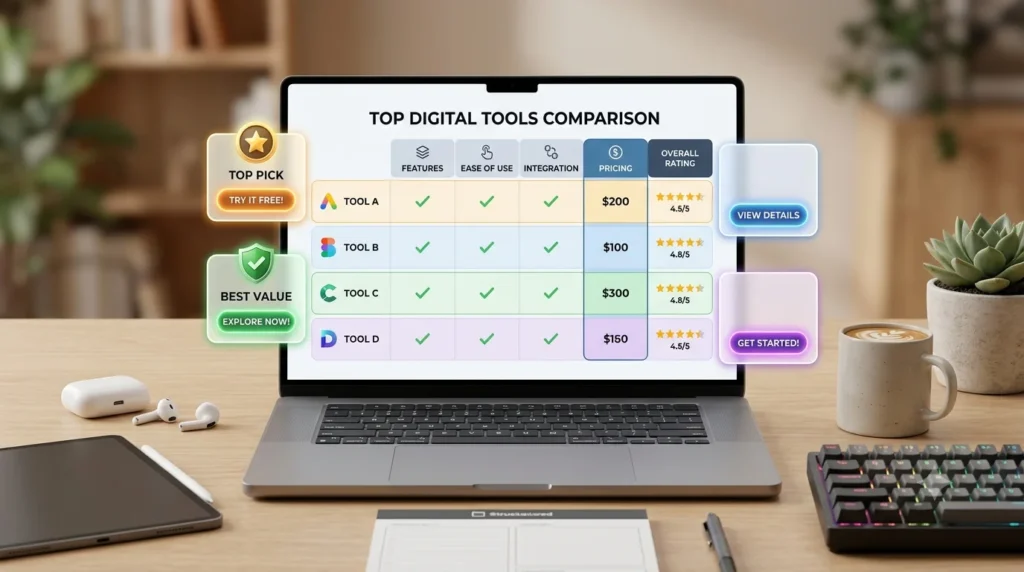
ATTENTION: Want to Learn Affiliate Marketing from Successful Affiliates?
Buyer intent and decision fatigue
The answer lies in buyer intent and decision fatigue. Modern consumers rarely jump on the first product they encounter online. They want perspective, options, and a clear benchmark. When a visitor lands on a single product review, they are exposed to only one perspective on a single solution. If that tool does not precisely match their budget, technical workflow, or personal preferences, the session ends abruptly. That is precisely why the strategic Review Roundup serves as the ultimate cornerstone of modern high-converting affiliate sites.
Masterfully written Review Roundup
A masterfully written Review Roundup transforms your website from a simple product catalog into an authoritative, curated destination. Instead of forcing readers to open twenty browser tabs to compare feature matrices, pricing tiers, and real-world trade-offs, you present a comprehensive, well-structured comparison right in front of them. You strip away endless search frustration, replace confusion with clarity, and position yourself as the ultimate trusted advisor. Most importantly, instead of relying on a single offer to generate revenue, you build a diversified portfolio within a single piece of content. When written with sharp copywriting principles, a single Review Roundup can become a long-term, high-converting revenue driver on your digital property.
High level of conversion performance
Achieving this level of conversion performance requires far more than copying marketing bullets from sales pages and dropping generic links into a bulleted list. It demands an understanding of consumer psychology, meticulous page architecture, high-converting CTA placement, and empathetic storytelling. In this comprehensive guide, we will break down the exact strategies, structural frameworks, and copywriting techniques required to write multi-offer affiliate posts that inform, persuade, and consistently convert.
The Psychological Machinery Behind High-Converting Roundups
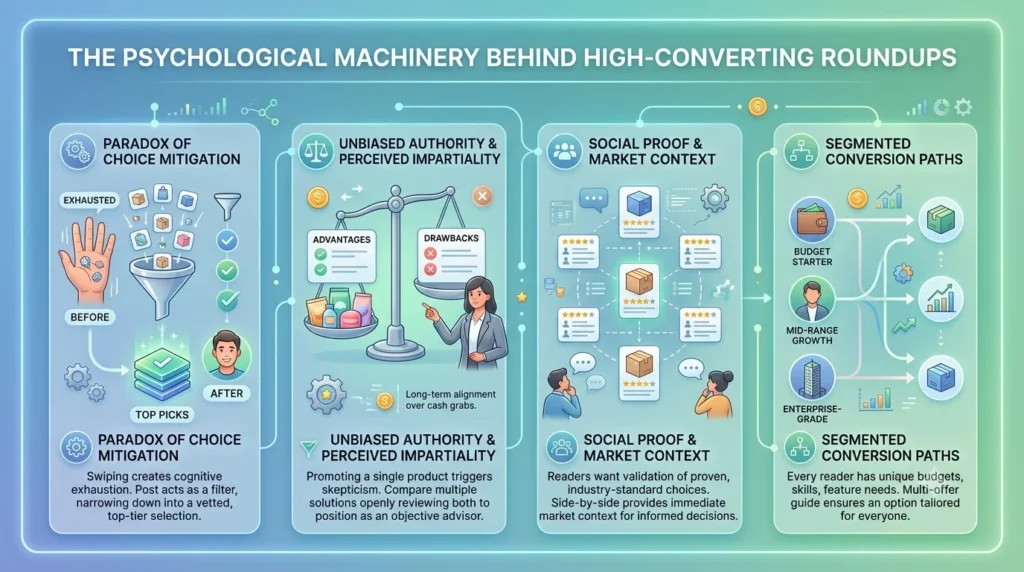
To write high-converting copy, you must first master the underlying psychology of your readers. Consumers navigating online shopping environments undergo distinct cognitive stages before making a purchasing decision. Recognizing where a reader sits along this intent continuum allows you to tailor your tone, layout, and calls to action for maximum persuasive impact.
When a reader searches for a curated collection or comparison guide, they are operating with high commercial intent, yet they feel overwhelmed by choice overload. Presenting too many unorganized options without a clear decision framework causes analysis paralysis, leading users to abandon the site without taking action. A well-designed Review Roundup systematically alleviates this friction by leveraging key psychological triggers:
- Paradox of Choice Mitigation: Swiping through hundreds of SaaS options or e-commerce products creates cognitive exhaustion. Your post acts as a filter, narrowing down the chaotic market into a carefully vetted, top-tier selection.
- Unbiased Authority and Perceived Impartiality: Promoting a single product often triggers consumer skepticism. By comparing multiple solutions—and openly reviewing both advantages and drawbacks—you position yourself as an objective advisor rather than a biased salesperson. Participating in reputable Sustainable Affiliate Programs reinforces this trust by ensuring long-term product alignment over short-term cash grabs.
- Social Proof and Market Context: Readers want validation that they are choosing a proven, industry-standard solution. Placing items side-by-side provides immediate market context, reassuring users that they are making an informed decision.
- Segmented Conversion Paths: Every reader brings a unique set of constraints, including varying budgets, skill levels, and feature needs. A multi-offer guide ensures that regardless of whether a user is looking for a budget starter option or an enterprise-grade platform, there is an option tailored to them.
By shifting your core focus from pitching a specific product to guiding the reader’s decision-making process, you transform the tone of your content. You move from chasing sales to facilitating confident purchases through your structured affiliate links.
Architecting the Page Layout for Maximum Visual Scannability
In online publishing, structure directly dictates readability, and readability drives conversion rates. If a user lands on your article and encounters dense, unbroken blocks of text, they will leave within seconds. Top-tier copywriters design layouts tailored specifically for fast visual scanning, rapid feature comparison, and frictionless navigation.
To keep readers engaged throughout long-form content, map out your overall page architecture using a proven structure:
- Immediate Above-the-Fold Value: Grab attention instantly with a strong headline, an empathetic introduction, and an immediate visual summary of your top picks.
- Testing and Selection Methodology: Briefly outline your evaluation process to build instant authority and explain how products earned their place on your list.
- The Comparative Matrix Table: Include a clean, structured table that lets analytical readers contrast key specs, pricing models, and ratings at a glance.
- Standardized Deep-Dive Mini-Reviews: Provide uniform review blocks for each product, complete with target user labels, core benefits, authentic trade-offs, and clear CTA buttons.
- Comprehensive Buyer’s Guide: Offer tailored advice that walks readers through exact selection criteria based on their unique scenario.
- Definitive Final Verdict: Wrap up with clear summary recommendations that remove lingering hesitation and give readers a confident path forward.
Optimizing Above-the-Fold Engagement: Capturing Instant Intent
The top section of your page determines whether a visitor stays to read your guide or bounces back to search engine results. Modern internet users want immediate answers. If you force them to scroll through thousands of words of introductory fluff before revealing your top recommendations, you lose high-intent traffic.
Hook your reader immediately within the first two paragraphs by acknowledging their primary frustration, stating the purpose of the guide, and introducing an executive summary block. This summary acts as an immediate decision tool for fast buyers, categorizing options into clear, distinct archetypes:
- The Overall Top Pick: The most balanced, high-performing solution suitable for the majority of users.
- The Best Value Option: The most budget-friendly choice that delivers essential features without unnecessary markup.
- The Premium/Enterprise Pick: The feature-packed solution designed for advanced users, growing teams, or complex workflows.
Providing immediate visual clarity right at the top of the page satisfies fast decision-makers while giving analytical readers a strong incentive to scroll down for deeper insights.
Curating the Ideal Mix of Affiliate Offers
A common mistake in writing a Review Roundup is stuffing the post with dozens of irrelevant offers just to maximize tracking links. Quantity without strategy dilutes page authority, degrades user experience, and damages long-term reader trust.
Curating your list requires selective filtering. Focus on partner merchants within established Sustainable Affiliate Programs that offer reliable tracking, high conversion rates, and recurring commission structures. Aligning with stable programs ensures your content remains a reliable revenue-generating asset for years to come.
Aim for a curated lineup of 5 to 9 distinct products. Fewer than five can make your roundups feel incomplete, while more than nine overwhelms the reader. Ensure that every single featured item serves a distinct user persona. If two products share identical pricing, feature sets, and target audiences, drop the weaker option and focus on the clear winner.
Crafting High-Converting Product Mini-Reviews
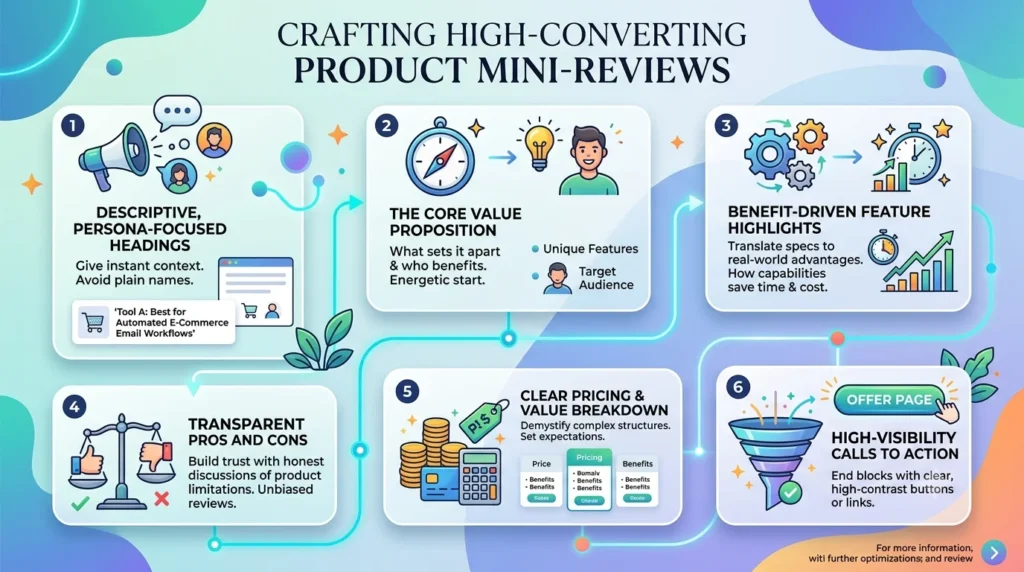
The core of your guide consists of individual product breakdowns. To maintain high energy and smooth readability across thousands of words, establish a standardized template for every mini-review inside your Review Roundup.
Each review section should flow logically without feeling mechanical or repetitive:
- Descriptive, Persona-Focused Headings: Avoid plain product names in your subheadings. Use descriptive titles like “Tool A: Best for Automated E-Commerce Email Workflows” to give instant context.
- The Core Value Proposition: Open with two or three energetic sentences detailing what sets the product apart and who benefits most from using it.
- Benefit-Driven Feature Highlights: Translate technical specifications into real-world advantages. Instead of listing raw specs, explain how those capabilities save time, reduce costs, or eliminate daily headaches.
- Transparent Pros and Cons: Earn credibility by openly discussing product limitations. Unbiased reviews that highlight drawbacks build authentic trust with readers.
- Clear Pricing and Value Breakdown: Demystify complex pricing structures so users know exactly what to expect before clicking through to the merchant site.
- High-Visibility Calls to Action: End every review block with a clear, high-contrast CTA button or anchor link driving visitors to the offer page.
Writing Powerful, Low-Friction Calls to Action
Even the most persuasive copy will fail to convert if your calls to action are vague or passive. The phrasing, styling, and placement of your links play a massive role in driving click-through rates.
Replace generic button copy like “Click Here” or “Buy Now” with action-oriented, value-driven text that sets clear expectations:
- “Check Today’s Promotional Pricing on Tool A” – Capitalizes on price sensitivity and curiosity.
- “Explore Custom Features for Tool B” – Works well for complex, high-ticket solutions that require further research.
- “Claim Your 14-Day Free Trial” – Lowers commitment anxiety for SaaS platforms and software apps.
- “See Why Tool C Ranked #1 Overall” – Re-engages analytical readers looking for solid proof before deciding.
Spread your affiliate links across multiple touchpoints in each review block, including descriptive contextual text links, clickable product image graphics, and high-visibility CTA buttons.
Building the Comparative Matrix: The Ultimate Conversion Tool
A structured side-by-side comparison table is often the single most clicked element in a multi-offer guide. It condenses complex feature sets, pricing models, and ratings into an easily scannable format, allowing readers to weigh their choices instantly.
To maximize readability across all devices, present your table with visible borders and full 100% width formatting:
| Product Name | Target Persona | Core Advantage | Entry Pricing | Overall Score | Direct Link |
|---|---|---|---|---|---|
| Platform Alpha | Growing Marketing Teams | Advanced Multi-Channel Automation | $29 / month | 4.9 / 5.0 | View Deals |
| Platform Beta | Solo Creators & Beginners | Intuitive Drag-and-Drop Interface | Free Plan Available | 4.7 / 5.0 | View Deals |
| Platform Gamma | Enterprise Brands | Dedicated Security & Infrastructure | Custom Quote | 4.8 / 5.0 | View Deals |
| Platform Delta | Agencies & Consultants | White-Label Workspaces | $79 / month | 4.6 / 5.0 | View Deals |
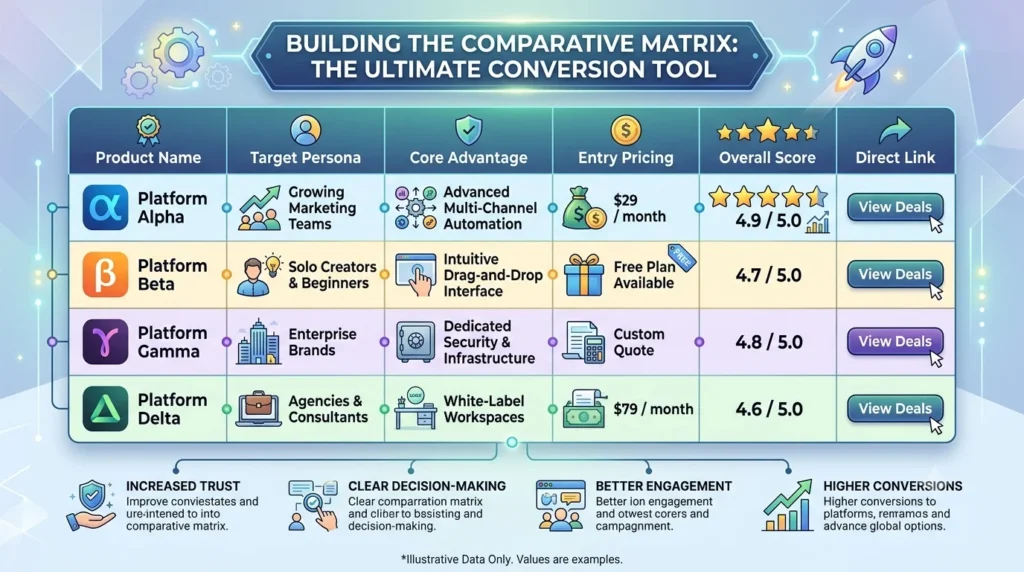
Using clear, organized layout elements allows users to compare features, select their preferred option, and click through your referral tracking links without friction.
SEO Optimization for Multi-Offer Review Roundups
Creating high-quality content is only half the battle. If search engines cannot discover, index, and rank your post, your affiliate revenue potential remains unrealized. Strategic search engine optimization for a Review Roundup requires balancing high commercial intent keywords with comprehensive topical authority.
Focus on capturing long-tail search queries that signal active purchase readiness:
- “Best [Product Category] for [Specific Target Persona]”: Reaches users looking for tailored recommendations built for their industry or skill level.
- “[Product A] vs [Product B] vs [Product C] Comparison”: Targets readers actively weighing two or three specific alternatives.
- “Top Rated [Category] Platforms with [Key Feature]”: Attracts high-intent buyers seeking specific capabilities within a tool set.
Integrate primary target keywords naturally into main page titles, subheadings, meta descriptions, image alternative text, and internal links. Avoid forced keyword stuffing. Modern search engines prioritize naturally written, thorough content that thoroughly answers user queries over artificial keyword counts.
In addition, strengthen page authority by building internal contextual links between your central roundup hub and individual product deep dives on your site. Interlinking your main comparison guide with dedicated standalone reviews creates a topical hub structure that search crawlers reward with higher search visibility.
Writing Comprehensive Buyer’s Guides
Below your product reviews and comparison tables, include a thorough buyer’s guide section. This part of the article serves two vital purposes: it reinforces search engine authority by thoroughly covering related topics, and it offers direct decision support for analytical readers who need extra guidance before buying.
Your buyer’s guide should clearly answer common questions and address key evaluation factors:
- Key Features to Evaluate: Break down critical functionalities readers must check before committing to a paid plan.
- Understanding Pricing Models: Clarify differences between flat rates, user-based pricing tiers, usage limits, and hidden upgrade costs.
- Common Deployment Pitfalls: Highlight typical onboarding mistakes users make when adopting new tools and explain how to avoid them.
- System Compatibility and Integration: Guide readers on verifying that their chosen software integrates seamlessly into their existing technical ecosystem.
Educating readers on how to make an informed choice helps build lasting trust, turning single-time visitors into loyal audience members who return for future purchasing advice.
Maintaining Freshness and Long-Term Affiliate Revenue
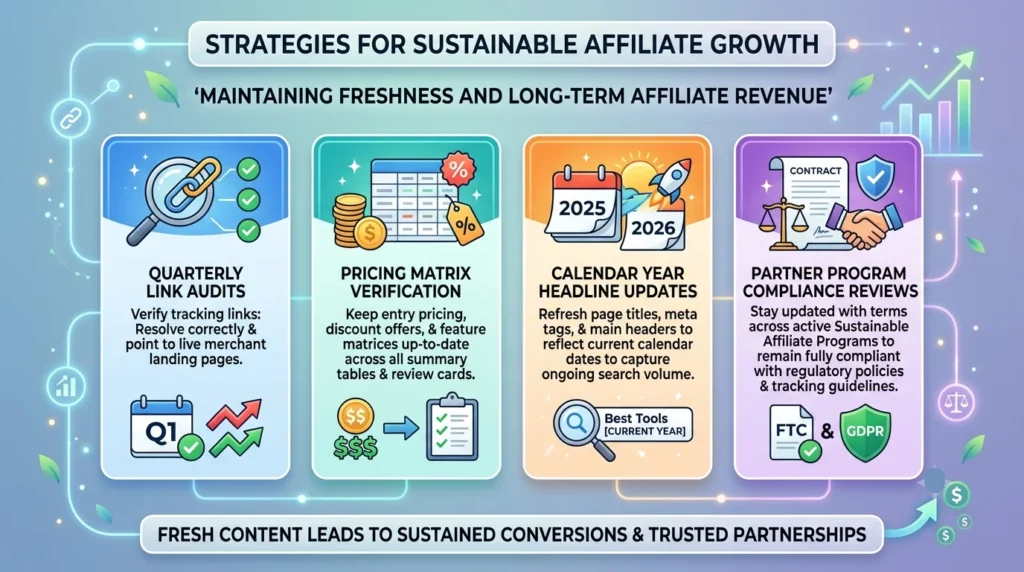
An elite Review Roundup is never truly finished. Tech platforms evolve quickly, software features change, pricing structures adjust, and new competitors enter the market continuously. Allowing your review content to go stale leads to declining rankings, broken affiliate links, higher bounce rates, and lost commission payouts.
Implement a routine content refresh schedule to keep your posts optimized and performant:
- Quarterly Link Audits: Check all tracking links to verify they resolve correctly and point to live merchant landing pages.
- Pricing Matrix Verification: Keep entry pricing, discount offers, and feature matrices up to date across all summary tables and review cards.
- Calendar Year Headline Updates: Refresh page titles, meta tags, and main headers to reflect current calendar dates (e.g., updating “Best Tools for 2025” to current timelines) to capture ongoing search volume.
- Partner Program Compliance Reviews: Stay up to date with terms across active Sustainable Affiliate Programs to remain fully compliant with regulatory policies and tracking guidelines.
Elevating Your Tone for Persuasive Copywriting
What sets a world-class copywriter apart from an average writer is tone, rhythm, and empathetic messaging. Stiff, overly formal product breakdowns bore readers and suppress click-through rates. Your writing style should be vibrant, confident, grounded, and focused on real-world practical use.
Use active voice, conversational phrasing, and relatable analogies throughout your content. Speak directly to your reader using second-person perspective (“you” and “your”). Empathize with their daily operational challenges, paint a clear picture of how much easier their workflow becomes with the right tool, and guide them effortlessly toward making a confident purchasing decision.
When you combine clear user-focused value, honest recommendations, and structured layout formatting across every Review Roundup you craft, you build high-performing digital content assets that generate sustainable affiliate revenue over the long term.
Essential Resources for Content Strategists and Affiliate Marketers
To continue mastering long-form affiliate copywriting, SEO strategy, and conversion rate optimization, refer to these industry resources:
- Authority Hacker – Advanced Content Blueprint and Affiliate Strategy
- Copyblogger – High-Converting Digital Copywriting Tactics
- Search Engine Journal – Modern SEO Guidelines for Review Publishers
- Moz Blog – In-Depth SEO Strategy and Keyword Optimization Guides
- CNET – Industry Benchmark Examples for Product Comparison Architecture