
How To Optimize Service Pages for SEO

ATTENTION: Want to Learn Affiliate Marketing from Successful Affiliates?
Optimizing your service pages for SEO is essential if you want to attract more customers. When potential clients search for services you offer, your page should rank high in search results. Here’s how you can effectively enhance your service pages for better SEO performance.
Understand Your Audience
Before optimizing your service pages, it’s crucial to understand your audience. Ask yourself:
- What are their needs and pain points?
- What questions do they frequently ask about your services?
- What keywords do they use when searching for services like yours?
By answering these questions, you can tailor your content to directly address the needs and desires of your target audience. Tools like Ahrefs can help you identify relevant keywords.
Use Relevant Keywords Strategically
Keywords are the backbone of SEO. Incorporate them thoughtfully into your service pages. Here’s where to place them:
- Page Title: Make sure your main keyword is included in the title tag, as this is vital for SEO.
- Headings: Use relevant keywords in H3 and H4 headings to provide clarity and access to information.
- Body Content: Naturally incorporate keywords into your text, but avoid keyword stuffing.
- Meta Description: Write a compelling meta description that includes the target keyword, as this text appears in search results.
- Image Alt Tags: Use keywords in alt text for images to help with image search optimization.
Create High-Quality, Engaging Content
Content is king when it comes to SEO. Ensure your service pages provide valuable information. Here’s how:
- Answer common questions your customers may have.
- Explain the benefits of your services clearly.
- Use case studies or testimonials to build trust.
- Break content into smaller sections for better readability.
For example, if you provide cleaning services, include specifics on the types of properties you service, the cleaning methods you use, and unique offers.
Enhance User Experience (UX)
An optimized service page should create a positive user experience. Consider these elements:
- Loading Time: Ensure your page loads quickly to reduce bounce rates. Tools like Google PageSpeed Insights can help.
- Mobile-Friendliness: Make sure your pages are mobile-responsive, as more users are browsing via their smartphones.
- Clear Navigation: Ensure users can easily find information. A simple layout helps guide them toward taking action.
Implement Local SEO
If your services are location-based, leverage local SEO strategies. Here are key elements to consider:
- Google My Business: Claim and optimize your Google My Business listing.
- Local Keywords: Include local keywords in your content, such as the city or neighborhood you serve.
- Local Listings: Ensure your business is listed on local directories and review sites.
Review Analytics Regularly
It’s vital to monitor the performance of your service pages. Use Google Analytics to track metrics such as traffic sources, bounce rate, and average time on page. Adjust your strategy based on what the data tells you. If certain keywords are underperforming, consider revising your content.
| Metric | What to Analyze |
|---|---|
| Traffic Sources | Identify where your visitors are coming from. Focus on high-performing channels. |
| Bounce Rate | Check if users are leaving the page quickly. Improve content or UX if necessary. |
| Average Time on Page | Longer times suggest good content. Short times may indicate a need for improvement. |
By applying these strategies To Optimize Service Pages for SEO, you can effectively increase your visibility online, engage your audience, and ultimately drive more traffic to your site. Don’t forget that SEO is an ongoing process, so stay informed and adapt your strategies as needed.
Key Elements to Include in Your Service Page Copy
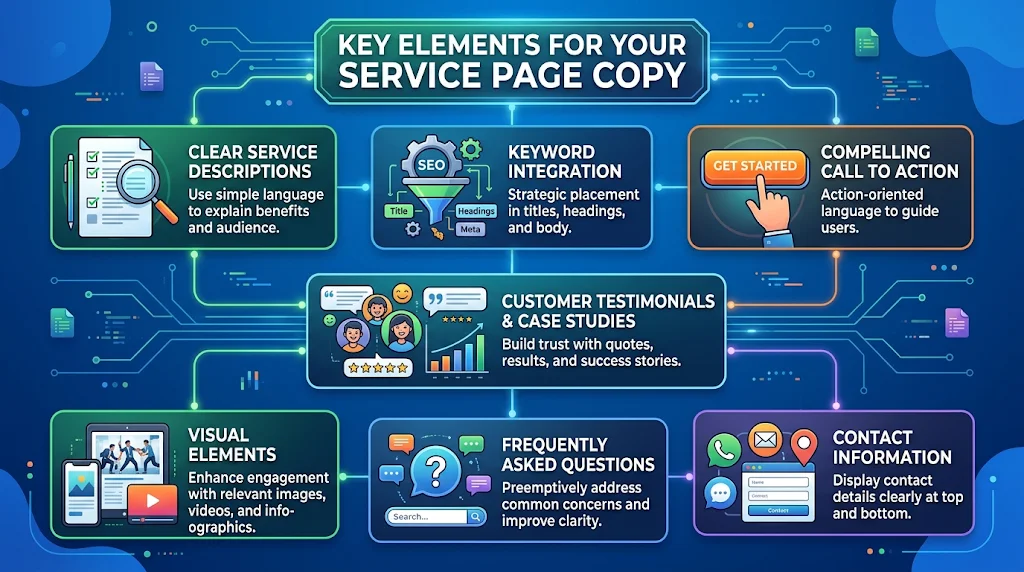
Creating service pages that effectively communicate your offerings is crucial for converting visitors into customers. Here are essential elements you should include in your service page copy to help optimize for both user experience and search engines.
Clear Service Descriptions
At the core of your service page, you need a clear and concise description of what you offer. This should answer the questions your customers have, including:
- What services do you provide?
- What are the benefits of choosing your services?
- Who is the intended audience for these services?
By addressing these points, you enhance the readability of your content, making it more inviting for potential clients.
Keyword Integration
Keyword optimization is vital. Conduct keyword research to identify terms your target audience uses when searching for your services. Include these keywords naturally within your copy. However, avoid keyword stuffing, as it can lead to a poor user experience and may negatively impact your SEO.
A few places to integrate your keywords include:
- Headings and subheadings
- First 100 words of your text
- Meta descriptions
For tools to assist in keyword research, consider websites like Moz or Ahrefs.
Compelling Call to Action
Your service page should include clear calls to action (CTAs) that guide the user towards the next steps. Whether it’s prompting them to schedule a consultation, request a quote, or sign up for a newsletter, strong CTAs are essential. Use action-oriented language like:
- “Get Started Today”
- “Contact Us Now”
- “Book Your Free Consultation”
Position these at the top and bottom of your service page to maximize visibility. For more insights, check out Neil Patel’s insights on CTAs.
Customer Testimonials and Case Studies
Social proof plays a significant role in building trust. Include testimonials from satisfied customers or case studies that showcase successful outcomes. This not only enhances credibility but also provides relatable proof of how your services can help potential clients.
Try to highlight various aspects by including:
- Quotes from happy customers
- Before and after scenarios
- Statistics that reflect improvement
For more tips on using testimonials effectively, visit WordStream.
Visual Elements
Words alone can’t convey everything. Use visuals like images, infographics, and videos to explain your services better. This could involve:
- Infographics summarizing service benefits
- Videos that walk through the service process
- Images of your team in action
Visuals not only attract attention but also convey messages that words sometimes can’t. Ensure that all visuals have appropriate alt text to aid SEO.
Frequently Asked Questions
A FAQ section can provide quick answers to common questions, improving user experience and keeping visitors engaged. Consider including:
- Common concerns about your service
- Doubtful scenarios your service addresses
This helps preemptively alleviate concerns, making it easier for users to consider your services. You can read more about effective FAQ sections at UX Design.
Contact Information
Make it easy for potential clients to reach you. Clearly display your contact information, which can include:
- Phone number
- Email address
- Contact form
Ensure that these details are visible at the top and bottom of your page.
By implementing these key elements in your service page copy, you can improve user engagement and optimize for search engines effectively. Always remember, your goal is to create value for your readers while ensuring visibility online.
The Role of User Experience in SEO for Service Pages
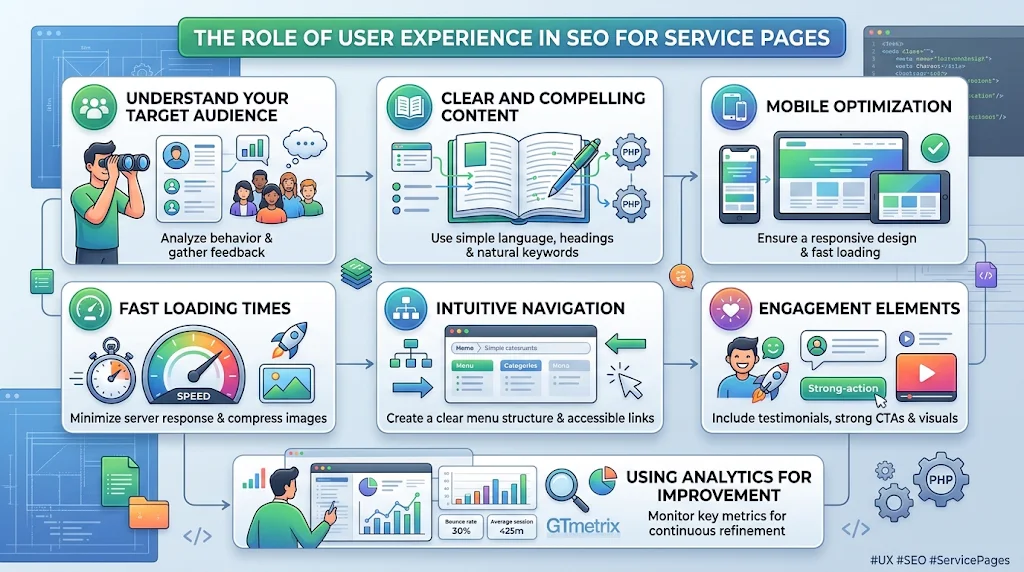
Creating effective service pages isn’t just about listing services; it’s also about ensuring a positive user experience (UX). Good UX is vital for SEO because it directly influences how users interact with your site. When users feel satisfied, they stay longer, reducing bounce rates and boosting rankings on search engines like Google. Here’s how you can optimize service pages with user experience in mind.
Understand Your Target Audience
To create a user-friendly service page, you need to know who your target audience is. What are their needs? What problems do they face? By understanding these aspects, you can craft content that directly addresses their concerns. Here are some tips to help you:
- Conduct surveys to gather feedback about what users want to know.
- Analyze behavior using tools like Google Analytics to see which pages perform well.
- Create user personas to visualize your audience and tailor your content accordingly.
Clear and Compelling Content
Once you understand your audience, the next step is to create content that genuinely captures their attention. Clear, compelling content is crucial because it affects both user engagement and SEO. Follow these tips to enhance content quality:
- Use simple language and short sentences to improve readability.
- Include headings and bullet points for better scanning and understanding.
- Incorporate relevant keywords naturally throughout your text. This strengthens SEO.
Mobile Optimization
Nowadays, many users browse on mobile devices. If your service page isn’t mobile-friendly, you risk losing potential customers. To optimize for mobile, ensure:
- Your site has a responsive design that adjusts to various screen sizes.
- Buttons and links are easy to click on mobile devices.
- The page loads quickly to avoid losing impatient users.
Fast Loading Times
Page speed significantly impacts user experience. If your service pages take too long to load, users will likely abandon them. Here are some strategies to improve load times:
- Optimize images by compressing them without losing quality.
- Minimize HTTP requests by combining files where possible.
- Use browser caching to help your site load faster on repeat visits.
Intuitive Navigation
User experience is also fundamentally tied to how easily users can navigate your site. Effective navigation helps users find what they need without frustration. Consider these navigation strategies:
- Implement a clear menu structure, categorizing services logically.
- Use breadcrumbs to help users keep track of their location on the site.
- Ensure that important links are easily accessible from the main page.
Engagement Elements
Various engagement elements can significantly enhance the user experience and encourage visitors to spend more time on your service pages. You might include:
- Customer testimonials or case studies to build trust.
- Call-to-action (CTA) buttons that guide users on what to do next.
- Visual aids like images and videos to make content more appealing.
Using Analytics for Improvement
The user experience is not a one-time effort; it requires ongoing analysis. Tools like Google Analytics can provide valuable insights into how users interact with your service pages. Monitor metrics such as:
- Bounce rates to see how many users leave without engaging.
- Average session duration to measure how long users stay on the page.
- Conversion rates to evaluate how many visitors take desired actions.
With this analytical approach, you can continuously refine and enhance your service pages to meet user expectations effectively.
How Local SEO Can Transform Your Service Page Visibility
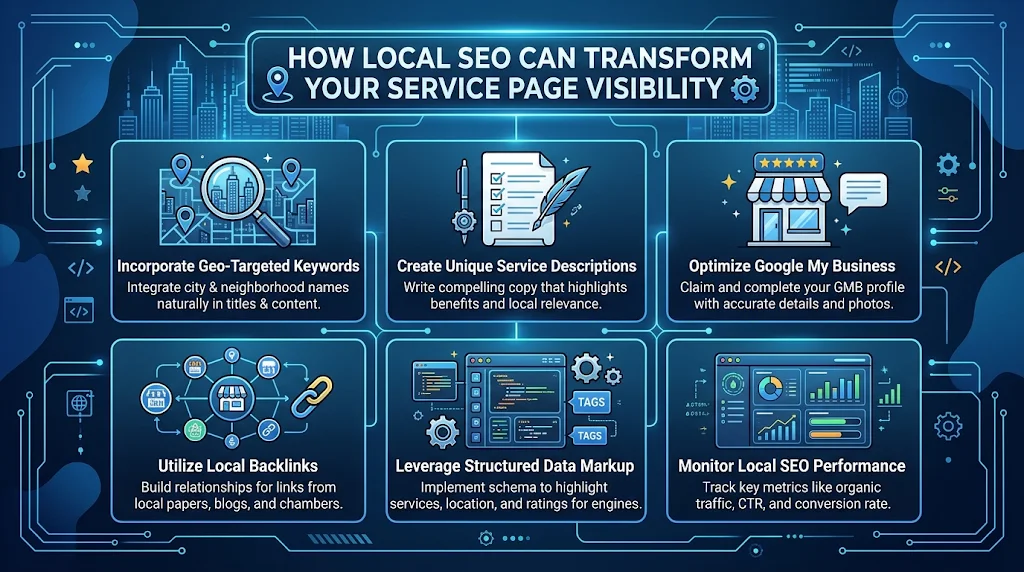
When you think about boosting your online presence, especially for service-based businesses, local SEO plays a star role. It’s a game-changer, enhancing how potential customers discover your service pages. You want to connect with local clients who are on the lookout for your services, and that’s exactly where local SEO shines.
Focusing on local SEO strategies can help you appear in targeted geographic searches. This means when someone nearby types in a query related to your service, your page could potentially show up first. Let’s delve into some impactful strategies that can elevate your service page visibility.
Incorporate Geo-Targeted Keywords
Using specific keywords is critical. Geo-targeted keywords include location-based phrases like “plumbing services in [City Name]” or “best hair salon in [Neighborhood].” Here’s how to effectively implement them:
- Identify high-traffic keywords that are relevant to the services you offer.
- Incorporate these keywords naturally into your service page content, headers, and meta descriptions.
- Utilize tools like Moz or Ahrefs to analyze what keywords are gaining traction in your area.
Create Unique Service Descriptions
Your service descriptions should not only inform but also engage your audience. Avoid generic language; define what makes your services unique. Consider these tips:
- Write clear and compelling copy that highlights the benefits of your services.
- Include customer testimonials or case studies to create trust.
- Employ a conversational tone that resonates with your local audience.
Optimize Google My Business
Your Google My Business (GMB) profile serves as a robust tool for local visibility. Ensure you:
- Complete your GMB profile with accurate business info, including name, address, phone number, and hours.
- Add high-quality photos showcasing your services, staff, and location.
- Encourage happy customers to leave positive reviews to enhance credibility.
Don’t forget to regularly update your GMB profile with posts about promotions, events, or new services. Consistency is key to keeping your audience engaged.
Utilize Local Backlinks
Building backlinks from local websites can significantly increase your authority. Consider reaching out to:
- Local newspapers or blogs interested in featuring your business.
- Local chambers of commerce and industry organizations.
- Sponsored events or local charities to gain exposure.
By building strong relationships within your community, you not only improve your backlinks but also create word-of-mouth referrals that can lead to business growth.
Leverage Structured Data Markup
Structured data markup can help search engines understand your website better. By implementing schema markup, you highlight important information about your business, such as services offered, location, and customer ratings.
This advanced technique can enhance your visibility in search results, allowing potential customers to easily find relevant information without having to dig through multiple pages.
Monitor Local SEO Performance
Regularly checking your local SEO performance enables you to track your progress and make necessary adjustments. Tools like Google Analytics and Google Search Console can offer insights into your service page performance.
| Metric | Description |
|---|---|
| Organic Traffic | Number of visitors coming from search engines. |
| Click-Through Rate (CTR) | Percentage of users who click on your service page from search results. |
| Conversion Rate | Percentage of visitors who take desired actions, like calling or booking services. |
Utilizing this data can lead to informed decisions regarding your SEO strategy, driving you closer to a stronger local presence.
By embracing local SEO tactics, your service pages can gain significant traction. Take the time to optimize your content, engage with your local audience, and watch your visibility transform in remarkable ways. For more information on local SEO strategies, check out sites like Search Engine Journal or LocalU.
Analyzing Competitor Service Pages: Lessons to Learn for SEO Success
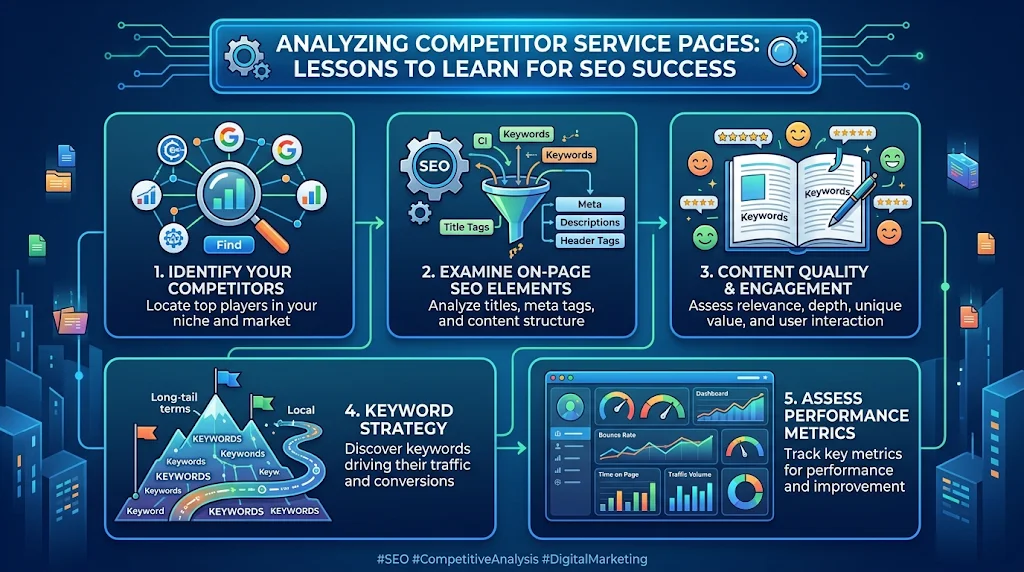
Analyzing your competitors’ service pages can provide you with valuable insights for enhancing your own SEO strategy. By examining their strengths and weaknesses, you can identify gaps in your services or content that could improve your visibility on search engines and draw more visitors to your site. Here’s how you can approach this analysis effectively.
Identify Your Competitors
Start by identifying the key competitors within your niche. Look for businesses that occupy similar market space and offer comparable services. Tools like SEMrush and Moz can help you find both direct and indirect competitors. Create a list of these competitors for a focused analysis.
Examine On-Page SEO Elements
Once you have your competitors identified, take a closer look at their service pages. Focus on critical on-page SEO elements, such as:
- Title Tags: Check the keywords they use in their title tags. Are they optimizing for specific phrases related to their services?
- Meta Descriptions: Look at their meta descriptions to see how they entice users to click. Are they clear and engaging?
- Header Tags: Analyze their use of header tags (H3, H4, etc.) to organize content effectively. This helps search engines understand the structure of the page.
- Keyword Density: Observe how frequently relevant keywords are used. Are they integrated naturally into the content?
- Image Alt Text: Check if they are using appropriate alt text for images. This not only helps with SEO but also improves accessibility.
Content Quality and Engagement
Content is king in the world of SEO. Higher-quality content attracts more visitors and keeps them on your page longer. Evaluate your competitors’ service pages by considering:
- Unique Value Proposition: What makes their services stand out? How do they communicate this to their audience?
- Length and Depth of Content: Are their pages lengthy and informative, providing all necessary details about their services? Additionally, longer content often ranks better in search engines.
- User Engagement: Look for signs of user engagement, like comments, testimonials, or media (videos, images) that can enhance their content. Are they using calls to action (CTAs) effectively?
Keyword Strategy
Understanding the keywords that drive traffic to your competitors can help refine your own strategies. Use tools like Ahrefs to uncover which keywords your competitors rank for. Here are some tips to develop your keyword strategy based on their performance:
- Long-Tail Keywords: Pay attention to long-tail keywords that might have lower competition but can lead to high conversions.
- Local Keywords: If your business has a physical presence, check if competitors target local keywords effectively.
- Trending Keywords: Identify any emerging trends that your competitors may be capitalizing on.
Assess Performance Metrics
To ensure your service pages rank well, it’s important to analyze the performance metrics of your competitors. Make use of analytics tools like Google Analytics and Screaming Frog. Here are some key metrics to consider:
| Metric | Description |
|---|---|
| Traffic Volume | How many visitors are landing on their service page? |
| Bounce Rate | What percentage of visitors leave the page without interaction? |
| Average Time on Page | How long do visitors stay on their service page? |
| Conversion Rate | How many visitors complete a desired action (like signing up) after visiting? |
By understanding these performance metrics, you can gauge the effectiveness of your competitors’ pages and adapt your strategy accordingly.
Conclusion
Optimizing service pages for SEO is not just about keyword placement; it’s about creating a meaningful connection with your audience. By implementing effective strategies, like incorporating tailored keywords and engaging content, you enhance the relevance of your service pages. Remember that the key elements—informative headers, clear descriptions, and compelling calls to action—play a significant role in guiding potential customers through their decision-making process.
User experience is a crucial factor in maintaining high search engine rankings. Ensuring that your service pages are visually appealing, easy to navigate, and mobile-friendly will keep visitors engaged and reduce bounce rates. The quicker users find the information they seek, the better your chances are of converting them into loyal customers.
Moreover, paying attention to local SEO can dramatically increase your visibility. By optimizing your service pages for local searches, you can attract more local clients, making it easier for them to discover and choose your services over competitors.
Analyzing competitor service pages provides valuable insights. By identifying what tactics they’re using successfully, you can apply similar approaches, enhance your content, and offer better solutions to potential customers.
Combining these strategies will not only elevate your SEO rankings but also create a comprehensive experience for visitors. Every element—from content to design—must work together to meet user needs, making your service pages not just an online presence, but a destination worth visiting. By focusing on quality and user engagement, you’ll position your business for long-term success in the competitive digital landscape.