
How to Optimize Blog Categories


ATTENTION: Want to Learn Affiliate Marketing from Successful Affiliates?
Creating blog categories that enhance user experience is key to making your content easily accessible and enjoyable. By optimizing these categories, you can help readers find exactly what they’re looking for, leading to longer site visits and higher engagement. Here are some effective strategies to help you refine your Optimize Blog Categories and improve user experience.
Understand Your Audience
Before you set up your blog categories, it’s crucial to understand your audience. Identifying your target readers will help you create categories that resonate with them. Consider the following:
- What are the main interests of your audience?
- What problems do they need solutions for?
- What type of content do they enjoy (articles, videos, etc.)?
Utilize surveys or feedback forms to gather data directly from your readers. This information allows you to tailor categories that meet their specific needs.
Keep Categories Simple and Specific
When you create blog categories, aim for simplicity. Complicated or overly niche categories can confuse readers. Instead, focus on broad themes that encapsulate the essence of your content. For example:
- Instead of using “Lifestyle,” you could use “Healthy Living” and “Travel Tips.”
- Instead of “Tech,” break it down into “Gadgets” and “Software Reviews.”
This organization helps readers navigate your blog easily and improves the chances of them finding content they are interested in.
Limit the Number of Categories
Avoid having too many categories. Typically, 5-10 categories work best, as this keeps your blog organized without overwhelming visitors. Aim to keep related posts together, ensuring your audience has a clear path to follow. Here’s how to think about it:
- Group similar topics together.
- Remove categories that receive little to no traffic.
- Consolidate redundant categories for clarity.
Use Descriptive Category Names
Your category names should clearly convey the type of content within them. Descriptive names not only benefit users but also contribute to SEO. For instance, instead of using “Misc” or “Other,” opt for more specific titles like “Home Improvement” or “Garden Tips.” This approach provides clarity and enhances the discoverability of your posts.
Optimize Category Pages for SEO
SEO optimization can significantly impact how your blog ranks in search engines. To optimize your category pages:
- Write a unique introduction for each category page that summarizes what visitors can expect.
- Incorporate relevant keywords naturally within your content.
- Include internal links to popular posts within each category to boost engagement.
Improved SEO not only helps in attracting more visitors but also enhances their experience by making navigation easier.
Incorporate a Search Functionality
The addition of a search bar on your blog is a valuable move. It allows visitors to search for specific topics within your categories swiftly, enhancing their overall experience. Ensure that your search function is prominently displayed and easily accessible on every page.
Monitor User Interaction
Analyzing how users interact with your categories is critical. Use analytics tools to track which categories are performing well and which aren’t attracting much readership. This data can illuminate areas for improvement. Regularly reviewing user behavior will allow you to adjust categories as necessary and keep your blog aligned with their needs.
Consider User Feedback
Utilizing reader feedback can provide insights you may not have considered. Create avenues for user comments or suggestions regarding category structure. This communication fosters a sense of community and encourages repeat visits to your blog.
Examples of Successful Blog Categories
| Blog Name | Category Examples | Why They Work |
|---|---|---|
| WPBeginner | WordPress Tips, SEO, E-commerce | Specific and actionable categories make information easily accessible. |
| Making Different | Travel, Food, DIY | Engaging, relatable content tailored for diverse interests. |
By implementing these strategies, you are not only enhancing user experience but also boosting your blog’s performance. Whether you’re just starting out or looking to revamp your existing categories, focusing on user needs will always yield positive results. Explore related resources for deeper insights into optimizing your blog, such as Search Engine Journal and Blogging Basics 101.
The Impact of Well-Structured Categories on SEO Performance
When it comes to blogging, the organization of your content plays a major role in not just user experience but also how your site performs in search engines. A well-structured set of blog categories can significantly affect your SEO performance. Categories help to streamline content, making it easier for both search engines and users to navigate your site effectively.
Proper categorization involves grouping related content together. By doing so, you create a logical hierarchy that makes it easy to find information. This structure can lead to a lower bounce rate and higher session duration, two critical factors for SEO. Why does that matter? Search engines like Google analyze these behaviors to determine the quality and relevance of your content.
Key Benefits of Well-Structured Categories
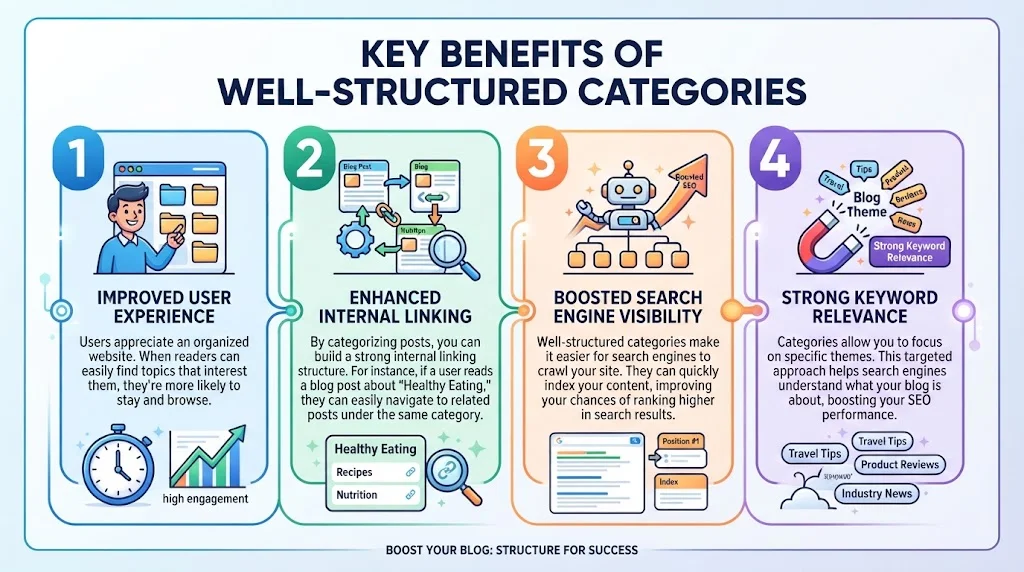
- Improved User Experience: Users appreciate an organized website. When readers can easily find topics that interest them, they’re more likely to stay and browse.
- Enhanced Internal Linking: By categorizing posts, you can build a strong internal linking structure. For instance, if a user reads a blog post about “Healthy Eating,” they can easily navigate to related posts under the same category.
- Boosted Search Engine Visibility: Well-structured categories make it easier for search engines to crawl your site. They can quickly index your content, improving your chances of ranking higher in search results.
- Strong Keyword Relevance: Categories allow you to focus on specific themes. This targeted approach helps search engines understand what your blog is about, boosting your SEO performance.
Now that we’ve covered the benefits, the next step is to learn how to create effective blog categories.
Steps to Create Effective Blog Categories
- Identify Core Topics: Begin by outlining the primary subjects of your blog. What themes do you cover regularly? Aim for five to seven main categories to avoid overwhelming your audience.
- Conduct Keyword Research: Use tools such as Moz or Ahrefs to find relevant keywords for each category. These keywords should reflect the topics you want to rank for in search engines.
- Organize Hierarchically: If possible, arrange categories from broad to specific. For example, a category named “Fitness” can have subcategories like “Yoga,” “Strength Training,” and “Cardio.”
- Limit the Number of Categories: Too many categories can confuse users. Stick to a manageable number to keep your site organized.
- Monitor and Adjust: Regularly review your categories to see if they still align with your content strategy. As your blog evolves, be ready to add, remove, or merge categories as needed.
Common Mistakes to Avoid
While building categories might seem straightforward, some common pitfalls can hinder SEO performance:
- Overlapping Categories: Avoid creating similar categories that can confuse readers and search engines alike. Each category should be unique and specific.
- Neglecting to Use Keywords: Choose keywords that reflect your blog’s focus when naming categories. Keyword-rich categories can enhance both visibility and relevance.
- Ignoring User Experience: Always keep the reader in mind. If your categories are confusing or not user-friendly, you’re likely to drive visitors away.
Implementing well-structured categories can make a significant difference in how your blog performs. When readers can find what they’re looking for without hassle, they’re more likely to return and share. This enhances your brand reputation and encourages growth.
Tips for Selecting the Right Categories for Your Blog Content
Creating a blog that stands out requires more than just engaging writing; it needs well-structured categories. Selecting the right categories for your blog content isn’t just about organization. It’s a cornerstone for enhancing your readers’ experience and boosting your SEO efforts. Here are some effective tips to guide you in this important decision.
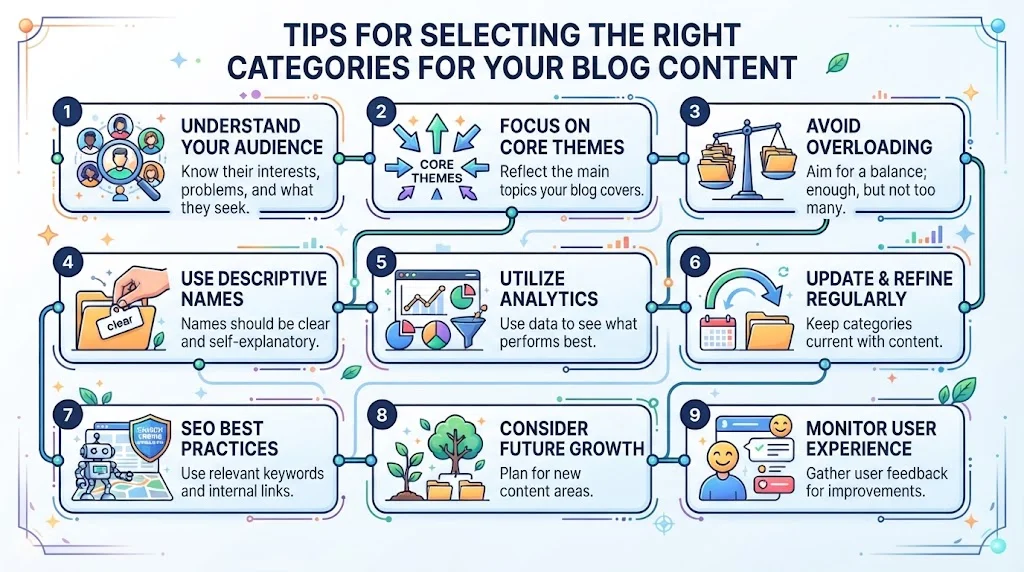
Understand Your Audience
Put yourself in your readers’ shoes. Think about who they are and what they are searching for. When you know your target audience, you can create blog categories that resonate with their interests. This connection not only improves engagement but also encourages return visits. Ask yourself:
- What topics are my readers most interested in?
- What problems are they trying to solve?
- Which categories would keep them coming back for more?
Focus on Core Themes
Your blog should reflect the main themes of your niche. Identify the core subjects you often write about and categorize your posts accordingly. For instance, if your blog focuses on health and wellness, categories might include:
- Nutrition
- Fitness
- Mental Health
This approach not only makes it easier for readers to navigate your blog but also aids in SEO by creating relevant keyword clusters.
Avoid Overloading with Categories
While it might be tempting to create many categories, this can confuse your readers. Aim for a balance—enough categories to cover your content without overwhelming your audience. A well-defined structure helps users find content quickly, enhancing their experience and keeping them on your site longer.
Use Descriptive Names
The names of your categories should be descriptive and self-explanatory. Avoid using vague or clever titles that might confuse readers. For example, instead of naming a category “Musings,” opt for “Lifestyle Tips.” Clear category names help with SEO as well, as they often become part of the URL structure.
Utilize Analytics for Insights
Make data-driven decisions by using tools like Google Analytics. Check which posts are getting the most traffic and engagement. This data can help you refine your categories. If a certain topic consistently attracts visitors, consider creating dedicated categories to showcase that content.
Update and Refine Regularly
As your blog evolves, so should your categories. Regularly review them to ensure they still reflect your content and audience interests. If you notice certain categories are rarely used, it may be worth consolidating them or redefining their scope. Keeping your categories fresh ensures continued relevance.
SEO Best Practices
For optimal search engine visibility, implement these SEO strategies while setting up your categories:
- Use keywords relevant to your audience within category names.
- Link to multiple posts from each category to enhance site structure.
- Ensure that each category has a unique description to improve keyword rankings.
Consider Future Growth
Your blog will grow over time, and so should your categories. Think about potential content areas you’d like to explore in the future. By planning for growth, you can avoid the hassle of restructuring your blog later on. Ask yourself:
- Are there related topics I haven’t included yet?
- Can I create subcategories to further organize content?
Monitor User Experience
Ultimately, the goal is to provide a seamless user experience. Periodically conduct surveys or feedback sessions to gauge if your categories meet the needs of your audience. Pay attention to how users navigate your blog and make adjustments as necessary.
For further guidance on optimizing categories, websites such as WPBeginner and Moz offer valuable resources and insights to help you refine your approach.
Selecting the right categories for your blog content is vital for user experience and SEO. By understanding your audience, focusing on core themes, keeping categories concise, and using descriptive names, you can create a well-organized blog that keeps readers coming back and attracts search engine attention.
Analyzing Successful Blogs: Category Structures That Work
When you analyze successful blogs, a clear trend emerges: effective category structures are essential for both user experience and SEO performance. By organizing content into well-defined categories, blogs can improve navigation, encourage readers to explore more, and enhance search visibility.
One of the first steps in creating a successful blog is defining the primary topics you want to cover. This helps in crafting categories that align with your audience’s interests. Below are key strategies to optimize blog categories:
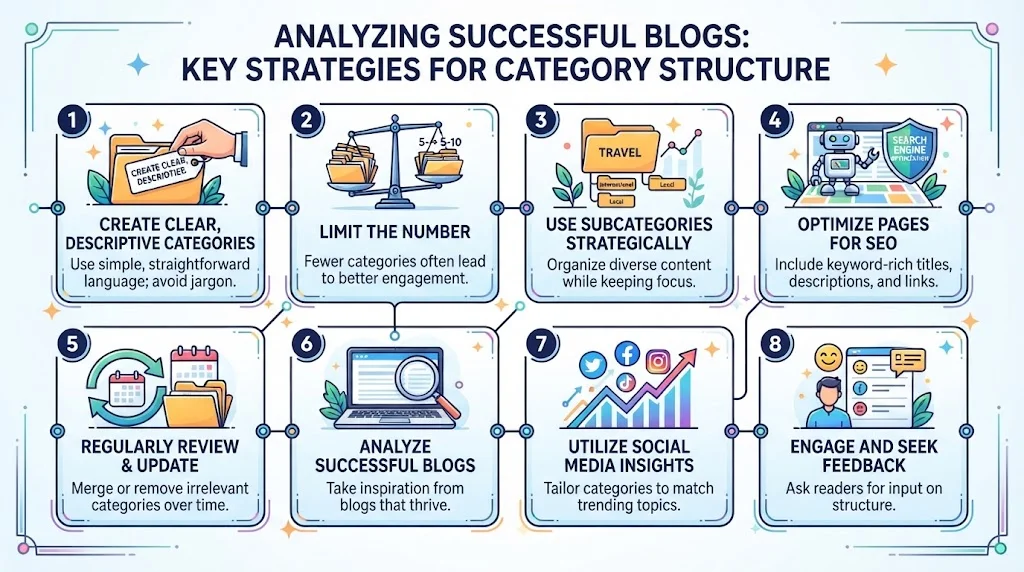
Create Clear, Descriptive Categories
Each category should clearly describe what readers can expect from the posts within it. Use simple, straightforward language and avoid jargon. Here are some examples:
- For a food blog, categories might include “Appetizers,” “Main Courses,” and “Desserts.”
- A travel blog could use “Adventure Travel,” “Family Vacations,” and “Budget Tips.”
Descriptive categories help users quickly find posts that interest them and improve SEO as search engines understand your content better.
Limit the Number of Categories
While it might be tempting to create many categories to cover all possible topics, fewer categories often lead to better engagement. Aim for between 5-10 well-defined categories. Too many categories can confuse users and make it harder for them to find relevant content.
Use Subcategories Strategically
If your blog covers a broad range of topics, consider using subcategories. This keeps your main categories focused while still allowing for diverse content. For example:
- Under “Travel,” you might have subcategories like “International,” “Local,” and “Road Trips.”
- In a tech blog, categories like “Gadgets” could include subcategories like “Mobile Devices,” “Wearables,” and “Smart Home.”
Optimize Category Pages for SEO
Each category page presents an opportunity to boost your SEO. Ensure that:
- Category titles are keyword-rich but natural.
- Each category includes a brief description that tells readers what they can find there.
- You use relevant internal links to connect related posts.
This approach not only helps search engines index your site better but also provides value to your readers.
Regularly Review and Update Categories
Successful blogs evolve over time. Regularly review your categories to see if they still serve your needs and your audience’s interests. If you notice that certain categories are no longer relevant, don’t hesitate to merge or remove them. This keeps your blog fresh and responsive to user demands.
Analyze Successful Blogs
Take inspiration from blogs that thrive. Look at their category structures to identify what works. For instance, popular sites like HuffPost and Medium have impactful category organization. They employ simple, user-friendly categories that enhance readability and engagement.
Utilize Social Media Insights
Social media can provide valuable insights into what topics your audience is discussing. Check the hashtags and discussions around your niche. This can help tailor categories to match trending topics or user interests. Also, when sharing your posts, use these categories to stay organized and consistent across platforms.
Engage and Seek Feedback
Your readers are a great resource for optimizing your blog categories. Encourage them to provide feedback on the category structure. You can add polls or comment sections where users can express what they like or what could improve. This input can guide you in optimizing or modifying your categories.
By applying these strategies, you can create a blog category structure that not only appeals to your audience but also maximizes your SEO efforts. This leads to increased traffic, longer user engagement, and ultimately, higher conversion rates. Remember, an effective blog category is a path to success in the digital landscape.
Common Mistakes to Avoid When Organizing Blog Categories
Organizing blog categories is essential for guiding readers and improving user experience. However, many bloggers make common mistakes when categorizing their content. Recognizing these pitfalls can help you structure your blog categories more effectively, making it easier for visitors to find what they want.
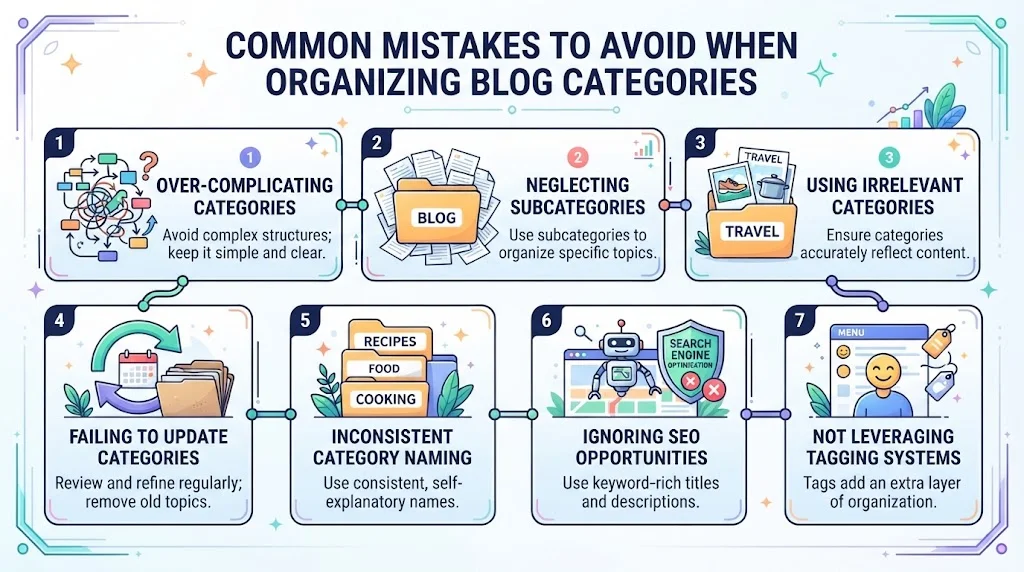
Over-complicating Categories
One mistake many bloggers make is creating overly complicated category structures. When you have too many categories, it confuses visitors rather than helping them navigate your site. Aim for a simple structure that makes sense and is easy to follow. Here are some tips to keep it straightforward:
- Limit the number of categories to 5-8 main topics.
- Use clear and easily understandable names for each category.
- Consider the primary goals of your blog when choosing categories.
Neglecting Subcategories
Sometimes, bloggers forget to use subcategories effectively. Well-placed subcategories can enhance organization and make it easier for readers to drill down into specific areas of interest. Consider the following:
- Use subcategories to break down broad topics into more specific ones.
- Avoid creating too many subcategories, as this can dilute the main categories.
- Ensure that subcategories only contain related posts to maintain cohesion.
Using Irrelevant Categories
When listing categories, make sure they accurately reflect your content. Including irrelevant categories may mislead your readers and could harm your blog’s credibility. Here are ways to ensure your categories are relevant:
- Regularly review your blog content and adjust categories as needed.
- Eliminate categories that no longer represent your brand or content style.
- Stay focused on your target audience’s interests when determining categories.
Failing to Update Categories
Blogs evolve over time, and so should their categories. Failing to update your categories can lead to outdated structures that confuse readers. To keep your categories fresh:
- Set a regular reminder to review categories at least once a year.
- Analyze traffic patterns to see if certain categories aren’t performing well.
- Be open to adding new categories as your blog grows in new directions.
Inconsistent Category Naming
Inconsistencies in naming categories can confuse your audience. If you use variations for similar topics, it can lead to missed clicks and frustrated readers. To ensure consistency:
- Create a category naming guideline for yourself or your team to use.
- Avoid using synonyms or alternative names for the same category.
- Use keywords in category names, which can also help with SEO.
Ignoring SEO Opportunities
Many bloggers overlook the SEO potential of their categories. Properly optimized categories can boost your search engine rankings and visibility. Here are key strategies to optimize:
- Add relevant keywords to category descriptions.
- Use SEO-friendly URLs for your category pages.
- Link categories to relevant posts to improve internal linking and distribution of link equity.
Not Leveraging Tagging Systems
Tags offer an additional layer of categorization that can help your content get discovered. Neglecting them means missing chances to enhance the way users find related posts. Here are some tips on using tags effectively:
- Use tags to highlight specific topics within a category.
- Keep tags limited and relevant to avoid clutter.
- Regularly review and clean up tags in accordance with your blog’s focus.
Organizing your blog categories effectively can enhance user experience and optimize content visibility. Avoid common mistakes such as over-complicating categories, neglecting updates, and being inconsistent in naming. For further insights on this topic, check out WPBeginner and explore how to streamline your blog structure effectively.
Conclusion
Optimizing your blog categories is a crucial step in creating a delightful user experience while also boosting your site’s SEO performance. By implementing effective strategies, you can ensure that your content is easy to navigate, which encourages readers to stay longer on your site. Well-structured categories not only help visitors find what they’re looking for but also enhance your blog’s visibility across search engines.
Selecting the right categories requires careful consideration of your content and audience. Think about what your readers are searching for and how they navigate your blog. This strategic approach can lead to increased engagement and higher organic traffic. Analyzing successful blogs provides a treasure trove of insights. By looking at category structures that work, you can find inspiration and ideas to tailor your own blog categories effectively.
However, it’s vital to avoid common mistakes, such as creating too many categories or those that overlap significantly. Simplicity and clarity should be your guiding principles. Keep in mind that every decision in your category organization can influence both user satisfaction and your blog’s success in search rankings.
By focusing on these aspects, you can create a well-optimized category system that not only enhances the reader’s journey but also drives traffic and engages your audience more effectively. Take the time to refine your categories and watch your blog thrive.