
How To Create Topic Clusters for SEO


ATTENTION: Want to Learn Affiliate Marketing from Successful Affiliates?
Creating topic clusters can significantly improve your SEO strategy by organizing your content in a way that search engines appreciate and users find valuable. This method not only helps in enhancing your content’s visibility but also boosts your authority on specific subjects. Let’s walk through a practical approach to establishing topic clusters that can drive traffic to your website.
Understanding Topic Clusters
At its core, a topic cluster consists of a central “pillar” content piece and several related subtopics, which connect back to the pillar. This structure provides a comprehensive understanding of a particular subject while making navigation easier for users.
Step 1: Identify Your Pillar Content
Your first step is to determine the central topic or pillar content. This should be a broad subject relevant to your audience. Consider the following:
- What are your audience’s main interests?
- What keywords are people searching for related to your niche?
- Which topics do you have substantial knowledge and resources on?
An example might be if you run a gardening website; a pillar topic could be “Vegetable Gardening.”
Step 2: Research Related Subtopics
Next, brainstorm a list of subtopics that fit under your pillar content. These should be more specific aspects of your main topic. For instance, under “Vegetable Gardening,” you might consider:
- Best Vegetables to Grow in Your Area
- Organic Pest Control for Vegetable Gardens
- Seasonal Gardening Tips
Use tools like Google Keyword Planner or Ahrefs to find keywords that can help you identify relevant subtopics.
Step 3: Create and Optimize Your Content
Begin drafting your pillar content and subtopic articles. Ensure these pieces are optimized for SEO by incorporating relevant keywords, internal linking, and providing valuable information. For instance:
- Pillar Content: Discuss the fundamental concepts of vegetable gardening, practical tips, and resources.
- Subtopic Articles: Delve into specifics like “Top 10 Vegetables for Beginners,” including how-to guides and tips for each type.
Maintain a consistent tone across all articles to connect with your audience effectively.
Step 4: Link Your Content Strategically
Internal linking is crucial in topic clusters. Make sure that each subtopic article links back to your pillar content and vice versa. This not only helps users navigate your site but also signals to search engines the relationship between your topics. A simple diagram can illustrate this:
| Pillar Topic | Subtopic 1 | Subtopic 2 | Subtopic 3 |
|---|---|---|---|
| Vegetable Gardening | Best Vegetables to Grow | Organic Pest Control | Seasonal Gardening Tips |
Step 5: Monitor and Adjust
Once your topic clusters are live, keeping track of their performance is key. Use analytics tools such as Google Analytics to understand which clusters perform best. Pay attention to:
- Page views and time spent on the page
- Conversion rates
- Search rankings for related keywords
Based on this data, refine and update your content as needed to enhance engagement and visibility.
Creating topic clusters for SEO is a structured process that can yield significant benefits for your website. By focusing on pillar content, related subtopics, strategic linking, and ongoing performance monitoring, you can enhance your authority and visibility in search engines. For more resources on this topic, consider checking out websites like Moz or HubSpot.
The Importance of Topic Clusters in Content Marketing
Using topic clusters in content marketing can have a profound impact on your online presence. This strategy not only enhances your website’s SEO but also provides a better user experience, making it easier for your audience to find relevant content.
The topic cluster model organizes content around a central theme, allowing you to cover various aspects of a subject in-depth. By creating a pillar page that acts as a hub, you can link related articles that delve into specific subtopics. This interconnectedness shows search engines like Google that your website has comprehensive knowledge on a subject, improving your chances of ranking higher in search results.
Why Use Topic Clusters?
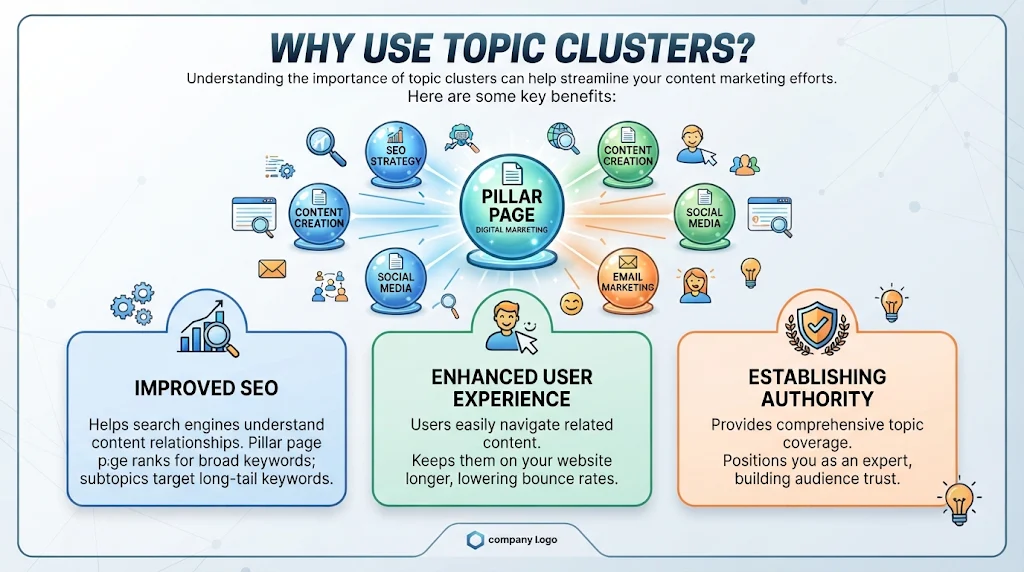
Understanding the importance of topic clusters can help you streamline your content marketing efforts. Here are some key benefits:
- Improved SEO: Topic clusters help search engines understand the relationship between your content pieces. The pillar page can rank for broader keywords, while the subtopics can target long-tail keywords.
- Enhanced User Experience: Users can easily navigate related content, keeping them on your website longer. This lowers bounce rates, which is a positive signal for search engines.
- Establishing Authority: By providing comprehensive coverage of a topic, you position yourself as an expert, which can lead to higher trust from your audience.
Steps to Create Effective Topic Clusters
Creating topic clusters requires careful planning. Follow these steps to get started:
- Identify Core Topics: Start by determining the main themes relevant to your audience. Use tools like AnswerThePublic to find popular questions and topics in your niche.
- Develop Pillar Content: Create comprehensive pillar pages that cover the core topic in detail. This page should act as a resource, providing an overview and linking to various subtopic articles.
- Create Related Content: Write multiple blog posts and articles that focus on specific aspects of the core topic. Ensure these posts link back to the pillar page for better visibility.
- Optimize for SEO: Use relevant keywords naturally in your content. Tools like Moz can help you identify keywords to target.
- Promote Your Content: Share your pillar and cluster content across social media and email newsletters to drive traffic.
Examples of Topic Clusters
To visualize how topic clusters can be structured, consider these examples:
| Pillar Topic | Subtopics |
|---|---|
| SEO Basics | How to optimize your titles, Understanding keyword research, Link building strategies, On-page SEO techniques |
| Content Marketing | Understanding buyer personas, How to create a content calendar, The role of social media in content marketing |
| Email Marketing | Best practices for subject lines, Segmenting your audience, Analyzing email campaign success |
Measuring Success with Topic Clusters
After implementing topic clusters, it’s crucial to measure their effectiveness. Consider tracking these metrics:
- Organic Traffic: Monitor if there’s an increase in traffic to your cluster content.
- Engagement: Look for improvements in metrics like time spent on page and click-through rates.
- Search Rankings: Check if your pillar page and related content rank higher over time.
The strategic use of topic clusters can bolster your content marketing strategy significantly. Take the time to implement this model, and you’ll see improvements in SEO performance and user engagement. Resources like HubSpot provide further insights into exploring and expanding your content marketing strategies. As you create and refine your topic clusters, remember that the goal is to offer clarity and value to your audience, driving not only traffic but also building lasting relationships.
Best Practices for Structuring Topic Clusters
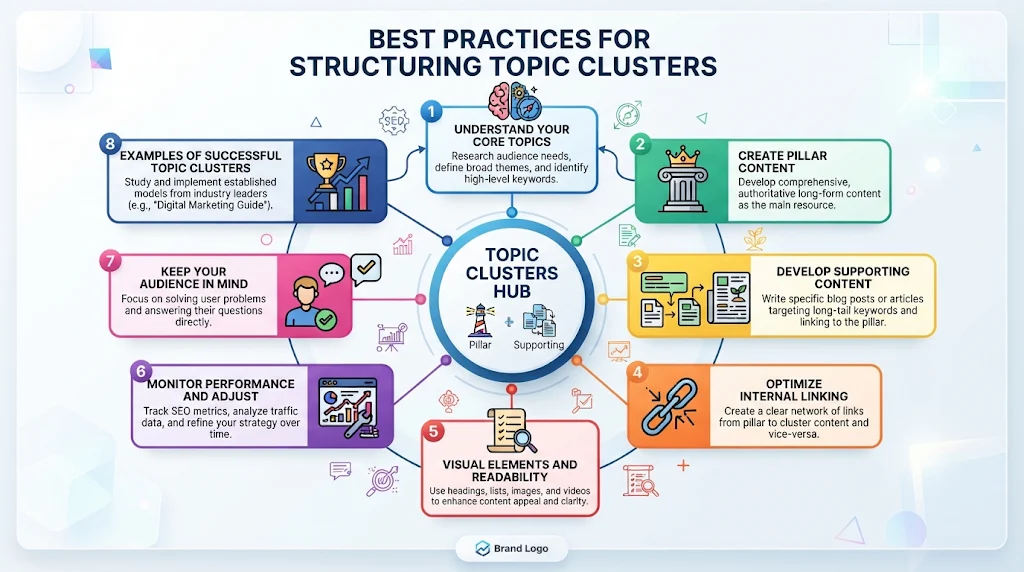
When it comes to optimizing your website for search engines, structuring your content strategically is crucial. One of the most effective methods is to create topic clusters. This approach helps establish your site as an authority on specific subjects. So how do you go about structuring these topic clusters?
Understand Your Core Topics
The first step is identifying your core topics. These should be the main subjects you want to rank for. Start by researching your audience and what matters to them. Consider using tools like Google Trends or Ahrefs to gather insights on what keywords people are searching for. Once you have a list of potential topics, pick those that align with your expertise and services.
Create Pillar Content
Pillar content serves as the backbone of your topic clusters. This is a comprehensive article or page that covers a broad subject in-depth. For example, if your core topic is “Digital Marketing,” your pillar content could focus on “The Complete Guide to Digital Marketing.” This piece should answer all the fundamental questions related to the topic. Make sure to include relevant keywords such as “SEO”, “social media”, and “content marketing” to help with search visibility.
Develop Supporting Content
Next, you’ll create supporting pieces that dive deeper into specific aspects of your pillar topic. These are often referred to as cluster content. Each piece should link back to the pillar content, helping search engines understand the relationship between them. Some ideas for supporting content in the digital marketing niche may include:
- Understanding SEO Best Practices
- How to Create a Content Marketing Strategy
- Social Media Marketing Tips for Beginners
- Email Marketing Strategies to Boost Engagement
Optimize Internal Linking
Internal linking is vital for the success of your topic clusters. When writing your supporting articles, make sure each one links back to the pillar content. This practice not only enhances user navigation but also signals to search engines which pages are important. Aim for a balanced linking structure; each piece should also link to other relevant cluster content to boost topical authority.
Visual Elements and Readability
Integrating visual content like images, infographics, and videos can significantly enhance your topic clusters. Visuals make content more engaging and easier to comprehend. Use alt text for images, which also helps with SEO. Ensure your content is broken into digestible sections. Use short paragraphs, bullet points, and clear headings to enhance readability. A clean layout can keep readers on your page longer, which is beneficial for SEO.
Monitor Performance and Adjust
After you’ve published your topic clusters, the work doesn’t stop there. Monitor their performance using analytics tools like Google Analytics. Look for metrics such as page views, bounce rates, and time on page. This data can help you understand which pieces of content are performing well and which may need adjustments or updates. Don’t hesitate to refresh old content with new information or better visuals to maintain relevancy.
Keep Your Audience in Mind
Throughout this process, always remember that you’re creating content for your audience, not just for search engines. Focus on providing value, answering questions, and making your content helpful. If you prioritize user intent, search engines will recognize that and reward your efforts over time.
Examples of Successful Topic Clusters
Consider examining successful websites that utilize topic clusters effectively. Sites like Moz and HubSpot have clear topic clusters that allow users to navigate through a variety of related subjects easily. By studying their structure, you can gain valuable insights into best practices that you can adopt for your site.
Tools and Resources for Developing Effective Topic Clusters
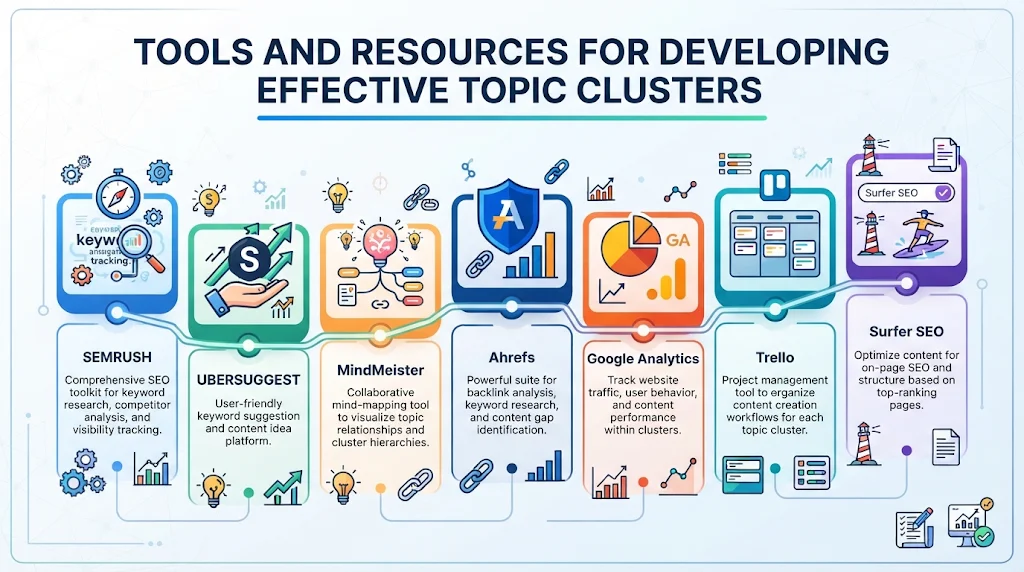
Creating effective topic clusters is a powerful strategy for boosting SEO and organizing your content. To get started, leveraging the right tools and resources is essential. By utilizing these tools, you can streamline your process and ensure you’re building topic clusters that resonate with your audience while improving your search rankings.
SEMrush
One of the most valuable tools for topic clustering is SEMrush. This platform provides comprehensive keyword research that helps you identify the main topics and subtopics relevant to your audience. You can see keyword difficulty, search volume, and trends, making it easier to decide which clusters to pursue. Its topic research tool generates topic ideas based on your primary keyword, helping you brainstorm content and identify gaps in your current offerings.
Ubersuggest
Another excellent resource is Ubersuggest. Ubersuggest is perfect for brainstorming content ideas. Input a keyword, and it’ll provide a plethora of related suggestions, including content suggestions that can form the basis of your clusters. Moreover, it offers insights into what types of content perform best for your selected topics, allowing you to tailor your strategy accordingly.
MindMeister
When it comes to mapping your clusters visually, tools like MindMeister can be incredibly useful. This mind-mapping tool allows you to visualize how your topics and subtopics relate to one another. By laying everything out, you can ensure a clear organizational structure that will assist not only your SEO but also reader navigation.
Ahrefs
Additionally, you might consider using Ahrefs. This SEO tool is particularly notable for its site audit and backlink analysis. By understanding which themes are driving traffic to your site, you can focus your topic clusters on these themes, maximizing their potential impact. Its content explorer feature can also show you the most successful content in your niche, guiding you on what to prioritize in your clusters.
Google Analytics
Data analysis is another key aspect of developing topic clusters. Google Analytics is an excellent free tool to monitor which topics bring the most visitors to your site. By assessing your existing content, you can uncover patterns that can inform your next cluster of topics. Look for high-traffic blogs or pages to identify successful themes.
Trello
For collaboration and project management, platforms like Trello can help keep your topic cluster development organized. You can create boards for different clusters and track the progress of each article. This helps you stay on task and ensures that each piece of content is aligned with your overarching SEO strategy.
Surfer SEO
Another useful tool is Surfer SEO. With its content editor, you can optimize your articles based on real-time data. It provides keyword suggestions, competitor analysis, and other vital metrics that aid in writing content that ranks well while ensuring contextually relevant topic clustering.
Having a clear structure for your content is vital. You might want to use a table to list your topic clusters clearly. For instance:
| Primary Topic | Subtopics | Keywords |
|---|---|---|
| Digital Marketing |
|
|
| Content Creation |
|
|
Don’t forget to explore educational hubs such as Moz. They offer a wealth of information on SEO best practices, including how to effectively structure your content into clusters. Understanding the foundational elements of SEO will only enhance your capability to build topic clusters that not only rank well but are also informative for your readers.
By utilizing these tools and resources, you will significantly enhance your ability to create compelling and effective topic clusters. With the right organization and strategy, your content will not only meet your audience’s needs but also thrive in search engine visibility.
Measuring the Success of Your Topic Clusters for SEO
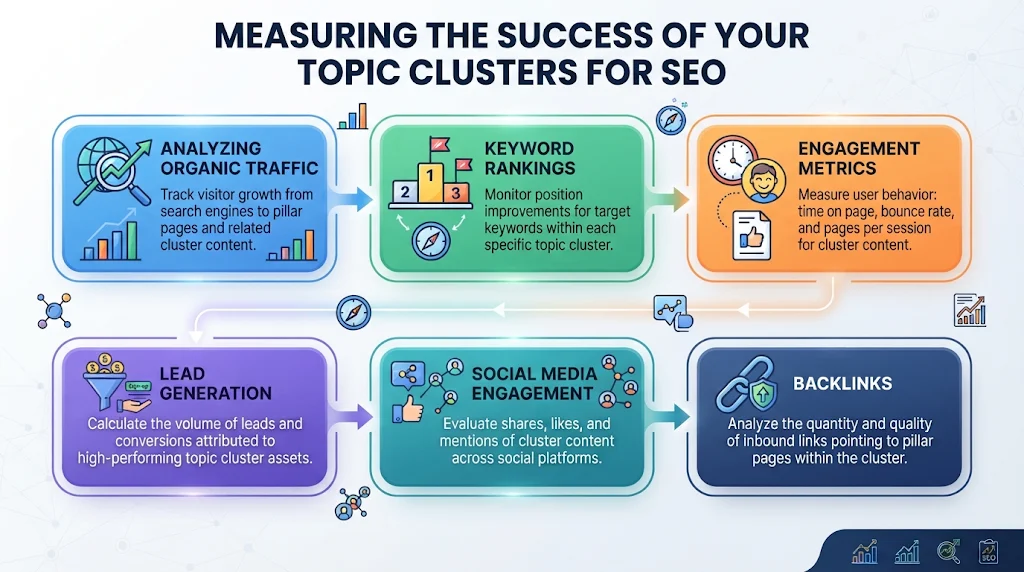
Monitoring the performance of your topic clusters is essential for understanding their impact on your SEO goals. To effectively measure success, you need to focus on different metrics that provide insight into how well your content is resonating with your audience and helping you achieve better visibility on search engines.
Analyzing organic traffic
Start by analyzing organic traffic. One of the primary indicators of success is how much organic traffic your topic cluster is generating. Using tools like Google Analytics, you can track the number of visitors arriving from search engines to your pillar page and its related content. This helps you identify which topics are driving the most traffic. Check the daily, weekly, and monthly trends to understand the sustained performance of your content.
Keyword rankings
Another vital metric to look at is keyword rankings. As your topic clusters should target specific keywords, monitoring those rankings will reveal whether your efforts are paying off. Use tools like SEMrush or Ahrefs to track how your keywords rank over time. If your ranking improves for target keywords connected to your cluster, it indicates that your strategy is effective.
Engagement metrics
Engagement metrics such as bounce rate, average session duration, and pages per session also provide critical insights. If people are visiting your page but leaving quickly, it might suggest that the content isn’t engaging enough or doesn’t meet their expectations. Thus, keeping an eye on these metrics will help you fine-tune your content for better user experience. For example:
- Bounce Rate: Aim for a lower bounce rate, indicating visitors are exploring your site rather than leaving immediately.
- Average Session Duration: Higher session durations mean users are finding valuable content that keeps them engaged.
- Pages per Session: More pages per session may indicate that your topic clusters are effectively encouraging visitors to view related content.
Lead generation
Lead generation is another metric that can measure the effectiveness of your topic clusters. If your goal is to convert visitors, track how many leads or sign-ups come from your cluster pages. Use tracking pixels or analytics codes to better understand the conversion funnel and see which pages are most successful at driving leads. Make adjustments as needed depending on the leads generated from specific articles or sections of your cluster.
Social media engagement
Social media engagement can also reveal how well your topic clusters resonate. Share your pillar page and related articles on social platforms and monitor likes, shares, and comments. If your content garners attention on social media, it could indicate that it is both valuable and shareable. Consider using social media analytics tools to track your engagement rates thoroughly.
Backlinks
Keep an eye on backlinks. Quality backlinks from reputable sites can significantly affect your SEO performance. Use tools like Moz or Ahrefs to track any incoming links to your content. More backlinks typically correlate with higher authority and improved search rankings.
To give a clearer picture of the metrics you should focus on, consider the following table:
| Metric | Purpose | Tools |
|---|---|---|
| Organic Traffic | Assess how much traffic is coming from search engines | Google Analytics |
| Keyword Rankings | Monitor the ranking of target keywords over time | SEMrush, Ahrefs |
| Engagement Metrics | Evaluate user interaction and satisfaction | Google Analytics |
| Lead Generation | Track conversions from your content | Google Analytics, CRM |
| Social Engagement | Measure content popularity on social platforms | Social Media Analytics Tools |
| Backlinks | Gauge authority and reliability through external links | Moz, Ahrefs |
By following these strategies and regularly measuring the success of your topic clusters, you can make informed adjustments to enhance your SEO performance. To dive deeper into optimizing your content strategy, consider visiting SEMrush or Ahrefs for more resources.
Remember, the key to long-term success is continuous monitoring and optimization of your content strategy based on your performance metrics.
Conclusion
Creating topic clusters for SEO is not just a strategy; it’s a roadmap to more organized, impactful content. By understanding the step-by-step approach to developing these clusters, you can significantly enhance your website’s search visibility. Recognizing the importance of topic clusters in content marketing will help you create a cohesive narrative that meets user intent and answers their queries.
Structuring your topic clusters correctly is crucial. Ensuring that your pillar content is comprehensive while supporting pieces are relevant will lead to better engagement and retention. The best practices outlined earlier serve as a framework for building a resilient cluster that benefits both users and search engines.
Using the right tools and resources will streamline your efforts. From keyword research tools to analytics software, you have a wide array of options to enhance your topic clusters. Implementing these tools effectively will not only make your process smoother but will also give you insights into what works best for your audience.
Ultimately, measuring the success of your topic clusters will guide you toward improvement. Analyzing performance through metrics like organic traffic, engagement rates, and conversion rates will tell you if your strategy is effective or if it requires tweaks.
Embracing topic clusters in your SEO strategy elevates your content marketing game and strengthens your online presence. By continuously refining your approach and focusing on delivering valuable, relevant content, you’ll foster deeper connections with your audience and achieve long-term success in search engine visibility.