
How to Create Pillar Content


ATTENTION: Want to Learn Affiliate Marketing from Successful Affiliates?
Creating pillar content is an essential strategy for anyone looking to engage an audience effectively. This type of content serves as the foundation for your website, allowing you to organize your blog and provide your readers with valuable information. By following a few key steps, you can learn How to Create Pillar Content that captivates your audience while enhancing your website’s performance in search engines.
Understand Your Audience
Knowing your audience is crucial for creating pillar content that resonates. Conduct surveys, ask for feedback, and use analytics to identify your audience’s needs and interests. Once you understand what they are looking for, you can tailor your content to fit their preferences.
Choose Relevant Topics
When brainstorming topics for your pillar content, consider creating a list of broad subjects relevant to your industry. These subjects should align with both your audience’s interests and your expertise. Here’s a quick way to identify relevant topics:
- Identify common questions in your niche.
- Look at trending topics on social media.
- Analyze competitors’ content for gaps.
Conduct Thorough Research
Quality information is the backbone of pillar content. Once you identify a relevant topic, dive deep into research to gather data, statistics, and insights that make your content authoritative. Use credible sources like Statista or HubSpot for data-driven insights. Additionally, examining studies and expert opinions can lend credibility to your content.
Structure Your Content Effectively
A well-structured piece of content improves readability. Aim for a clear introduction, body, and conclusion. Use bullet points, numbered lists, and tables wherever appropriate. Here is how you can structure your pillar content:
| Content Section | Purpose |
|---|---|
| Introduction | Briefly introduce the topic and its importance. |
| Main Body | Provide in-depth information supporting your topic. |
| Visuals | Enhance understanding with charts or infographics. |
| Internal Links | Link to related articles for further reading. |
| Conclusion | Summarize key points (avoid making it sound like a wrap-up). |
Optimize for SEO
While creating pillar content, don’t forget about SEO. Use keywords naturally throughout the article. Incorporate relevant AI tools or plugins to discover keywords that can enhance your content’s visibility. Include internal and external links to deepen your readers’ understanding and improve search engine rankings. Tools like SEMrush can help identify keywords to use effectively.
Add Visual Elements
Visual elements enhance engagement. Adding images, infographics, and videos can help break up large blocks of text, making your content more inviting. Ensure that your visuals are relevant to the content and add value to the reader’s understanding.
Promote Your Pillar Content
Once created, don’t keep your pillar content hidden. Share it across social media platforms, newsletters, or even guest posts. Encourage discussions in the comments section to boost user interaction. Actively engage with your audience to create a community around your content.
Regularly Update Your Content
Pillar content should not be static. Make it a point to revisit and update your articles regularly. As trends and information evolve, refreshing your content ensures that it remains relevant and useful to your audience. Aim for a review cycle of at least once a year.
Ultimately, developing pillar content is about providing real value to your audience. By focusing on their needs, optimizing for SEO, and maintaining engagement through various methods, you can create lasting and impactful content that serves as a foundation for your digital presence. Remember, the goal is to create a resource that people will return to again and again.
The Importance of Pillar Content in Building SEO Authority
Pillar content plays a crucial role in establishing SEO authority for your website. By providing comprehensive information on key topics, this type of content not only improves your search engine rankings but also enhances user engagement. The effectiveness of pillar content lies in its ability to serve as a central hub that links to related, more detailed articles, creating a structured approach to content strategy.
When you create pillar content, you are essentially building a strong foundation for other pieces of content. This foundation supports not only your own articles but also increases your website’s authority on a particular subject. Here are some key reasons why you should focus on developing pillar content:
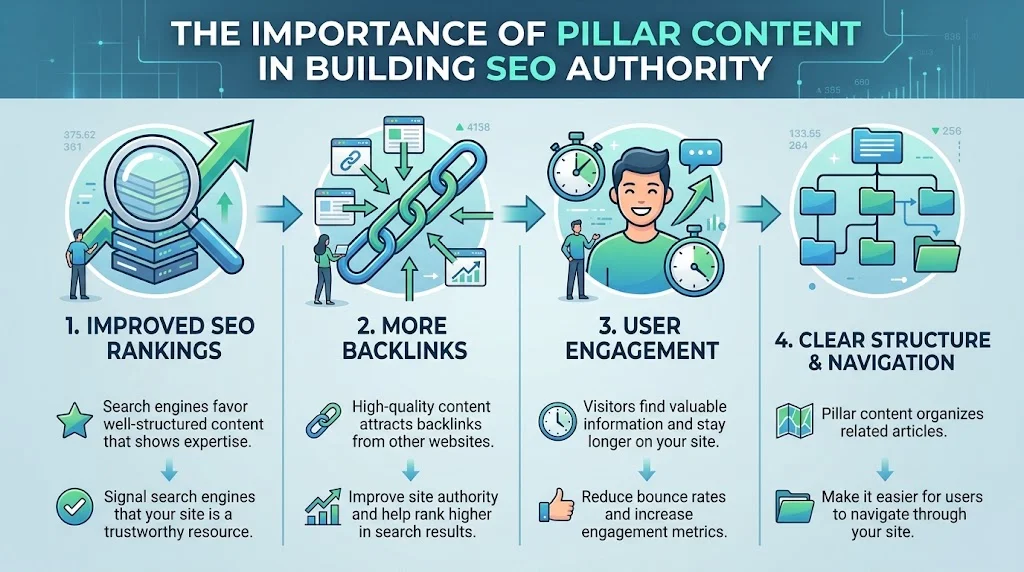
- Improved SEO Rankings: Search engines like Google favor well-structured content that shows expertise. By establishing comprehensive pillar pages, you signal search engines that your site is a trustworthy resource in your niche.
- More Backlinks: High-quality pillar content is more likely to attract backlinks from other websites. These backlinks further improve your site’s authority and help in ranking higher in search results.
- User Engagement: When visitors find valuable information on a topic, they are more likely to stay longer on your site, which can reduce bounce rates and increase engagement metrics.
- Clear Structure and Navigation: Pillar content organizes related articles, making it easier for users to navigate through your site. This organized structure enhances the overall user experience.
To create effective pillar content, you need to follow a few essential steps. Start by selecting a topic that is relevant to your audience and aligns with your business goals. This topic should be broad enough to allow for the creation of multiple subtopics or related articles. You can gather ideas by researching keywords using tools like Moz or Ahrefs.
Once you’ve identified a suitable topic, it’s time to outline the structure of your pillar content. A well-structured pillar page typically includes:
| Element | Description |
|---|---|
| Introduction | A brief overview of the main topic to set expectations for the reader. |
| Key Points | Divide the topic into several key areas that you will cover in detail. |
| Links to Related Articles | Include hyperlinks to interconnected articles that delve deeper into specific subtopics. |
| Visuals | Incorporate images, infographics, or videos to enhance comprehension and engagement. |
| Next Steps | A wrap-up that encourages further action, such as exploring related content or signing up for a newsletter. |
Make sure to use engaging language and visuals that can capture the reader’s attention. Don’t forget to optimize your content for SEO by including relevant keywords naturally throughout the text without keyword stuffing. Tools like SEMrush can help you identify the right keywords to include.
Promote it
Once you have published your pillar content, promote it across various channels. Using social media platforms like Twitter, Facebook, and LinkedIn to share your content can drive traffic and increase visibility. Additionally, consider reaching out to influencers or bloggers within your niche to see if they would be willing to link to your pillar content or share it with their audience.
Update your pillar content
Furthermore, continually update your pillar content to ensure its relevance. As trends or information changes, periodically revisit your content to add new insights, statistics, or resources. This practice not only keeps your content fresh but also encourages recurring visitors who appreciate timely updates.
Well-structured pillar pages
The importance of pillar content cannot be understated in the digital landscape of today. By committing to high-quality, well-structured pillar pages, you are not only building SEO authority but also creating valuable resources for your audience. So start creating pillar content today and watch your website’s authority grow!
Effective Strategies for Structuring Your Pillar Content
Creating pillar content is essential for any content strategy, as it allows you to provide in-depth information on a topic while linking to related subtopics. Effective structuring of this content ensures better engagement and higher visibility on search engines. Here is a guide on how to strategically structure your pillar content to maximize its impact.
Understanding Your Audience
Before you start writing, take the time to understand your audience deeply. Consider the following questions:
- What are their primary interests?
- What problems do they need solutions for?
- How do they prefer to consume content?
Knowing your audience helps you tailor your content to address their needs directly. This approach not only makes your content more engaging but also ensures it provides real value.
Choosing the Right Topic
Choosing a topic that resonates with your audience is crucial for effective pillar content. Your topic should be broad enough to cover a wide array of subtopics, yet specific enough to provide targeted information. For example, if your subject area is digital marketing, a pillar topic could be “Content Marketing Strategy,” under which you can delve into areas like SEO, social media strategies, and blog optimization.
Establishing a Clear Structure
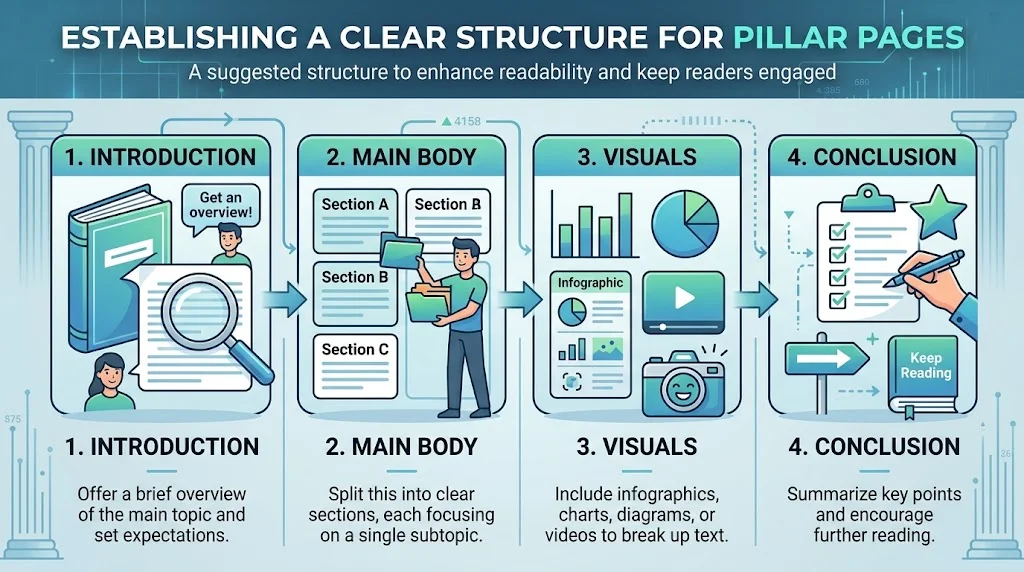
A well-organized pillar page enhances readability and keeps readers engaged. Here’s a suggested structure:
| Section | Description |
|---|---|
| Introduction | Offer a brief overview of the main topic. |
| Main Body | Split this into clear sections, each focusing on a subtopic. |
| Visuals | Include infographics, charts, or videos to break up text. |
| Conclusion | Summarize key points and encourage further reading. |
Linking Related Resources
To maximize the SEO potential of your pillar content, internal linking is critical. Link to related articles and blog posts within your site to provide your readers with a more comprehensive understanding. For example, if you’re discussing SEO techniques, you could link to a specific article detailing “The Importance of Keyword Research” on Moz or an insightful read on “On-Page SEO” on Neil Patel.
Utilizing Visual Content
Humans are visual creatures, and incorporating images, videos, and infographics can enhance user engagement significantly. Visual content can simplify complex information and provide a break from text-heavy sections. This improves engagement and helps convey your message effectively—further increasing the time spent on your page.
SEO Best Practices
For your pillar content to gain visibility on search engines, applying basic SEO techniques is essential:
- Use relevant keywords throughout your content.
- Optimize meta titles and descriptions for search engines.
- Ensure your content is mobile-friendly.
- Utilize alt text for images to enhance accessibility and SEO.
Regular Updates and Monitoring
Pillar content isn’t set in stone. As trends and information evolve, so should your content. Regularly review and update your pillar pages to ensure that they remain accurate and valuable. Monitor analytics to see how the content performs and make adjustments based on user engagement and feedback.
Encouraging User Interaction
Engagement can be enhanced by incorporating interactive elements in your pillar content. Encourage your audience to leave comments or ask questions. You may also consider adding quizzes or polls related to your topic. This not only increases user interaction but can also provide you with valuable insights about your audience.
Promoting Your Pillar Content
Once your pillar content is created, it’s time to promote it. Share it on social media platforms, email newsletters, and online forums. Engage with your audience by discussing your post and linking back to it whenever relevant. Establishing a consistent promotional strategy helps drive traffic back to your pillar content regularly.
Creating effective pillar content is a strategic process that requires careful planning and thought. By considering your audience, structuring your content well, and using effective SEO practices, you can develop pillar content that not only ranks well but also engages and benefits your readers.
How to Evolve Existing Content into Pillar Content
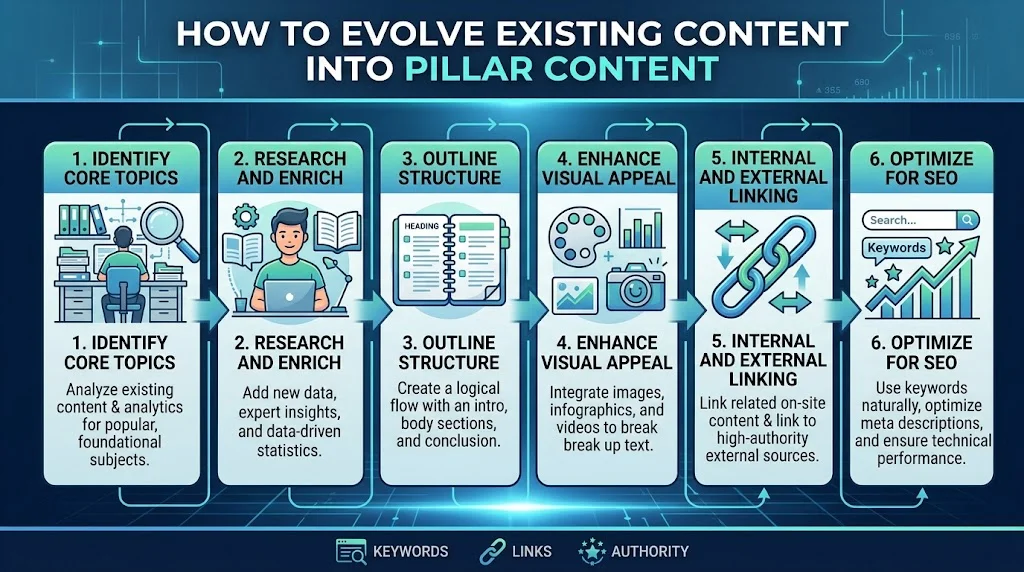
Creating pillar content from existing material is an effective way to enhance your website’s authority and improve your SEO. By transforming what you already have into comprehensive, well-structured content, you can attract more traffic and provide more value to your audience. Here’s how you can effectively evolve your existing content into pillar content.
Identify Core Topics
First, evaluate your existing blog posts or articles. Look for insightful pieces that can serve as foundational topics for your audience. Pillar content should address core interests related to your niche. Here are some steps to identify potential core topics:
- Review analytics to find your most popular posts.
- Identify topics that align with user queries and interests.
- Consider gaps in your current content that could be filled.
Research and Enrich
Once you’ve chosen a topic, broaden your understanding by conducting thorough research. Use reputable sources to gather accurate, updated information. This enhancement process involves:
- Collecting statistics and data to support your points.
- Finding case studies or expert opinions to add depth.
- Seeking out relevant keywords that can boost search visibility.
Ensure you maintain flow and readability while incorporating new data to keep your audience engaged. You can utilize tools like Ahrefs or SEMrush for keyword research and analysis.
Outline Structure
A well-organized structure helps readers navigate your content easily. Start by creating a detailed outline. Here’s how to structure your pillar content effectively:
- Introduction: Briefly introduce the topic and its relevance.
- Main Sections: Divide your content into major subtopics that reflect user intent.
- Supporting Information: Add graphs, examples, or lists to substantiate your claims.
- Conclusion: Summarize key takeaways without forming a traditional conclusion.
Enhance Visual Appeal
Visual elements play a crucial role in user engagement. Break up long paragraphs with images, infographics, and charts to make your content more digestible. Integrate tools like Canva or Piktochart to create compelling visuals.
Use a cohesive visual style across your pillar content to reinforce your brand identity. Ensure all images are high quality and relevant to the content. Remember to optimize images with alt text for better SEO.
Internal and External Linking
Linking is vital for SEO and reader experience. Incorporate internal links that guide users to related content on your site, enhancing site navigation. At the same time, use external links to reputable sources. This establishes credibility:
- Internal Links: Direct users to other relevant articles on your site.
- External Links: Reference high-authority sites to support your claims.
Consider linking to your previous articles found on platforms like Content Marketing Institute for additional insights. This dual linking strategy can boost traffic and improve the overall user experience.
Optimize for SEO
Focus on optimizing your content for search engines. This includes:
- Using target keywords naturally within the text.
- Creating engaging meta descriptions.
- Utilizing headings strategically to organize content.
Make sure your content is mobile-friendly, and verify page loading speeds using tools like Google PageSpeed Insights. Enhancing the technical aspects of your site ensures better performance and search rankings.
By following these steps, you can evolve your existing content into pillar content that resonates with your audience. This strategic transformation not only boosts engagement but also enhances your content’s SEO effectiveness, driving more organic traffic to your website.
Measuring the Success of Your Pillar Content Strategy
Creating pillar content is just the first step in a successful content marketing strategy. Measuring its impact is where the real magic happens. By closely monitoring the success of your pillar content, you can make informed decisions about what works and what doesn’t. But how do you accurately measure this success? Let’s delve into the key metrics and methods that will help you evaluate your pillar content strategy.
First, it’s essential to establish clear objectives for your pillar content. Are you looking to generate leads? Increase organic traffic? Build brand awareness? Defining your goals will set a clear direction and make it easier to measure the effectiveness of your content. Once your objectives are in place, consider the following metrics to gauge success:

- Organic Traffic: This indicates how many visitors arrive at your content naturally through search engines. Use tools like Google Analytics to track visitors specifically coming from search.
- Bounce Rate: This metric shows the percentage of visitors who leave your site after viewing only one page. A high bounce rate may indicate that your content isn’t engaging or relevant enough. Aim for a lower bounce rate to signify effective engagement.
- Time on Page: How long visitors spend reading your content can provide insights into its quality. If visitors linger longer, it typically means they find your content valuable.
- Social Shares: Content that’s shared across social media indicates its resonance with your audience. Track the number of shares on platforms like Facebook, Twitter, and LinkedIn to measure engagement.
- Conversion Rate: This represents the percentage of visitors who complete a desired action, such as signing up for a newsletter or making a purchase. Monitor this closely to assess how well your content drives action.
Another vital aspect of measuring success is audience feedback. Don’t hesitate to ask for input directly from your readers. Utilize surveys and quizzes to gather insights on their preferences and experiences with your pillar content. This will unfold areas of improvement and strengths of your existing strategy.
While quantitative data is essential, qualitative data plays a key role as well. Monitor comments, feedback on social media, and any mentions of your content across various platforms. Engaging directly with your audience will not only build relationships but also provide you with valuable insights that numbers alone may not capture.
As you evaluate your metrics, you may consider creating a performance dashboard. This could involve a simple table or visualization that outlines key performance indicators (KPIs) and tracks them over time.
| Metric | Goal | Result |
|---|---|---|
| Organic Traffic | Increase by 20% | Achieved 25% Increase |
| Bounce Rate | Below 50% | Reached 48% |
| Time on Page | Average 3 minutes | Achieved 4 minutes |
| Conversion Rate | 5% Completion Rate | Achieved 7% |
After some time analyzing your pillar content performance, it’s critical to adjust your strategies accordingly. If certain types of content are outperforming others, consider creating more like them. Conversely, if some pieces aren’t performing well, take a closer look to understand why.
Trends in your metrics can guide your content planning for the future. Make a habit of reviewing your performance regularly—weekly or monthly—so you can stay informed and agile. Adapt your strategy based on what you learn, and remember that success in content marketing is often about continuous improvement.
For deeper insights into pillar content strategies and performance measurement, consider checking out additional resources from experts at Neil Patel and Moz. Their comprehensive guides can help you refine your approach and ensure that your pillar content effectively supports your overall marketing goals.
By focusing on measurable outcomes and engaging with your audience, you’ll be well-equipped to enhance your pillar content strategy and propel your brand’s visibility. Ultimately, when you measure success accurately, you unlock the potential to optimize and thrive in a competitive online landscape.
Conclusion
Creating pillar content is a powerful way to engage your audience while establishing your authority in search engines. By crafting comprehensive and valuable pieces, you not only provide your readers with the information they need but also create lasting resources that enhance your website’s reputation. This kind of content acts as the backbone of your content strategy and can influence everything from social shares to inbound links.
Structuring your pillar content effectively is crucial for maximizing its impact. Use clear headings, bullet points, and visuals to break down information, making it easier for readers to digest. Additionally, evolving existing content into pillar pieces can breathe new life into outdated materials while aligning them with current trends and topics that resonate with your audience’s interests.
Measuring the success of your pillar content strategy is equally important. Keep an eye on traffic, engagement metrics, and SEO performance to gauge how well your content is performing. Regularly analyzing this data allows you to tweak your approach, ensuring that your content continues to meet the needs of your audience and maintains its relevance.
Ultimately, the goal is to create content that serves your readers first. By focusing on their needs and providing them with meaningful insights, you’ll not only improve your own content strategy but also foster a loyal community ready to engage with your brand. Embrace pillar content as a cornerstone of your efforts, and watch both engagement and authority grow.