How to Build a Permanent AI Memory Layer with Obsidian and Hermes Agent OS

Managing long-term memory is one of the single biggest hurdles when working with advanced autonomous tools. Standard AI chat threads inevitably hit a wall known as context bloat. The longer a session goes, the more likely the AI is to forget your core brand voice, lose track of your business standard operating procedures (SOPs), or drop out entirely with a frustrating safety filter glitch.
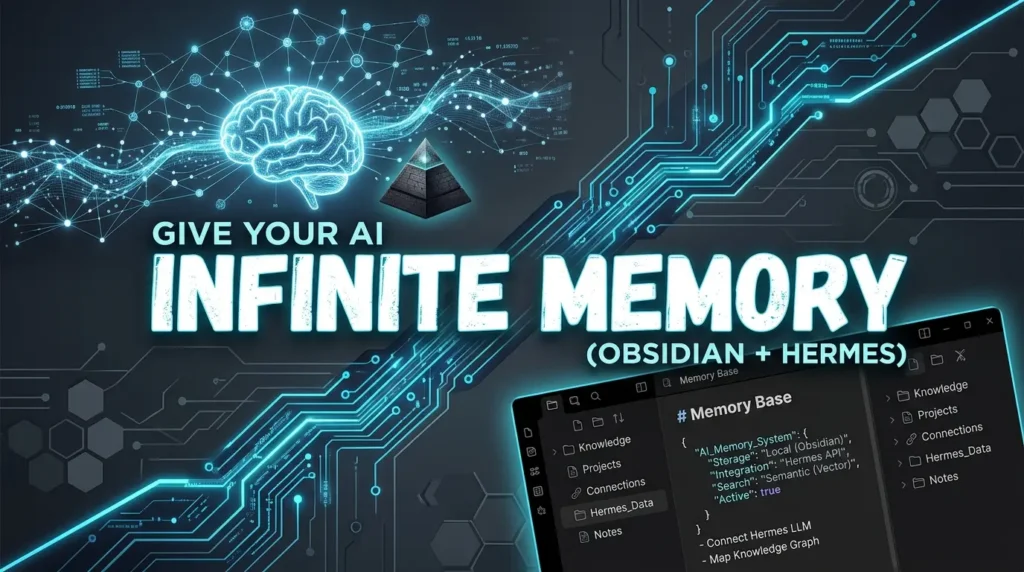
Instead of constantly retyping your operational workflows or feeding the same background documentation to your prompt bar over and over, you can establish a localized, self-sustaining database. By bridging Hermes Agent OS directly to an Obsidian knowledge graph using a customized Model Context Protocol (MCP) link, your autonomous agents gain a permanent space to store, retrieve, and organize relevant business metrics automatically. This approach leaves your active workspace threads clean, responsive, and ready to focus purely on asset production.
Building this local infrastructure doesn’t require a mass migration of your personal archives or a high-end computing rig. A minimal setup involving three to five foundational documents—such as your core business goals, primary SOPs, and style guides—is all it takes to initialize your graph. From there, the background network updates your vault files incrementally as you complete tasks, allowing your systemic knowledge base to scale organically without creating administrative overwhelm.
- Prevent Context Bloat: Protect your active development chats from breaking down by offloading static background data and long-term storage requirements onto a dedicated local directory.
- Automated Knowledge Curation: Allow your internal agent teams to update, tag, and organize incoming markdown notes within your Obsidian vault directly, removing manual data maintenance from your checklist.
- Hyper-Relevant Material Generation: Provide your operational systems with direct, localized reference material so that complex business outputs are immediately tailored to your specific parameters.
- Asynchronous Cloud Deployment: Run your lightweight agent infrastructure around the clock using virtual private servers (VPS) and secure tunnel access without requiring dedicated local computing hardware.
- Minimalist Scalability: Eliminate system deployment overwhelm by beginning your architecture with less than five reference files and letting the asset database grow step-by-step through natural usage.
To watch the complete step-by-step breakdown of how this localized dashboard handles active multi-agent task delegation on screen, check out the full walkthrough tutorial video embedded below.
P.S. If you want to go deeper than just tutorials and actually build a business with AI tools then join the AI Profit Boardroom. Here’s where you will find tons of tutorials, tips, tools and advanced workflows that don’t make it to YouTube. Check out the AI Profit Boardroom here: https://clinthermanlikes.com/aipb