

 ATTENTION: Want to Learn Affiliate Marketing from Successful Affiliates?
Join this FREE community where successful marketers share their secrets!
Learn directly from highly successful affiliate marketers
Access free, actionable training content regularly
Connect with an active community of over 5,000 members
Network with multiple six-figure earning affiliates
Get your questions answered by real experts
JOIN FREE NOW!
ATTENTION: Want to Learn Affiliate Marketing from Successful Affiliates?
Join this FREE community where successful marketers share their secrets!
Learn directly from highly successful affiliate marketers
Access free, actionable training content regularly
Connect with an active community of over 5,000 members
Network with multiple six-figure earning affiliates
Get your questions answered by real experts
JOIN FREE NOW!
Understanding how to analyze affiliate competitors’ SEO strategies is crucial for anyone looking to succeed in the affiliate marketing space. By examining what others are doing, you can adapt and improve your own strategies, leading to better rankings, traffic, and conversions.
Identify Your Competitors
Start by identifying your top competitors in the affiliate niche. This involves searching for the keywords relevant to your business and taking note of the websites that consistently rank on the first page of search results. Look for affiliates in your broad market and in closely related niches.
Utilize SEO Tools
Several tools can help you delve deeper into your competitors’ SEO strategies. Some of the most effective include:
- SEMrush – A comprehensive tool that offers insights into your competition’s keyword strategies and back-linking tactics.
- Ahrefs – This platform excels at showing which keywords bring traffic to your competitors.
- Moz – Use Moz to check domain authority and see how your competitors rank against you.
Keyword Research and Analysis
Examine the keywords your competitors are targeting. Focus on both short-tail and long-tail keywords. Look for:
- High-ranking keywords – Notice which keywords bring the most organic traffic.
- Content gaps – Identify keywords they aren’t targeting that could represent opportunities for you.
- Keyword variations – Check if they use variations or synonyms of keywords effectively.
Content Strategy Evaluation
Analyze the type of content your competitors produce. Here are several aspects to consider:
- Content format – Are they using blogs, videos, infographics, or other formats?
- Content depth – Is their content in-depth and informative, or is it brief and lacking substance?
- Update frequency – How often do they publish new content?
By evaluating these components, you can glean insights about the content strategy that works best within your niche.
Backlink Profile Examination
Backlinks are crucial for SEO success. Use your chosen SEO tools to analyze your competitors’ backlink profiles.
| Tool | Use Case |
|---|---|
| SEMrush | Discover where your competitors are getting backlinks from. |
| Ahrefs | Analyze the backlink quality and the number of referring domains. |
| Majestic SEO | Check the Trust Flow and Citation Flow of backlinks. |
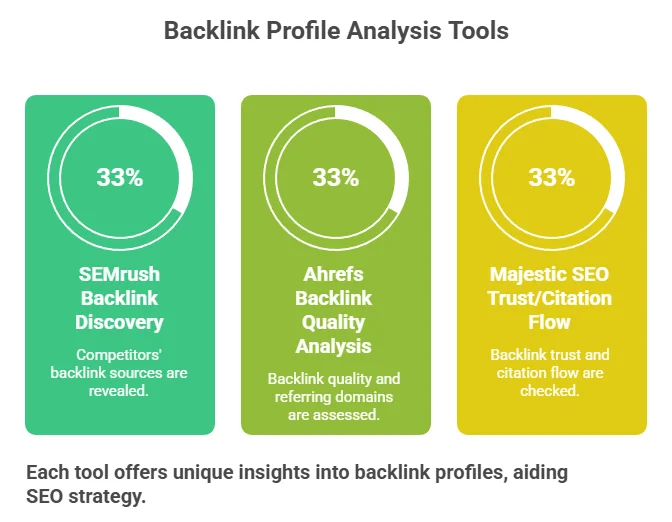
Understanding where your competitors receive their backlinks can guide you in developing your own linking strategy.
Social Media Interaction and Engagement
Take note of your competitors’ presence on social media platforms. Check for:
- Engagement rates – How much interaction are they getting on their posts?
- Content sharing – What kind of content do their followers share the most?
- Influencer partnerships – Are they collaborating with influencers or other brands?
This information can guide you to create a more engaging social media strategy that resonates with your audience.
Technical SEO Factors
Don’t neglect the technical side of SEO. Check aspects such as:
- Site speed – Use tools like Google PageSpeed Insights to compare load times.
- Mobile-friendliness – Is their site optimized for mobile devices?
- Site structure – Analyze their navigation and URL structure to understand how it supports SEO.
By incorporating these tactics into your strategy, you will gain a more comprehensive understanding of how to analyze affiliate competitors’ SEO. This, in turn, can help elevate your own methods to achieve better results in the competitive online market.
Key Metrics to Evaluate in SEO Competitor Analysis
Analyzing your competitors’ SEO strategies can provide you with invaluable insights, helping you craft an effective approach for your own site. Understanding key metrics allows you to measure their strengths and weaknesses while identifying opportunities to enhance your visibility. Consider focusing on the following essential metrics to get started:
Organic Traffic
One of the most fundamental metrics to evaluate is the amount of organic traffic your competitors receive. This can often be assessed through tools such as SEMrush or Ahrefs, which provide estimates based on keywords and rankings. Increasing visibility in organic search results typically correlates with higher traffic, so understanding where your competitors stand can help you set your goals accordingly.
Keyword Rankings
Examining which keywords drive traffic to your competitors’ websites is vital for your SEO strategy. Use tools like Moz to track the keywords they rank for. Pay attention to both short-tail and long-tail keywords, and identify any that are relevant to your niche but not yet on your radar. Creating content tailored around these keywords can help level the playing field.
Backlink Profile
A comprehensive backlink profile reveals which websites link to your competitors and can indicate the strength of their domain authority. Focus on:
- Total Number of Backlinks: More backlinks generally equate to better rankings, provided the links come from reputable sources.
- Quality of Backlinks: Prioritize links from high-authority domains over those from lower-quality sites.
- Anchor Text Distribution: Analyzing the anchor text can reveal how competitors optimize their backlinks.
Tools such as Majestic can assist you in evaluating your competitors’ backlink strategies.
On-Page SEO Factors
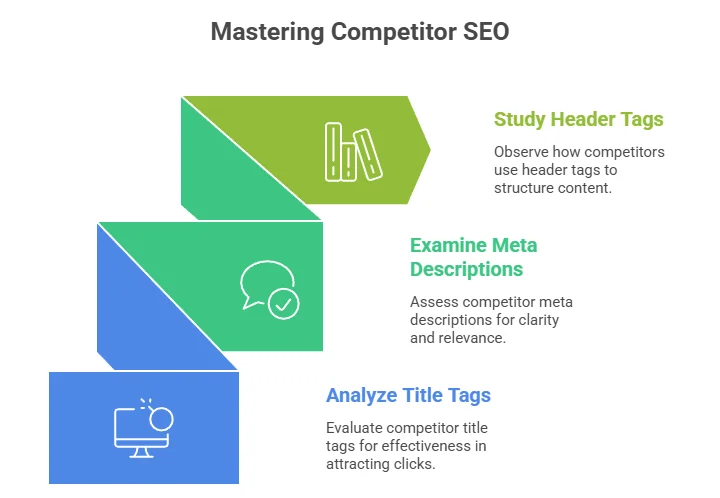
Assessing your competitors’ on-page SEO practices can offer valuable lessons. Focus on:
- Title Tags and Meta Descriptions: Evaluate how they are written and structured, as these elements help improve click-through rates.
- Header Tags: Look at how your competitors utilize header tags (H1, H2, etc.) to organize content for both users and search engines.
- Content Length and Quality: Determine the average length of their top-performing content and whether it engages readers effectively.
User Engagement Metrics
Understanding user engagement metrics such as bounce rate, time on page, and pages per session can help you gauge how well competitors keep visitors on their sites. Engaging content often leads to lower bounce rates and higher return visits.
Social Signals
While not a direct SEO ranking factor, social signals can play a role in visibility and traffic. Explore:
- Shares and Likes: Assess how often competitors’ content is shared across social media platforms.
- Engagement Rates: Examine comments and interactions to see which types of content resonate best with their audience.
Technical SEO Factors
Technical SEO is essential for ensuring a website is crawlable and user-friendly. Look into your competitors’:
- Site Speed: Fast-loading sites offer better user experience and can improve search rankings.
- Mobile Friendliness: With the increasing number of mobile users, checking mobile optimization is crucial.
- Structured Data: Evaluate if they utilize schema markup to enhance their search appearances.
Content Strategy
Analyzing the type of content your competitors produce can provide insights into their overall SEO strategy. Consider the following:
- Blog Posts vs. Static Pages: Determine the balance between blog content and static pages. Blogs can help attract new visitors, while static pages are more for targeted conversions.
- Content Updates: Explore how often they refresh their existing content, a critical factor in maintaining search rankings.
By diligently analyzing these metrics, you equip yourself with the knowledge needed to outrank competitors and enhance your SEO strategy. For detailed guides, you can refer to resources like HubSpot Blog for content marketing insights or Search Engine Journal for the latest trends and strategies in SEO.
Tools and Resources for Monitoring Affiliate Competitors
In the competitive world of affiliate marketing, staying ahead of your rivals is crucial for success. One effective strategy is to monitor your affiliate competitors. By utilizing various tools and resources, you can gain valuable insights and enhance your own marketing strategies.
Keyword Research Tools
Understanding the keywords your competitors are targeting is key. Here are some popular tools that can help you analyze their SEO strategies:
- SEMrush: This comprehensive tool provides keyword tracking, competitor analysis, and traffic insights. You can see which keywords are driving traffic to their sites and strategize accordingly.
- Ahrefs: Renowned for its backlink analysis, Ahrefs also offers a keyword explorer that can shed light on your competitors’ keyword choices.
- Moz: Moz provides a range of tools, including keyword tracking and competitive analysis, to help you identify effective strategies.
Traffic Analysis Tools
Knowing how much traffic your competitors receive can inform your marketing decisions. Utilize these resources to gather traffic data:
- SimilarWeb: This tool allows you to monitor web traffic and analyze user engagement metrics for any competitor’s site.
- Alexa: Alexa provides insights into website traffic and can help gauge how your competitors rank among similar sites.
- Google Analytics: While primarily for your own site, competitor traffic can sometimes be estimated indirectly by analyzing shared keywords.
Social Media Monitoring
Monitoring your competitors’ social media presence can provide insights into their marketing strategies and customer engagement. Here are some effective tools to consider:
- BuzzSumo: This tool helps you identify what content performs best for your competitors on social media, how many shares they receive, and who their key influencers are.
- Hootsuite: With Hootsuite, you can track competitors’ social media activities and gauge their presence and engagement levels across multiple platforms.
- Sprout Social: This platform provides social media analytics that help you understand your competitors’ audience engagement and overall performance.
Backlink Analysis
It’s important to monitor where your competitors are getting their backlinks since this can inform your own link-building strategy. Consider these tools:
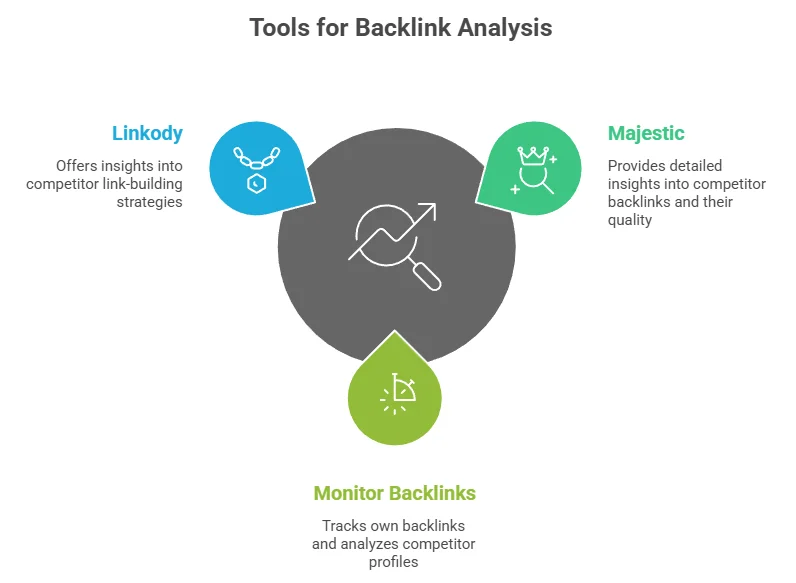
| Tool | Features |
|---|---|
| Majestic | Offers detailed insights into backlinks, showing you where your competitors earn their links and the quality of those links. |
| Monitor Backlinks | Not only does it track your own backlinks, but it also lets you analyze competitors’ backlink profiles. |
| Linkody | A great resource for tracking backlinks, gaining insights into your competitors’ link-building strategies. |
Content Analysis Tools
Understanding the type of content your competitors are producing can give you ideas for your own campaigns. Use these tools:
- Clearscope: Helps in optimizing content by analyzing competitor content against target keywords.
- Grammarly: While primarily a writing tool, it can help you maintain high standards of quality as you craft content that can outperform your competitors.
- Canva: Use this tool to create visually appealing content that stands out, inspired by your competitors’ strategies.
Monitoring your affiliate competitors is not just about replicating their strategies; it’s about learning and improving your own approach. By leveraging these tools, you can enhance your SEO efforts and ultimately boost your affiliate marketing success.
Common Mistakes to Avoid When Analyzing Competitors’ SEO
When diving into the world of SEO, understanding your competitors is essential. However, there are common mistakes that can derail your analysis. Here’s how to navigate those pitfalls and get the most from your competitor analysis.
Neglecting to Define Your Goals
Before you begin analyzing competitors’ SEO, you must clearly define what you aim to achieve. Without specific goals, you may miss critical insights or focus on irrelevant metrics. Are you hoping to increase organic traffic, enhance your keyword strategy, or improve your content quality? Establish your objectives first to guide your analysis.
Focusing Solely on Rankings
Many people make the mistake of concentrating only on where competitors rank for certain keywords. While rankings matter, this approach neglects a wider view of SEO performance. Consider the following factors:
- Content Quality: Evaluate how well your competitors engage their audience.
- Backlink Profiles: Examine who links to them and the quality of those links.
- User Experience: Analyze the usability and speed of their sites.
Viewing rankings in isolation can lead you to overlook other critical aspects that influence overall success.
Overlooking Long-Tail Keywords
While analyzing competitors, you might gloss over long-tail keywords, which can be quite powerful. These keywords often have less competition but can yield significant traffic. Take note of any long-tail phrases your competitors rank for, as they may not have the same visibility for more general terms. Tools like Ahrefs and Moz can help reveal these hidden gems.
Ignoring Core Metrics
Another common error is not paying attention to core metrics that can indicate SEO performance effectively. These metrics include:
- Domain Authority (DA): A higher score typically indicates more trust and credibility.
- Page Speed: Faster pages improve user experience and can influence rankings.
- Bounce Rate: A high bounce rate may indicate that content is not meeting expectations.
Ignoring these metrics can provide a skewed analysis that doesn’t reflect a complete picture.
Not Analyzing Content Strategies
Content is king in the world of SEO. Failing to assess your competitors’ content strategies is a major mistake. Take the time to analyze:
- Content topics and themes they cover.
- The depth and format of their content (e.g., blogs, videos, infographics).
- The frequency of content updates and new publications.
This information can help you identify content gaps in your own strategy and inspire new ideas that resonate with your audience.
Underestimating Social Media Impact
Competitors’ social media presence can often reveal insights into their SEO performance. Social media metrics, such as engagement rates and follower counts, can hint at the effectiveness of their content. These platforms can drive traffic to websites, enhancing visibility. Therefore, monitoring how well competitors utilize their social media can be crucial to a holistic view of their overall SEO strategy.
Failing to Update Competitor Analysis
SEO is a constantly evolving landscape. Competitors’ strategies change over time, and so should your analysis. Make it a habit to revisit your findings regularly. Consider setting reminders every few months to update your competitive analysis. This approach ensures you’re always aligned with the current state of your industry’s SEO practices.
Avoiding these common mistakes will lead to a more insightful and effective analysis of your competitors’ SEO strategies. By focusing on the bigger picture, prioritizing goals, and regularly updating your research, you’ll strengthen your own SEO efforts. Resources like SEMrush and SpyFu can aid you in gathering valuable information to keep your analysis sharp.
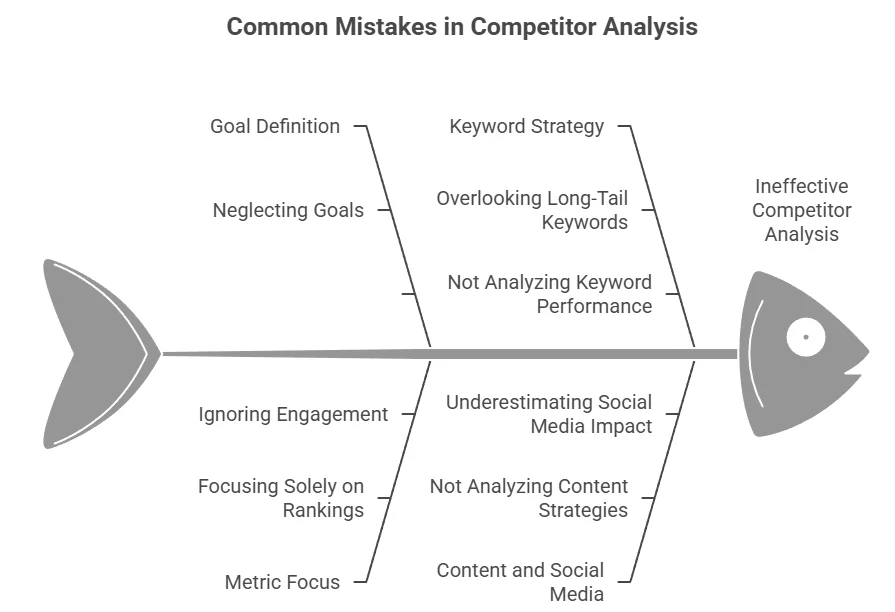
| Common Mistakes | Description |
|---|---|
| Neglecting Goals | Failing to define what to analyze. |
| Focusing Solely on Rankings | Ignoring other metrics like engagement and user experience. |
| Overlooking Long-Tail Keywords | Missing out on valuable lower-competition keywords. |
| Ignoring Core Metrics | Not assessing key data points like DA and bounce rate. |
| Not Analyzing Content Strategies | Failing to learn from competitors’ content success. |
| Underestimating Social Media Impact | Ignoring how social media influences SEO. |
| Failing to Update Analysis | Letting analysis become stale with no updates. |
How to Use Competitor Insights to Enhance Your Own SEO Strategy
In today’s competitive digital landscape, understanding how to analyze affiliate competitors’ SEO strategies can significantly boost your online visibility. By tapping into their successes and mistakes, you can craft a robust SEO plan that propels your website to the top of search engine results.
First, identify your primary competitors. These are not only those who have direct affiliate links but also businesses that operate in your niche offering similar products or services. Make a list of their URLs, and be strategic. Remember, you’ll want competitors who rank for keywords that are crucial for your business.
Next, use SEO tools to analyze these competitors. Popular tools like Ahrefs, SEMrush, and Moz can provide insights into competitor keywords, backlink profiles, and overall site health. These insights will help you understand what strategies work in your industry.
When analyzing keywords, focus on these aspects:
- Search Volume: Identify which keywords your competitors rank for with significant search traffic.
- Keyword Difficulty: Assess how competitive the keywords are. Target less competitive keywords for quicker wins.
- Content Type: Examine the kinds of content ranking well (blogs, guides, reviews, etc.).
- On-Page SEO: Look for patterns in title tags, meta descriptions, and headers that may engage users effectively.
Once you’ve gathered keywords, it’s time to analyze content. Assess the following:
- Content Quality: Is it informative, engaging, and valuable to readers?
- Length: How long are the top-ranking articles? This can signal what Google prefers in terms of depth.
- User Engagement: Check comments, shares, or likes to determine the effectiveness of the content.
Next, evaluate the backlink profile of your competitors. Backlinks are crucial for SEO and provide a vote of confidence from one site to another. Use your SEO tool to examine:
- Total Backlinks: More links typically mean better credibility.
- Referring Domains: How many unique domains are linking back to them?
- Quality of Backlinks: Are the backlinks from high-authority sites, or are they lower-quality links?
This analysis will guide you in developing your link-building strategy. Your goal should be to acquire backlinks from reputable sources within your niche, which can help improve your website’s authority in the eyes of search engines.
After this deep dive, map out gaps in your offering. If competitors rank well for specific keywords you aren’t targeting, or their content resonates better with the audience, these are areas to focus on. Additionally, consider the user experience elements of your competitors’ sites:
- Loading Speed: Fast loading times enhance user experience and SEO rankings.
- Mobile Responsiveness: Most users access websites via mobile devices; ensure yours is optimized.
- Site Structure: A well-organized site helps both users and search engines navigate content easily.
Implement your findings into your SEO strategy. Set achievable goals based on your competitor analysis. Begin with keyword targeting and content creation, ensuring that both align with user intent. Regularly monitor and adjust your strategy based on performance metrics.
For ongoing learning and supporting tools, consider these resources:
By effectively leveraging competitor insights, you can enhance your own SEO strategy and improve your chances of success in the vibrant world of affiliate marketing. Stay proactive, gather data frequently, and watch as your website climbs the ranks.
Conclusion
Analyzing your affiliate competitors’ SEO strategies can significantly boost your online performance. By employing effective techniques to assess their approaches, you can gather crucial insights that inform your own tactics. Focus on key metrics such as keyword rankings, backlink quality, and content performance, as these can reveal strengths and weaknesses in their strategies.
Utilizing the right tools and resources enables you to monitor these competitors effortlessly. Whether it’s SEO analytics software or keyword research tools, having the right data at your fingertips is invaluable. However, steer clear of common mistakes like fixating too much on one competitor or neglecting to adapt insights to fit your unique brand voice.
Learning from your competitors is more than just imitation; it’s about refining your own SEO strategy. Use their successes and failures to carve out your niche, identify gaps in their content, and address needs that they may overlook. Ultimately, the goal is to create a robust SEO plan that not only attracts traffic but also engages and converts visitors effectively. By leveraging competitor insights wisely, you can position your affiliate business for sustained growth and success in a competitive landscape. Remember, the key lies in continuous analysis and adaptation, setting you apart in the ever-evolving world of digital marketing.