Email Newsletter Strategies for Engagement

ATTENTION: Want to Learn Affiliate Marketing from Successful Affiliates?
Email Newsletter Strategies for Engagement are a powerful tool for building relationships with your audience. To truly engage your readers, it’s essential to implement effective strategies that resonate with their interests and preferences. Here are several approaches to enhance the engagement of your email newsletters.
Personalization
One of the best ways to increase engagement is through personalization. When you tailor content to individual subscribers, they feel more connected. Consider these tips for effective personalization:
- Use the recipient’s name in the subject line and greeting.
- Segment your audience based on their preferences, behavior, or demographics.
- Send personalized recommendations based on past purchases or interactions.
Compelling Subject Lines
Catchy subject lines are critical to boosting open rates. Here are ways to make your subject lines stand out:
- Keep them short and sweet—aim for 6 to 10 words.
- Ask intriguing questions or use “how-to” statements.
- Incorporate emojis to add a fun touch but use them sparingly.
- Create a sense of urgency with words like “limited time” or “only today.”
Valuable Content
Your email newsletter should offer value. If you consistently deliver high-quality content, your subscribers will look forward to your emails. Here’s how:
- Share expert insights, tips, or how-to guides relevant to your audience.
- Highlight customer success stories to inspire and motivate your readers.
- Consider including curated content from trusted sources in your industry.
Engaging Calls to Action
An email newsletter should always guide readers to take action. Clear and compelling calls to action (CTAs) can significantly boost engagement. Here are some strategies:
- Use action-oriented language like “Discover More,” “Join Now,” or “Get Started Today.”
- Make CTAs stand out with contrasting colors and buttons.
- Place CTAs strategically within the email for easy access.
Consistency and Timing
Establishing a consistent schedule for your email newsletters fosters reliability. Determine the right frequency and timing that resonates with your audience. Here are some tips for consistency:
- Aim for a frequency that aligns with your content and fits your audience’s expectations.
- Test sending your emails at different times to see when your audience is most responsive.
- Maintain a uniform style, tone, and format to create familiarity.
Mobile Optimization
With a significant number of users checking emails on their mobile devices, ensuring mobile-friendly designs is vital. Here’s how you can optimize for mobile:
- Use responsive design templates that adapt to different screen sizes.
- Keep your content succinct and visually appealing with images and bullet points.
- Test your emails on various devices before sending.
Interactive Content
Adding interactive elements to your newsletters can greatly enhance engagement. Here are some ideas:
- Incorporate quizzes or polls to gather opinions from your audience.
- Use GIFs or videos to create a dynamic viewing experience.
- Include clickable infographics that guide readers to more information.
Measure and Adapt
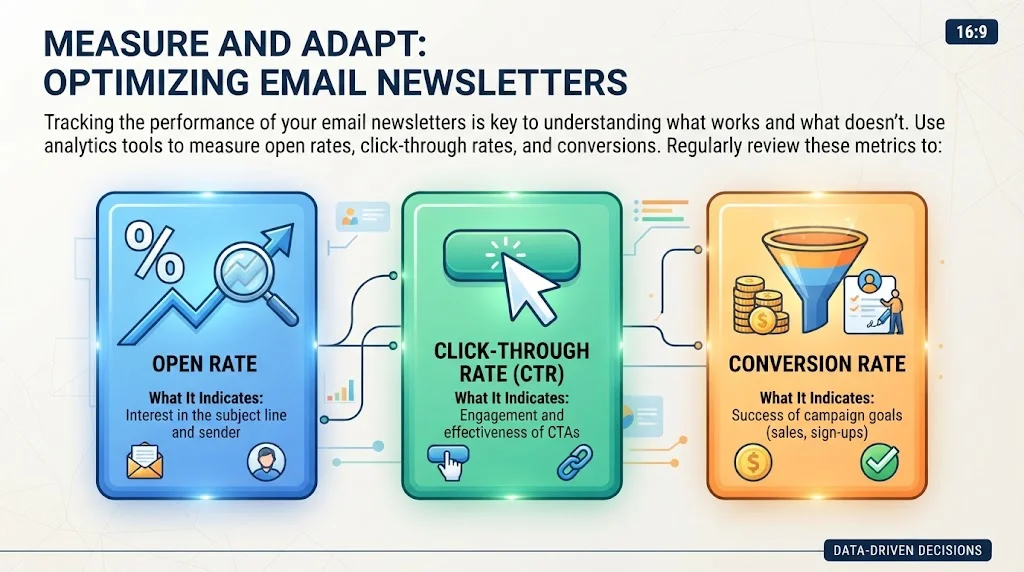
Tracking the performance of your email newsletters is key to understanding what works and what doesn’t. Use analytics tools to measure open rates, click-through rates, and conversions. Regularly review these metrics to:
| Metric | What It Indicates |
|---|---|
| Open Rate | Interest in the subject line and sender |
| Click-Through Rate | Engagement and effectiveness of CTAs |
| Conversion Rate | Success of campaign goals (sales, sign-ups) |
Adjust your strategies based on these insights to continually enhance your email newsletters. For more strategies and inspiration, you can visit Mailchimp or check out Sendinblue for email marketing tips. Remember, engaging your audience takes time and consistent effort, but with the right strategies in place, you can create meaningful interactions that lead to stronger relationships and results.
Personalization Techniques to Boost Reader Interaction
In today’s fast-paced digital landscape, connecting with your audience on a personal level has never been more important. Email Newsletter Strategies for Engagement personalization techniques can significantly enhance reader interaction, driving engagement and increasing the value of your content. By tailoring your email newsletters to meet the individual preferences and characteristics of your subscribers, you can forge stronger relationships and encourage them to interact more with your messages.
One of the most effective ways to personalize your email newsletters is through segmentation. By breaking down your subscriber list into smaller groups based on shared characteristics or behaviors, you can craft messages that resonate with specific audiences. For example, consider segmenting your subscribers by:
- Demographics: Age, gender, location, and occupation.
- Behavior: Previous purchases, email opens, and clicks.
- Interests: Topics they signed up to receive updates about.
Segmentation allows you to deliver content that is highly relevant to each group. When subscribers feel like the content speaks directly to their experiences and needs, they are more likely to engage, whether by clicking links, responding to surveys, or sharing your newsletter with others.
Dynamic content
Another personalization technique is utilizing dynamic content. This means customizing email elements based on the recipient’s data. For instance, you could display different product recommendations, images, or even different introductory text based on subscriber profiles. By changing these variables, you send a tailored message that enhances the user experience. A simple way to implement dynamic content is through tools that support conditional logic in emails.
User-generated content
Encouraging user-generated content is another way to personalize your newsletters. Inviting readers to share their experiences related to your products or services can boost interaction. This could be in the form of testimonials, photos, or stories. When you include their content in your newsletters, subscribers feel more valued, leading to enhanced engagement. A great example of this is a brand showcasing customers’ photos using their product, which fosters a sense of community and connection.
Personalization
Furthermore, personalization extends to the subject lines and preview text of your emails. Crafting compelling and personalized subject lines can entice readers to open your email. Use the subscriber’s name, tailor the subject line to their interests, or create a sense of urgency. For example, instead of a generalized “New Products Available,” you might say, “Emily, check out the new shoes in your favorite color!” This small change can significantly increase open rates.
Timing and frequency
Timing and frequency also play an essential role in personalization strategies. Analyze your audience’s behavior to determine when they are most likely to engage with your emails. Some subscribers may prefer receiving daily updates, while others might respond better to weekly summaries. Sending emails at the right time can make a significant difference in engagement rates.
Surveys and feedback forms
Consider incorporating personalization through surveys and feedback forms. Asking subscribers for their opinions on content, products, or services can provide valuable insights into their preferences. This data can help inform future content strategies and make your newsletters even more tailored to your audience’s interests. Plus, when subscribers see that their feedback leads to changes, they will feel a greater connection to your brand.
Test your strategies
To enhance reader interaction through personalization, it is vital to constantly test and iterate your strategies. You can run A/B tests on different email elements to gauge what resonates more with your audience. This approach provides an opportunity to refine your messaging and improve engagement over time.
Adopting personalized techniques within your email newsletters is key to boosting reader interaction. By segmenting your audience, using dynamic content, encouraging user-generated input, crafting tailored subject lines, optimizing send times, and gathering feedback, you can create newsletters that not only reach your audience but resonate with them deeply. These strategies, when implemented thoughtfully, will lead to increased engagement and foster long-lasting relationships with your subscribers.
Designing Eye-Catching Layouts for Maximum Impact
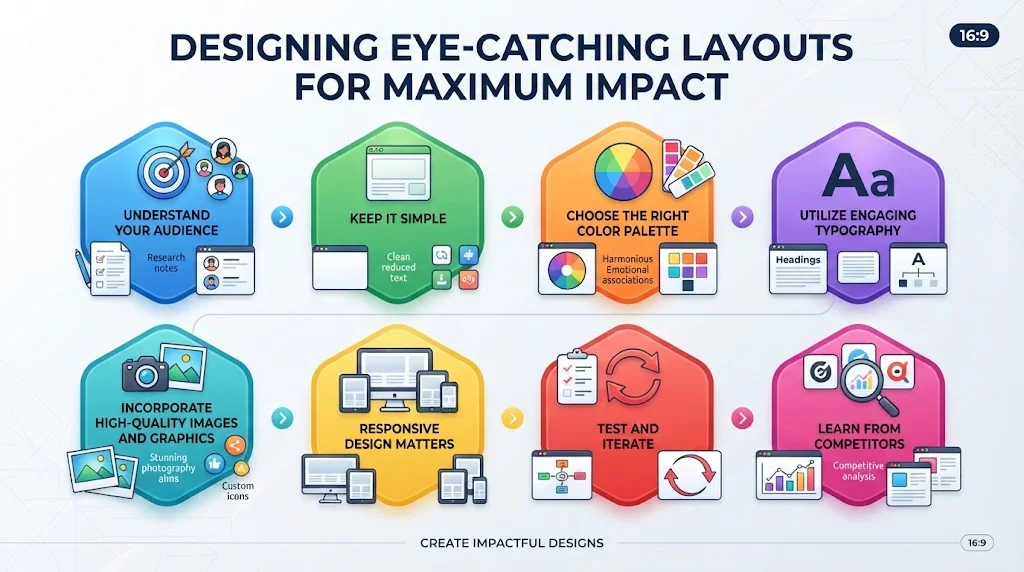
Creating layouts that capture the eye and engage the audience is vital in today’s fast-paced digital landscape. When designing for maximum impact, there are several strategies you can employ to ensure your visuals stand out and resonate with your readers.
Understand Your Audience
Before diving into design elements, take a moment to consider who your audience is. Different demographics will respond to visuals in unique ways. Here are a few tips to help you get started:
- Conduct surveys to gauge preferences.
- Analyze user behavior through analytics tools.
- Review feedback from previous design iterations.
Keep It Simple
A cluttered layout can overwhelm your readers and lead to disengagement. Implementing a minimalist design can often yield the best results. Aim for:
- Less text and more visuals.
- A clear hierarchy of information.
- Whitespace to allow elements to breathe.
Choose the Right Color Palette
Your choice of colors can significantly influence how your message is perceived. Colors evoke emotions and can drive action, so consider the following:
- Use contrasting colors to highlight key areas.
- Consider color psychology: for instance, blue can instill trust, while red can create urgency.
- Limit your palette to three to five primary colors for cohesion.
Utilize Engaging Typography
Typography is not merely about the words you use; it is about how they look on the page. Make sure to:
- Choose fonts that reflect your brand’s personality.
- Use a combination of fonts sparingly for emphasis.
- Ensure readability; avoid overly decorative fonts that may distract from the content.
Incorporate High-Quality Images and Graphics
Images can significantly elevate your design, making it more engaging. Here are some recommendations:
- Use high-resolution images that are relevant to your content.
- Incorporate infographics to simplify complex information.
- Utilize icons for quick visual representations of key ideas.
Responsive Design Matters
With the increasing use of mobile devices, it’s crucial to ensure your layout works seamlessly across all devices. Consider:
- Testing designs on various devices and screen sizes.
- Paying attention to touch targets; buttons and links should be easily clickable on small screens.
- Choosing responsive frameworks to streamline the design process.
Test and Iterate
Once your layout is in place, don’t forget to test its effectiveness. Here’s how:
- Conduct A/B testing on different design elements.
- Analyze user engagement metrics to gauge interest.
- Gather feedback from target audience segments to find areas for improvement.
Learn from Competitors
An excellent way to enhance your design skills is to analyze your competitors. Look at:
- The layout structure they use.
- Color combinations that seem effective.
- How they utilize white space and typography to enhance readability.
How to Measure the Success of Your Email Newsletters
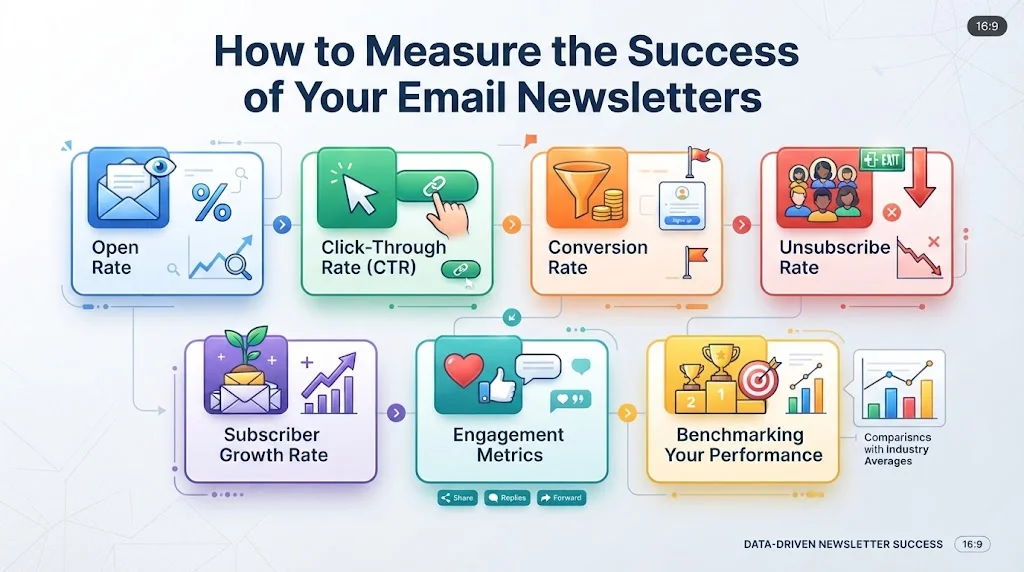
To understand how effective your email newsletters are, it’s crucial to measure key performance indicators (KPIs). These metrics provide clear insights into how engaging and valuable your content is to your audience. Below, we’ll explore various methods and metrics for evaluating your newsletters’ success.
Open Rate
The open rate indicates how many recipients opened your email. It’s usually expressed as a percentage. A higher open rate suggests your subject line is compelling and relevant to your audience. You can improve your open rates by:
- Crafting intriguing subject lines.
- Segmenting your email list for targeted messaging.
- A/B testing different subject lines to see what resonates with recipients.
Click-Through Rate (CTR)
Once your emails are opened, it’s essential to measure how many readers clicked on links within your content. The click-through rate (CTR) is another vital indicator. A high CTR shows that your content is engaging and that your call-to-action (CTA) is effective. Here’s how to enhance your CTR:
- Make sure your CTA stands out visually.
- Use action-oriented language to encourage clicks.
- Regularly analyze and refine your email content based on recipient interactions.
Conversion Rate
The conversion rate reflects the percentage of email recipients who completed a desired action, like purchasing a product or signing up for a webinar. This metric is crucial for assessing your email’s overall effectiveness. Follow these steps to improve your conversion rate:
- Clearly define what a conversion looks like for each email.
- Ensure your newsletter provides value that aligns with your audience’s needs.
- Utilize strong testimonials or case studies to build credibility.
Unsubscribe Rate
A high unsubscribe rate can be a signal that your content isn’t meeting audience expectations. To keep this number in check:
- Regularly solicit feedback from your subscribers to understand their preferences.
- Personalize your emails to make them more relevant.
- Provide valuable content that entertains or educates.
Subscriber Growth Rate
Monitoring how quickly your subscriber list is growing can give you insights into the effectiveness of your email acquisition strategies. Look for:
- Trends in new subscriptions and identify spikes related to specific content or offers.
- Evaluate your promotional efforts to convert visitors into subscribers.
- Remove inactive subscribers periodically to maintain a healthy list.
Engagement Metrics
Engagement metrics, like social media shares or replies, provide additional insights into how recipients interact with your content. Here are effective strategies to foster engagement:
- Encourage readers to share their thoughts or experiences in response to your emails.
- Incorporate social sharing buttons to promote wider visibility.
- Develop interactive elements such as polls or quizzes.
Benchmarking Your Performance
To effectively measure the success of your email newsletters, compare your results with industry benchmarks. According to sites like Mailchimp and Campaign Monitor, benchmark data can provide context for your metrics:
| Metric | Average Rate | Optimal Rate |
|---|---|---|
| Open Rate | 20-30% | 30%+ |
| Click-Through Rate | 2-5% | 5%+ |
| Unsubscribe Rate | 0.2-0.5% | <0.2% |
| Conversion Rate | 1-2% | 2%+ |
Regularly analyzing these metrics and making improvements based on findings ensures your email newsletters remain effective and engaging. When you focus on measuring success, you’re not just driving numbers; you’re connecting with your audience, fulfilling their needs, and establishing a loyal subscriber base.
For more detailed insights, check out the resources offered by Mailchimp or Campaign Monitor.
Creating Compelling Content that Resonates with Your Audience
Creating content that captures your audience’s attention begins with understanding their needs and preferences. It’s vital to research your target demographic to ensure your message resonates. Use surveys, social media polls, or website analytics to gather insights into what your audience values and enjoys.
Engaging content typically has a few key characteristics. Firstly, it should be informative and provide value. When your audience learns something new, they are more likely to share your content and return for future updates. Secondly, your content should evoke emotions. Whether it’s humor, inspiration, or empathy, stirring feelings can create a memorable experience for your readers.
Once you understand your audience, craft your message to align with their interests. Here are some strategies to help create compelling content:
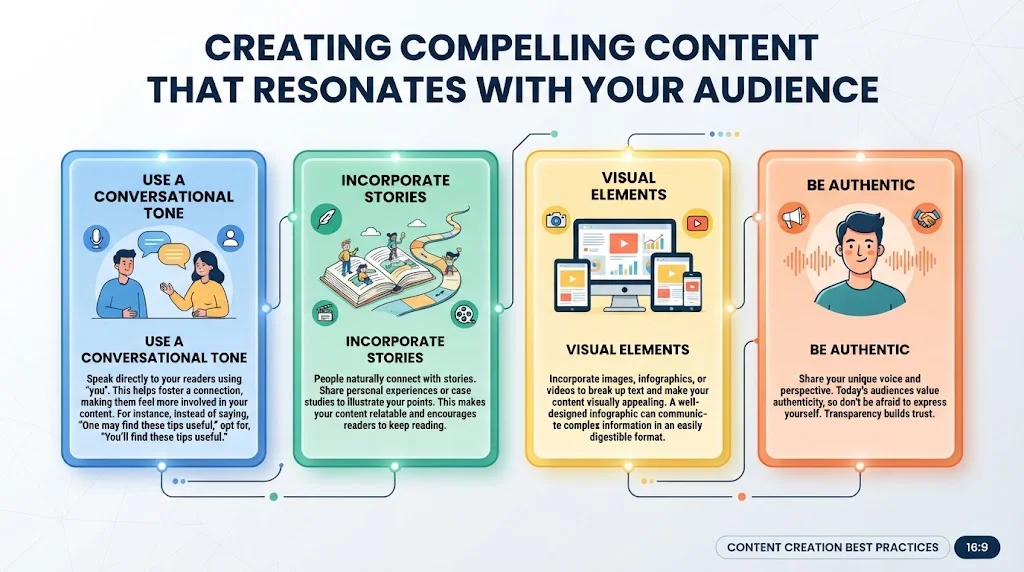
- Use a Conversational Tone: Speak directly to your readers using ‘you’. This helps foster a connection, making them feel more involved in your content. For instance, instead of saying, “One may find these tips useful,” opt for, “You’ll find these tips useful.”
- Incorporate Stories: People naturally connect with stories. Share personal experiences or case studies to illustrate your points. This makes your content relatable and encourages readers to keep reading.
- Visual Elements: Incorporate images, infographics, or videos to break up text and make your content visually appealing. A well-designed infographic can communicate complex information in an easily digestible format.
- Be Authentic: Share your unique voice and perspective. Today’s audiences value authenticity, so don’t be afraid to express yourself. Transparency builds trust.
Engagement goes beyond just the written word; it also involves interaction. Encourage readers to participate through comments, social media shares, or calls to action (CTAs). Posing questions or prompting discussions at the end of your content can foster a sense of community around your brand.
Another powerful technique is the use of data and statistics. People appreciate credible insights that support your arguments. Consider the following example, represented in a table:
| Content Type | Engagement Rate |
|---|---|
| Blog Articles | 40% |
| Infographics | 60% |
| Videos | 80% |
This table highlights how various content types rank in terms of engagement. By knowing these metrics, you can prioritize formats that yield the best results, tailoring your content strategy accordingly.
Moreover, always be mindful of trends within your industry. Subscribe to industry blogs or follow influencers relevant to your niche. Staying updated allows you to align your content with current interests. For instance, if sustainability is trending, consider how your brand can incorporate eco-friendly practices or ideas into your posts.
Don’t shy away from repurposing content. An in-depth article can be transformed into a series of quick social media posts or an engaging video. This approach not only maximizes your resources but also reaches different segments of your audience through various touchpoints.
If you’re looking for additional resources on content creation, visit Copyblogger for expert tips and strategies. Another helpful site is Content Marketing Institute, which focuses on producing effective customer-centric content.
By applying these strategies, you’ll be well on your way to creating compelling content that resonates with your audience. Engaging your readers requires a mix of understanding, creativity, and consistent efforts. With practice, you’ll see the impact of your content on audience engagement and brand loyalty.
Helpful Resources
If you’re looking for inspiration and additional tools for your design projects, check out:
- Canva: A user-friendly tool for creating eye-catching designs with templates.
- Adobe Express: Offers advanced design capabilities for more professional layouts.
- Adobe Fonts: Find unique, high-quality typography for your project.
The design of your layouts plays a critical role in how your content is received. By employing these strategies and continuously refining your approach, you can create captivating layouts that deliver a strong impact and help keep your audience engaged.
Conclusion
To drive engagement through your email newsletters, implementing effective strategies is key to building a loyal audience. Personalization techniques can significantly enhance reader interaction, making your subscribers feel valued and understood. By addressing their specific interests, you not only increase open rates but also foster a deeper connection with your content.
Design plays a crucial role in the impact of your newsletters. An eye-catching layout can capture attention and encourage readers to explore your messages further. Consistent branding and intuitive navigation help ensure that your audience enjoys a seamless reading experience. Pairing appealing visuals with well-structured text will keep readers engaged longer.
Measuring the success of your email newsletters is essential in refining your strategy. Utilize metrics like open rates, click-through rates, and subscriber feedback to gauge what works and what doesn’t. Regularly analyzing this data allows you to tweak your approach, ensuring that your newsletters stay relevant and compelling.
Creating content that resonates with your audience drives home the importance of understanding their needs and preferences. Share stories, tips, and updates that align with their interests, promoting a sense of community. By focusing on delivering value, your newsletters will not only be opened but also shared, leading to organic growth in your readership.
By implementing these strategies, you can transform your email newsletters into powerful tools for engagement, keeping your audience informed, entertained, and eager for more. Engage, measure, and refine continuously, and your newsletters will be a crucial part of your communication strategy.