
Conversion Rate Optimization for Landing Pages

ATTENTION: Want to Learn Affiliate Marketing from Successful Affiliates?
When you craft a landing page, your main goal should be to transform visitors into customers. This process, known as Conversion Rate Optimization for Landing Pages (CRO), involves several key techniques that can make your landing pages more effective. Here are the essential strategies to enhance your landing page conversions.
Understand Your Audience
The first step in effective Conversion Rate Optimization for Landing Pages is understanding who your audience is. Conduct thorough research to gather insights on their preferences, needs, and pain points. Use tools like Google Analytics to analyze visitor behavior on your landing page. By knowing what your audience values, you can tailor your content and design to meet their expectations.
Create a Clear Value Proposition
Your landing page should prominently feature a clear value proposition. This statement informs visitors about what they will gain by taking action, whether that’s signing up, downloading, or purchasing. Make sure your value proposition is concise and directly addresses how your product or service solves a problem for the visitor. A strong value proposition helps to build trust and sparks interest.
Optimize Your Call to Action (CTA)
The call to action is a critical element in the conversion process. To maximize its effectiveness, consider the following:
- Use Action-Oriented Language: Phrases like “Get Started,” “Join Now,” or “Claim Your Free Trial” encourage immediate action.
- Create Urgency: Use limited-time offers to prompt visitors to act quickly.
- Make It Stand Out: Use contrasting colors for your CTA button to draw attention.
Streamline Your Design
A clean and simple design often performs better than a cluttered one. Ensure that your landing page has ample white space which allows visitors to focus on the content. Limit distractions such as excessive links, images, or pop-up forms that can divert attention from your CTA. A visually appealing layout increases readability, making it easier for users to navigate.
Leverage Social Proof
Social proof can significantly influence a visitor’s decision to convert. Incorporate elements such as customer testimonials, user reviews, or trust badges from well-known brands. Showcasing that others have benefited from your product can reassure potential customers. Consider integrating tools like Yotpo to showcase authentic customer reviews.
Utilize A/B Testing
A/B testing allows you to compare two versions of your landing page to determine which one performs better. Experiment with different headlines, images, CTAs, and page layouts. By analyzing which variation results in a higher conversion rate, you will be able to make data-driven decisions that enhance your landing page’s effectiveness.
| Element | Test A | Test B | Winner |
|---|---|---|---|
| Headline | Get Your Free E-Book | Download Your Guide Now | Test B |
| CTA Color | Green | Red | Test A |
Mobile Optimization
With an increasing number of users accessing websites via mobile devices, mobile optimization is essential for Conversion Rate Optimization for Landing Pages. Ensure that your landing page is responsive, meaning it adapts to different screen sizes seamlessly. Testing the mobile version of your landing page using tools like Google’s Mobile-Friendly Test is crucial to ensure a smooth user experience.
Monitor and Analyze Performance
Once your landing page is live, continuously monitor its performance. Use analytics tools to track essential metrics such as bounce rates, time spent on the page, and conversion rates. If certain elements do not meet your expectations, revisit them and make necessary adjustments. Ongoing analysis helps you refine your strategies and achieve better results over time.
CRO is not a one-time task. It’s a continuous journey. By implementing these key techniques, you can create landing pages that not only attract visitors but also persuade them to convert. Visit resources like WordStream for more insights on effective CRO strategies.
The Impact of Design Elements on Landing Page Performance
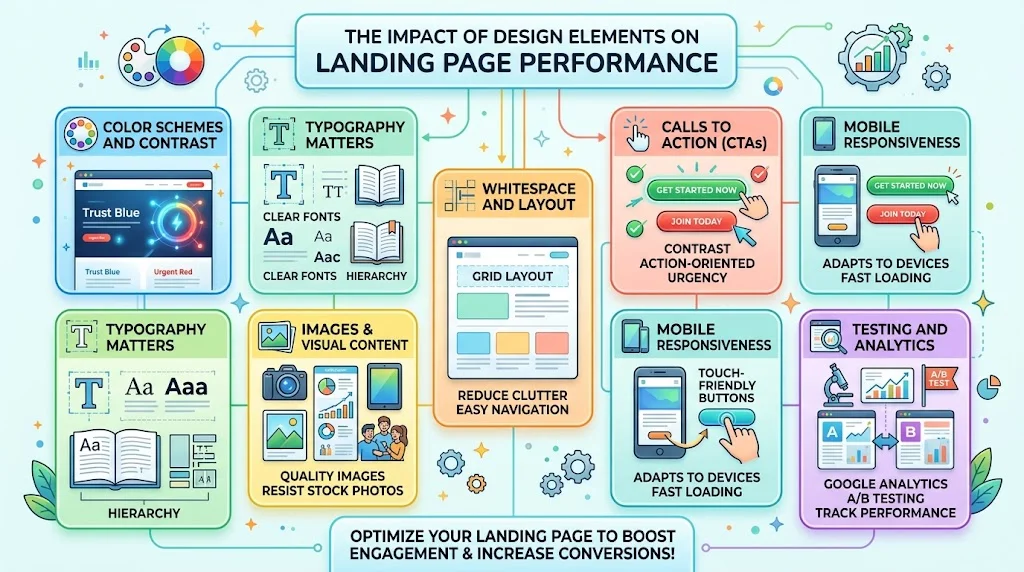
Design elements play a crucial role in determining how well your landing page performs. When you optimize your landing page’s design, you can significantly enhance user experience, keep visitors engaged, and ultimately increase your conversion rates. Let’s explore how various design elements impact landing page performance.
Color Schemes and Contrast
The colors you choose for your landing page can evoke different emotions and responses. It’s essential to select a color scheme that aligns with your brand identity while also appealing to your target audience. For instance, blue often inspires trust and calmness, while red can create a sense of urgency.
Contrast is equally important. By using contrasting colors for buttons and calls to action (CTAs), you make them stand out, attracting attention. A well-designed button that uses a bold color against a more subdued background can significantly improve click-through rates.
Typography Matters
The typeface you select has a direct impact on readability and, consequently, user engagement. You want your visitors to easily read and absorb your content. Using clear, legible fonts enhances the user experience. Consider these tips for choosing the right typography:
- Limit Font Types: Stick to two or three different fonts to maintain a cohesive look.
- Use Hierarchy: Different font sizes and weights can help emphasize critical information.
- Test for Readability: Check how your chosen fonts look on various devices.
Images and Visual Content
High-quality images can make a significant difference in how visitors perceive your landing page. Instead of using generic stock photos, opt for relevant visuals that resonate with your audience. High-quality images can enhance credibility, while poorly chosen visuals can harm your image.
Visual content also streamlines user understanding. Infographics or diagrams can illustrate complex information quickly and effectively. images should complement your text and drive engagement.
Whitespace and Layout
A clean layout, enhanced by adequate whitespace, can guide users’ attention towards essential elements on your landing page. Whitespace reduces clutter and prevents overwhelming users with too much information. A simplified layout allows visitors to navigate the page more effortlessly.
Consider a grid layout for organizing content. By segmenting sections clearly, you can help users find information quickly, boosting overall satisfaction with your site.
Calls to Action (CTAs)
The positioning and design of your CTAs can significantly impact conversion rates. CTAs need to be clearly visible and easily accessible at various points on your landing page. A/B testing different CTA placements can provide insights into what works best for your audience.
Effective CTAs are concise and action-oriented. Phrases like “Get Started Now” or “Join Us Today” create urgency. Experiment with different colors and shapes to see what resonates most with your users.
Mobile Responsiveness
More users are browsing the web on their mobile devices than ever before. Ensuring your landing page is mobile-friendly is critical. A responsive design guarantees that your page looks good and functions well on devices of all sizes.
Consider aspects like touch-friendly buttons and fast-loading images to enhance mobile user experience. Google has emphasized the significance of mobile performance, making it crucial for SEO as well.
Testing and Analytics
Once you’ve implemented design changes, it’s essential to monitor their performance. Tools like Google Analytics can provide valuable insights into user behavior. Track metrics such as bounce rate, time on page, and conversion rates to evaluate the effectiveness of your design elements.
Regular testing is beneficial. Utilize A/B testing to compare different design variations and understand what resonates with your audience. This approach helps refine your design strategy continuously.
Focusing on design elements like color, typography, imagery, whitespace, mobile responsiveness, and CTAs can tangibly impact your landing page’s effectiveness. By creating a user-centric design that promotes engagement, you can drive better results and improve conversion rates. To further enhance your knowledge, you can visit Optimizely and Unbounce for tools and insights related specifically to optimizing landing pages.
Utilizing A/B Testing for Enhanced User Engagement
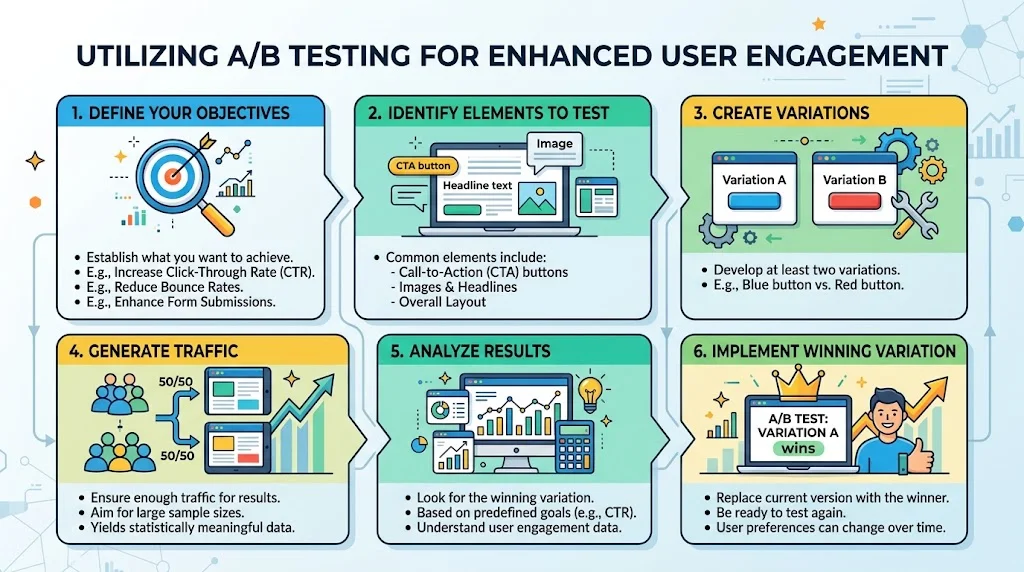
When it comes to improving user engagement, A/B testing stands out as one of the most effective strategies. A/B testing, also known as split testing, allows you to compare two versions of a webpage or app to see which performs better. This method provides you with valuable insights into user preferences and behavior. Implementing A/B testing in your marketing strategy is essential for driving conversions and enhancing user experience.
To start leveraging A/B testing effectively, you should follow a systematic approach. Here are the key steps you need to take:
- Define Your Objectives: Before conducting any tests, establish what you want to achieve. Are you looking to increase the click-through rate, reduce bounce rates, or enhance form submissions? Clear goals will guide your testing effectively.
- Identify Elements to Test: Determine which elements of your website or landing page you want to test. Common elements include call-to-action (CTA) buttons, images, headlines, and overall layout.
- Create Variations: Develop at least two variations for the elements you want to test. For instance, you might create one version of a landing page with a blue button and another with a red button.
- Generate Traffic: Ensure that both variations get enough traffic. This means your sample size must be large enough to yield statistically meaningful results.
- Analyze Results: After running the test for a suitable duration, analyze the data. Look for which variation led to better user engagement based on your predefined goals.
- Implement Winning Variation: The variant that performs best should replace the current version. However, always be ready to test again, as user preferences can change over time.
Using tools such as Google Optimize, Optimizely, or VWO can make your A/B testing smoother and more efficient. These platforms offer user-friendly interfaces and comprehensive analytics to help you track performance seamlessly.
Additionally, A/B testing can apply to various aspects of your marketing strategy beyond mere landing pages. For instance, you can run tests on email campaigns, social media ads, and even content layouts. With these methods, understanding and improving user engagement become achievable goals.
Consider this example: a well-known e-commerce site had trouble converting visitors. They ran an A/B test where they changed their product page layout. One version had customer reviews prominently displayed, while the other buried them lower on the page. After a few weeks, the variation with customer reviews at the top significantly increased conversions. This change illustrated the impact of social proof on buying decisions.
Moreover, A/B testing helps to foster a culture of experimentation. Encourage your team to test new ideas regularly. This mindset can lead to continuous improvements, ensuring that your websites and marketing efforts always aim to meet user needs better.
A/B testing can also enhance user engagement by providing insights into user preferences. Here’s how:
- Behavior Insights: A/B tests reveal how changes impact user interactions. For instance, discovering that users prefer a specific color for CTAs can help you make evidence-based decisions.
- Segmented Data: You can analyze how different audience segments respond. This information can further personalize user experiences in future marketing efforts.
- Real-Time Feedback: A/B testing reveals immediate results, allowing you to pivot and optimize strategies quickly based on user feedback.
Creating an engaging user experience is about understanding your audience. Utilizing tools and strategies like A/B testing allows you to create a more tailored experience that keeps users coming back. Tracking performance through analytics is key to understanding the success of these changes. By monitoring metrics like average session duration, bounce rate, and user feedback, you can refine your strategy.
Also, you may explore resources for further guidance on effective A/B testing strategies:
A/B testing is a powerful tool that can significantly enhance user engagement on your website. By carefully analyzing user behavior and preferences, you can make data-driven decisions that lead to higher conversions and a more positive user experience. Start implementing A/B testing today to discover how you can fine-tune your approach for better results.
The Role of Copywriting in Boosting Conversion Rates
Effective copywriting plays a crucial role in driving conversion rates for landing pages. When crafted thoughtfully, your words not only inform but also motivate visitors to take action. This makes mastering the art of copywriting essential for anyone looking to enhance their online presence.
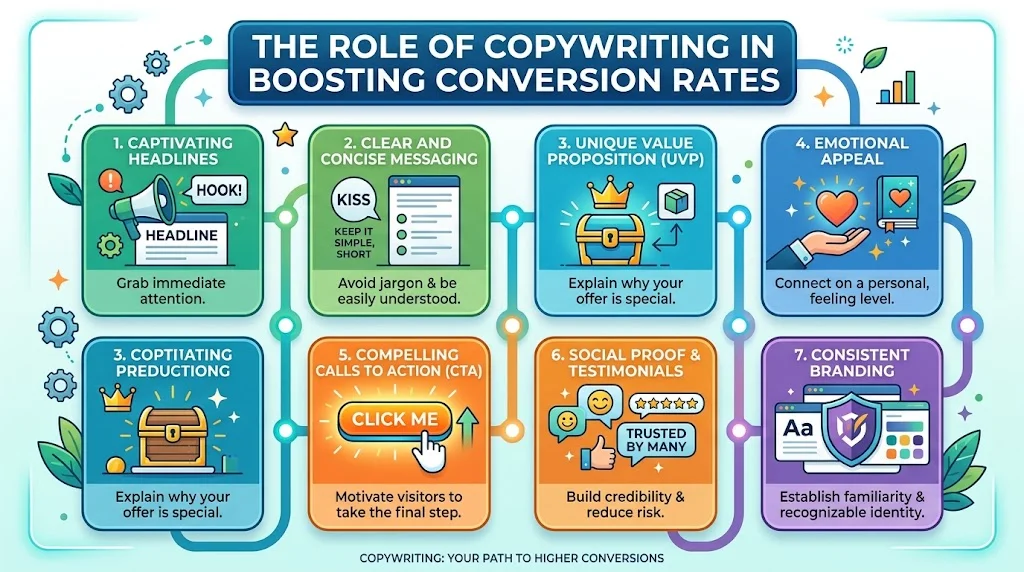
First, let’s consider the primary objective of your landing page: to convert visitors. A well-written copy serves as a bridge that connects user intent with your offerings. The words you choose can evoke emotions, build trust, and persuade visitors to act. Here’s how copywriting contributes to higher conversion rates:
1. Captivating Headlines
The headline is the first impression you make on visitors. It needs to grab attention immediately. To create captivating headlines:
- Use impactful action words.
- Make it relevant to the audience’s needs.
- Pose a thought-provoking question.
An engaging headline sets the tone for the rest of the content, compelling users to read further.
2. Clear and Concise Messaging
Your landing page should communicate its purpose quickly. Visitors tend to skim content, so clarity is key. Here are some pointers for concise copy:
- Avoid jargon and complicated sentences.
- Keep paragraphs short, ideally 2-3 sentences.
- Use bullet points to break down information.
Realistic expectations matter. Visitors appreciate straightforward information that quickly addresses their queries.
3. Unique Value Proposition (UVP)
Your UVP clearly explains why your offering stands out. It’s essential that your copy highlights the benefits of your product or service. Consider these points in your UVP:
- What makes your product unique?
- How does it solve a problem for the customer?
- Highlight any guarantees or warranties.
Position your UVP prominently on the landing page to emphasize why a visitor should choose you over competitors.
4. Emotional Appeal
People often make decisions based on feelings rather than logic. Emotionally driven copy can resonate with your audience on a personal level. To evoke emotions:
- Use storytelling techniques to create relatability.
- Appeal to the visitor’s desires, fears, or aspirations.
This connection can significantly increase the likelihood that a visitor will take the desired action.
5. Compelling Calls to Action (CTA)
Your CTA is one of the most critical elements of your landing page. It should be clear, actionable, and enticing. Consider these best practices for effective CTAs:
- Make the CTA button noticeable through color and placement.
- Use action-oriented language (e.g., “Get Started,” “Download Now”).
- Limit options to minimize decision fatigue.
A strong CTA draws users toward the next step, whether it’s making a purchase or signing up for a newsletter.
6. Social Proof and Testimonials
Including customer reviews and testimonials can significantly enhance credibility. Positive feedback indicates that others have found value in what you offer. Here are ways to incorporate social proof:
- Display star ratings prominently.
- Share user-generated content or success stories.
- Feature any relevant certifications or partnerships.
This not only builds trust but also reassures potential customers about their decision.
7. Consistent Branding
Your copy should align with your overall branding strategy. Consistency helps in establishing familiarity and building a recognizable identity. Ensure that:
- Your tone matches your brand personality.
- The language used reflects your brand values.
A cohesive approach enhances engagement and encourages conversions.
Focusing on effective copywriting for landing pages is essential for boosting conversion rates. The right words can transform casual visitors into loyal customers. If you’re looking to dive deeper into conversion rate optimization and copywriting techniques, check out resources from Neil Patel and Copyblogger.
Implement these strategies, and watch your conversion rates soar.
| Technique | Benefits |
|---|---|
| Captivating Headlines | Grabs attention instantly |
| Clear Messaging | Easy comprehension and quick information delivery |
| Unique Value Proposition | Sets you apart from competitors |
| Emotional Appeal | Resonates with visitors on a personal level |
| Compelling CTA | Guides visitors toward taking action |
| Social Proof | Builds trust and credibility |
| Consistent Branding | Enhances familiarity and engagement |
Analyzing User Behavior to Improve Landing Page Effectiveness
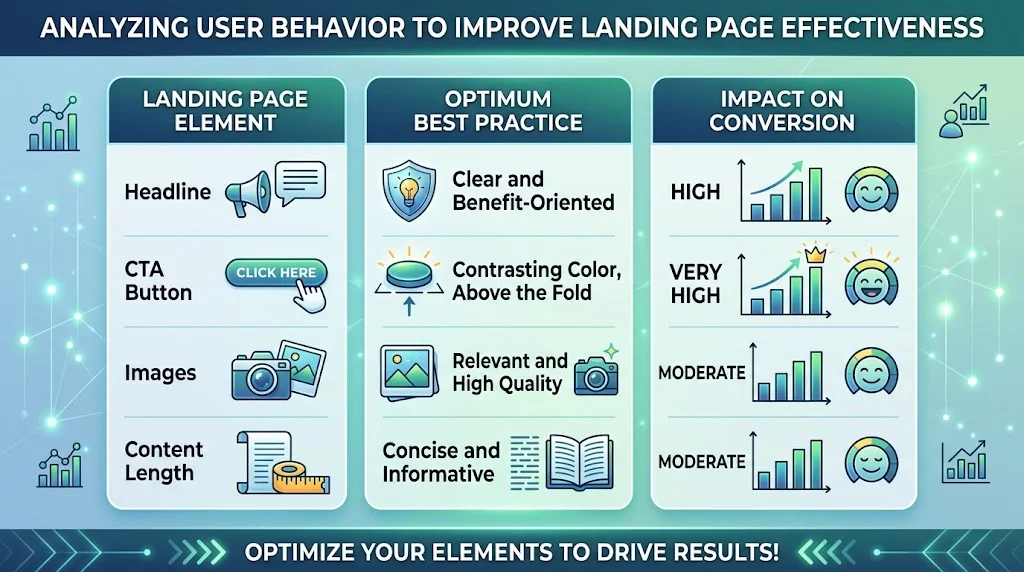
In today’s digital landscape, understanding user behavior is essential for driving Conversion Rate Optimization for Landing Pages. When you analyze how visitors interact with your landing page, you can uncover valuable insights that help improve its effectiveness. By optimizing elements based on actual user behavior, you can significantly increase your conversion rates.
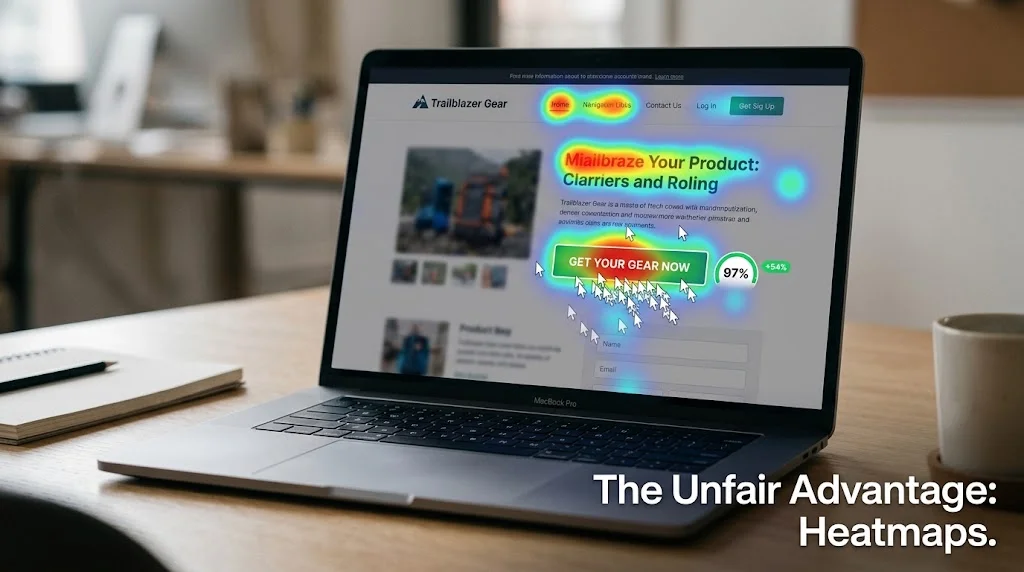
First, let’s talk about the importance of tracking user behavior on landing pages. This data provides a roadmap that guides design and content decisions. You might consider using heatmaps to visualize where visitors click and how they navigate your page. Tools like Hotjar can offer insights into how users interact with your content, allowing you to make informed adjustments.
Another critical aspect is analyzing user flow. Tracking the path your visitors take—from the initial click through to conversion—can reveal obstacles that might be hindering their progress. Tools like Google Analytics allow you to identify drop-off points in the user journey. By addressing these barriers, you can create a smoother path to conversion.
To effectively analyze user behavior, consider implementing the following strategies:
- Segmentation: Break down your audience into segments based on demographics, behavior, and interests. This tactic enables you to tailor your landing page content to specific groups, increasing the likelihood of conversion.
- A/B Testing: Conduct tests between two versions of your landing pages. Slight variations in headlines, images, or CTAs can lead to significant differences in conversion rates. Tools like VWO can help you set up and track these tests.
- Feedback Loops: Engage with your audience by collecting feedback. Use surveys or quick polls to understand what users like or dislike about your landing page. Their insights can guide modifications and improve user satisfaction.
Furthermore, focusing on page speed is crucial. Research indicates that even a one-second delay in load time can lead to a drop in conversions. You can use platforms like Google PageSpeed Insights to monitor your landing page’s speed and identify areas for enhancement.
Next, analyze your calls-to-action (CTAs). These buttons are pivotal in directing users toward conversion. Test different phrases, placements, sizes, and colors to discover what grabs attention. It’s often beneficial to create a sense of urgency, prompting users to act immediately.
The layout of your landing page can also significantly impact user experience. A clean, straightforward design can encourage users to stay longer and engage more with your content. Always ensure that the essential information is above the fold, allowing users to quickly grasp the page’s purpose without excessive scrolling.
Here is a simple table displaying the relationship between different landing page elements and conversion rates:
| Landing Page Element | Optimum Best Practice | Impact on Conversion |
|---|---|---|
| Headline | Clear and Benefit-Oriented | High |
| CTA Button | Contrasting Color, Above the Fold | Very High |
| Images | Relevant and High Quality | Moderate |
| Content Length | Concise and Informative | Moderate |
It’s essential to continually revisit and adjust your strategies. Regularly review analytics and feedback, and stay updated with emerging trends to keep your landing page relevant. As you adapt to user behavior changes, your landing page can become a powerful instrument in driving conversions.
For additional resources, you can visit WordStream’s Power Guide to Landing Page Optimization for further insights and best practices.
By implementing these strategies and keeping user behavior at the center of your optimization efforts, you can create a landing page that not only attracts visitors but persuades them to take action. Investing in understanding your audience will deliver tangible results in your conversion rates.
Conclusion
To drive successful Conversion Rate Optimization for Landing Pages, it’s essential to integrate various strategies that work together harmoniously. By employing key techniques tailored to your specific audience, you can create a landing page that resonates with visitors and encourages them to take action. Design elements play a vital role in this process; colors, layout, and typography can significantly influence user experience and overall performance. A well-designed page leads to higher engagement and increased trust.
A/B testing is another powerful way to enhance user engagement. This method allows you to test different versions of your landing page to see which one performs better based on real-time user feedback. It’s a straightforward process that can yield valuable insights into what works and what doesn’t.
Equally important is the role of copywriting. Crafting persuasive and clear messaging can effectively communicate your value proposition, making it easier for visitors to understand the benefits of your product or service. Well-written copy not only captures attention but also drives users to convert.
Analyzing user behavior is crucial for ongoing optimization. By understanding how users interact with your landing page, you can identify areas for improvement and make data-driven decisions to enhance effectiveness. Every small change can lead to better results and higher conversion rates.
By weaving together these elements—techniques, design, A/B testing, copywriting, and user analysis—you can create a landing page that not only captures interest but also converts visitors into loyal customers. Making these practices a priority will ensure your landing pages perform at their best.