
Content Repurposing Ideas for Marketers

ATTENTION: Want to Learn Affiliate Marketing from Successful Affiliates?
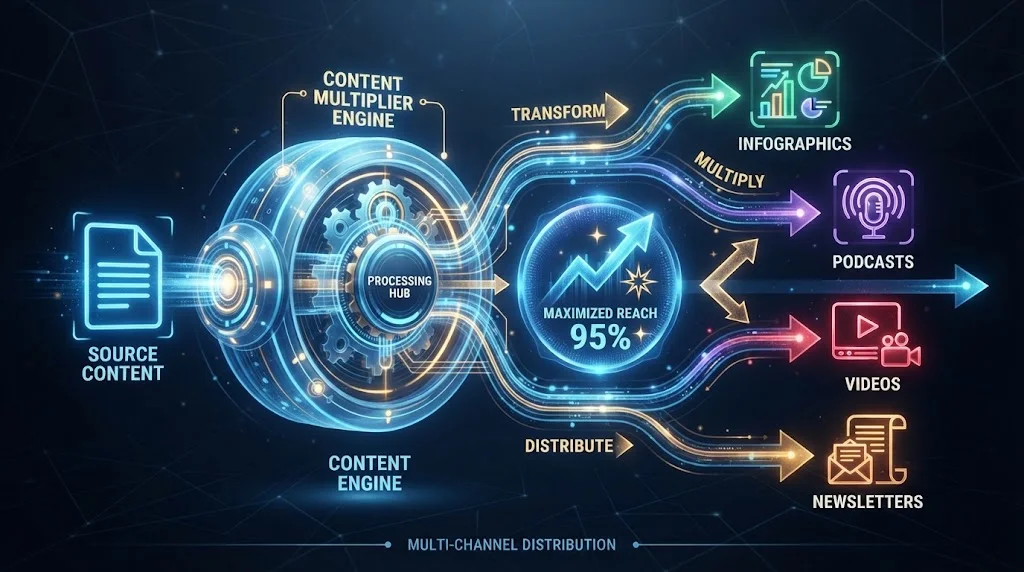
Creative content repurposing is an essential strategy for marketers looking to maximize their content’s reach and effectiveness. By recycling your existing material, you can attract new audiences and engage current followers in fresh ways. Here are some innovative ideas to help you get the most out of what you’ve already created, focusing on Content Repurposing Ideas for Marketers.
Transform Written Content into Visual Assets
One of the simplest ways to repurpose content is by converting articles or blog posts into engaging visuals. This could be in the form of:
- Infographics: Summarize key points in a visually appealing way. Tools like Canva are perfect for creating these.
- Slideshows: Turn informative articles into presentations for platforms like SlideShare.
- Social Media Posts: Break down the content into bite-sized graphics or quote cards for platforms like Instagram and Pinterest.
Use Audio Formats to Expand Reach
Turn your written content into audio formats. This can help you reach audiences who prefer listening over reading.
- Podcasts: Discuss the key themes of your blog posts in podcast episodes. You could invite experts to share insights related to the topic. Check out tools like Audacity for recording and editing.
- Audiobooks: If you have a comprehensive guide or eBook, consider narrating it and converting it into an audiobook format.
Engage Your Audience with Video Content
Video content is thriving, and marketers can effectively keep their audience engaged by repurposing written content into videos:
- Webinars: Host a live webinar that dives deeper into subjects discussed in your articles.
- Short Videos: Create summary videos for platforms like TikTok or Instagram. Use sites like Animaker to help with video creation.
Utilize Email Marketing
Your email list is a goldmine. Recycle your content to send to your subscribers:
- Weekly Digest: Compile several related posts into a single email that provides value to your audience.
- Exclusive Content: Turn a popular blog post into a downloadable resource, like a checklist or worksheet, and offer it as an exclusive to email subscribers.
Leverage User-Generated Content
Engage your audience by inviting them to share their thoughts on your content. This can further enhance your reach while also providing fresh perspectives:
- Testimonials: Share reviews and testimonials from readers or customers to build social proof.
- Stories or Comments: Feature stories or creative comments from users, creating a sense of community and connection.
Create a Comprehensive Resource
Consolidate multiple articles around a specific topic into a single, comprehensive guide or eBook. This not only adds value but also positions you as an authority. Make this resource available on your website to attract leads:
- Offer the compilation as a free download in exchange for an email subscription, helping you build your list.
Creative content repurposing can set you apart in a saturated market. By innovatively revitalizing your existing assets, you enhance your marketing strategy’s effectiveness and reach a broader audience. Embrace these ideas and observe how your engagement and followers grow.
How to Maximize Your Content’s Lifespan
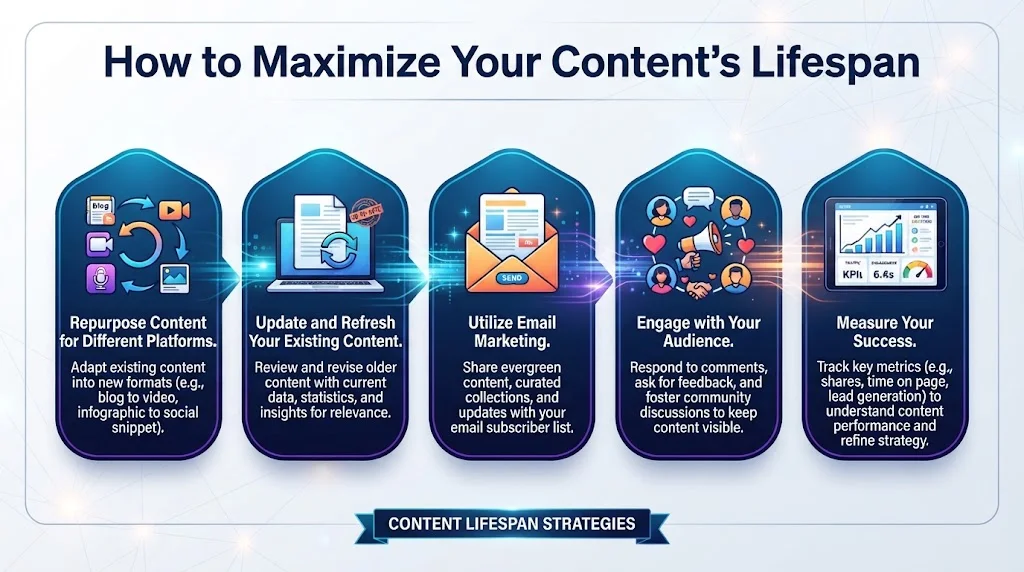
Creating high-quality content is just the beginning of a successful marketing strategy. To truly benefit from your efforts, you need to make your content last. Here are some effective strategies that can help you maximize your content’s lifespan and ensure it continues to engage your audience over time.
Repurpose Content for Different Platforms
One of the best ways to extend the lifespan of your content is to repurpose it. You can take a blog post and transform it into various formats that cater to different audiences. Here are some effective ways to do this:
- Social Media Posts: Break down key insights from your article into bite-sized posts for platforms like Twitter, Instagram, or Facebook. Use graphics and hashtags to boost visibility.
- Infographics: Create an infographic that visually summarizes your content. Tools like Canva can help you design appealing visuals.
- Podcasts: Discuss your content in a podcast format. This allows you to reach an audience that prefers audio content.
- Videos: Make a short video summarizing your key points. Share it on platforms like YouTube or TikTok for broader reach.
- Webinars: Host a webinar based on your topic. This interactive format is great for in-depth discussions and audience engagement.
Update and Refresh Your Existing Content
Another effective strategy is to revisit and update older content. Search engines prioritize fresh information, and keeping your content relevant can boost its visibility. Here’s how to do it:
- Check for Accuracy: Make sure all facts, statistics, and links are up-to-date.
- Add New Insights: Since your original publication, you may have gained new knowledge or data. Incorporate these elements to enhance value.
- Improve SEO: Use updated keywords that reflect current search trends to improve your content’s discoverability.
Utilize Email Marketing
Email marketing is a powerful tool for extending your content’s reach. By regularly incorporating links to your content in newsletters, you encourage readers to engage with your material:
- Segment Your Audience: Tailor emails to specific audience segments based on their interests regarding your content.
- Highlight Key Points: Use catchy subject lines and brief summaries to entice readers to click through to your content.
- Encourage Shares: Add social sharing buttons to increase visibility.
Engage with Your Audience
Engagement plays a crucial role in maximizing content lifespan. When readers interact with your content, it increases its relevance.
- Comments and Feedback: Encourage your audience to leave comments. Responding to comments can create a sense of community.
- Ask Questions: Pose questions at the end of your posts to invite discussion.
- Social Media Interaction: Promote discussions surrounding your content on social media platforms.
Measure Your Success
Regularly analyze the performance of your content to understand what works and what doesn’t. Use tools like Google Analytics to track metrics such as:
| Metric | Description |
|---|---|
| Page Views | Number of times your content is viewed. |
| Average Time on Page | Indicates how long, on average, visitors stay on your content. |
| Bounce Rate | The percentage of visitors who leave after viewing only one page. |
| Social Shares | How many times your content has been shared on social media platforms. |
By keeping track of these metrics, you can adjust your strategy for better engagement and extended reach. Extending the lifespan of your content requires proactive strategies and ongoing effort. By repurposing, updating, engaging with your audience, and measuring success, you can ensure that your content remains relevant and valuable over time.
The Benefits of Repurposing Content Across Multiple Platforms
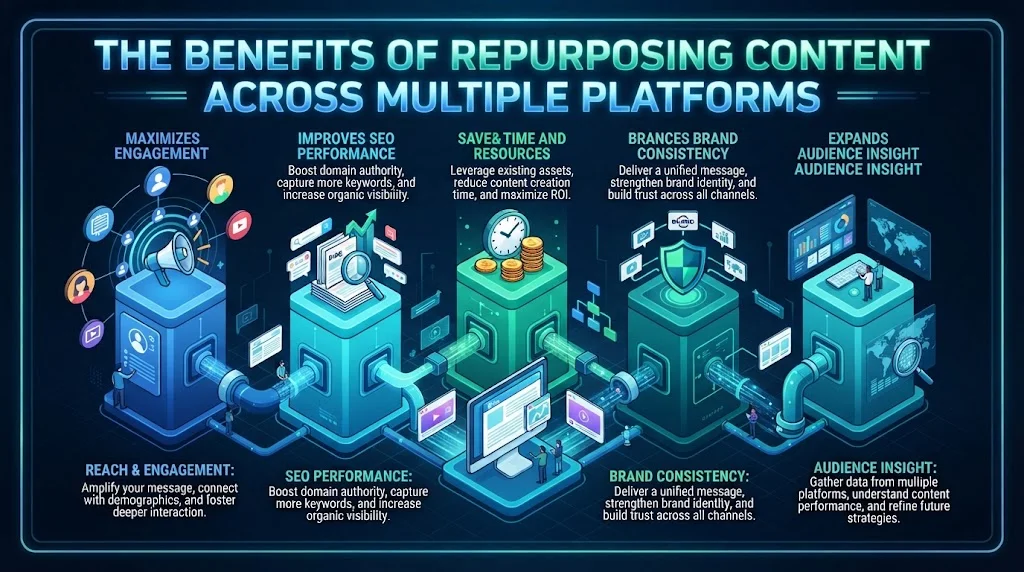
In today’s fast-paced digital environment, marketers face the challenge of constantly needing fresh content. However, creating new content from scratch can be both time-consuming and costly. Repurposing existing content is a smart strategy that can maximize your efforts and help your brand gain more visibility across different platforms. Here are several compelling benefits of content repurposing that every marketer should consider.
Maximizes Reach and Engagement
When you repurpose content, you not only extend its lifespan but also increase its reach. For instance, a blog post can be turned into a series of tweets, an infographic, or a video. This allows you to engage different audience segments on varied platforms. Here’s how you can do it:
- Blog Posts: Transform a single blog post into multiple formats such as podcasts, videos, or social media posts.
- Podcasts: Use audio content to create transcripts that can serve as blog posts.
- Webinars: Turn webinar content into email newsletters or bite-sized social media clips.
Improves SEO Performance
Repurposing content can also enhance your website’s SEO. By creating multiple formats of your content, you increase the chances of ranking for various keywords. For example, an article focused on “content marketing tips” can be restructured to include different keyword variations across platforms. This strategy can lead to:
- Increased backlinks as more content attracts more external links.
- Higher domain authority from consistent quality content across various formats.
- More indexed pages on search engines enhancing your visibility.
Saves Time and Resources
Creating new content takes a lot of time and resources. When you repurpose, you save precious hours and can focus your energy on promoting your content. Here are some tips on how repurposing saves time:
| Original Content Type | Repurposed Content Type | Time Saved (Hours) |
|---|---|---|
| 1 Blog Post | 5 Social Media Posts | 3 |
| 1 Webinar | 4 Blog Posts | 5 |
| 1 Video | 3 Infographics | 4 |
Enhances Brand Consistency
Consistency is key in branding. When you repurpose content, you ensure that the same message is communicated across various platforms. This helps solidify your brand identity and keeps your audience connected. It also creates a cohesive consumer experience regardless of where your audience interacts with your content. You can achieve improved consistency by:
- Keeping a unified tone and voice across all content formats.
- Using the same branding visuals, such as logos and color schemes.
- Reinforcing core messages that reflect your brand values.
Expands Audience Insight
When you share content across multiple platforms, you gain valuable insights into your audience’s preferences. Different formats may resonate more with certain demographics. By analyzing which content works best where, you can tailor your marketing strategies effectively. Tools like Google Analytics or social media insights can provide you data on:
- Engagement rates on different types of content.
- Traffic sources based on content format.
- Audience demographic details from various platforms.
For more insights on maximizing your content’s value, consider exploring resources from Content Marketing Institute and Neil Patel. By applying these strategies to your marketing efforts, you can significantly increase your content’s longevity and effectiveness, reaching your audience where they are most active.
Repurposing content isn’t just a smart practice; it’s essential in a landscape where staying relevant is crucial. By maximizing your existing materials, you can enhance engagement, improve SEO, save time, ensure consistency, and gain deeper audience insights. Taking the time to rethink how you use your content can yield great benefits in both the short and long term.
Tools and Resources for Efficient Content Repurposing
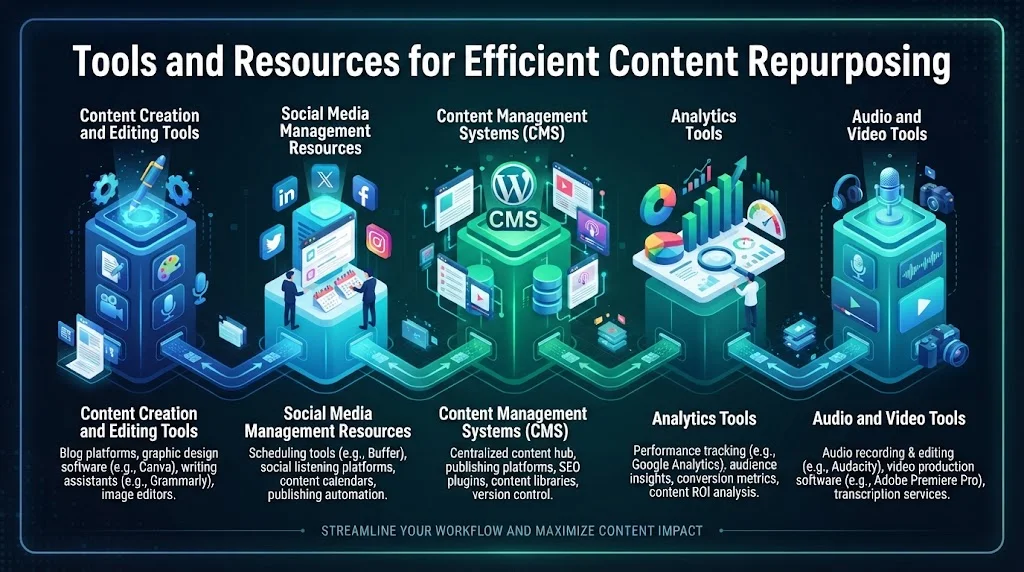
In today’s fast-paced digital landscape, marketers must continuously create fresh content while maximizing their existing resources. Content repurposing is a strategy that allows marketers to extend the value and reach of their content. By utilizing the right tools and resources, you can efficiently repurpose your content, saving time and enhancing your marketing efforts. Below are some effective tools and resources that can streamline the content repurposing process.
Content Creation and Editing Tools
When it comes to repurposing content, having the right creation and editing tools is essential. Here are some favorites:
- Canva: This graphic design tool allows you to create stunning visuals from existing blog posts or podcasts. You can turn text into eye-catching infographics or social media posts quickly.
- Adobe Express: Great for transforming articles into videos, Adobe Express offers templates suited for various platforms catered to marketers aiming for a visual appeal.
- Grammarly: Use this tool to refine your repurposed content’s clarity and tone, ensuring that your message is consistent across various formats.
Social Media Management Resources
Social media plays a vital role in content distribution. To repurpose your content effectively on social platforms, consider utilizing:
- Buffer: This platform allows you to schedule and manage your posts effectively. You can share repurposed content at peak times to reach your audience efficiently.
- Hootsuite: Similar to Buffer, Hootsuite enables you to monitor multiple social media channels simultaneously, making it easier to share revamped content across various platforms.
- Canva’s Social Media Templates: Use these templates to create tailored posts for Instagram, Facebook, or Twitter that align with your repurposed content.
Content Management Systems (CMS)
A solid CMS can make the process of repurposing content more streamlined. Here are some CMS options that can help:
- WordPress: One of the most popular CMS options, WordPress allows you to update old blog posts easily. You can convert existing content into new formats like podcasts, eBooks, or videos.
- Squarespace: Use Squarespace to create visually appealing landing pages that host your repurposed content, such as combining blog posts into a comprehensive guide.
Analytics Tools
Understanding how your audience interacts with your repurposed content is crucial. The following analytics tools can provide valuable insights:
- Google Analytics: This free tool provides in-depth analytics on your website’s performance. You can track which repurposed content performs best and adjust your strategy accordingly.
- SEMrush: A comprehensive tool for content marketing analytics, SEMrush helps you study your competitors and find valuable keywords to incorporate into your repurposed content.
Audio and Video Tools
If you’re interested in converting written content into audio or video formats, consider these tools:
- Anchor: A podcasting tool that lets you transform your blogs into engaging podcasts. This increases the accessibility of your content for a different audience segment.
- Zoom: Record meetings or discussions where you elaborate on previous content. This video content can be repurposed into snippets, webinars, or tutorials.
Repurposing your content can save you time and effort while maximizing your marketing impact. By leveraging the right tools and resources, you can efficiently breathe new life into your existing content, making it accessible to a wider audience. These tools not only enhance creativity but also allow for a systematic approach to sharing content across multiple formats.
Success Stories: Brands that Mastered Content Repurposing
Content repurposing is an innovative strategy that allows brands to leverage existing content to maximize reach and engagement. Many successful companies have effectively utilized this approach, turning a single idea into multiple formats to attract diverse audiences. Let’s explore some remarkable success stories of brands that mastered content repurposing.
HubSpot is a prime example of a brand that understands how to get the most out of its content. By transforming blog posts into downloadable resources, such as eBooks or guides, HubSpot reaches audiences who prefer different formats. They often take an in-depth article and distill its core concepts into an infographic. This strategy not only broadens their reach but also caters to visual learners. Their diverse content types include webinars, podcasts, and interactive tools, making their material accessible to everyone.
Patagonia, the outdoor clothing brand, has mastered storytelling through content repurposing. They use photos and videos from their social media campaigns and compile them into engaging blog posts that tell powerful, conservation-focused stories. Patagonia also takes user-generated content and shares it across different platforms. By doing this, they foster a sense of community while also promoting their brand values and encouraging deeper connections with their consumers.
Coca-Cola has taken content repurposing to another level with its “Share a Coke” campaign. Initially launched as print advertisements, Coca-Cola quickly adapted the campaign to create social media posts and videos. They encouraged consumers to share photos of personalized bottles, which further spread brand awareness. This user-generated content serves as social proof and provides fresh and engaging material that can continuously be repackaged across various platforms, such as Instagram and Facebook.
BuzzFeed is another brand known for its clever use of content repurposing. They often take topics trending on social media and create quizzes, lists, videos, and articles around them. By reshaping the same content idea into multiple formats, BuzzFeed caters to different content consumption preferences. This adaptability ensures that they are always relevant and engaging with their audience, driving traffic to their website and keeping visitors coming back for more.
Here are some organizational tactics that have worked for these brands:
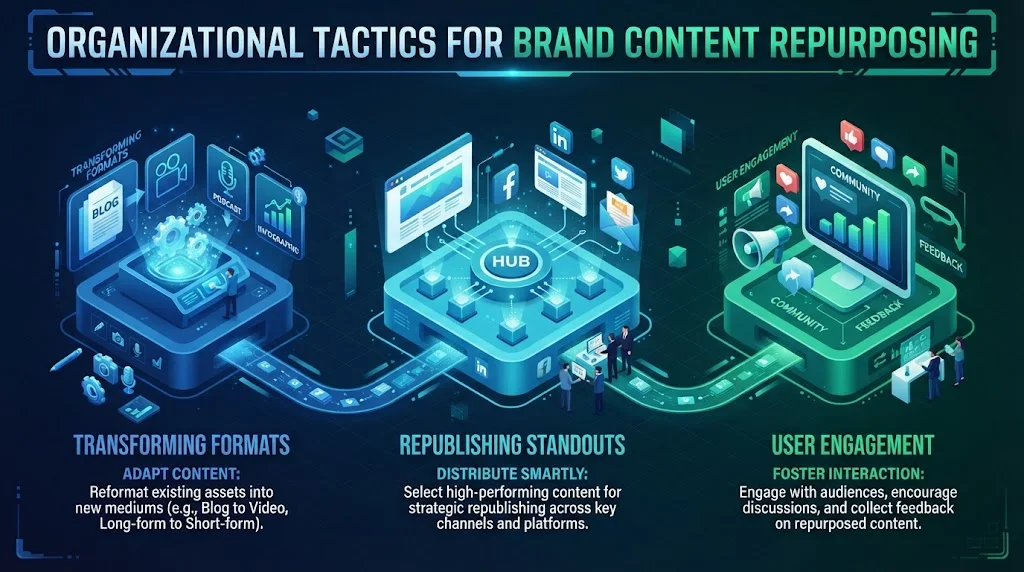
- Transforming Formats: Each piece of content can often be rewritten or redesigned. For example, turning a blog post into a podcast script or an infographic enhances accessibility.
- Republishing Standouts: Not all content is evergreen, but popular posts can be repurposed and updated for relevance, increasing their lifespan.
- User Engagement: Engaging your audience creates a wealth of free content that can be utilized again through sharing on multiple platforms, as seen with Patagonia.
The success of these brands showcases the importance of a strong content repurposing strategy. It not only maximizes the investment made in initial content creation but also expands the brand’s footprint across various channels. Sometimes the simplest ideas yield the greatest returns, especially in a digital landscape overflowing with information.
Utilizing platforms like HubSpot, Patagonia, and Coca-Cola can inspire marketers to think outside the traditional content box. By examining how these brands repurpose content, you can identify strategies that fit your unique audience and goals.
To ensure your repurposed content resonates with your audience, consider these steps:
- Identify Core Messages: Know what you want to convey across different formats.
- Choose the Right Platforms: Utilize the platforms where your audience engages most.
- Measure and Optimize: Track the success of repurposed content and adjust your strategies as needed.
Content repurposing is not just about recycling material; it’s about evolving content strategies to meet the needs of a changing audience. Brands like HubSpot, Patagonia, and Coca-Cola have not only mastered the art of repurposing but have demonstrated the potential for other marketers to create engaging, multifaceted content that drives engagement across all platforms.
Conclusion
As we’ve explored throughout this article, the art of content repurposing offers marketers a powerful strategy to enhance their outreach and engagement. By creatively transforming existing content, you not only extend its lifespan, but also maximize its value. This approach allows you to reach diverse audiences across various platforms, ensuring that your message resonates with different groups in ways that are more suitable for their consumption preferences.
Moreover, the right tools and resources can make the content repurposing process efficient, enabling you to streamline workflows and save valuable time. From content management systems to design software, leveraging the right technologies can simplify creating and distributing your repurposed content.
Success stories from leading brands serve as motivating examples of how effective content repurposing can lead to notable visibility and engagement. By embracing their strategies, you can adapt their techniques to fit your unique brand voice and audience needs.
Remember, repurposing isn’t just about recycling old content; it’s about breathing new life into it. When you thoughtfully reinterpret your existing material, you enhance its appeal and relevance, ensuring your audience is continuously engaged. With creative ideas and strategic execution, you can unlock the full potential of your content, driving brand awareness and fostering deeper connections with your audience. Embrace the journey of repurposing, and watch your marketing efforts flourish.