Content Creation Workflow for Marketers

ATTENTION: Want to Learn Affiliate Marketing from Successful Affiliates?
In today’s fast-paced digital world, an effective Content Creation Workflow for Marketers is essential for success. A well-defined workflow not only enhances productivity but also ensures that your brand’s message is consistent and resonates with your audience. Streamlining your content processes can ultimately lead to higher engagement and improved conversion rates. Here’s how to set up a successful content creation workflow tailored for marketers.
Define Your Goals and Audience
Before diving into content creation, it’s crucial to understand your goals. Whether you aim to increase website traffic, elevate brand awareness, or generate leads, having clear objectives guides your content strategy. Additionally, knowing your target audience is vital. Ask yourself:
- Who am I writing for?
- What challenges do they face?
- How can my content provide value?
Conduct Thorough Research
After defining your goals and audience, conduct comprehensive research to validate your assumptions. Utilize tools like Ubersuggest and Answer the Public to discover relevant topics, keywords, and questions your audience is interested in. By pulling data from search trends, social media conversations, and competitor analysis, you can create relevant content that meets your audience’s needs.
Brainstorm and Plan
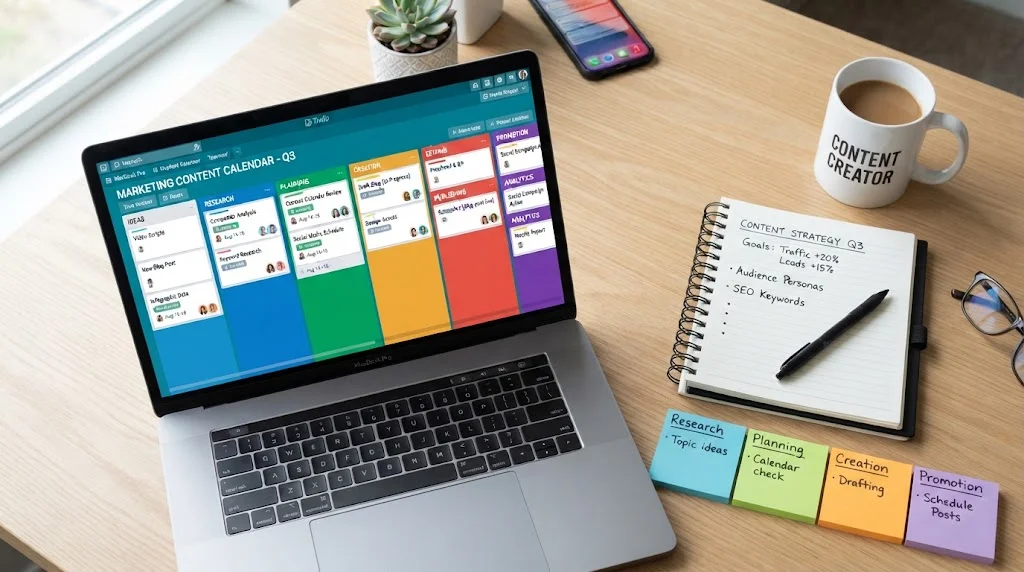
With the research in hand, start brainstorming content ideas. Create a content calendar to keep yourself organized. This calendar should include:
- Content Topics
- Intended Audience
- Publishing Dates
- Promotion Strategies
A planning tool like Trello can facilitate collaboration and ensure everyone involved is on the same page.
Create Compelling Content
This is the phase where the real magic happens. In this step, focus on the following:
- Write Engaging Headlines: Your title is the first thing readers will see. Use action words and emotion to grab their attention.
- Stay Authentic: Speak directly to your audience and provide real value in every piece of content.
- Incorporate Visuals: Use images, videos, infographics, and tables to make your content more appealing. Tools like Canva can help you create stunning visuals effortlessly.
Edit and Proofread
Once your content is drafted, the editing phase is critical. Look for grammar issues, clarity, and style. You can use tools like Grammarly or Hemingway Editor to enhance the readability of your writing. Editing not only ensures quality but also maintains your brand’s credibility.
Optimize for SEO
To ensure your content is discoverable, optimizing it for SEO is non-negotiable. Incorporate relevant keywords naturally throughout your article, making sure to include:
- The title
- Subheadings
- The first 100 words
- Meta descriptions
Websites like SEMrush provide insights into keyword performance and help you craft content that ranks higher in search engine results.
Distribute and Promote
The distribution phase involves sharing your content across various channels. Utilize social media, email newsletters, and your website to increase reach. Tailor your promotional strategies based on where your audience typically engages. Consider creating visual snippets or key takeaways from your content for platforms like Instagram or Twitter to boost engagement.
Analyze and Adjust
Once your content is live, it’s essential to track its performance. Use analytics tools like Google Analytics to monitor traffic, engagement, and conversion rates. Analyzing data helps you understand what works and what doesn’t, allowing you to refine your workflow and improve future content.
| Content Stage | Tools | Purpose |
|---|---|---|
| Research | Ubersuggest, Answer the Public | Identify topics and audience interests |
| Planning | Trello | Organize ideas and timelines |
| Writing | Canva, Grammarly | Create compelling visuals and ensure quality |
| SEO Optimization | SEMrush | Enhance search visibility |
| Analytics | Google Analytics | Track content performance |
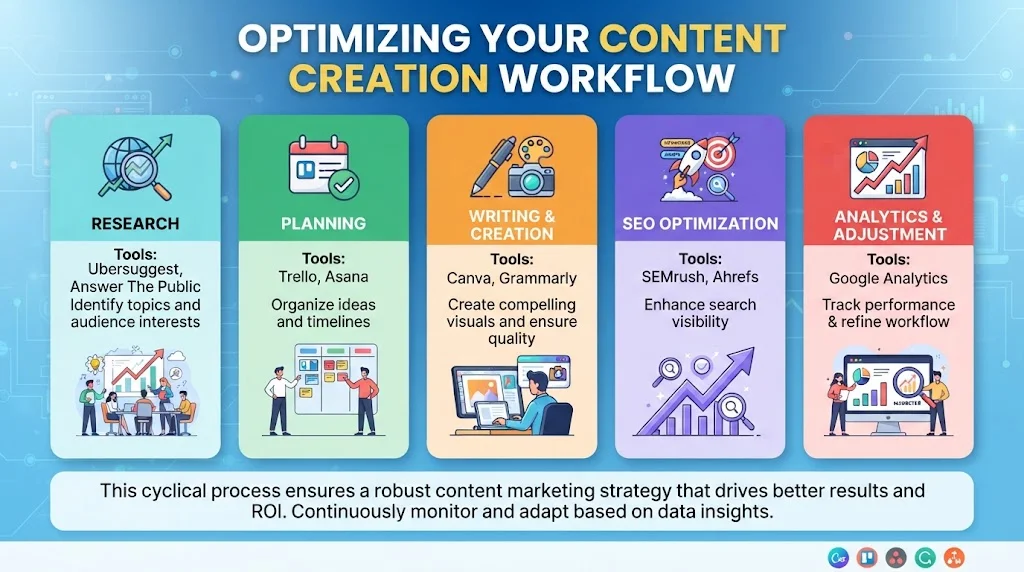
Following this Content Creation Workflow for Marketers can significantly improve your marketing efforts. By planning effectively, producing high-quality content, and using data to guide future decisions, you can create a robust content marketing strategy that drives results.
Essential Tools for Enhancing Your Content Creation Workflow
In today’s fast-paced digital world, an efficient Content Creation Workflow for Marketers is crucial for marketers. Having the right tools can streamline your process and ensure that you produce high-quality content consistently. Here are some essential tools that will enhance your Content Creation Workflow for Marketers.
Content Planning and Organization
A well-structured plan can save you time and reduce stress. Use these tools for organizing your ideas:
- Trello: This project management tool helps you create boards for different projects, making it easier to track your content progress.
- Asana: Asana helps manage tasks and deadlines, allowing you to collaborate with your team effectively.
- Miro: A visual collaboration platform, perfect for brainstorming and mapping out your content ideas visually.
Content Creation Tools
Once you have a plan in place, it’s time to create that content. Consider these tools:
- Canva: Excellent for graphic design, Canva creates stunning visuals without requiring design skills.
- Adobe Express: Another great graphic design tool that helps you create high-quality images and social media posts.
- Writer: A writing assistant that uses AI to enhance your writing by checking for tone, grammar, and style.
SEO Optimization Tools
SEO is vital to ensure your content reaches the right audience. Use these tools to optimize your articles:
- SEMrush: This powerful SEO tool helps you conduct keyword research and analyze competitors’ strategies.
- Ahrefs: Useful for backlink analysis and keyword tracking, Ahrefs provides valuable insights into how to improve your SEO.
- Google Search Console: Essential for understanding how your site is performing in search results and identifying any issues.
Content Editing and Proofreading
Editing can elevate your content from good to great. Consider these helpful tools:
- Grammarly: A popular proofreading tool that checks for grammar, punctuation, and style. It helps ensure your content is polished.
- Hemingway Editor: This app helps improve readability by highlighting complex sentences and passive voice.
Content Distribution and Scheduling
After creating your content, you need to share it effectively.
- Buffer: Buffer allows you to schedule social media posts and track their performance.
- Hootsuite: Manage multiple social media accounts and schedule posts in advance with Hootsuite.
Analytics and Performance Tracking
You must analyze how your content performs.
- Google Analytics: Track traffic sources, user behavior, and more to understand how well your content is performing.
- Hotjar: This tool helps visualize user interactions on your website through heatmaps and session recordings.
Using these essential tools will significantly enhance your Content Creation Workflow for Marketers. By embracing these resources, you can save time, create quality content, and ensure it reaches and resonates with your target audience. Tailoring your workflow with these tools can set you apart in the competitive landscape of digital marketing.
The Role of Collaboration in Optimizing Content Development
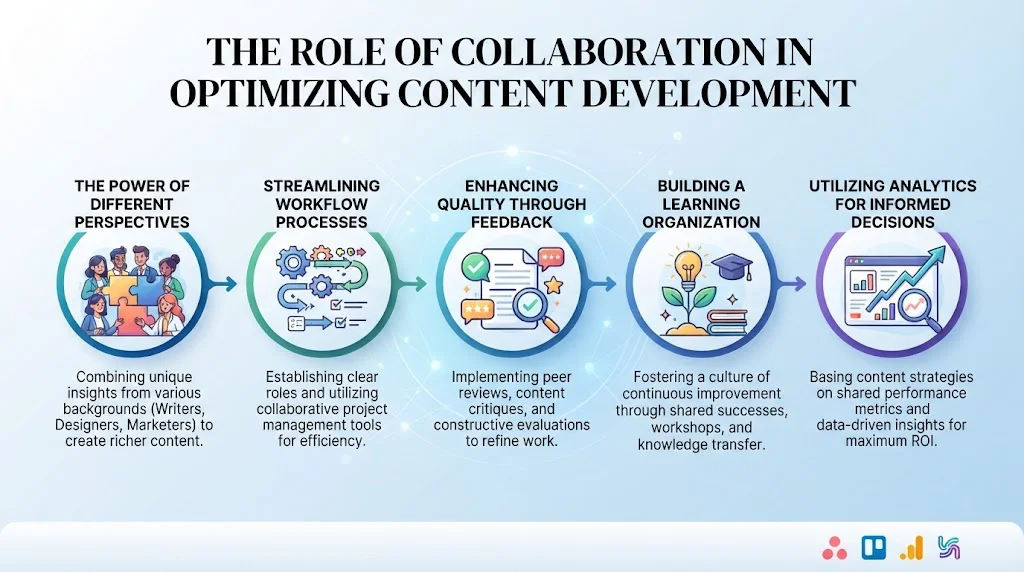
Effective content development is crucial for marketers aiming to enhance brand visibility and engage audiences. One often overlooked aspect of this process is collaboration. When team members work together, they create a vibrant environment that can lead to innovative and high-quality content. Here’s how collaboration plays a vital role in optimizing content development.
The Power of Different Perspectives
Collaboration brings together individuals from various backgrounds and areas of expertise. This diversity can lead to unique insights and ideas. For example:
- A writer can provide narrative flair.
- A designer can enhance visual appeal.
- A marketer can align content with business goals.
When these professionals collaborate, their combined efforts result in richer and more engaging content. Encouraging open dialogues allows for brainstorming and creative problem-solving, producing content that resonates with your target audience.
Streamlining Workflow Processes
Another benefit of collaboration is the ability to streamline content creation workflows. Here’s how you can effectively collaborate to enhance workflows:
- Establish Clear Roles: Clearly define the responsibilities of each team member. This ensures that everyone knows what they are accountable for and reduces the chances of confusion.
- Utilize Collaborative Tools: Leverage tools such as Google Docs, Trello, or Asana. These platforms allow team members to work on documents simultaneously, track progress, and communicate efficiently.
- Regular Check-ins: Schedule regular meetings to discuss progress and challenges. This keeps the team aligned and motivated.
By integrating these practices, the team can produce content more quickly and efficiently, ultimately driving better results.
Enhancing Quality Through Feedback
Feedback is a cornerstone of effective collaboration. Peer reviews, content critiques, and open discussions can greatly enhance the quality of content. Here’s why feedback is crucial:
- Objective Evaluation: Team members can provide unbiased perspectives that help refine ideas.
- Skill Development: Constructive feedback encourages personal growth, enabling each contributor to hone their skills.
- Better Audience Understanding: Collaboration can lead to a deeper understanding of audience needs, making the content more relevant.
Encouraging a culture of feedback not only improves the content but also fosters a sense of camaraderie among colleagues.
Building a Learning Organization
Collaborative content creation promotes a learning environment. When team members learn from each other’s successes and mistakes, it leads to overall improvement. Here are ways to build this culture:
- Sponsor Workshops: Regular training sessions can improve skill sets and encourage new ideas.
- Create Resource Libraries: Collect articles, case studies, and white papers that team members can reference to guide their work.
- Encourage Experimentation: Allow team members to test new ideas without the burden of fear. This can lead to innovative approaches.
When team members are open to learning from one another, the entire organization benefits.
Utilizing Analytics for Informed Decisions
Collaboration also enables the effective use of analytics. By sharing insights and performance metrics, teams can make more informed decisions. Monitoring content performance through tools like Google Analytics helps in identifying what works and what doesn’t. This kind of data-driven approach can lead to:
- Aiming at the right audience segments.
- Adjusting content strategies based on audience engagement.
- Maximizing ROI on marketing efforts.
Collaborative analysis of data encourages a more strategic approach, which enhances overall content development efforts. For marketers looking to elevate their content strategies, embracing collaboration is essential. By tapping into collective strengths, integrating feedback, and fostering a learning environment, organizations can ensure they remain competitive in today’s dynamic marketplace. Explore more about optimizing content development through collaboration at Content Marketing Institute and enhance your marketing efforts.
Measuring Success: Key Metrics in Your Content Workflow
In the fast-paced world of digital marketing, creating quality content is just the beginning. To ensure that your content is truly effective, you need to measure its success using key metrics throughout your workflow. Understanding which metrics matter can be a game-changer for your marketing strategy.
Understanding Key Metrics
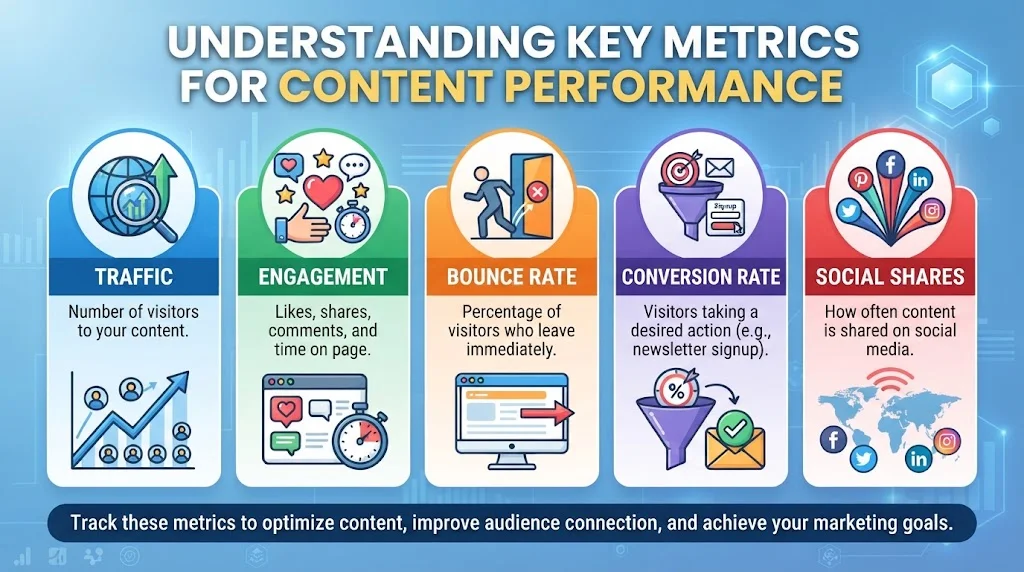
Tracking the right metrics can provide invaluable insights into how your content is performing. Here are some essential metrics that every marketer should consider:
- Traffic: The number of visitors to your content is an obvious metric. You can track both unique visitors and page views to get a clearer picture of your audience.
- Engagement: This is measured through likes, shares, comments, and time on page. Higher engagement often indicates that your content resonates with your audience.
- Bounce Rate: A high bounce rate may show that visitors aren’t finding what they expect. Look to improve your content to keep users on your page longer.
- Conversion Rate: This metric tracks how many visitors take a desired action, such as signing up for a newsletter, which can signal that your content is effective.
- Social Shares: Examining how often your content is shared on social media can unveil its overall reach and visibility.
Tools for Tracking Metrics
Many tools are available that can help you track these metrics effectively. Some popular tools include:
- Google Analytics: This powerful tool provides a comprehensive view of traffic analytics and user behavior.
- Hootsuite: Useful for tracking social media engagement and performance across platforms.
- Buffer: This platform helps you analyze the reach and shares of your social media content.
- SEMrush: Focused on SEO metrics, it can also show the effectiveness of your content in search engines.
Integrating Metrics into Your Workflow
To effectively measure success, ensure that these metrics are integrated at various stages of your content workflow:
- Planning: Before creating content, analyze past performance metrics to identify what types of content resonate with your audience.
- Creation: During the writing process, consider keywords and phrases that drive traffic and engagement. Use tools like Answer The Public to find age-relevant questions.
- Publication: After publishing, monitor the performance metrics immediately to adjust your promotional strategies if necessary.
- Analysis: Regularly analyze gathered metrics to refine your content strategy for future projects. This makes your process cyclical and continuously improving.
Setting Goals for Metrics
Having clear goals for each metric can enhance your focus. Consider the following table to define your goals:
| Metric | Current Baseline | Goal |
|---|---|---|
| Traffic | 1,000 visitors/month | 2,000 visitors/month |
| Engagement | 50 shares | 100 shares |
| Bounce Rate | 70% | 50% |
| Conversion Rate | 1% | 2% |
Continuous Monitoring and Adjustment
Regularly revisiting your metrics helps you stay aligned with your audience’s preferences. If a piece of content underperforms, analyze what went wrong. Was it the topic, format, or timing? Adjustments based on data can lead to better results. Remember that the ultimate aim of evaluating your content metrics is to create content that genuinely resonates with your audience. As you refine your approach based on measurable data, you not only improve your overall Content Creation Workflow for Marketers but also build deeper connections with your audience. By integrating these key metrics into your content strategy, you will be well-positioned to create effective, engaging, and measurable content that meets both your goals and those of your audience.
Adapting Your Content Workflow for Multi-Platform Distribution
In today’s digital landscape, a well-integrated content workflow is essential for marketers aiming to reach audiences across various platforms. Adapting your content creation process for multi-platform distribution not only enhances visibility but also increases engagement with diverse audience segments. By fine-tuning your workflow, you can ensure your content resonates no matter where it’s shared.
Start by evaluating your target audience. Knowing where your audience spends their time is crucial. This insight helps in tailoring your content strategy to highlight specific platforms—be it social media, blogs, newsletters, or podcasts. You can use tools like Google Analytics to gather data on user behavior and preferences.
Your content workflow should embrace flexibility. Creating a master content calendar can significantly streamline the process. This calendar should include key dates for campaigns, planned topics, and specific platforms for distribution. By visualizing your content schedule, you can begin to allocate resources better and avoid bottlenecks. Here are key components to consider:
- Content Planning: List all content ideas and categorize them by themes or campaigns.
- Creation: Assign tasks to writers, designers, and other team members.
- Editing: Implement a review process to ensure quality and relevance.
- Distribution: Schedule release times for multi-platform posting.
- Analytics: Track the performance of each piece of content on the respective platforms.
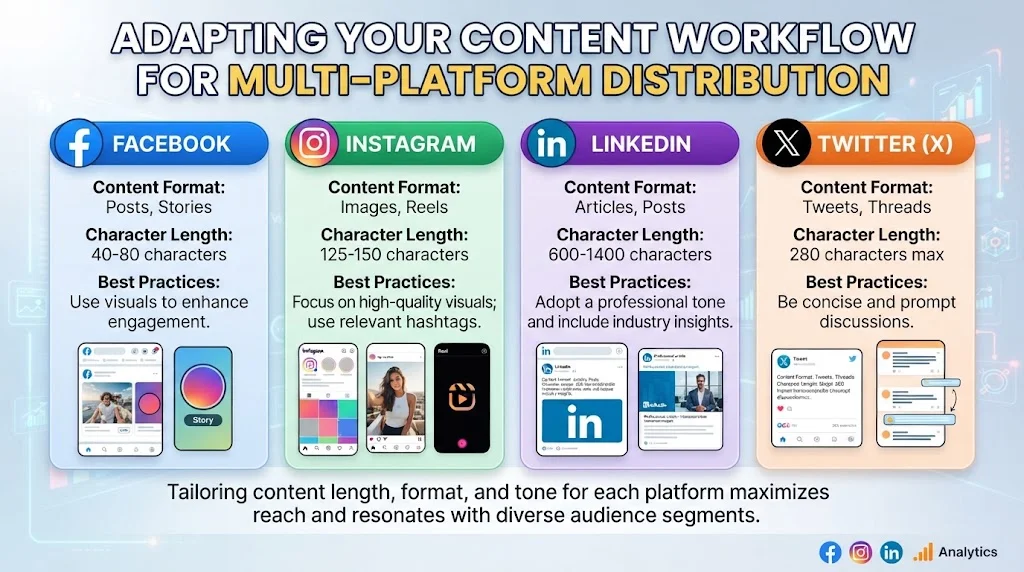
When you create content, consider the unique elements of each platform. For example, concise tweets work well on Twitter, while longer, narrative-driven posts perform better on LinkedIn. Adapting the format and tone based on the platform ensures your message remains clear and engaging. Here’s a quick guide to adapting your content:
| Platform | Content Format | Character Length | Best Practices |
|---|---|---|---|
| Posts, Stories | 40-80 characters | Use visuals to enhance engagement. | |
| Images, Reels | 125-150 characters | Focus on high-quality visuals; use relevant hashtags. | |
| Articles, Posts | 600-1400 characters | Adopt a professional tone and include industry insights. | |
| Tweets, Threads | 280 characters max | Be concise and prompt discussions. |
Moreover, utilizing tools such as Hootsuite and Buffer can simplify your scheduling and monitoring tasks. These platforms allow you to plan, post, and analyze your content’s performance in one place, making multi-platform management effortless.
Cross-promotion of your content is another strategy to harness the power of multi-platform distribution. For instance, share snippets of your blog posts on social media, guiding your audience back to your site for the full article. This not only drives traffic but also engages users more deeply with your content. Here are some effective cross-promotion strategies:
- Use Stories: Share highlights from your blog on social media stories.
- Create Teasers: Post short video clips to promote your podcast episodes.
- Encourage Sharing: Prompt followers to share your content and repost user-generated content.
Measuring success is key. After implementing multi-platform strategies, make sure to analyze the performance metrics. Look at how your content is being received, focusing on engagement rates, shares, and comments across each platform. Utilizing metrics ensures you are adapting your strategy based on what works best.
Adapting your content workflow for multi-platform distribution is about understanding your audience, creating tailored content, and continuously refining your approach through analytics. Embracing this strategy will not only enhance your marketing effectiveness but also build stronger connections with your audience across the digital landscape. To provide additional insights and resources on content marketing, consider visiting Moz and HubSpot for in-depth articles and guides.
Conclusion
Developing an effective Content Creation Workflow for Marketers is not just about producing high-quality content; it’s about streamlining your entire process for better efficiency and results. By following the outlined steps, you can create a structured approach that helps to minimize bottlenecks and maximize creativity. Utilizing essential tools enhances this workflow, making every aspect of content creation—from brainstorming to publication—more manageable.
Collaboration plays a pivotal role in optimizing content development. By fostering teamwork and communication among your marketing team, you ensure diverse insights and ideas that enrich your content. As you refine this collaborative approach, remember that measuring success through key metrics can provide valuable feedback on your efforts. These metrics not only help you understand what resonates with your audience but also guide adjustments in your strategy.
In today’s digital landscape, adapting your content workflow for multi-platform distribution is crucial. With audiences consuming content across various channels, having a flexible and agile workflow allows you to tailor your messaging for each platform effectively. This adaptability not only boosts engagement but also enhances brand visibility.
By incorporating these strategies into your Content Creation Workflow for Marketers, you don’t just create a streamlined process; you build a sustainable, engaging, and data-driven approach to content marketing. Embrace these elements, and watch your content efforts soar to new heights, driving meaningful connections with your target audience across multiple platforms.