
Content Audit Checklist for Websites


ATTENTION: Want to Learn Affiliate Marketing from Successful Affiliates?
Performing a content audit is crucial for every website owner who wants to enhance their online presence and improve user engagement. A well-thought-out content audit checklist will help ensure that all elements of your website content are optimized effectively. Here are the essential components to include in your content audit checklist.
1. Inventory of Existing Content
Start by creating a complete inventory list of all your website content. This includes:
- Web pages
- Blog posts
- Videos
- Infographics
- Podcasts
Keep a record in a spreadsheet that includes the URL, title, type of content, and the date it was published. This will serve as your foundational document for the audit.
2. Analyze Content Performance
Utilize analytics tools such as Google Analytics to review how each piece of content is performing. Look at metrics such as:
- Page views
- Average time on page
- Bounce rate
- Social shares
- Conversion rates
This data helps identify which content resonates with your audience and which does not.
3. SEO Assessment
Evaluate the SEO effectiveness of your content. Check for:
- Keyword usage: Is the content properly optimized for target keywords?
- Meta tags: Are the title tags and meta descriptions engaging and relevant?
- Header tags: Are H1, H2, and other header tags used correctly?
- Image alt texts: Are images being indexed properly?
A strong SEO strategy is essential in ensuring your content gains visibility in search results.
4. Content Quality Evaluation
Review the quality of each piece of content. Ask yourself:
- Is the information accurate and up to date?
- Is the content engaging, relevant, and useful for your audience?
- Does the tone and style align with your brand’s voice?
Content that is outdated or poorly written should be revised or removed.
5. User Engagement Factors
Engagement metrics are indicators of how well your content captures the audience’s attention. Analyze:
- Comments and discussions: Are users actively engaging?
- Shares and backlinks: Is the content being shared across platforms?
Higher engagement levels typically signify quality content that your audience values.
6. Identify Content Gaps
While evaluating your inventory, look for content gaps where necessary subjects or keywords are missing. Consider:
- The needs of your target audience: What questions are they asking?
- Trending topics in your industry: What is currently relevant?
Creating new content that fills these gaps can significantly boost your visibility and audience engagement.
7. Action Plan for Improvement
Based on your findings, establish an actionable plan. Your plan could include:
- Updating existing content with fresh information
- Optimizing for SEO where needed
- Creating new content to capture missed opportunities
Utilizing a project management tool like Trello can help you organize tasks and track progress.
| Content Type | Performance Indicator |
|---|---|
| Blog Post | Higher shares and comments |
| Landing Page | Increased conversion rates |
| Video | Longer watch time and engagement |
A comprehensive content audit checklist for your website helps you maintain high-quality content while maximizing its effectiveness. Regular audits ensure your website remains relevant and efficient. Performing these essential steps will contribute significantly to a more optimized, user-friendly website.
For more tips on conducting content audits, check out resources from Moz and Ahrefs.
The Impact of Regular Content Audits on SEO Performance
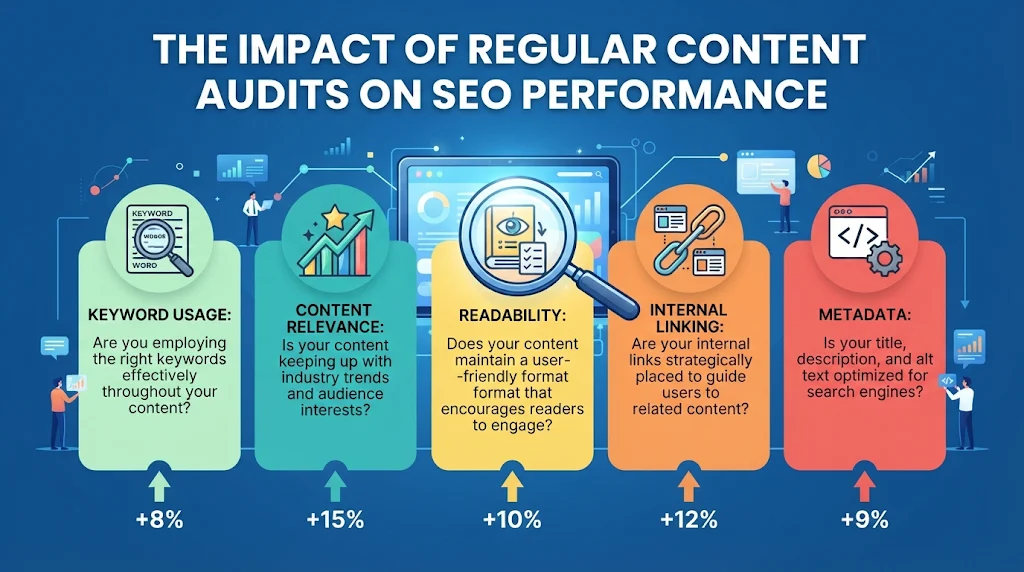
Regular content audits play a crucial role in enhancing SEO performance for websites. They offer a structured method to evaluate how existing content aligns with current SEO best practices. By conducting a comprehensive content audit, you can identify and rectify issues that may be hindering your website’s visibility in search engine results. This strategy not only boosts user engagement but also strengthens your site’s authority in the digital landscape.
When you perform a content audit, you can assess various aspects of your content. This includes checking for keyword optimization, readability, and relevance. Here are a few key elements to consider during your audit:
- Keyword usage: Are you employing the right keywords effectively throughout your content?
- Content relevance: Is your content keeping up with industry trends and audience interests?
- Readability: Does your content maintain a user-friendly format that encourages readers to engage?
- Internal linking: Are your internal links strategically placed to guide users to related content?
- Metadata: Is your title, description, and alt text optimized for search engines?
To maximize the effectiveness of your content audit, consider the following advanced strategies:
- Establish Clear Objectives: Define what you want to achieve with your content audit. Are you focusing on increased traffic, higher engagement rates, or improved conversions?
- Utilize Analytics Tools: Tools like Google Analytics can provide valuable insights into which pages are performing well and which ones are not. Analyzing this data helps identify content gaps and opportunities for improvement.
- Evaluate Content Performance: Check metrics such as bounce rates, page views, and average session duration. This data helps gauge audience engagement and satisfaction.
- Update or Remove Low-Performing Content: If certain content isn’t resonating with your audience, consider updating it with fresh information or repurposing it. In some cases, it may be best to remove it altogether to avoid clutter.
- Monitor Your Competitors: Keeping an eye on competitors can offer insights into industry trends and help you find gaps in your content that can be filled.
Regular content audits contribute significantly to improving your website’s SEO performance. It allows you to refine and enhance the quality of your content, ensuring it meets the needs of your audience while adhering to best SEO practices. A Harvard Business Review article emphasizes that “fresh content can lead to increased engagement, shares, and links.” This rings true in the context of SEO where updated content is favored by search engines.
It’s essential to establish a schedule for conducting your audits. Many websites benefit from quarterly audits, but you can adjust the frequency based on your content production rate and industry trends. Keeping a consistent rhythm helps ensure your content stays optimized, relevant, and engaging.
Content that reflects accurate information and user intent has a better chance of ranking higher in search results. An audit helps align your content with SEO best practices while fostering user trust and satisfaction. Regularly reviewing your content allows your website to adapt to changes in audience behavior and search engine algorithms.
Certain metrics should be prioritized during the review process:
| Metric | Importance |
|---|---|
| Traffic | Indicates how many users visit your content |
| Engagement Rate | Shows how users interact with your content |
| Conversion Rate | Measures how effectively content drives actions from users |
| Keyword Rankings | Tracks the position of your keywords in SERPs |
To get started with your content audit, consider utilizing platforms such as Moz and Ahrefs for tools and resources to guide you through the process. These tools can help you identify weaknesses in your SEO strategy and provide insights on optimization techniques.
Regular content audits are a powerful tool for enhancing your website’s SEO performance. By consistently evaluating and refining your content, you stay engaged with your audience’s needs and improve your search engine visibility. Make the commitment to audit your content regularly, and you will likely see the positive impacts on your overall website performance.
How to Identify and Fix Common Content Issues
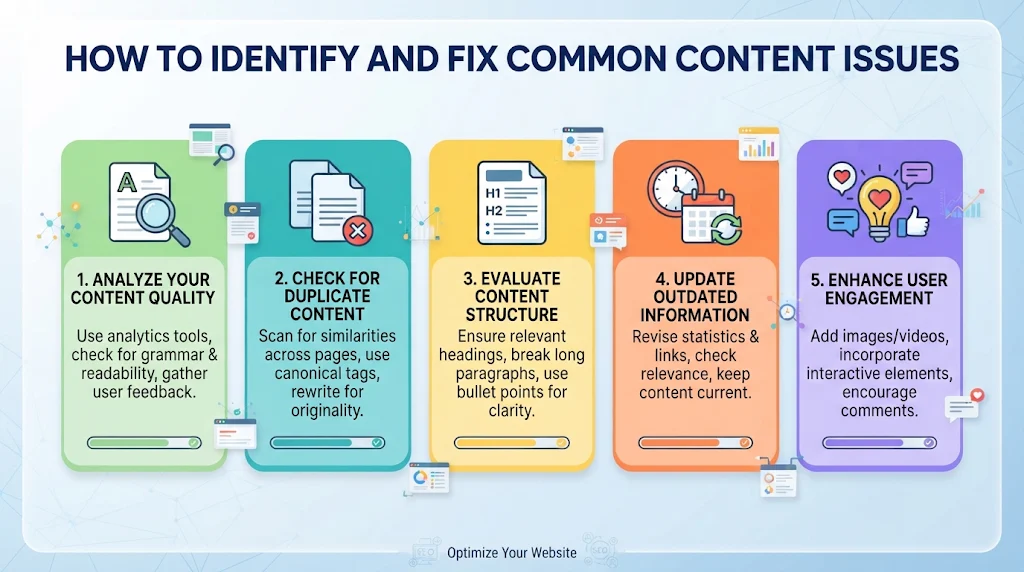
Every website has the potential to shine, but common content issues can hold you back from reaching your true potential. Identifying and fixing these problems is crucial for improving user experience and boosting your search engine rankings. Let’s dive into how you can tackle these common content issues.
Understanding Content Issues
Content issues can range from outdated information to lack of engagement. They affect how visitors interact with your website and may deter them from returning. Here’s how you can identify and resolve these issues effectively.
1. Analyze Your Content Quality
Your content should offer value to your audience. Start by asking yourself these questions:
- Is the information current and accurate?
- Does it engage the reader and address their needs?
- Is the writing clear and easy to understand?
To analyze content quality:
- Use tools like SEMrush to check for grammar and readability.
- Seek feedback from users regarding their experience with your content.
2. Check for Duplicate Content
Duplicate content confuses search engines and can harm your rankings. Conduct a content audit to find similarities across your pages. Tools like Copyscape can help you identify duplicate content instances. If you find duplicates, consider the following fixes:
- Rewrite the content to make it original.
- Use canonical tags on pages with duplicate content to inform search engines which is the preferred version.
3. Evaluate Content Structure
Your content structure should guide readers logically through your topics. To check this:
- Ensure you have relevant headings and subheadings.
- Break long paragraphs into shorter ones for easier reading.
- Use bullet points to highlight key information.
4. Update Outdated Information
Outdated content can mislead users and harm your credibility. Regularly review your articles and update statistics, links, and other relevant information. This can lead to improved search rankings and happier users.
5. Enhance User Engagement
Engagement is vital for retaining visitors. Look for areas where users may lose interest:
- Include visuals such as images, charts, or videos to break up text.
- Incorporate interactive elements like quizzes or polls.
- Encourage comments by asking questions at the end of posts.
Technical SEO Itself
While content is king, technical SEO also plays a role in how your audience finds and interacts with your content. Here are some aspects to check:
- Ensure your website is mobile-friendly to cater to all user devices.
- Optimize loading speed. A faster website keeps users engaged and encourages longer visits.
- Verify that your site’s security is solid, using HTTPS instead of HTTP.
How to Identify Opportunities for Improvement
Regular audits can help you stay on top of content issues. Use a content audit checklist for websites to keep track of what you’ve reviewed and what needs fixing. Here’s a simplified checklist:
| Task | Status |
|---|---|
| Check for outdated content | Completed |
| Review for duplicate content | In Progress |
| Update images and visuals | Not Started |
| Enhance engagement features | Completed |
Regular audits ensure your content remains relevant and effective. For more detailed guides, visit websites like Search Engine Journal and Moz to learn best practices.
By addressing these common content issues, you’ll not only improve the user experience on your website but also set the stage for increased traffic and better overall results. Make it a practice to revisit and refine your content consistently!
Strategies for Prioritizing Content Improvements
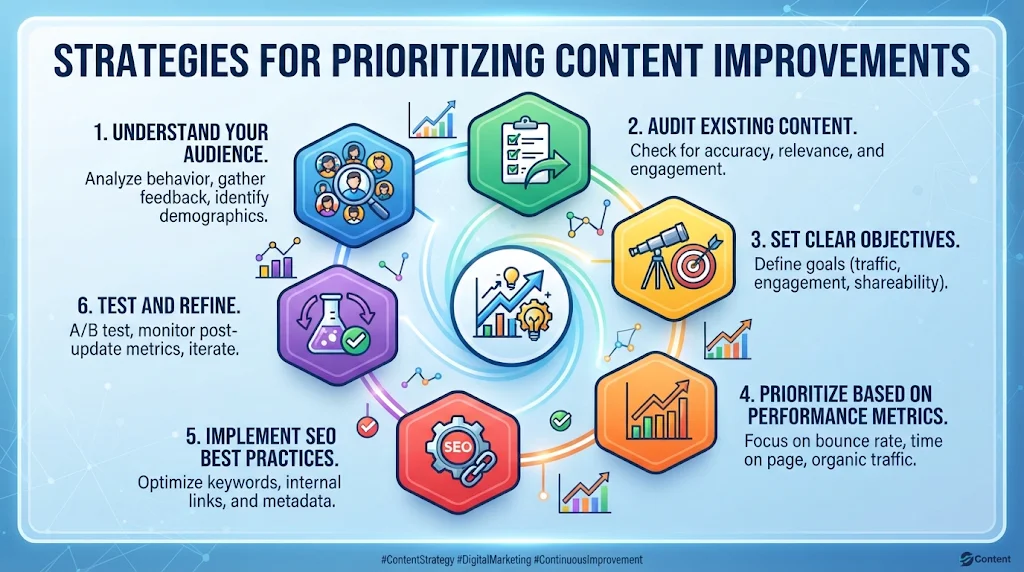
Improving content quality is essential for engaging your audience and driving traffic to your website. Prioritizing these improvements efficiently can lead to significant gains in user experience and search engine rankings. Here are some effective strategies to help you focus on the areas that require immediate attention the most.
Understand Your Audience
Before diving into content modifications, it’s crucial to have a clear understanding of who your audience is. Conducting surveys or utilizing analytics tools can help you gather valuable insights. Consider the following approaches:
- Analyze User Behavior: Use tools like Google Analytics to track what pages your visitors spend the most time on. This data can indicate what content resonates well.
- Gather Feedback: Encourage readers to provide feedback through comments or surveys. Their insights can highlight what they find helpful or lacking.
- Identify Demographics: Knowing your audience’s age, gender, and geographic location will help you tailor content that appeals directly to them.
Audit Existing Content
Conducting a content audit is vital to understand which pieces of content need improvements. A content audit checklist can help you evaluate your website’s current content. When you audit:
- Check for Accuracy: Ensure that all your content is factually accurate and up-to-date.
- Assess Relevance: Content that isn’t relevant to your audience or industry should be amended or discarded.
- Evaluate Engagement: Identify which posts have low engagement metrics such as share rates, comments, or bounce rates. This can signify a need for improvement.
Set Clear Objectives
Before making any adjustments, establish clear objectives for each content piece. Consider what you want to achieve with improvements. Here are a few potential goals:
- Increase Traffic: Focus on enhancing SEO for content that already attracts visitors.
- Boost Engagement: Modify calls-to-action to increase user interaction with your content.
- Enhance Shareability: Improve existing content to make it more appealing for users to share with their networks.
Prioritize Based on Performance Metrics
Utilizing performance metrics is essential when deciding which content to improve first. Key performance indicators (KPIs) to consider include:
| Metric | Significance |
|---|---|
| Bounce Rate | A high bounce rate indicates users are leaving quickly. Focus on improving those pages. |
| Time on Page | Content that keeps users engaged longer is performing well. Refine less effective content. |
| Organic Search Traffic | Pages that rank well in search results should be prioritized for updates to maintain or enhance their rankings. |
Implement SEO Best Practices
Once you’ve identified which content to improve, it’s key to implement SEO best practices. These could include:
- Keyword Optimization: Ensure each piece targets relevant keywords that your audience is searching for.
- Internal Linking: Use internal links to guide readers to other relevant content on your site.
- Metadata Optimization: Update your title tags and meta descriptions to improve click-through rates.
Test and Refine
After making improvements, continuously test the performance of your updated content. Utilize A/B testing on tags and content formatting to see what works best. Monitor metrics post-update to determine whether your strategy is effective. This iterative process will ensure improvements align with audience preferences.
Tools and Resources for Conducting Effective Content Audits
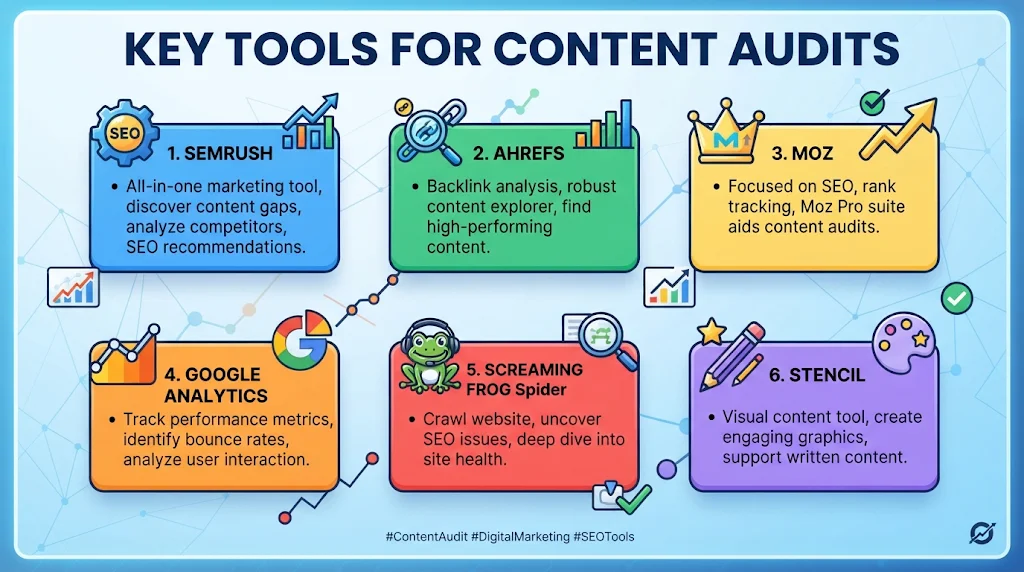
Conducting effective content audits is essential for optimizing your website and ensuring you deliver valuable content to your audience. Utilizing the right tools and resources can make this process smoother and more efficient. Here’s a detailed look at various tools and resources that can help you perform content audits with precision.
Key Tools for Content Audits
When embarking on a content audit, consider these essential tools:
- SEMrush: This all-in-one marketing tool provides insights into your website’s performance. You can discover content gaps, analyze competitor content, and get SEO recommendations.
- Ahrefs: Known for its backlink analysis, Ahrefs also boasts a robust content explorer that allows you to find high-performing content in your niche.
- Moz: Focused on SEO, Moz offers features that show how well your content ranks and how you can improve it. The Moz Pro suite can significantly aid in your content audits.
- Google Analytics: A must-have for tracking website performance metrics, Google Analytics reveals how users interact with your content. It helps identify pages with high bounce rates or low engagement.
- Screaming Frog SEO Spider: This desktop software crawls your website to uncover SEO issues and content gaps, providing a deep dive into your site’s health.
- Stencil: A tool for visual content, Stencil aids in creating engaging graphics that support your written content during audits.
Useful Resources
In addition to tools, several online resources can enhance your understanding of content audits:
- Content Marketing Institute: This resource provides insights on conducting a comprehensive content audit, including strategies and processes.
- Search Engine Journal: With thorough guidelines, this resource breaks down the content audit process step by step, showcasing best practices.
- Backlinko: Another excellent guide on content audits, Backlinko focuses on how to analyze, optimize, and improve your content.
- Crazy Egg: Offers detailed tips on performing a content audit and how to leverage analytics for better results.
Steps for an Effective Content Audit
Follow these steps to ensure your content audit is effective:
- Identify Your Goals: Determine what you want to achieve with the audit, such as improving SEO or enhancing user engagement.
- Catalogue Your Content: Create a spreadsheet to list all your content. Include URLs, titles, publication dates, and any relevant metrics.
- Analyze Performance: Use analytics tools to assess each content piece’s performance, including traffic, bounce rates, and engagement metrics.
- Evaluate Content Quality: Look for outdated, irrelevant, or poorly written content. Consider user feedback and keywords engagement.
- Group Content: Categorize your content based on performance and relevance. Identify which pieces to keep, update, or remove.
- Create an Action Plan: Based on your findings, outline the steps needed to optimize or eliminate content and prioritize them accordingly.
Displaying Content Audit Metrics
Organizing your audit metrics into a table can help visualize your findings effectively. Here’s an example of how to format your audit findings:
| Page URL | Title | Traffic | Bounce Rate | Action |
|---|---|---|---|---|
| https://your-page-url.com | Your Title Here | 500 | 70% | Update |
| https://your-other-page-url.com | Another Title Here | 150 | 80% | Remove |
By systematically using these tools and resources, you can ensure a successful content audit that improves your website’s performance and user experience. Regular audits can not only enhance your current content strategy but also align it with your ongoing business goals.
Conclusion
Keeping your website’s content in tip-top shape is essential for maintaining user engagement and boosting SEO performance. By incorporating the essential elements of a content audit checklist, you can thoroughly assess your content and identify areas for improvement. Regularly evaluating your content directly impacts your site’s visibility in search engines, ultimately leading to increased traffic.
Addressing common content issues, such as outdated information, broken links, or subpar quality, is crucial. Not only can these issues deter users, but they can also harm your site’s credibility. By being proactive in identifying these flaws, you are taking vital steps to enhance user experience and strengthen your online presence.
When tackling content improvements, prioritize based on your audience’s needs and search engine trends. By focusing on the most impactful changes first, you ensure that your efforts yield the best results. Then, leverage the right tools and resources to streamline your content audits. Utilizing software and data analytics can simplify this process, making it easier to gather insights and track improvements.
Making content audits a routine part of your website management strategy will keep your content fresh, relevant, and engaging. Ultimately, this practice not only preserves your established audience but also attracts new visitors, reinforcing your brand’s authority in an ever-evolving digital landscape. Embrace the power of a comprehensive content audit checklist, and watch your website thrive.