
Best Keyword Research Tools Comparison

ATTENTION: Want to Learn Affiliate Marketing from Successful Affiliates?
Selecting the right keyword research tool is vital for any digital marketer or SEO specialist. With a myriad of options available, it becomes crucial to understand the differences and advantages of each tool. Best Keyword Research Tools Comparison can significantly optimize your content strategy, allowing you to target the right audience and improve your search engine rankings.
Factors to Consider When Choosing a Keyword Research Tool
When evaluating keyword research tools, consider the following factors:
- Data Accuracy: The tool should provide reliable and up-to-date keyword data.
- User Interface: An intuitive and easy-to-navigate interface enhances the user experience.
- Features: Look for features such as keyword suggestions, competitive analysis, and SERP analysis.
- Pricing: Compare the pricing plans to find one that fits your budget while offering the needed features.
- Customer Support: Good support can help resolve issues quickly and efficiently.
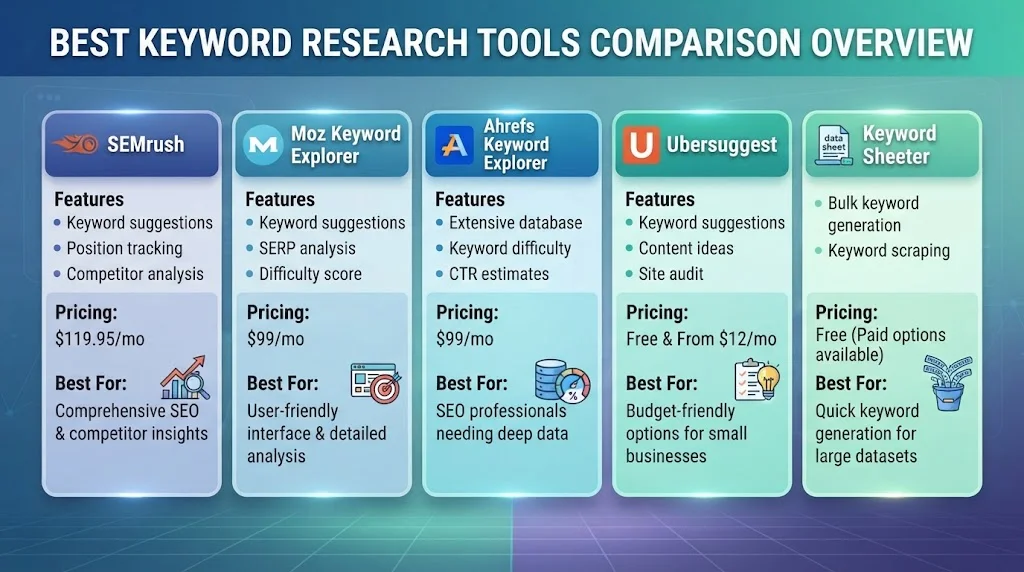
Best Keyword Research Tools Comparison Overview
Below is a detailed comparison of some of the leading keyword research tools available today, highlighting their strengths and weaknesses.
| Tool Name | Features | Pricing | Best For |
|---|---|---|---|
| SEMrush | Keyword suggestions, position tracking, competitor analysis | Starts at $119.95/month | Comprehensive SEO tools and competitor insights |
| Moz Keyword Explorer | Keyword suggestions, SERP analysis, difficulty score | Starts at $99/month | User-friendly interface and detailed analysis |
| Ahrefs Keyword Explorer | Extensive database, keyword difficulty, click-through rate estimates | Starts at $99/month | SEO professionals needing deep data |
| Ubersuggest | Keyword suggestions, content ideas, site audit | Free and Premium plans starting at $12/month | Budget-friendly options for small businesses |
| Keyword Sheeter | Bulk keyword generation, keyword scraping | Free, with paid options for more features | Quick keyword generation for large datasets |
Pros and Cons of Each Tool
Every keyword research tool comes with its own benefits and drawbacks:
- SEMrush: Excellent for detailed competitor analysis but may be overpriced for solo users.
- Moz Keyword Explorer: Easy to use and provides great insights but lacks the volume of data compared to others.
- Ahrefs: Offers extensive resources but can be complicated for beginners.
- Ubersuggest: Budget-friendly with useful features, but lacks advanced methods present in other tools.
- Keyword Sheeter: Great for bulk keyword needs but limited in competitor analysis capabilities.
Making Your Choice
Your choice of a keyword research tool will ultimately depend on your specific needs. If you’re a beginner looking for straightforward suggestions, Ubersuggest may be your best pick. However, if you’re an experienced marketer in need of advanced insights, SEMrush or Ahrefs are more suitable options.
Consider starting with free trials offered by these platforms to discover which features align best with your objectives. By thoroughly comparing the Best Keyword Research Tools Comparison, you can enhance your content strategy, leading to greater visibility and success in your online endeavors.
Key Features to Look for in Keyword Research Tools
Choosing the right keyword research tool can greatly enhance your SEO strategy. With numerous options available, it’s essential to focus on key features that can provide the best insights for your content. Understanding these features can help you make informed decisions and maximize your search engine visibility.
Data Accuracy
When evaluating keyword research tools, data accuracy should be one of your top priorities. Reliable tools will provide you with up-to-date information about keyword search volumes, trends, and competitiveness. Outdated or inaccurate data can lead you astray, causing you to target the wrong keywords.
User-Friendly Interface
A user-friendly interface is crucial for any keyword research tool. It should be intuitive and easy to navigate. This ensures that you can quickly access the information you need without wasting time learning how to use the software. Look for features like:
- Simple dashboards
- Streamlined navigation
- Visual representations of data
Comprehensive Keyword Suggestions
It’s important that your keyword research tool offers a wide range of keyword suggestions. The more options you have, the better your chances of discovering valuable keywords you may not have considered. Look for features that include:
- Related keywords
- Long-tail keyword suggestions
- Questions related to your primary keyword
Competitive Analysis
Understanding your competition is vital in SEO. Effective keyword research tools can provide insights into what your competitors are targeting. This helps you identify gaps in your strategy and target keywords that might be easier to rank for. Key features to look for include:
- Competitor keyword tracking
- Backlink analysis
- Content performance metrics
Search Volume and Trends
To target the right keywords, you need to know their search volume. Good tools offer metrics on average monthly searches, which indicate how popular a keyword is. Additionally, you should find features that highlight trends over time. This helps you identify rising keywords and stay ahead of the curve.
Location-Based Keywords
If your business serves specific geographic areas, consider a tool that provides location-based keyword insights. This feature can help you optimize your content for local search, ensuring that you reach clients in your target area.
Examples of Tools with Location Features:
Integration with Other Tools
Keyword research is only one aspect of your overall SEO strategy. Make sure the tool you choose integrates seamlessly with other tools you may use. This includes analytics platforms, content management systems, and social media tools. Integration can streamline your workflow and provide a more comprehensive view of your performance.
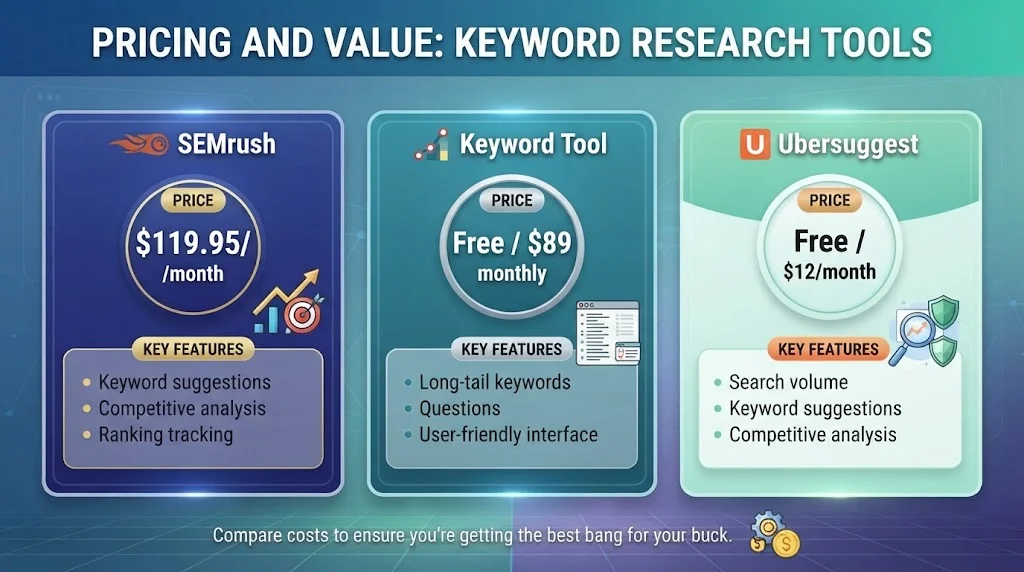
Pricing and Value
It’s important to consider the pricing of keyword research tools in relation to the value they provide. Some tools may have a higher price tag but offer advanced features that can save you time and improve your results. Compare costs to ensure you’re getting the best bang for your buck.
| Tool | Price | Key Features |
|---|---|---|
| SEMrush | $119.95/month | Keyword suggestions, competitive analysis, and ranking tracking |
| Keyword Tool | Free/$89 monthly | Long-tail keywords, questions, and user-friendly interface |
| Ubersuggest | Free/$12/month | Search volume, keyword suggestions, and competitive analysis |
When you are seeking the Best Keyword Research Tools Comparison, it’s vital to focus on features that cater to your specific needs. By prioritizing data accuracy, user-friendliness, comprehensive suggestions, and competitive analysis, you can enhance your SEO strategy. Understanding these key features will guide you toward selecting a tool that not only meets your needs but also aids in your overall growth.
How Keyword Research Tools Enhance SEO Strategies
In the ever-evolving landscape of digital marketing, effective SEO strategies are essential for achieving online visibility. One key aspect of developing a successful SEO strategy is keyword research. Utilizing keyword research tools can significantly enhance your ability to target the right audience, optimize content, and ultimately improve search engine rankings.
Keyword research tools help you uncover valuable insights into search behaviors and trends. These insights enable businesses to craft content that resonates with potential customers. Using these tools allows you to:
- Identify Popular Keywords: Discover which keywords your target audience is using by analyzing search volume and competition level.
- Analyze Competitors: Understand what keywords your competitors are ranking for, gauging areas where you can improve or capitalize.
- Optimize Content: Create content that naturally integrates high-performing keywords, improving its relevance and readability.
- Track Performance: Monitor how selected keywords perform over time, allowing you to adjust your strategies as needed.
Implementing keywords effectively into your content is another area where these tools shine. When you identify relevant keywords, it’s essential to delve deeper into their usage:
- Long-tail Keywords: These are less competitive but highly specific phrases that lead potential customers closer to making a purchase.
- Semi-competitive Keywords: These keywords have moderate competition but can yield significant traffic when handled correctly.
- Trending Keywords: Stay updated with keywords that are currently rising in popularity, ensuring your content remains relevant.
To maximize the effectiveness of keyword research tools, pairing them with tools like Google Search Console or Google Analytics can give you a holistic perspective on your website’s performance and user behavior. These platforms provide insights to measure the impact of your keyword strategy on web traffic and engagement levels.
While keyword research is an ongoing process, regularly revisiting your data allows for continuous improvement in your strategy. Monitoring your keyword rankings and adjusting your content accordingly ensures that you remain at the forefront of your industry.
Keyword research tools are invaluable resources for enhancing SEO strategies. By investing time in understanding and utilizing these tools, you can achieve better alignment between your content and your audience’s needs. Increased visibility and targeted traffic will follow, leading ultimately to higher conversion rates and business success.
The Impact of Long-Tail Keywords on Content Strategy
In today’s digital landscape, understanding the role of long-tail keywords can significantly enhance your content strategy. Long-tail keywords, which typically consist of three or more words, target more specific search queries. Unlike short, broad keywords, these phrases attract a smaller, more engaged audience. By efficiently utilizing long-tail keywords, you can refine your content positioning and improve your chances in search engine results.
Long-tail keywords are invaluable for several reasons:
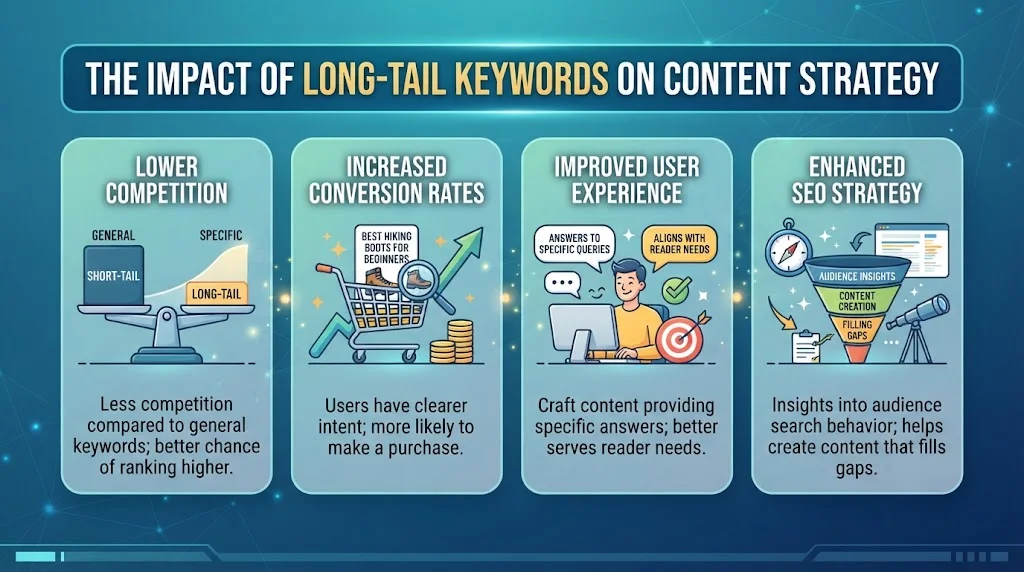
- Lower Competition: Since long-tail keywords are more specific, they face less competition compared to general keywords. This means that your content has a better chance of ranking higher on search engines.
- Increased Conversion Rates: Users searching for long-tail keywords usually have a clearer intent. For example, someone searching for “best hiking boots for beginners” is likely ready to make a purchase. Targeting these keywords can help increase your conversion rates.
- Improved User Experience: By crafting content around long-tail keywords, you can provide answers to specific queries. This improves the user experience as it aligns your content directly with reader needs.
- Enhanced SEO Strategy: Long-tail keywords can help in shaping your broader SEO strategy. They provide insights into what your audience is searching for, allowing you to create content that fills gaps in current offerings.
Integrating long-tail keywords into your content strategy requires a systematic approach. Here’s how:
1. Conduct Thorough Keyword Research
Start by identifying relevant long-tail keywords for your niche. Use tools like Moz or AnswerThePublic. They can provide insights into popular phrases and questions that potential readers are asking. Record your findings in a spreadsheet to keep track of the keywords and their search volumes.
2. Analyze the Competition
Next, assess the competition for each selected long-tail keyword. Tools like SEMrush allow you to evaluate how challenging it might be to rank for specific phrases. Aim for keywords with decent search volume but low to medium competition.
3. Create Targeted Content
Your content should answer questions or provide solutions related to your long-tail keywords. In doing so, you gain the attention of a niche audience. Consider creating blog posts, how-to guides, or FAQs based on these targeted terms.
4. Optimize for SEO
When writing your content, naturally integrate the long-tail keywords throughout the text. Place them in:
- The title
- Subheadings
- The introduction and conclusion
- Image alt attributes
- Meta descriptions
This helps search engines understand the focus of your content and assists in indexing it appropriately.
5. Measure Performance
Once your content is live, track its performance. Utilize analytics tools like Google Analytics to monitor page views, bounce rates, and conversion rates. This data can provide insight into how well your long-tail keywords are performing and whether adjustments are necessary.
Benefits of Long-Tail Keyword Strategy
Implementing a strategy focused on long-tail keywords allows you to:
| Benefit | Description |
|---|---|
| Target Specific Audiences | Reach users who are searching for specific solutions, enhancing engagement. |
| Cost-Effective Advertising | Long-tail keywords usually have lower costs per click in paid advertising. |
| Greater Insights | Gain a clearer understanding of consumer behavior and interests. |
Long-tail keywords play a crucial role in shaping an effective content strategy. They allow you to connect with your audience more precisely, enhance your SEO efforts, and ultimately drive more traffic to your site. By adopting best practices and utilizing the right tools, you can take full advantage of the benefits long-tail keyword strategies provide. This approach not only leads to better search engine rankings but also fosters a more meaningful relationship with your readers.
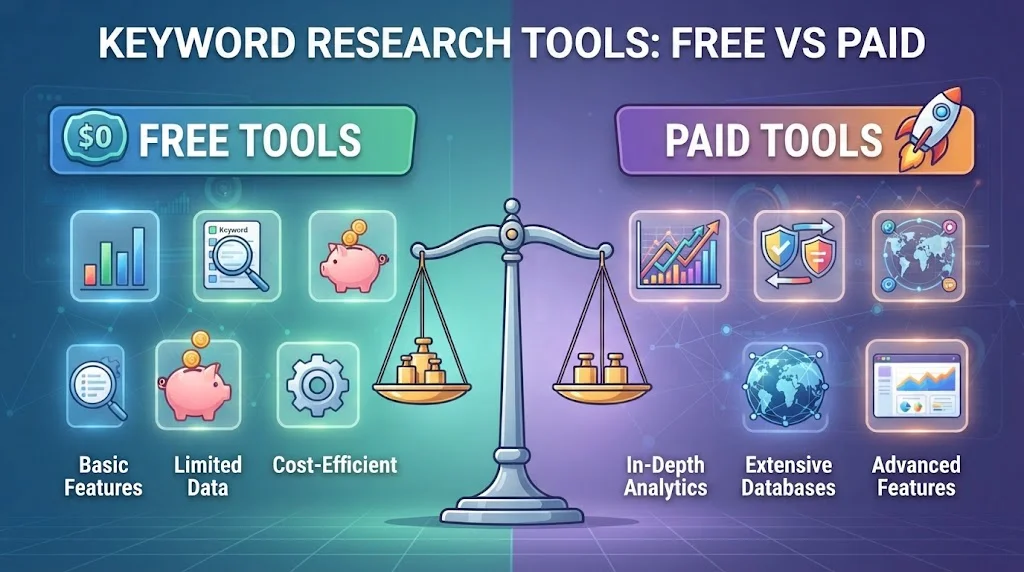
Comparing Free vs. Paid Keyword Research Tools: Pros and Cons
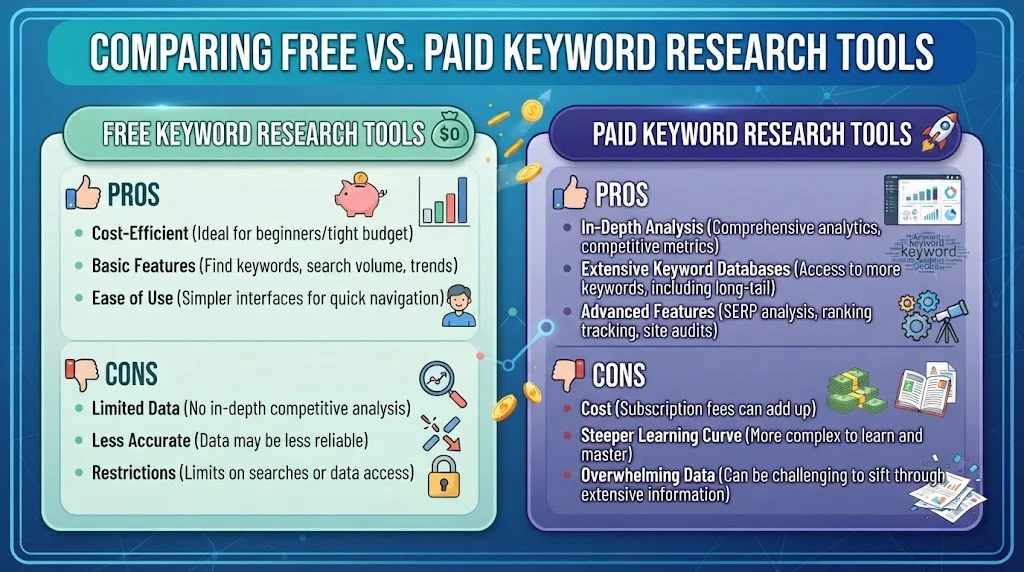
Choosing the right keyword research tool is crucial for anyone aiming to improve their online visibility. Whether you’re a blogger, a digital marketer, or a business owner, understanding the pros and cons of free versus paid keyword research tools can significantly impact your strategy. Below, we explore the strengths and weaknesses of both options.
Free Keyword Research Tools
Free keyword research tools can be a fantastic starting point, especially for beginners. They typically have a user-friendly interface and are accessible to anyone. Here are some notable advantages and disadvantages:
Pros of Free Keyword Research Tools:
- Cost-Efficient: As the name suggests, using free tools won’t cost you a penny. This is ideal if you’re just starting or have a tight budget.
- Basic Features: Most free tools provide essential features that help you find keywords, check their search volume, and understand trends.
- Ease of Use: Free tools often boast simpler interfaces, which can be easier to navigate for beginners.
Cons of Free Keyword Research Tools:
- Limited Data: You generally won’t get as much keyword data, such as competitive analysis, which is crucial for informed decision-making.
- Less Accurate: The data provided by free tools may not be as reliable as that of paid tools. Inaccuracies can lead you astray when formulating your content strategy.
- Restrictions: Many free tools place restrictions on the number of keywords you can search or the data you can access at a time.
Paid Keyword Research Tools
On the other hand, paid keyword research tools are generally packed with features that can take your SEO efforts to the next level. Let’s analyze the advantages and disadvantages of using premium options:
Pros of Paid Keyword Research Tools:
- In-Depth Analysis: Paid tools provide comprehensive analytics, including competitive metrics, which are essential for crafting a strong SEO strategy.
- Extensive Keyword Databases: You gain access to a wider array of keywords, including long-tail options that can yield better targeting.
- Advanced Features: Many premium tools offer features like SERP analysis, keyword ranking tracking, and site audits, which can elevate your SEO to a new level.
Cons of Paid Keyword Research Tools:
- Cost: The most notable disadvantage is the expense. Subscription fees can add up, making these tools less accessible for those on a tight budget.
- Steeper Learning Curve: Due to their complexity, paid tools may require time to learn and make the most out of their features.
- Overwhelming Data: With so much information available, some users may find it overwhelming to sift through data and make informed choices.
Popular Tools Comparison
The choice between free and paid keyword research tools often comes down to your specific needs. Below is a comparison table highlighting some popular tools from both categories:
| Tool | Type | Key Features | Price |
|---|---|---|---|
| Keyword Tool | Free | Keyword suggestions, search volume, trend data | Free; Pro version available |
| Ahrefs | Paid | In-depth analytics, keyword tracking, competitor analysis | Starts at $99/month |
| Moz Keyword Explorer | Paid | Keyword suggestions, SERP analysis, click-through rate data | Starts at $99/month |
| Ubersuggest | Free/Paid | Keyword ideas, traffic analysis, suggestions | Free; Paid version starting at $12/month |
Both free and paid keyword research tools offer unique advantages and challenges. The right choice depends on your goals, budget, and skill level.
Conclusion
Understanding the landscape of keyword research tools is essential for anyone serious about enhancing their SEO strategies. By exploring the Best Keyword Research Tools, you now have a clearer perspective on what to consider when choosing one. Key features like user-friendly interfaces, comprehensive data, and the ability to analyze competitors can greatly influence your selection.
The right keyword research tool not only identifies the terms your audience is searching for but also helps you structure your content more effectively, particularly through the use of long-tail keywords. These specific phrases can make a significant difference in driving targeted traffic to your website, as they capture the nuances of user intent.
Additionally, weighing the pros and cons of free versus paid tools is crucial in your decision-making process. While free tools often provide a decent starting point, investing in a comprehensive paid tool can yield richer insights and better align with advanced SEO needs.
By leveraging the appropriate keyword research tools and strategies, you can create more engaging content that resonates with your audience, ultimately boosting your online visibility. Emphasizing the right keywords will not only optimize your content for search engines but will also ensure that it meets the needs of your readers. With the right approach, you’ll be well on your way to mastering your content strategy and achieving significant growth in your online presence.