
Best Call to Action Examples for Blogs


ATTENTION: Want to Learn Affiliate Marketing from Successful Affiliates?
Crafting an engaging blog that captures your audience’s attention is only half the battle; the other half lies in effectively persuading them to take action. A strong call to action (CTA) is critical for driving user engagement, whether it’s signing up for a newsletter, clicking a link, or sharing content on social media. Here are some of the best call to action examples for blogs that can motivate your readers to act.
Use Direct Language
One of the simplest yet most effective ways to boost engagement is to use direct language in your CTAs. Instead of using passive phrases that leave the audience unsure about what to do, opt for clear and assertive language that expresses exactly what you want them to do. For example:
- “Subscribe Now”: This is straightforward and creates urgency.
- “Download Your Free Guide”: Offers value directly linked to the action.
- “Join Our Community”: Suggests belonging and connection.
Incorporate Visual Elements
Visual design plays a significant role in the success of a CTA. Making your CTA buttons stand out enhances their visibility and persuades users to engage. Here are some tips for effective design:
- Use contrasting colors to make the buttons pop against your blog background.
- Incorporate enticing shapes, such as rounded corners, that are generally more inviting.
- Add icons next to the text to draw attention and provide context.
Create a Sense of Urgency
Adding a sense of urgency can significantly enhance engagement levels. When readers feel they need to act quickly, they are more likely to respond. For instance:
- “Limited Time Offer: Sign Up Today for 20% Off”
- “Don’t Miss Out – Join Now Before Spots Fill Up!”
- “Get Your Free Trial – Ends Midnight!”
Leverage Social Proof
People tend to follow the actions of others, especially if they see those actions bring positive results. Use social proof in your CTAs to instill confidence in potential users. Examples include:
- “Join 10,000+ Happy Subscribers”: Indicates popularity and credibility.
- “See Why 5,000 Users Love Our Service”: Generates curiosity and trust.
- “Download Our Free E-book, Rated 4.9 Stars”: Adds credibility through rating.
Utilize Interactive CTAs
Interactive elements can heighten user engagement rates. Consider these engaging call-to-action ideas:
- Polls: “What Topic Do You Want Us to Cover Next?”
- Quizzes: “Find Out Which Product is Right for You!”
- Comments Section: “Share Your Thoughts Below!”
Run Contests and Giveaways
Offering a prize can drive incredible engagement. By encouraging readers to enter contests or giveaways, you not only boost participation but also create an exciting atmosphere. Some examples are:
- “Enter to Win a Free Year’s Subscription!”
- “Join Our Giveaway for a Chance to Win a Gift Card!”
- “Share This Post and Win a Surprise Package!”
Make It Personal
Personalization is key. When your audience feels directly addressed, they are more likely to respond. Customize your CTAs based on user behavior or interests, such as:
- “Hey [Name], Your Free Resource is Just a Click Away!”
- “Based on Your Readings, You Might Enjoy This!”
These best call to action examples for blogs can help elevate your blog engagement. Remember, the right CTA not only drives clicks but fosters lasting relationships with your readers.
For more insights on enhancing your blogs and engagement metrics, check out HubSpot Blog and Neil Patel’s Blog.
These strategies are a roadmap to improving your audience’s interaction with your content. By implementing actionable CTAs, you can help ensure that your blog is not just read but actively engaged with, creating a loyal community in the long run.
The Psychology Behind Effective Call to Actions
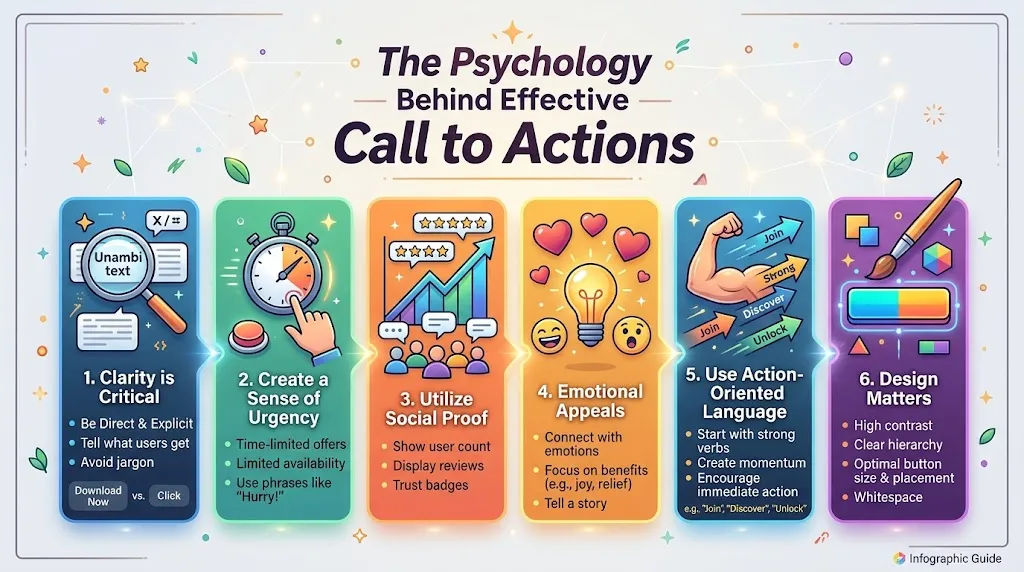
Every day, we navigate a web filled with opportunities to engage, purchase, or learn something new. However, what often distinguishes successful content from the rest is the effectiveness of its call to action (CTA). Understanding the psychology behind crafting effective CTAs can significantly enhance your blog’s performance, driving more engagement and conversions.
The essence of a strong CTA lies in its ability to tap into the reader’s emotions and motivations. It pushes them toward a desired action, whether it’s subscribing to a newsletter, downloading a resource, or making a purchase. But what psychological principles make some CTAs more compelling than others? Let’s explore some key factors.
1. Clarity is Critical
From the onset, your CTA must be clear and direct. Avoid ambiguity at all costs. When readers encounter phrases like “Click here” or “Learn more,” they may be unsure about what to expect. Instead, clarity fosters trust. Use specific language that outlines precisely what the user will gain:
- Download Your Free E-Book instead of Get More Information.
- Join Our Community for Exclusive Tips rather than Sign Up.
2. Create a Sense of Urgency
Humans are inherently motivated by the fear of missing out (FOMO). When you incorporate urgency into your CTAs, readers will feel compelled to act quickly. Phrases like “Limited Time Offer” or “Sign Up Today” can push readers to make quicker decisions.
3. Utilize Social Proof
Social proof can play a pivotal role in the decision-making process. By showing that thousands of others have already benefited from your offering, you can alleviate hesitation. Consider using CTAs like:
- Join 5,000+ Satisfied Subscribers
- See Why 1,000 Users Love Our Product!
4. Emotional Appeals
One of the most powerful aspects of human psychology is our emotional response. Content that resonates on an emotional level tends to drive engagement. Craft your CTAs to reflect emotions relevant to your audience. For instance:
- Transform Your Life with Our Coaching appeals to those seeking change.
- Don’t Miss Out on the Joy of Learning can evoke curiosity and excitement.
5. Use Action-Oriented Language
Verbs are your best friends in creating CTAs. Actively directing your audience with strong verbs establishes a powerful momentum. For instance, phrases like:
- Discover Your Potential
- Unlock Exclusive Content
Engage the reader’s interest and invite them to take the next step.
6. Design Matters
While words are essential, the visual design of your CTA can profoundly impact its effectiveness. A button that stands out, uses contrasting colors, and is well-placed on the page can draw attention. Here’s a summary of design tips:
| Design Element | Effectiveness |
|---|---|
| Color Contrast | Draws attention and enhances visibility |
| Button Size | Should be noticeable but not overpowering |
| Whitespace | Prevents clutter, making the CTA stand out |
Applying these psychological principles when designing your CTAs on blogs can create a powerful framework for reader engagement. Using the best call to action examples for blogs isn’t just about the click; it’s about leading your readers on a journey that ultimately feels rewarding. Want to dive deeper into CTA strategies? Check out Digital Marketer or Optimizely for more insights. Your readers will appreciate the clarity and motivation they will encounter, leading to greater interaction and satisfaction.
How to Craft Compelling CTAs That Convert Readers
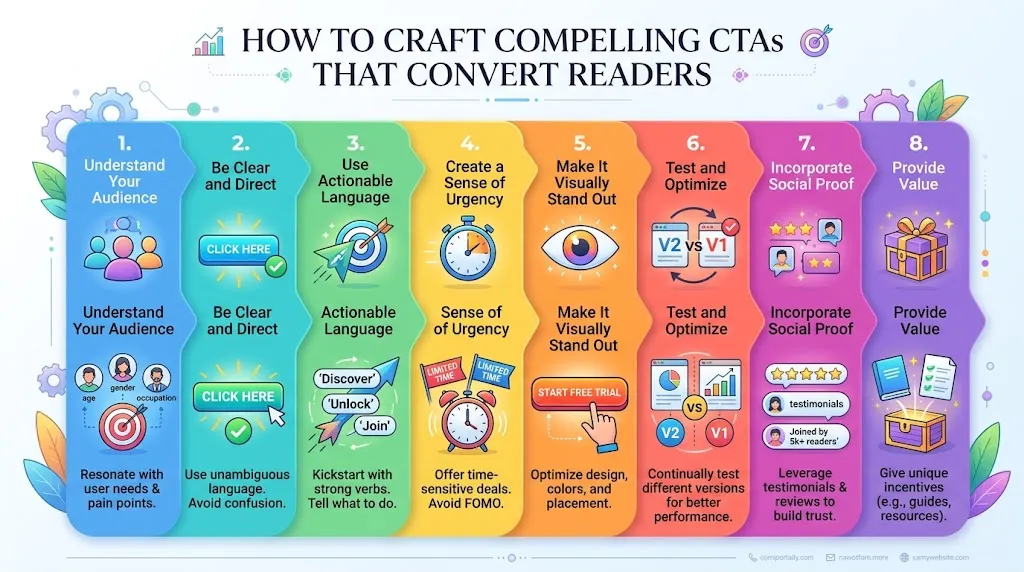
Crafting compelling calls to action (CTAs) is crucial for any blog looking to boost engagement and conversion rates. A well-structured CTA not only guides your readers but also motivates them to take the next step. Here are advanced strategies and insights on how to create CTAs that convert.
Understand Your Audience
Before writing your CTA, it’s essential to know who your audience is. Understanding their needs, pain points, and motivations will help you tailor your message effectively. Consider running surveys or asking your readers directly what they are interested in. This understanding will allow you to create CTAs that resonate with them.
Be Clear and Direct
Your CTA should communicate exactly what you want readers to do. Use clear and direct language. Instead of saying “Click here,” try something more specific like “Download the free eBook now!” Clarity helps eliminate confusion and sets the right expectations.
Use Actionable Language
Words are powerful, and using action verbs can make a significant difference. Instead of passive phrases, employ active language that energizes the reader. Some examples include:
- Join
- Discover
- Grab
- Start
- Unlock
For instance, “Unlock your potential” can sound more appealing compared to “Learn more,” driving higher engagement.
Create a Sense of Urgency
Adding a sense of urgency to your CTAs can encourage readers to act quickly. Phrases like “Limited time offer,” or “Sign up before it’s too late!” push readers to make quicker decisions. Use time-sensitive words or phrases to promote immediate action.
Make It Visually Stand Out
Design plays a significant role in how effective your CTA is. Ensure that your CTAs are visually appealing and easy to find. Use contrasting colors, buttons, and appropriate sizes. Here’s a simple checklist for visual elements:
- Contrast: Use colors that stand out against the background.
- Size: Make sure the CTA is sizeable enough to catch the eye.
- Placement: Position CTAs in high-traffic areas—like the top of the page, in the middle, or at the end.
Test and Optimize
Once you implement your CTAs, testing them is crucial. A/B testing allows you to compare different messages, colors, positioning, and more. Look at metrics like click-through rates and conversions to identify what works best. Some metrics to track include:
| Metric | Description |
|---|---|
| Click-Through Rate (CTR) | The percentage of readers who clicked on your CTA. |
| Conversion Rate | The percentage of users who completed the desired action after clicking the CTA. |
Incorporate Social Proof
People are influenced by others. Including testimonials, reviews, or statistics can add credibility to your CTAs. For example, saying “Join our community of 10,000 happy readers” can make your CTA more trustworthy and appealing.
Provide Value
Give your readers a compelling reason to take action. Offering something of value, such as a free guide, eBook, or exclusive content, helps enhance the attractiveness of your CTA. Think about how you can provide genuine value. For instance, “Subscribe now and receive a free checklist!” creates an incentive that readers are likely to appreciate.
Examples of Effective CTAs
Here are some of the best call to action examples for blogs you can draw inspiration from:
- “Get Started with a Free Trial”
- “Join the Mailing List”
- “Download Our Ultimate Guide”
When trying to improve your blog’s engagement, keep these essential elements in mind. By understanding your audience, using clear and actionable language, creating urgency, experimenting with visual designs, and incorporating social proof, you can craft CTAs that will effectively convert readers. For further reading on enhancing CTAs, check out resources from Crazy Egg and Neil Patel.
Common Mistakes to Avoid with Blog Call to Actions
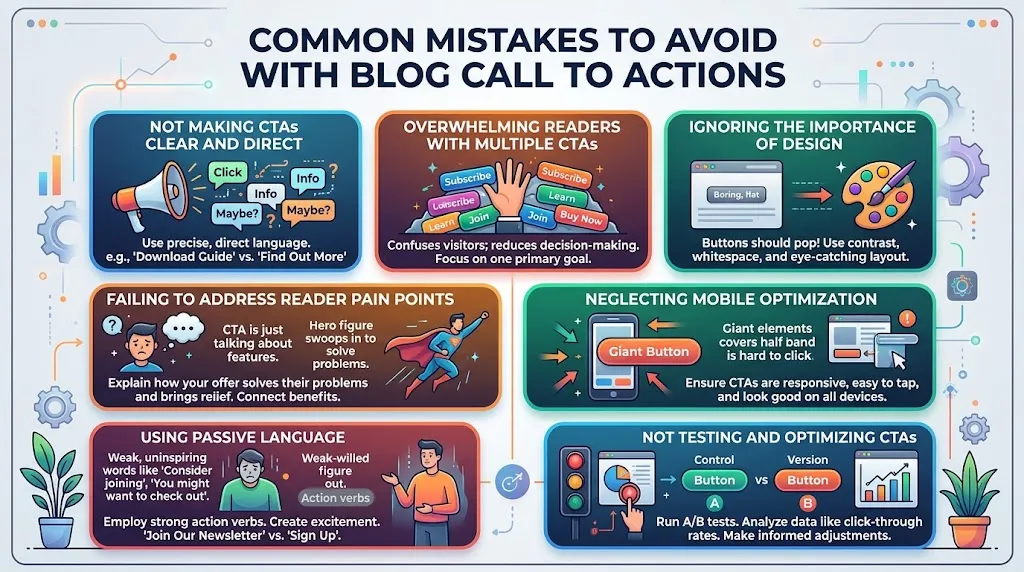
Creating an effective call to action (CTA) in your blog is crucial for engaging readers and guiding them toward the next steps you want them to take. However, many bloggers make common mistakes that diminish the impact of their CTAs. Understanding these pitfalls can help you refine your approach and enhance the effectiveness of your blog posts.
Not Making CTAs Clear and Direct
One of the most frequent errors in CTAs is the lack of clarity. Readers should immediately understand what action you want them to take. Use direct language and avoid jargon that may confuse your audience. For example, instead of saying “Click here for more information,” try “Download our free guide now.” This simple shift provides a clear directive.
Overwhelming Readers with Multiple CTAs
While it might seem beneficial to give readers several options, providing too many CTAs can overwhelm them. Stick to one or two main CTAs in a blog post to maintain focus. This can greatly improve conversion rates. If you want to include additional options, place them at the end of the post or in a sidebar, making sure they don’t compete for attention in the main content area.
Ignoring the Importance of Design
The design of your CTA plays a significant role in its effectiveness. Use contrasting colors, eye-catching fonts, and ample white space to make the CTA stand out. A button is often more effective than a text link. Here’s a simple checklist to enhance the design of your CTAs:
- Use a color that contrasts with your blog’s background.
- Make the button large enough to be easily clicked on mobile devices.
- Include action-oriented text, like “Get Started” or “Join Now.”
Failing to Address Reader Pain Points
Your CTAs should resonate with your audience’s needs and emotions. To craft CTAs that effectively connect with readers, consider the following:
- Identify challenges your readers face.
- Show how your product or service provides a solution.
- Highlight benefits that appeal directly to their interests.
For a powerful example, instead of saying, “Subscribe to our newsletter,” consider, “Never miss an update on the latest tips to boost your productivity.” This connects more directly with what your audience is seeking.
Neglecting Mobile Optimization
With a significant number of readers accessing blogs through mobile devices, it’s essential to ensure your CTAs are mobile-friendly. A button that’s too small to tap easily or a link that’s difficult to click can cause potential conversions to be lost. Test your CTAs on multiple devices to confirm they function well and look good.
Using Passive Language
Your CTAs should inspire action. Passive language, such as “You might want to consider…” weakens your appeal. Instead, use assertive language that compels readers to act immediately. Phrases like “Start your free trial now!” convey urgency and prompt users to take action without unnecessary hesitation.
Not Testing and Optimizing CTAs
Neglecting to test and optimize CTAs is a critical mistake. Utilize A/B testing to compare different CTA versions and analyze which performs better. This can involve experimenting with the text, color, size, and placement. Tools like Optimizely or Google Analytics can provide valuable insights.
Remember that your audience’s preferences may change over time, so make it a habit to regularly review your CTAs and tweak them accordingly.
Employing clear, focused, well-designed, and tested CTAs will not only engage your readers but also lead them toward meaningful actions. Avoid these common mistakes, and you will create an effective call to action that resonates with your audience and drives conversions using the best call to action examples for blogs.
Analyzing Successful Blogs: What CTAs Do Right
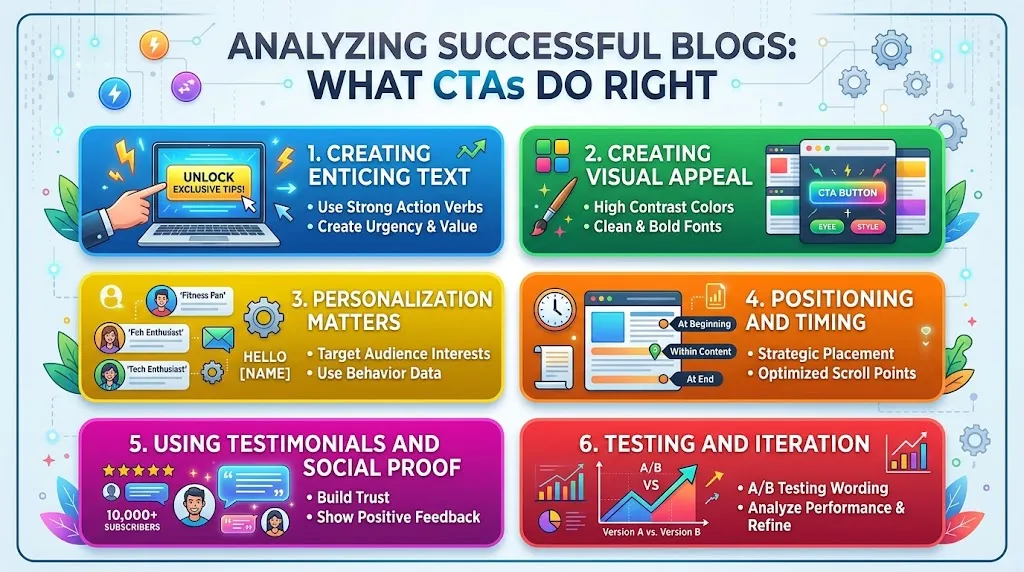
Blogs have become a vital part of marketing strategy for businesses and individuals alike. However, not all blogs generate the same level of engagement. A key factor that determines the effectiveness of a blog is the effectiveness of its Call to Actions (CTAs). Understanding what successful blogs do right can help you craft CTAs that convert readers into loyal followers.
Creating Enticing Text
Successful blogs use engaging language in their CTAs that speaks directly to the reader. This includes using words like “discover,” “join,” and “start today.” These powerful action verbs create a sense of urgency and encourage visitors to act. For example, instead of saying, “Subscribe to our newsletter,” a more engaging CTA could be, “Join our community and get the latest updates!”
Creating Visual Appeal
Design plays a significant role in enhancing the effectiveness of CTAs. Successful blogs often use contrasting colors and clear typography to make their CTAs stand out. Consider these tips for creating eye-catching CTAs:
- Color Contrast: Use bright, contrasting colors that draw the reader’s attention.
- Button Size: Make your button large enough to be easily clickable, especially on mobile devices.
- Whitespace: Surround your CTA with whitespace to give it room to breathe.
Personalization Matters
Many successful blogs utilize personalization in their CTAs. This means tailoring the message based on user behavior or demographics. For instance, if a visitor has been reading articles about fitness, a blog might present a tailored CTA such as, “Get your personalized workout plan today!” Personalization makes the CTA relevant to the user, increasing the likelihood of engagement.
Positioning and Timing
The placement of your CTAs in a blog post can significantly impact their success. Here are effective strategies for positioning CTAs:
- At the Beginning: A strong and relevant CTA at the beginning of the post can grab attention immediately.
- In the Middle: Placing one or two CTAs throughout the content can keep attracting attention as readers gain insight.
- At the End: Following a strong conclusion, a well-placed CTA encourages readers to take action after they’ve absorbed the content.
Using Testimonials and Social Proof
Social proof can significantly boost the effectiveness of CTAs. Successful blogs often incorporate testimonials next to their CTAs, demonstrating how others have benefited from subscribing or taking action. For instance, a blog might include a quote from a satisfied reader: “I found this newsletter invaluable for my daily routines!” This kind of endorsement builds trust and authenticity, prompting new visitors to engage.
Testing and Iteration
A/B testing is a common practice among successful bloggers. This involves testing different versions of CTAs to see which ones perform best. Consider testing variations of wording, design, color, or placement. For example, you might test “Subscribe Now” against “Join the Fun!” to see which generates more clicks. Iterating based on real data will help refine your approach and lead to higher conversion rates.
Examples of Effective CTAs
To inspire you, here are a few successful blog examples and their standout CTAs that serve as some of the best call to action examples for blogs:
| Blog | CTA | Why It Works |
|---|---|---|
| Copyblogger | “Get the bite-sized insights for content marketing.” | Offers quick and valuable benefits directly. |
| HubSpot | “Start your free trial!” | Encourages immediate action without commitment. |
| Buffer | “Join 100,000 others and boost your social media.” | Utilizes social proof effectively. |
Successful blogs harness the power of CTAs to enhance engagement. By focusing on strong language, attractive design, personalized messaging, strategic positioning, social proof, and testing different strategies, you can optimize your CTAs to resonate with your audience. By analyzing what works well for others, you can implement these best practices in your own blogs to achieve better results.
Conclusion
Creating effective call to actions (CTAs) is essential for engaging your blog audience and driving conversions. By exploring the best call to action examples for blogs, we discovered that clarity, urgency, and succinctness can significantly boost reader interaction. Understanding the psychology behind these actions allows you to tap into your audience’s motivations, making it easier for them to take the desired action.
When crafting CTAs, focus on using strong action verbs and addressing your readers’ needs directly. Techniques like personalizing your message and employing visual elements can enhance their effectiveness. Avoid common mistakes, such as using vague language or placing CTAs where they are easily overlooked, which can detract from their power.
Analyzing successful blogs shows that the most effective CTAs often incorporate a blend of these strategies, creating a strong incentive for readers to participate. Notable examples reveal how integrating CTAs into the flow of content maintains reader engagement and drives further action.
By applying these insights, you can craft compelling calls to action that resonate with your audience and foster a more interactive experience on your blog. Remember, the key is to keep your reader’s needs at the forefront and to continually refine your strategies based on what resonates best. Embrace the feedback and adapt to your audience’s preferences to maximize engagement and conversion rates. This process will not only enhance the effectiveness of your CTAs but also retain and grow your blog readership over time.