
Best Affiliate Disclosure Practices for Blogs


ATTENTION: Want to Learn Affiliate Marketing from Successful Affiliates?
As a blogger, transparency is key to building trust with your audience. A crucial part of this transparency is understanding and implementing the best affiliate disclosure practices for your blog. Effective disclosures not only comply with legal regulations but also foster a trustworthy relationship between you and your readers. Here’s what you need to know.
The Importance of Affiliate Disclosures
When you promote affiliate products, it’s essential to inform your readers that you may earn a commission from their purchases. This honesty helps them make informed decisions and reaffirms your credibility as a content creator. Notably, the Federal Trade Commission (FTC) mandates clear and conspicuous disclosures to ensure consumers are aware of your relationship with affiliates.
Best Practices for Affiliate Disclosures
Implementing effective affiliate disclosures can be straightforward if you follow these best practices:
- Be Transparent: Your readers deserve honesty about your affiliate roles. Always include a disclosure when you mention affiliate links.
- Positioning Matters: Place your disclosure near the affiliate link or mention. Ideally, it should be at the beginning of a blog post or close to where you reference the affiliate product.
- Use Clear Language: Avoid jargon. Use simple words like “I earn a commission if you make a purchase through my link” to ensure clarity.
- Include a Dedicated Disclosure Page: Having a separate page for full disclosure can be beneficial. Link to this page from your affiliate posts.
- Visual Cues: Consider using visual reminders like bold text or color contrasts to make your disclosures stand out.
Placement and Visibility
Your affiliate disclosures should be clearly visible and not hidden within the content. Here are some effective strategies:
- Top of the Post: Starting your post with a brief statement about affiliate links can set the tone early.
- Section: Mentioning your affiliate relationships in the conclusion is a great reinforcement, but ensure it does not replace the primary disclosure.
- Before Clickable Links: Always include a disclosure right before any affiliate link to meet FTC guidelines.
Examples of Effective Disclosures
To help you visualize, here are some examples of how to craft your own disclosures:
| Example | Description |
|---|---|
| “As an Amazon Associate, I earn from qualifying purchases.” | This is a straightforward and simple disclosure referring to the Amazon affiliate program. |
| “I may earn a commission on products I promote; thank you for your support!” | This example emphasizes appreciation while ensuring transparency. |
Legal Requirements
It’s vital to be aware of the legal obligations tied to affiliate marketing. The FTC requires disclosures to be:
- Clear and Conspicuous: The language must be easy to understand.
- Unavoidable: It should be placed in a location where readers cannot miss it, ensuring it is noticeable.
Regularly Update Your Disclosures
As your content evolves, so should your disclosures. Regularly revisit and update them to reflect any changes in your affiliate partnerships or guidelines. This diligence helps maintain your integrity as a blogger.
The Importance of Transparency in Affiliate Marketing

Affiliate marketing has become a powerful way for bloggers and online entrepreneurs to earn income. However, with this opportunity comes the responsibility of maintaining transparency. You may wonder why transparency is essential and how it impacts your blog reputation and business. Here are a few key reasons.
Builds Trust with Your Audience
When you openly declare your affiliations, your readers are more likely to trust you. Trust plays a vital role in conversion rates. If visitors feel confident about your recommendations, they are more inclined to make purchases through your affiliate links. Consider these practices to enhance trust:
- Clearly label affiliate links. Use phrases like “This is an affiliate link” to inform your audience.
- Be honest about your experiences with the products you promote.
- Regularly review and update your content to maintain accuracy.
Legal Compliance
Transparency is not just ethical; it’s also a legal requirement in many jurisdictions. In the United States, the Federal Trade Commission (FTC) mandates that affiliate marketers disclose their affiliations to prevent misleading advertising. Failing to comply can result in penalties. It’s crucial to:
- Include a brief disclosure at the start of your articles.
- Utilize pop-ups or footnotes if space is a concern but ensure they are noticeable.
- Link to detailed disclosures, explaining how affiliate marketing works on your site.
Enhances SEO and User Experience
Transparency can also improve your blog’s SEO. When visitors know you are being honest, they will spend more time on your site, reducing bounce rates. Search engines like Google reward websites that provide value and maintain engagement. Here’s how to boost user experience and SEO through transparency:
- Use clean and user-friendly designs for disclosing information.
- Incorporate FAQs that clarify your affiliate relationships.
- Optimize your content around relevant keywords to improve search visibility.
Attracts Like-Minded Brands
Brands want to collaborate with affiliates who are upfront about their business practices. When you maintain a culture of transparency, you attract high-quality partnerships. You’re more likely to work with brands that share your values. Try these strategies for successful brand partnerships:
- Build a media kit that highlights your audience demographics and traffic metrics.
- Showcase examples of transparent practices you use on your blog.
- Communicate openly throughout the partnership to ensure mutual benefits.
Proof of Authenticity
In a crowded market, being transparent showcases your authenticity. Readers can sense when someone is genuinely passionate about what they promote. You can differentiate yourself from other bloggers by staying true to your brand. Here are some ways to demonstrate authenticity:
- Share personal stories related to the products you promote.
- Be selective about the brands you affiliate with, only promoting products you believe in.
- Encourage feedback and engage with your audience regarding their experiences.
Practical Disclosure Practices
Now that you understand the significance of transparency, how can you apply it effectively? Implement these best affiliate disclosure practices:
| Practice | Description |
|---|---|
| Clear Language | Use simple language to explain your affiliate partnerships. |
| Visible Placement | Place your disclosures in a way that catches attention, preferably at the top or very close to the affiliate links. |
| Examples | Provide examples of products you endorse with links. |
| Regular Updates | Keep your disclosures up to date with current affiliate partnerships and regulations. |
By prioritizing transparency, you’ll not only comply with the law but also foster a loyal audience. Building trust and maintaining clear communication about your affiliate relationships is essential for long-term success in the competitive world of affiliate marketing.
How to Craft Clear and Effective Affiliate Disclaimers

When you’re running a blog that features affiliate marketing, crafting clear and effective affiliate disclaimers is essential. Not only does this act in compliance with legal guidelines, but it also builds trust with your audience. Many readers appreciate transparency, and a well-crafted disclaimer can inform them about how you earn revenue while offering them valuable content. Here are several strategies to ensure your affiliate disclaimers are clear and effective.
Understand the Importance of Affiliate Disclaimers
Affiliate disclaimers serve multiple purposes:
- Legal Compliance: According to the Federal Trade Commission (FTC), affiliate links must be disclosed. Failing to do so can result in legal repercussions.
- Building Trust: Transparency fosters trust. When readers understand that you might earn a commission through their purchases, they are more likely to value your recommendations.
- Enhancing User Experience: Clear disclosures help users make informed choices about what to click on, leading to a more satisfying experience.
Choose the Right Placement for Your Disclosure
Where you place your affiliate disclaimer can significantly affect visibility and understanding. Here are some optimal locations:
- Above the Fold: Place the disclaimer near the top of your blog post. This ensures that readers see it before engaging with your content.
- Within the Content: Depending on the length of your article, you might want to integrate the disclosure naturally into the text where the affiliate link appears.
- In the Footer: Including a general disclaimer in your site’s footer can serve as a reminder without being obtrusive.
Make Your Language Simple and Direct
Using straightforward language is crucial. Readers should not have to decipher complex legal jargon. Here’s how you can write an effective disclosure:
- Use first-person language: “I earn a commission for purchases made through my affiliate links.”
- Be transparent: “This means that at no additional cost to you, I may earn a small commission.”
- Keep it brief: A simple, concise statement can be just as effective as a lengthy disclaimer.
Utilize Visual Elements
Sometimes, less is more. visual elements into your disclosures can capture attention quickly. Consider the following:
- Bold Text: Making the disclosure bold can make it stand out from the rest of the text.
- Boxed Sections: You can create a shaded box around your disclaimer to grab attention.
Provide Context for Affiliate Links
Besides stating that links are affiliate links, offering context can be beneficial:
- Explain why you’re promoting specific products or services.
- Share personal experiences or stories that resonate with the products.
This additional detail can further enhance trust and interest amongst your readers.
Regularly Update Your Disclosures
Your affiliate programs may change over time. It’s important to regularly review and update your disclosures to reflect new partnerships or changes in existing programs. This proactive approach ensures compliance and showcases your dedication to transparency.
Examples of Affiliate Disclaimers
Here are a couple of examples of effective affiliate disclaimers:
| Disclaimer Type | Example |
|---|---|
| Above the Fold | I may earn a commission for purchases made through links in this post. Thank you for supporting my blog! |
| In-Content | As an Amazon Associate, I earn from qualifying purchases. It won’t cost you any extra! |
For more insights into the best practices for affiliate disclaimers, visit FTC Guidelines or Affiliate Marketer Training.
Crafting effective affiliate disclaimers is a skill that can enhance your blog and increase trust among your readers. By implementing these practices and consistently evaluating your strategies, you can create a transparent blogging environment that benefits both you and your audience.
Legal Requirements and Guidelines for Affiliate Disclosures
In today’s digital landscape, affiliate disclosures have become an essential aspect for bloggers and content creators. Knowing the legal requirements and guidelines surrounding these disclosures can help you build trust with your audience while ensuring compliance with regulations. This article will walk you through the necessary elements to keep in mind when crafting your affiliate disclosures.
The Federal Trade Commission (FTC) is the primary authority on advertising and marketing regulations in the United States, including affiliate marketing. They require that any form of endorsement or recommendation, including affiliate links, be clearly disclosed to readers. This transparency is crucial for maintaining ethical standards and ensuring that consumers can make informed decisions based on your content.
One key principle is to make the disclosure clear and conspicuous. This means that readers should not have to search for it or figure out what it means. Instead, the disclosure should be immediately visible and easily understandable. Here are some guidelines to consider:
- Location: Place the disclosure near the affiliate link or at the beginning of the content to ensure that it catches the reader’s attention.
- Language: Use simple and straightforward language. Phrases like “I earn a commission” or “These are affiliate links” are effective and clear.
- Formatting: Consider using bold text or different color fonts to make the disclosure stand out.
It’s also important to note that the FTC’s guidelines apply to all types of affiliate partnerships. Whether you’re promoting products, services, or digital goods, your audience deserves to know when you have a financial interest in their purchase decisions. To help you stay compliant, here’s a checklist of best practices:
| Practice | Description |
|---|---|
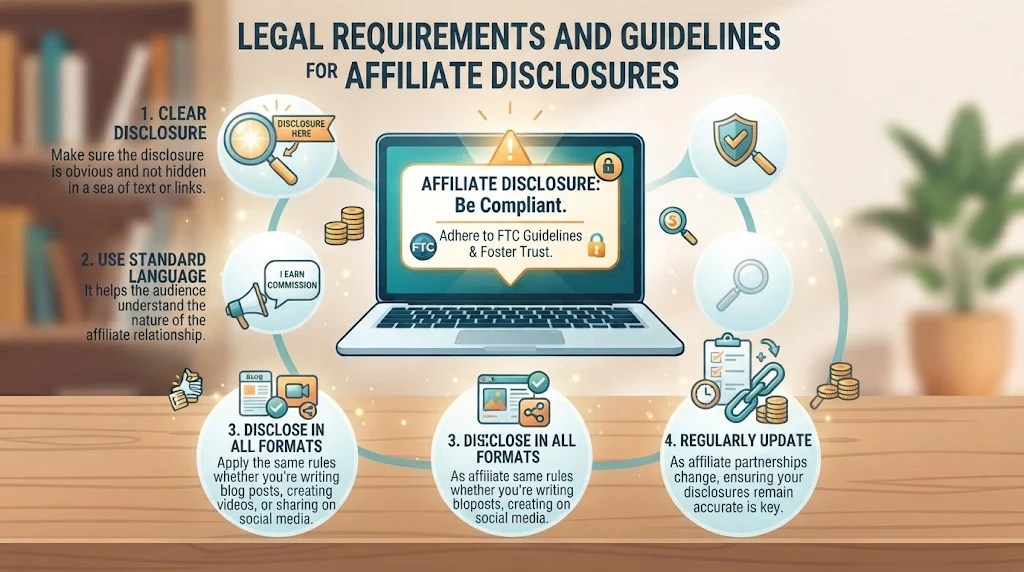
| Clear Disclosure | Make sure the disclosure is obvious and not hidden in a sea of text or links. |
| Use Standard Language | It helps the audience understand the nature of the affiliate relationship. |
| Disclose in All Formats | Apply the same rules whether you’re writing blog posts, creating videos, or sharing on social media. |
| Regular Updates | As affiliate partnerships change, ensuring your disclosures remain accurate is key. |
Moreover, the guidelines extend beyond the United States. If you have an international audience, consider the local regulations regarding affiliate disclosures. For instance, in the UK, the Advertising Standards Authority (ASA) also emphasizes the need for transparency in advertising. Understanding the regulations in different territories protects you from potential legal issues and builds trust with your international audience.
Importance of consistency
Another critical aspect to keep in mind is the importance of consistency. Your approach to affiliate disclosures should not vary based on the product or service. Maintain the same style and format in all posts to reinforce to your readers that they can expect honesty and transparency throughout your content. For detailed insights into other countries’ regulations, you can visit the Advertising Standards Authority.
Review your blog
Consider reviewing your blog periodically to ensure that your disclosures are up to date. As new regulations come into effect or if you enter new affiliate relationships, it’s crucial to adapt your disclosures accordingly. This not only helps in staying compliant but also reinforces your commitment to integrity, which is invaluable in maintaining and growing your audience.
Understand the legalities
Understanding the legalities surrounding affiliate disclosures is integral to running a successful blog. By following the FTC guidelines and best practices outlined above, you can create honest, engaging content while staying compliant. For more tips on legal requirements in affiliate marketing, check out the resources available on FTC’s official website to keep your blog both informative and trustworthy.
Strategies to Build Trust with Your Audience Through Disclosure

Building trust with your audience is a cornerstone of successful blogging, especially in the realm of affiliate marketing. When readers trust you, they are more likely to engage with your content and make purchases based on your recommendations. A key part of earning this trust lies in effective disclosure practices. By being transparent about your affiliate relationships, you can create a more authentic connection with your audience.
Make your disclosures clear and visible
One of the best affiliate disclosure practices is to make your disclosures clear and visible. You can accomplish this by positioning your disclosures near the beginning of your blog posts. This ensures that your readers see the information before delving deeper into your content. Use straightforward language that explains your affiliation, such as, “This post contains affiliate links. If you make a purchase through these links, I earn a commission at no extra cost to you.”
Incorporate a dedicated disclosure page
Another strategy is to incorporate a dedicated disclosure page on your blog. This page should elaborate on your affiliate relationships, how they work, and why they matter. By directing your audience to this page, you provide them with detailed insights, which can reinforce your credibility. Make sure to link to this page in your blog’s footer and mention it in your posts whenever relevant. This can improve visibility and create a habit for your readers to check it.
Use visual elements
Consider using visual elements to enhance your disclosures. A simple banner or graphic could highlight that your blog contains affiliate links. These visuals can catch the eye of your readers and serve as an additional reminder. Remember to design them in a non-intrusive manner, ensuring that they complement your content rather than distract from it.
Engage with your readers
Engagement with your readers is vital for establishing trust. Take the time to respond to comments and questions they may have about your affiliate products. If they express concerns or curiosity, be open and honest in your interactions. Demonstrating responsiveness shows your audience that you value their opinions. A great way to sustain that engagement is by encouraging discussions around the products you promote. You could ask questions like, “Have you tried this product? What do you think?” This keeps the conversation going and shows you care about their input.
Be authentic
Your audience appreciates authenticity. Share your personal experiences with the products you recommend. Rather than simply regurgitating promotional content, tell your readers why you use the products and how they have positively impacted your life. This storytelling approach makes it easier for readers to connect with you on a personal level.
Clarity
Clarity in your communication builds a stronger bond with your audience. Avoid using jargon when discussing your affiliate relationships. Instead, aim for straightforward language that anyone can understand. Simplifying your communication ensures that readers aren’t confused about the affiliations you have with brands.
Frequency
The frequency of your disclosures is another factor in building trust. Regularly remind your audience that your blog contains affiliate links. This isn’t about being repetitive but rather reinforcing the transparency of your practices. Frequent disclosures help to keep your audience informed and engaged without feeling deceived.
A study conducted by ResearchGate indicates that transparency in blogging leads to increased audience loyalty. By sharing both the advantages and disadvantages of the products you recommend, you illustrate honesty and authenticity. Balance is key; don’t just convey positive aspects. Acknowledging potential downsides shows that you are genuinely evaluating products.
Comply with the laws and guidelines
Additionally, it’s essential to comply with the laws and guidelines regarding affiliate disclosures. The Federal Trade Commission (FTC) requires bloggers to disclose their affiliations clearly. Familiarize yourself with these regulations to ensure you meet compliance standards. You can learn more about these guidelines on the official FTC website.
Ultimately, fostering trust with your audience through effective disclosure practices requires a combination of transparency, engagement, and authenticity. By clearly communicating your relationships with brands and sharing genuine experiences, you not only comply with regulations but also establish a loyal following. Remember, a reader who trusts you is more likely to click your affiliate links and make purchases.
Conclusion
Ensuring that you adopt the best affiliate disclosure practices for your blog is not just a legal obligation; it also serves to build a trusting relationship with your audience. Transparency in affiliate marketing is crucial, as it helps your readers understand your intentions and the content they consume. By crafting clear and effective affiliate disclaimers, you are showing that you value honesty and openness, which are essential in today’s digital landscape.
Understanding the legal requirements and guidelines for affiliate disclosures is a vital step in protecting yourself and your blog. By adhering to these regulations, you minimize any risks while demonstrating your commitment to ethical standards. Keep in mind that readers appreciate knowing how their trust is rewarded, and disclosing affiliate partnerships transparently reinforces this trust.
Furthermore, building trust with your audience goes beyond merely including a disclaimer. Engage with your readers through authentic interactions, and provide valuable content that addresses their needs. This will strengthen the bond between you and your audience, making them more likely to appreciate and accept your affiliate recommendations.
Prioritizing these best practices not only fulfills legal obligations but also enhances your credibility as a blogger. As you incorporate these strategies into your blog, you’ll likely see an increase in reader loyalty and potentially higher conversion rates. Ultimately, fostering a transparent environment through effective affiliate disclosures will benefit both you and your audience in the long run. Remember, honesty is the foundation of a sustainable and successful blogging journey.