

 ATTENTION: Want to Learn Affiliate Marketing from Successful Affiliates?
Join this FREE community where successful marketers share their secrets!
Learn directly from highly successful affiliate marketers
Access free, actionable training content regularly
Connect with an active community of over 5,000 members
Network with multiple six-figure earning affiliates
Get your questions answered by real experts
JOIN FREE NOW!
ATTENTION: Want to Learn Affiliate Marketing from Successful Affiliates?
Join this FREE community where successful marketers share their secrets!
Learn directly from highly successful affiliate marketers
Access free, actionable training content regularly
Connect with an active community of over 5,000 members
Network with multiple six-figure earning affiliates
Get your questions answered by real experts
JOIN FREE NOW!
Affiliate marketing can be a lucrative venture through blogging, but many newcomers often stumble due to common errors. Recognizing these mistakes early on can greatly enhance your success rate. Here’s a breakdown of the most frequent Affiliate Marketing Blogging Mistakes and how you can avoid them.
The Importance of Quality Content
One major mistake is producing low-quality content. Readers are drawn to engaging, informative, and well-written articles. If your content doesn’t offer value, potential customers will quickly look elsewhere. Make sure to:
- Create original content that showcases your unique voice.
- Provide actionable tips that can be easily implemented.
- Update your posts regularly to keep them relevant.
Ignoring SEO Best Practices
Another mistake many bloggers make is neglecting search engine optimization (SEO). Without proper SEO strategies, it’s tough for your content to be discovered online. Aim to:
- Use keywords naturally throughout your posts, including the title, headers, and body.
- Optimize your images by using alt tags and compressing file sizes.
- Build backlinks to reputable sites related to your niche to enhance your site’s credibility.
For further insights on SEO, you can visit Moz.
Lack of Focus on Target Audience
Not defining your target audience is a common pitfall in affiliate marketing blogging. You must know who you’re writing for. Consider demographics, interests, and needs. Then tailor your content to address those factors. To effectively reach your audience:
- Create reader personas to understand potential customers better.
- Engage with your audience through comments or social media.
- Use surveys to gather insights directly from your readers.
Overly Promotional Content
While promoting products is the core of affiliate marketing, being excessively promotional can turn readers off. You want to build trust, not pressure your audience. To balance promotion with value:
- Focus on providing educational content that includes product mentions seamlessly.
- Share personal experiences with products for authenticity.
- Use storytelling to convey the benefits of products rather than listing features.
Neglecting Email Marketing
Many bloggers ignore the power of email marketing. Building an email list can help you reach your audience directly. Here are tips to leverage email:
- Create lead magnets like free ebooks or exclusive content to grow your list.
- Segment your email list based on user interests for targeted campaigns.
- Consistently engage with your subscribers to keep them interested.
For effective email marketing strategies, check out Mailchimp.
Failure to Track and Analyze Performance
Without analytics, you cannot measure your success. Understanding what works and what doesn’t is vital for growth. Make use of tools such as:
- Google Analytics to track site traffic and user behavior.
- Affiliate dashboards to monitor which products are selling well.
- A/B testing for headlines and content layout to see what resonates with your audience.
For comprehensive analytics options, explore Google Analytics.
Inconsistent Posting Schedule
Establishing a consistent posting schedule can create a reliable routine for your audience. If you post sporadically, readers may lose interest. To maintain consistency:
- Create a content calendar to plan your posts.
- Set realistic goals for how often you can commit to posting.
- Utilize scheduling tools to automate publishing if necessary.
Choosing the Wrong Affiliate Programs
Selecting affiliate programs that don’t align with your niche can hinder your credibility. Be selective with affiliate partnerships. To choose wisely:
- Look for products that genuinely interest you and your audience.
- Research the reputation of affiliate programs before committing.
- Opt for programs that offer competitive commission rates and good support.
For reputable affiliate networks, consider ClickBank or Amazon Associates.
Avoiding these common Affiliate Marketing Blogging Mistakes will set you up for greater success in this competitive field. Focus on quality, understand your audience, and maintain a consistent approach to see meaningful results.
The Role of Audience Engagement in Successful Affiliate Blogging

Engaging your audience is a crucial aspect of successful affiliate blogging. When you connect with your readers, not only do you build trust, but you also increase the likelihood that they will follow your recommendations. Here are some effective ways to enhance your audience engagement and boost your affiliate marketing efforts.
Understand Your Target Audience
To engage effectively, you must first understand who your audience is. Take time to analyze your demographics, preferences, and interests. Ask yourself:
- What age group does my audience belong to?
- What are their main interests and challenges?
- How do they prefer to consume content?
Utilizing tools like Google Analytics can provide you with insights into your audience’s behavior, making it easier to tailor your content accordingly.
Create Valuable Content
Content is king, especially in the world of blogging. Your articles should offer value. Here’s how to focus on creating valuable content:
- Educational Content: Teach your audience something new about the niche you’re in.
- Problem-Solving Posts: Address common issues your readers face and offer solutions.
- Product Reviews: Share honest opinions on products you’re affiliated with, highlighting their pros and cons.
By focusing on providing value, you’re more likely to keep your readers engaged and returning for more.
Encourage Interaction
Interaction is vital for audience engagement. Encourage your readers to leave comments, ask questions, and share their experiences. Here are a few strategies:
- Ask Open-Ended Questions: This invites discussion and helps you understand your audience’s needs.
- Create Polls and Surveys: Engage your audience with simple polls related to your content.
- Respond to Comments: Make it a habit to respond to reader comments promptly.
When readers see that you value their input, they are more likely to participate in the future.
Utilize Social Media
Social media is a powerful tool for affiliate bloggers. Use platforms like Facebook, Instagram, and Twitter to promote your content. Here’s how:
- Share Blog Posts: Regularly share links to your blog articles on your social media profiles.
- Create Engaging Craft Posts: Use eye-catching images and captions to draw in your readers.
- Join Relevant Groups: Participate in online communities that align with your niche.
By engaging with your audience on social media, you can drive traffic back to your blog and improve your affiliate marketing success.
Track and Analyze Engagement
Once you implement these techniques, tracking and analyzing your engagement metrics is essential. Use tools like Google Analytics or Social Media Examiner to gauge performance and make data-driven decisions. Pay attention to metrics such as:
- Page Views
- Time on Page
- Comments and Shares
Understanding how your audience interacts with your content will help you refine your strategies for better engagement.
Provide Clear Calls-to-Action
Every piece of content should encourage your audience to take action. This could be subscribing to your newsletter, clicking on an affiliate link, or sharing your post. Use concise and persuasive language, such as:
- “Don’t miss out—check out this amazing product!”
- “Subscribe for exclusive tips delivered straight to your inbox!”
- “Share your thoughts in the comments below!”
Effective calls-to-action not only foster engagement but also guide readers through the funnel of making a purchase. Ultimately, the role of audience engagement in successful affiliate blogging cannot be overstated. By understanding your audience, creating valuable content, encouraging interaction, utilizing social media, and analyzing engagement metrics, you set the groundwork for a thriving affiliate blogging business. Don’t hesitate to adapt these strategies to fit your unique niche and style. You may also find resources and further tips on websites like Affilorama or Smart Passive Income.
Strategies for Selecting Profitable Affiliate Products: A Beginner’s Guide

Choosing the right affiliate products can make the difference between success and failure in your affiliate marketing journey. Understanding how to select profitable products is crucial, especially if you’re just starting. Here are some effective strategies to help you find products that resonate with your audience and offer solid commission rates.
Know Your Audience
Your first step should be to have a clear understanding of your audience. Know their needs, interests, and pain points. This knowledge will guide you in selecting products that can genuinely address their concerns. Consider using online surveys or social media to gather feedback directly from your audience. Engaging with your readers helps in narrowing down the type of products you should promote.
Evaluate Product Demand
Before partnering with any affiliate program, check if there is a demand for the product. Here are some tools and techniques to help evaluate product demand:
- Google Trends: Use this to see the popularity of search terms related to the product over time.
- Ahrefs: This tool can provide insights into keyword search volumes and competition levels.
- Keyword Tool: It can help in finding long-tail keywords related to the product.
By understanding trends and search behaviors, you can identify whether a product will likely sell over time.
Analyze Commission Rates
Not all affiliate programs offer equal compensation. It’s essential to analyze commission rates to ensure that the products you choose are financially worthwhile. Here are a few points to consider:
- Look for a percentage that is competitive within your niche. Typical rates range between 5% to 50% or more.
- Consider flat-rate commissions for specific actions, such as lead generation.
- Evaluate the program’s payout structure. Some programs may offer recurring commissions, which can be beneficial in the long run.
Choose Reputable Affiliate Networks
Affiliates often partner with networks that host various brands and products. Choose networks that are well-established and reputable, such as:
These networks typically have a wide array of products across diverse categories, making it easier for you to find suitable items to promote.
Test Products
Before promoting a product, test it yourself if possible. This not only helps you understand the product quality but also allows you to create honest and authentic reviews. Here’s how to approach testing:
- Purchase the product or use a free trial, if available.
- Look for user feedback on forums and social media to gather varied opinions.
- Assess the product against competitors in terms of features and benefits.
By providing insightful feedback based on your experiences, you will build trust with your audience.
Stay Updated with Industry Trends
The affiliate marketing landscape is constantly changing. Staying updated with industry trends can help you pivot your strategies when necessary. Here are some resources:
- Niche Hacks: Offers insights on trending niches and products.
- Tech Glossary: Keeps you informed about evolving tech products that are trending.
Engaging with industry blogs and forums will keep you informed and enhance your affiliate marketing strategies. Selecting profitable affiliate products is an ongoing process that requires consistent research and an understanding of your audience. By following these strategies, you’ll be well on your way to building a successful affiliate marketing blog that not only attracts readers but also drives sales. Remember, the key to affiliate marketing success lies in the genuine interest and value you offer to your audience.
Effective Content Marketing Techniques for Affiliate Bloggers

In the fast-paced world of affiliate blogging, crafting effective content is vital for success. While the allure of quick profits often tempts many, it is essential to focus on techniques that not only attract readers but also convert them into loyal customers. Here are several content marketing techniques designed specifically for affiliate bloggers.
Produce High-Quality, Value-Driven Content
Your content should always aim to provide value. High-quality, well-researched articles educate, entertain, or help solve a problem for your readers. Consider the following:
- Use clear and concise language.
- Incorporate visually appealing elements like images, infographics, and videos.
- Ensure your content is original and avoid plagiarism with tools like Grammarly.
Optimize for SEO
Search engine optimization (SEO) should never be an afterthought. It’s essential to optimize your content for relevant keywords that your target audience is searching for. Here are some strategies:
- Conduct keyword research using tools like Ubersuggest.
- Place your primary keyword in the title, meta descriptions, and throughout the body content.
- Utilize internal and external links. External linking to authoritative sites can boost credibility. For instance, linking to Digital Marketer gives your content more weight.
Create Engaging Headlines
Your headline is the first impression readers will have of your content. Make it compelling and relevant by utilizing power words and ensuring it summarizes the main benefit of reading further. Use tools like CoSchedule’s Headline Analyzer to help you craft catchy and effective headlines.
Utilize Storytelling Techniques
Storytelling can significantly enhance your content. People connect with stories emotionally, making them more engaged. Share personal anecdotes or case studies related to your niche. This will not only enrich your content but also create a bridge of trust between you and your audience.
Incorporate Clear Calls-to-Action (CTAs)
Every piece of content should guide your readers toward the next step. Whether it’s signing up for a newsletter, clicking on a product link, or following you on social media, your CTAs should be clear and persuasive. Examples include:
- “Sign up for my newsletter for exclusive tips!”
- “Check out this product that solved my problem!”
- “Follow me on [Social Media] for more insights!”
Analyze and Refine
Content marketing is an ongoing process. Use analytics tools like Google Analytics to monitor your content’s performance. Look at metrics such as page visits, bounce rates, and conversion rates. This data will guide you in refining your strategies to cater better to your audience’s needs.
Stay Consistent and Be Patient
Success in affiliate blogging does not happen overnight. Maintain a consistent posting schedule, engage with your audience regularly, and refine your techniques based on feedback and analytics. Remember, persistence pays off.
| Content Technique | Benefits |
|---|---|
| Audience Analysis | Tailored content leads to higher engagement. |
| High-Quality Content | Increases authority and trust in your niche. |
| SEO Optimization | Boosts visibility in search engine results. |
| Storytelling | Creates emotional connections, improving retention. |
| Clear CTAs | Guides readers towards taking action. |
These effective content marketing techniques can elevate your affiliate blogging game. Stay informed, engage with your audience, and consistently refine your strategies for the best results.
Analyzing the Impact of SEO on Affiliate Marketing Success
When you dive into the world of affiliate marketing, understanding the power of SEO is key to your success. SEO, or Search Engine Optimization, helps your content rank higher in search results, increasing your visibility and driving more traffic to your blog. Here, we will analyze how SEO impacts affiliate marketing success and present strategies to boost your performance in this competitive space. Search engines like Google prioritize content that is relevant, useful, and engaging. By utilizing effective SEO strategies, you can ensure that your affiliate marketing efforts reach the right audience.
Here are essential SEO elements to consider:
- Keyword Research: Identifying the right keywords is fundamental. Use tools like Moz or Ahrefs to find relevant keywords that your target audience might be searching for.
- Content Quality: Write high-quality, informative content that engages your readers. The better your content, the more likely users will share it, boosting your SEO.
- On-Page SEO: Optimize titles, meta descriptions, headings, and image alt texts. Make sure your primary keyword appears naturally within these elements to help search engines understand what your page is about.
- Link Building: Acquire backlinks from relevant websites to establish authority and improve your ranking. This may involve guest blogging or collaborating with influencers.
- Mobile Optimization: Ensure your blog is mobile-friendly. More users are accessing content via mobile devices, and Google favors responsive designs.
To illustrate the impact of SEO on affiliate marketing, we can look at how proper optimization can drive traffic and conversions:
| SEO Strategy | Potential Traffic Increase | Conversion Rate Improvement |
|---|---|---|
| Keyword Optimization | Up to 50% | 20% |
| Quality Content Creation | 40% | 25% |
| Link Building | 30% | 15% |
| Mobile Optimization | 25% | 10% |
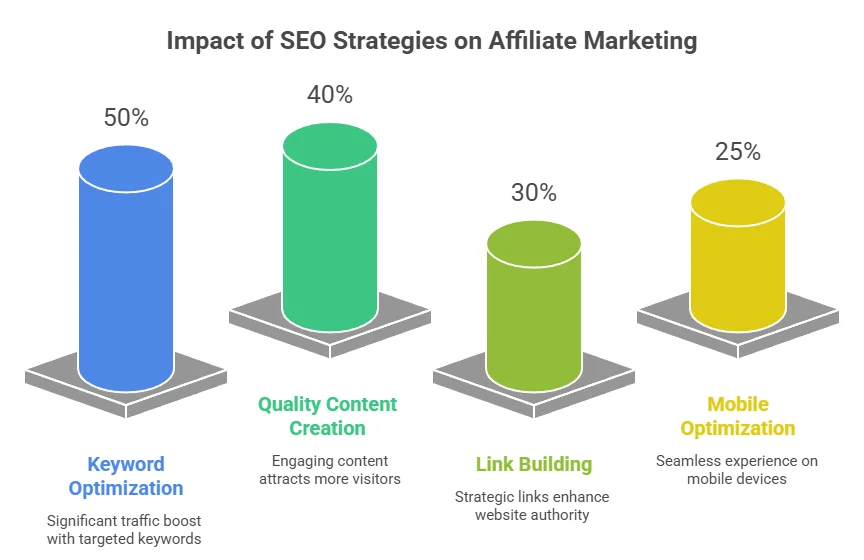
These percentages illustrate just how significant SEO can be for driving more targeted traffic to your affiliate marketing blog. Increased traffic leads to a greater chance of users clicking on your affiliate links, ultimately resulting in higher earnings. Another crucial aspect is understanding user intent. SEO focuses not just on attracting visitors, but attracting the *right* visitors. When you align your keywords with what your audience genuinely wants, you create a more effective affiliate marketing strategy. Be sure to analyze your audience’s behavior and tailor your content accordingly.
Additionally, keep an eye on analytics. Platforms like Google Analytics allow you to monitor your traffic sources and audience engagement. Identify which SEO strategies are working and which need refinement. Regular adjustments will keep your strategy aligned with the dynamic nature of search engine algorithms. Moreover, content freshness plays a role in your SEO performance. Regularly updating your blog with new posts or refreshing old content keeps your site active in the eyes of search engines. This can enhance your rankings and visibility over time.
Implementing these SEO strategies can significantly boost your affiliate marketing success. Create content aimed at answering questions your audience has, utilize visually engaging elements like infographics or videos, and invite readers to interact with your content. All these efforts translate directly into better SEO results. To enhance your knowledge of effective SEO practices, consider exploring resources from Search Engine Land and Search Engine Journal. They offer valuable insights and updates about evolving SEO trends and strategies. Effective SEO can dramatically influence the success of your affiliate marketing endeavors. By focusing on best practices and continuously optimizing your content, you set yourself up for sustainable growth and increased profitability in the affiliate marketing landscape.
Conclusion
Understanding the common Affiliate Marketing Blogging Mistakes is the first step towards achieving success. By avoiding pitfalls like neglecting audience engagement or promoting products indiscriminately, you can build a more loyal readership. Engaging with your audience not only fosters trust but also creates a community that encourages interaction and feedback, enhancing your blog’s credibility and effectiveness.
Selecting the right affiliate products is crucial, especially for beginners. Take the time to research and choose products that resonate with your audience’s needs and interests. This strategy not only increases your chances of making sales but also strengthens your position as a trusted authority in your niche.
Employing effective content marketing techniques can differentiate your blog from the competition. By creating valuable, relevant content that addresses your audience’s pain points, you drive traffic and encourage conversions. Utilize various formats such as story-driven posts, how-to guides, and video content to keep your audience engaged and invested.
SEO plays a pivotal role in driving visibility and traffic to your blog. By understanding how to optimize your content for search engines, you can attract organic visitors who are genuinely interested in what you offer. Focus on relevant keywords, quality backlinks, and a user-friendly design to enhance your site’s SEO.
By implementing these insights and strategies, you can cultivate a thriving affiliate marketing blog. The journey may come with challenges, but learning from mistakes and staying committed to providing value will lead you to long-term success. Embrace the process, adapt your approach, and watch your affiliate marketing efforts flourish.