How To Write Compelling Meta Descriptions


ATTENTION: Want to Learn Affiliate Marketing from Successful Affiliates?
Creating effective meta descriptions is a crucial part of optimizing your content for search engines. A well-crafted meta description acts like a mini-ad for your webpage. It can entice users to click on your link over others in the search results. Here’s how to craft compelling meta descriptions that truly engage users.
To start, it’s important to understand the basic format of a meta description. Typically, it should be between 150 to 160 characters long. This length ensures that the entire description is displayed in search results. Here are the key components that make up a successful meta description:
- Relevance: Ensure that the meta description accurately reflects the content of the page. Misleading descriptions can frustrate users and lead to higher bounce rates.
- Keywords: Incorporate relevant keywords naturally. Not only does this help with SEO, but it also communicates directly to users what the page is about. However, avoid keyword stuffing as it can degrade the quality of your description.
- Call-to-Action (CTA): Use action-oriented language that encourages users to take specific actions. For example, phrases like “Learn more,” “Discover,” or “Get started today” can drive clicks.
- Unique Selling Proposition (USP): Highlight what makes your content special. What can users expect that they won’t find elsewhere? This element could be a discount, unique information, or a fresh perspective.
Once you grasp the core elements of a meta description, consider the tone and style. For an engaging tone, use an active voice. This can make your descriptions sound more inviting and energetic. Here’s a simple approach to help with this:
- Think about the target audience. Who are they, and what are they looking for?
- Write your description in a way that speaks directly to them. Use the pronoun “you” to create a connection.
- Keep sentences short and punchy for better readability.
Let’s look at a few examples to clarify these points:
| Meta Description | Strength |
|---|---|
| “Get expert tips on How To Write Compelling Meta Descriptions that improve your SEO and increase click-through rates.” | Clear, informative, and contains a CTA. |
| “Struggling with meta descriptions? Learn the secrets of writing descriptions that drive traffic and engage readers!” | Engaging tone and clear USP. |
| “Discover our guide on crafting meta descriptions that attract clicks and boost your website’s visibility!” | Action-oriented language, with relevant keywords. |
Testing and refining your meta descriptions can significantly enhance your results. Use A/B testing to determine which versions attract more clicks. You may find that changing just a few words can make a big difference in how users respond to your content.
Another aspect to consider is the ongoing changes in SEO practices and user behavior. Keep track of trends and adapt your descriptions accordingly. Regularly updating meta descriptions can help maintain their effectiveness. Look for tools that can assist you in analyzing their performance, such as Google Search Console or SEMrush.
The Impact of Meta Descriptions on Click-Through Rates
The role of meta descriptions in the world of online content is crucial, especially when it comes to influencing click-through rates (CTR). A well-crafted meta description acts as a gatekeeper, inviting users to click on your link over others in the search results. Understanding and optimizing this small snippet can make a significant difference in how many visitors your website attracts.
Meta descriptions are brief summaries of a webpage’s content, typically ranging from 150 to 160 characters. They serve as the text that appears under the page title in search engine results. Because of this visibility, they are the perfect opportunity to convey the value of your content. When done right, they can captivate potential visitors.
One of the primary functions of a meta description is to provide a succinct overview of what users can expect. Instead of blending in with generic descriptions, aim to create something unique. Here’s how to write compelling meta descriptions that drive clicks:
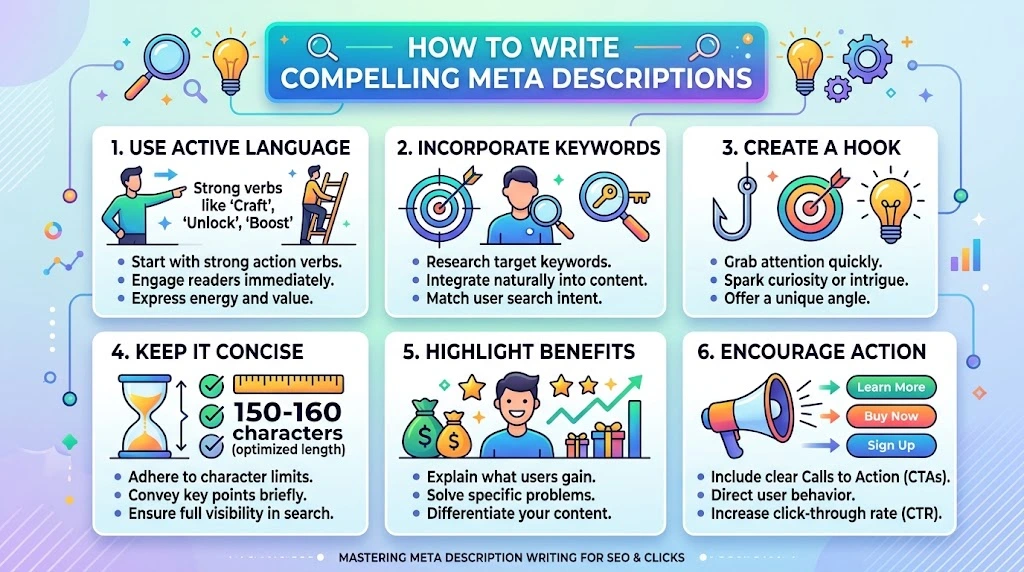
- Use Active Language: Speak directly to the reader by using active voice and engaging phrases. Encourage users to take action.
- Incorporate Keywords: Include relevant keywords that align with your content. This not only helps in search rankings but also answers the user’s query.
- Create a Hook: Start with a captivating statement or question that will intrigue users and make them want to read more.
- Keep It Concise: Stay within the character limit to avoid truncation. Aim for clarity and conciseness.
- Highlight Benefits: Clearly outline what the user will gain by clicking on your link—be it information, solutions, or fun.
- Encourage Action: Phrases like “Find out how” or “Discover today” can prompt users to click.
Statistics show that meta descriptions significantly impact CTR. A compelling description can increase CTR by up to 5.8%. This means your website can attract more visitors simply by optimizing this small piece of content.
Let’s consider a basic example:
| Keyword | Sample Meta Description | CTR Increase |
|---|---|---|
| Gardening Tips | “Discover 10 essential gardening tips to grow the perfect garden this summer! Start your gardening journey now.” | 5% |
| Healthy Recipes | “Unlock delicious and healthy recipes that will delight your taste buds. Click for your next meal inspiration!” | 7% |
| Travel Destinations | “Explore the top 5 travel destinations for 2023. Experience unforgettable adventures waiting for you!” | 6% |
As evidenced, varying your approach based on your audience can result in differing interaction rates. A meta description should never be an afterthought; it needs to be strategically planned and tailored to fit the intended audience.
Moreover, researching competitor meta descriptions can provide insights into what attracts clicks. Examine the language, style, and structure they use, and strive to improve upon it. Just remember to maintain your brand’s voice and ensure each description remains unique to your content.
Another tactic worth considering is testing different meta descriptions to see which performs best. A/B testing allows you to analyze which description resonates more with your audience. Monitor the results and adjust your strategies accordingly to enhance engagement.
It’s also important to remember that mobile devices account for a significant portion of web traffic. Ensure your meta descriptions are effective on smaller screens, as readability can differ greatly depending on device. This involves maintaining clarity while being succinct.
Keep yourself updated with the latest guidelines and practices around SEO and meta descriptions. Following reputable resources will help you remain competitive. Websites like Moz and Search Engine Land are excellent places to start.
Common Mistakes to Avoid When Writing Meta Descriptions
Writing effective meta descriptions is crucial for encouraging users to click through to your content. However, there are common pitfalls that can diminish the effectiveness of your meta descriptions. Avoid these mistakes to ensure your descriptions are both engaging and relevant.
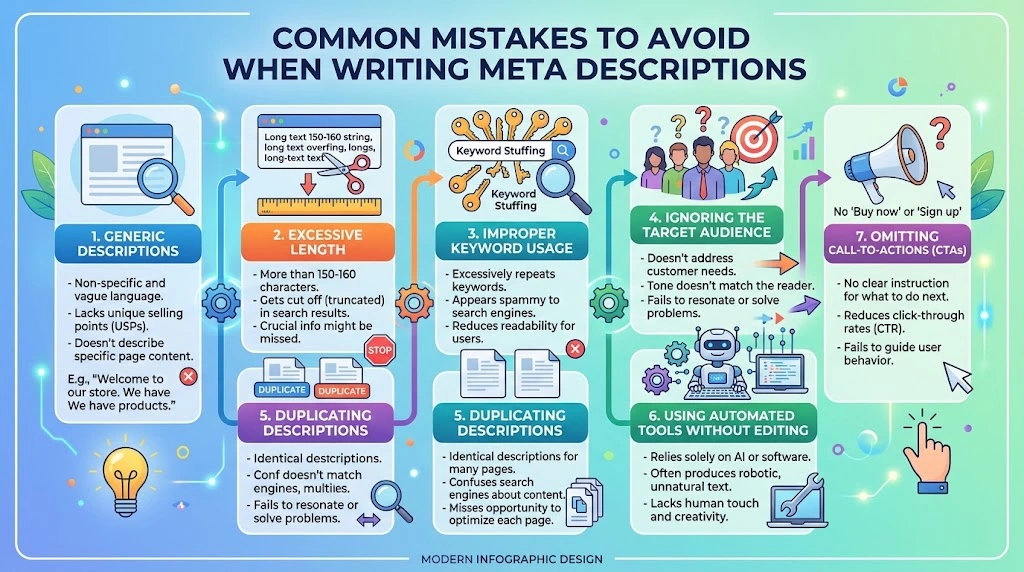
Generic descriptions
Firstly, one of the most frequent errors is creating overly vague or generic descriptions. A meta description should describe the content of the page clearly and specifically. Instead of using bland phrases like “great products” or “this article discusses…”, focus on specifics. Detail what the reader can expect, using engaging language that gives a true sense of value. For example, instead of writing “Learn more about cooking,” try “Discover 10 quick and easy recipes for busy weeknights.” This adds clarity and appeals directly to the reader’s interests.
Too lengthy
Another mistake to watch for is neglecting the importance of length. Meta descriptions should ideally be between 150-160 characters. If they are too long, they can get truncated in search results, leading to incomplete messaging. Conversely, if they are too short, they may lack essential information that could draw users in. Be concise but informative, ensuring to convey the essence of your content within this character limit.
Including strategic keywords
Many writers forget to include strategic keywords in their meta descriptions. While you don’t want to stuff keywords randomly, including relevant terms can help improve visibility in search results. Use keywords that are aligned with the page content and are terms your target audience is likely to search for. For instance, instead of a generic “check this out,” you could say “Explore our guide on sustainable gardening techniques today!” This aligns the description with search intent while maintaining appeal.
Not focusing on the target audience
One common oversight is failing to focus on the target audience. It’s essential to know who you are writing for to tailor your message effectively. Consider your audience’s age, interests, and needs when crafting your descriptions. If your website targets young professionals, use language and tones that resonate with that demographic. For example, “Unlock your career potential with these essential networking tips” speaks directly to that audience.
Duplicating meta descriptions
Additionally, avoid duplicating meta descriptions across multiple pages. Each page should have a unique description to prevent confusion and to help search engines understand the distinct content of each page. This uniqueness also allows you to engage more effectively with various segments of your audience across different topics.
Using automatic tools
Using automatic tools to generate meta descriptions is another mistake that many fall into. While they may seem convenient, these tools often lack the human touch necessary to create engaging and relevant descriptions. Take the time to craft each description manually. Personalization can make a significant difference in how your content is perceived by potential visitors.
Not considering the “call to action” (CTA)
Also, consider the “call to action” (CTA). A strong CTA compels readers to take an action, such as “Sign up today,” or “Learn how,” making them more likely to click through. Be direct in inviting the reader to engage with your content. Instead of a passive approach, using compelling verbs can lead to increased click-through rates.
Remember to continuously test and refine your meta descriptions. What works well today may not be as effective later. Monitor your website’s performance and adapt your strategies accordingly. Creating an A/B testing environment for different meta descriptions can reveal which ones resonate best with your audience.
| Mistakes to Avoid | Consequences | Improvement Tips |
|---|---|---|
| Vague descriptions | Unclear content, fewer clicks | Be specific about the content |
| Incorrect length | Truncated messages | Maintain 150-160 characters |
| Duplicated descriptions | Confusion for search engines | Create unique descriptions for each page |
| No focus on audience | Missed engagement | Know your audience’s interests |
| Cookie-cutter tool usage | Lack of personalization | Manually craft each description |
By steering clear of these mistakes, you can create compelling meta descriptions that enhance your website’s visibility and encourage user engagement. Take the time to craft thoughtfully written descriptions and watch your click-through rates improve. For more in-depth advice, consider checking resources such as Moz and Neil Patel. These sites provide valuable insights into optimizing your meta descriptions effectively.
Analyzing Examples of Effective Meta Descriptions
Meta descriptions are an essential component of search engine optimization (SEO) that can significantly influence how users engage with your content. A compelling meta description acts like a magnet, drawing in clicks and encouraging users to explore further. Let’s analyze well-crafted examples to understand what makes them effective.
Characteristics of Effective Meta Descriptions
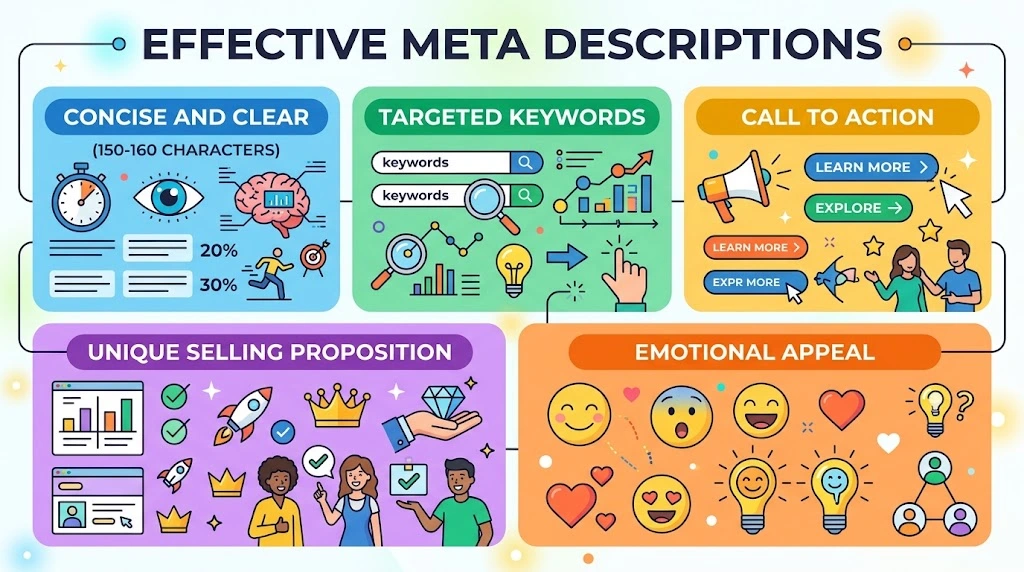
To create a magnetic meta description, the content should possess specific characteristics:
- Concise and Clear: Aim for a length between 150-160 characters. This ensures your message is clear without being truncated in search results.
- Targeted Keywords: Incorporate relevant keywords that mirror user search queries, enhancing visibility and relevance.
- Call to Action: Engage readers with action-oriented phrases, such as “Learn more,” or “Get started today!” to encourage clicks.
- Unique Selling Proposition: Highlight what makes your content stand out compared to competitors to foster curiosity and interest.
- Emotional Appeal: Utilize language that evokes emotion or urgency to create a connection with potential visitors.
Analyzing Examples
Let’s dive into several real-world examples of effective meta descriptions and dissect the elements that contribute to their success.
Example 1: Organic Skin Care Brand
Meta Description: “Discover naturally derived skin care products that nourish your skin while being eco-friendly. Visit us for exclusive offers!”
This description is concise at 158 characters. It includes keywords like “skin care products” and “eco-friendly,” which resonate with target customers. The phrase “exclusive offers” acts as a strong call to action, encouraging users to visit the website.
Example 2: Fitness Blog
Meta Description: “Transform your health with our expert tips on fitness and nutrition. Join our community for daily motivation!”
This description effectively uses the keywords “fitness” and “nutrition”, making it relevant for search intents. The invitation to “join our community for daily motivation” creates an emotional appeal, fostering a sense of belonging for potential readers.
Example 3: Online Learning Platform
Meta Description: “Unlock your potential with courses from industry experts. Sign up today and start your journey towards success!”
This example quickly communicates the value of the courses (“unlock your potential”) while subtly prompting action with “sign up today”. The use of “industry experts” adds credibility, making the description compelling.
Tips for Testing and Optimization
Even with strong writing, it’s crucial to continuously test and optimize your meta descriptions. Here are some strategies:
- A/B Testing: Create variations of your meta descriptions to identify which performs better regarding click-through rates.
- Analyze Analytics: Use tools like Google Analytics to monitor performance metrics. Pay attention to click-through rates and engagement data.
- Stay Relevant: Regularly update your meta descriptions to reflect current offers, blog posts, or product details.
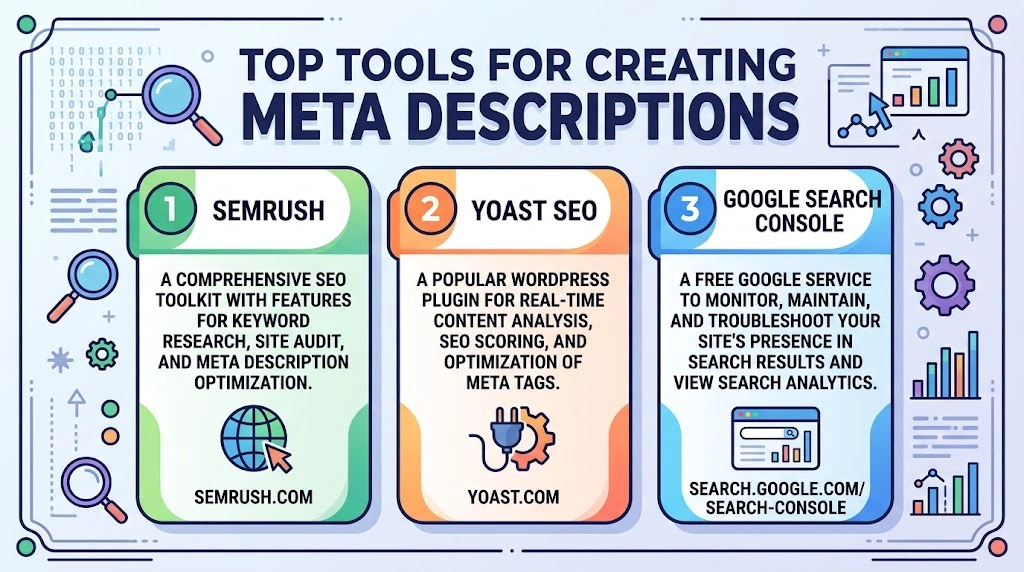
Tools to Help Create Meta Descriptions
Several tools can assist you in generating and optimizing meta descriptions:
| Tool Name | Description | Website |
|---|---|---|
| SEMrush | Comprehensive SEO tool that helps analyze keywords and competitors. | semrush.com |
| Yoast SEO | Plugin for WordPress that makes it easy to add and optimize meta descriptions. | yoast.com |
| Google Search Console | Monitor performance and see how your meta descriptions are performing in search results. | search.google.com |
Analyzing effective meta descriptions reveals the crucial elements that capture user interest and lead to higher click-through rates. By focusing on clarity, keywords, and emotional appeal, you can craft compelling descriptions that engage your audience and improve your SEO performance.
Tools and Techniques to Optimize Your Meta Descriptions
Writing compelling meta descriptions is essential for improving your website’s visibility and click-through rates. The right tools and techniques can make this task easier and more effective. Here are some strategies to help you craft persuasive meta descriptions that resonate with your audience.
Understanding the Basics
Before you dive into optimization, know what constitutes a strong meta description:
- Length: Aim for 150-160 characters to ensure the description shows up in search results.
- Relevance: Ensure your meta description accurately describes the content on the page.
- Call-to-action: Encourage users to click by using action verbs.
Utilizing Online Tools for Meta Description Optimization
Several online tools can help you improve your meta description writing. Here are some noteworthy options:
- Moz: Offers insights into SEO best practices, including meta description strategies.
- Ahrefs: Provides tools to analyze how your meta descriptions perform compared to competitors.
- SEMrush: This platform allows you to monitor and optimize your meta descriptions as part of your overall SEO strategy.
Techniques for Crafting Meta Descriptions
Here are some advanced techniques to keep in mind while writing your meta descriptions:
- Use Target Keywords: Incorporate primary and secondary keywords naturally. This not only enhances visibility but also aligns reader expectations with the content.
- Highlight Unique Value Proposition: What makes your content stand out? Clearly state why readers should choose your page over competitors.
- Utilize Emotional Triggers: Invoking curiosity, urgency, or a sense of relatability can prompt users to click. Words like “exclusive,” “limited time,” or “discover” can be effective.
Writing Tips for Effective Meta Descriptions
When writing, consider implementing these tips:
- Write for Your Audience: Know your target audience. Speak their language and address their needs directly to create a connection.
- A/B Test Descriptions: Experiment with different versions of your meta descriptions. Use analytics to track which versions garner more clicks.
- Keep It Conversational: Use an active voice and vary your sentence structures for a natural tone. Avoid jargon or overly complex words.
Measuring the Effectiveness of Your Meta Descriptions
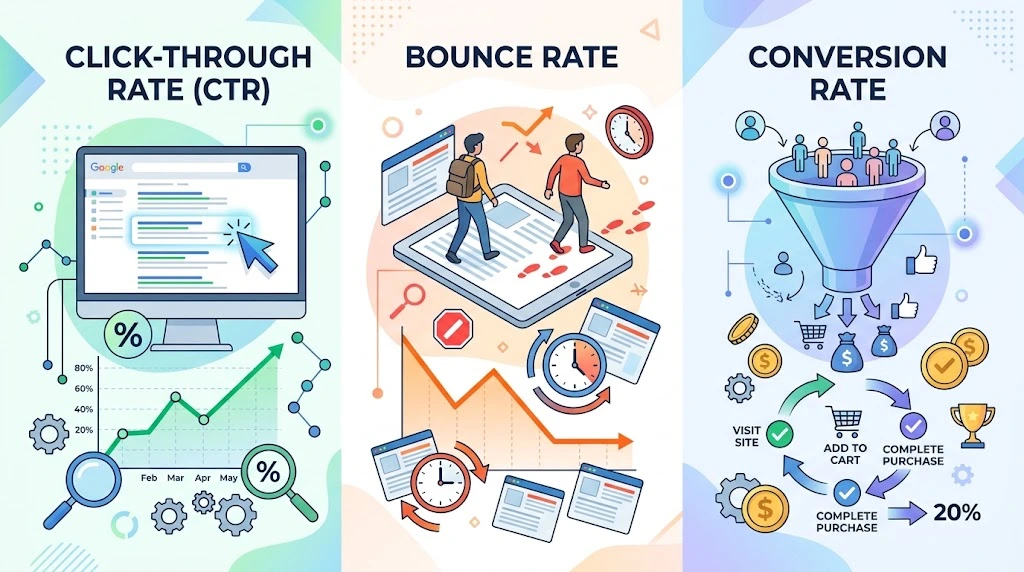
Once you’ve written your meta descriptions, measuring their performance is crucial. Here are some metrics to consider:
| Metric | Description |
|---|---|
| Click-Through Rate (CTR) | Percentage of users who click on your link after seeing it in search results. |
| Bounce Rate | Percentage of visitors who leave your site after viewing only one page. |
| Conversion Rate | Percentage of visitors who complete a desired action, such as signing up or making a purchase. |
Continuous Improvement
Meta descriptions should not be set in stone. Regularly review and update them based on performance data, changes in search trends, or updates to content. Keeping your descriptions relevant helps ensure optimal visibility and engagement.
The right combination of tools and techniques can significantly enhance your meta descriptions. Leveraging data and continuous improvement will help you stay ahead of the competition and drive more traffic to your site. For more insights into SEO practices and detailed guides, consider visiting: Search Engine Journal and Backlinko. These resources offer valuable information to sharpen your SEO strategy.
Conclusion
Writing compelling meta descriptions is an art that can significantly influence your website’s visibility and user engagement. By incorporating key components such as clear messaging, target keywords, and a strong call to action, you can create descriptions that not only inform but entice potential visitors. Recognizing the direct impact of well-crafted meta descriptions on click-through rates underlines their importance in your overall SEO strategy.
Avoiding common pitfalls, such as excessive length or vague language, ensures that your descriptions resonate with readers and deliver the information they need. Learning from effective examples helps you identify best practices and apply them to your content. Analyzing what works for your competitors provides valuable insights to shape your approach.
Furthermore, utilizing tools and techniques can streamline the optimization process. Whether it’s leveraging keyword research tools or employing A/B testing to refine your descriptions, these strategies can help you stay ahead in the digital landscape.
Ultimately, mastering the craft of writing compelling meta descriptions enhances not just your search engine rankings but also the overall user experience. By focusing on your audience’s needs and preferences while implementing these strategies, you set the stage for increased traffic and engagement on your website. Each meta description serves as a small but powerful ambassador for your content, inviting users to explore further and discover what you have to offer. The effort you invest in this crucial aspect of your content will pay dividends in the long run.