
Voice Search Optimization for Websites


ATTENTION: Want to Learn Affiliate Marketing from Successful Affiliates?
As voice-activated devices become more popular, optimizing your website for voice search is crucial. Users are increasingly relying on voice commands to find information, making it imperative for businesses and website owners to adapt their strategies. This guide will provide you with actionable techniques to enhance your site’s visibility in voice search results.
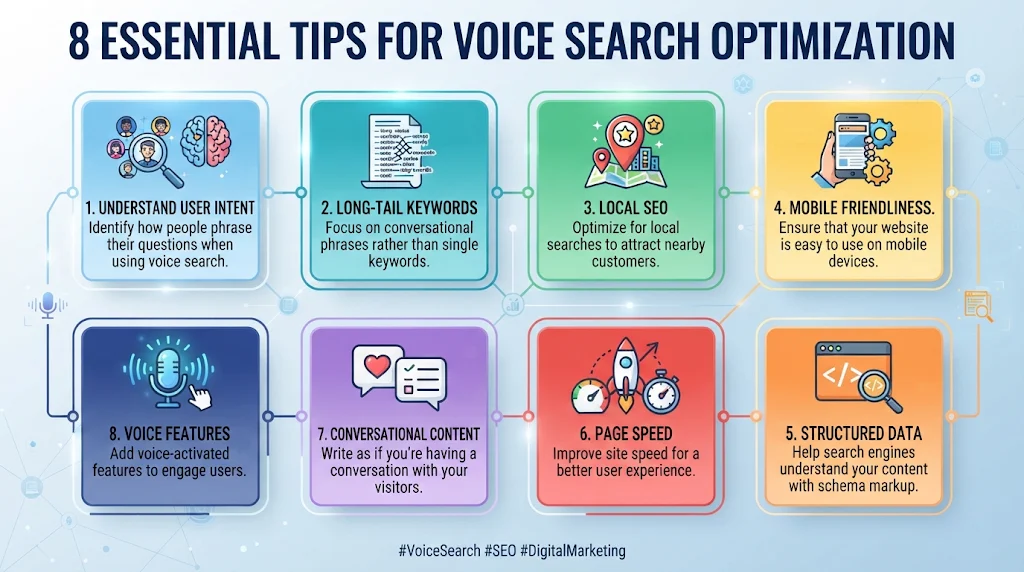
Understand User Intent
The first step in optimizing for voice search is understanding user intent. When people search using their voice, they often use natural language and phrases rather than keywords. For instance, instead of typing “best pizza near me,” a user might say, “What’s the best pizza place near me?” Recognizing these patterns helps you tailor your content to meet user needs.
Focus on Long-Tail Keywords
Voice searches tend to be longer than typed searches. This means your content should include long-tail keywords, which are more conversational phrases. For example, instead of focusing on the keyword “shoes,” you might want to use “where can I find comfortable running shoes online?” By incorporating these specific phrases, you can better match the search queries of voice users.
Optimize for Local SEO
Many voice searches are local in nature. People often ask for nearby services or locations, such as restaurants, shops, or services. To optimize for local voice searches, ensure that your website is well-optimized for local SEO:
- Claim and optimize your Google My Business listing.
- Use local keywords and phrases throughout your content.
- Encourage customer reviews, as they can influence local search rankings.
Enhance Mobile Friendliness
Voice searches are predominantly conducted on mobile devices. Thus, ensuring your website is mobile-friendly is vital. A responsive design improves user experience and can enhance your site’s ranking in search engines. Some tips include:
- Utilize larger fonts and buttons for easier navigation.
- Optimize images and resources for faster loading times.
- Ensure your site layout is simple and intuitive.
Utilize Structured Data
Implementing schema markup can help search engines understand your site’s content better. By using structured data, you can provide context about your content, making it easier for voice assistants to pull relevant information. Consider marking up:
- Business details (address, phone number, and hours).
- Product information (price, availability).
- FAQs to address common user queries directly.
Improve Page Speed
Speed is a critical factor in providing a better user experience. Slow-loading pages can lead to higher bounce rates, particularly for mobile users. To enhance your website’s speed, consider the following:
- Compress images to reduce load times.
- Minimize HTTP requests for scripts and resources.
- Utilize browser caching for repeat visitors.
Create Conversational Content
Your content should reflect the way people speak. Use a conversational tone, and aim for a natural flow in your writing. Short paragraphs and simple language make it easier for users to find the information they seek quickly. Sometimes, using FAQs can also address common questions directly and concisely.
Leverage Voice-Activated Features
Consider integrating voice-activated features on your website. Providing options to interact via voice can improve user engagement. Here are some features to consider:
- Voice search bar for easier navigation.
- Interactive voice-responsive chatbots to assist users.
- Audio versions of your content for a hands-free experience.
These techniques can significantly enhance voice search optimization for websites. For further insights and resources on this topic, you may check Moz and Search Engine Watch to stay updated with the latest trends and data in voice search optimization.
| Tip | Description |
|---|---|
| Understand User Intent | Identify how people phrase their questions when using voice search. |
| Long-Tail Keywords | Focus on conversational phrases rather than single keywords. |
| Local SEO | Optimize for local searches to attract nearby customers. |
| Mobile Friendliness | Ensure that your website is easy to use on mobile devices. |
| Structured Data | Help search engines understand your content with schema markup. |
| Page Speed | Improve site speed for a better user experience. |
| Conversational Content | Write as if you’re having a conversation with your visitors. |
| Voice Features | Add voice-activated features to engage users. |
The Impact of Mobile Devices on Voice Search Usage
Mobile devices have transformed the way we interact with technology, especially in the realm of voice search. As smartphones and tablets become more integrated into our daily lives, the impact on voice search usage is significant. Understanding this relationship is essential for anyone looking to optimize their online presence.
The Rise of Voice Search on Mobile Devices
Voice search is becoming increasingly popular due to its convenience and efficiency. Mobile devices, equipped with advanced microphones and AI-powered virtual assistants, make it easy for users to search the web hands-free. Here are some key reasons driving this trend:
- Hands-Free Convenience: With voice search, users can find information while doing other tasks, such as driving or cooking.
- Quick Answers: Users prefer quick and precise information, which voice search delivers by reading answers directly from search results.
- Natural Language Processing: Mobile devices utilize powerful algorithms to understand and process natural language, making it easier for users to ask questions as they would in conversation.
User Behavior and Intent
Understanding how users employ voice search on mobile devices can significantly impact content creation and optimization strategies. The intent behind voice searches often differs from traditional text-based queries.
Common Voice Search Queries
Voice searches typically focus on three key categories:
| Type of Query | Description |
|---|---|
| Informational: | Users seek specific information, such as “What is the capital of France?” |
| Navigational: | Users ask for locations or directions, like “Find me the nearest coffee shop.” |
| Transactional: | Users look to make purchases, such as “Order a pizza from Domino’s.” |
Optimizing for Voice Search on Mobile
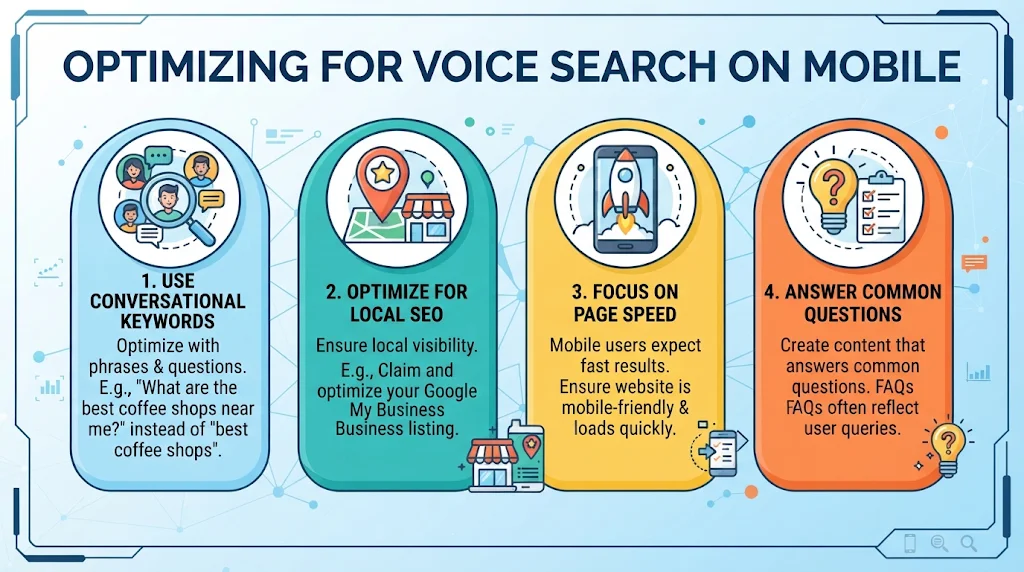
To effectively get your content in front of voice search users, you need to apply smart optimization techniques. Here are some strategies to consider:
- Use Conversational Keywords: Optimize your content by using phrases and questions that reflect natural speech. Instead of just “best coffee shops,” use “what are the best coffee shops near me?”
- Optimize for Local SEO: Since many voice searches are location-based, ensure that your local SEO is optimized. Use platforms like Google My Business to enhance visibility.
- Focus on Page Speed: Mobile users expect fast results. Ensure that your website is mobile-friendly and loads quickly.
- Answer Common Questions: Create content that answers common questions within your industry. FAQs are a great way to meet this need, as they often reflect the type of queries users make.
The Future of Voice Search
As mobile technology continues to evolve, voice search will likely become even more prevalent. Emerging technologies such as 5G will enhance speed and reliability, making voice search seamless. Businesses and content creators should stay ahead of these trends to ensure they meet their audience’s needs effectively.
The Importance of Continuous Learning
Keeping up with voice search optimization is crucial. Regularly review resources and websites dedicated to SEO trends, such as Moz or Search Engine Journal. This will equip you with the knowledge necessary to adjust strategies as technology changes.
The impact of mobile devices on voice search usage cannot be overstated. By adopting the right strategies and remaining aware of emerging trends, businesses can effectively engage users and improve their online visibility.
Ranking Factors for Voice Search: What You Need to Know
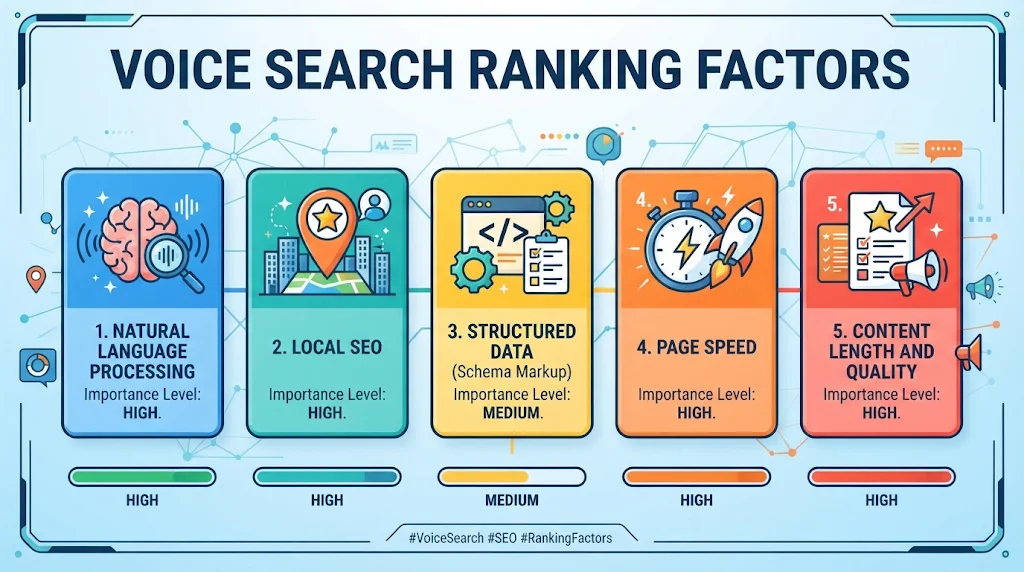
With the rise of smart speakers and voice assistants, voice search optimization has become crucial for websites. As millions of users turn to voice commands daily, understanding the factors that influence voice search ranking is essential for businesses and content creators alike. Here’s an overview of the ranking factors you should consider to ensure your website performs well in voice search results.
One of the primary factors guiding voice search optimization is – natural language processing. Users tend to speak in full sentences when using voice search. This means optimizing your content for conversational language is key. phrases that people might actually say, rather than just written keywords, can improve your chances of showing up in voice search results.
Another critical factor is local SEO. Many voice searches are based on location, like finding nearby restaurants or services. Ensuring your website has accurate location data is vital. Make sure you:
- Claim your Google My Business listing
- Keep your NAP (Name, Address, Phone Number) consistent across all platforms
- Encourage customer reviews, as they often help with local search rankings
Structured data also plays a significant role in voice search. By using schema markup, you can help search engines understand your content better. This structured data allows search engines to provide specific answers to users’ questions, which is particularly valuable for voice searches. Consider implementing schema for your local business, products, or services.
Now, let’s consider the importance of page speed. Users expect quick responses when they perform a voice search. If your website loads slowly, you might lose potential customers. Aim to optimize your site’s performance by:
- Compressing images
- Minimizing JavaScript and CSS files
- Utilizing browser caching
Moreover, content length and quality affect your search rankings significantly. In general, Google tends to favor authoritative, informative content that directly addresses user queries. Aim for your content to be succinct yet informative. Longer content pieces (around 1,500 words or more) often perform better when they provide detailed answers to commonly asked questions.
| Voice Search Ranking Factors | Importance Level |
|---|---|
| Natural Language Processing | High |
| Local SEO | High |
| Structured Data (Schema Markup) | Medium |
| Page Speed | High |
| Content Length and Quality | High |
When optimizing for voice search, focus on answering specific questions. This strategy will position your content well for featured snippets or position zero in search results. Utilize tools like AnswerThePublic to discover what questions people are asking related to your business.
Mobile optimization
Additionally, consider the role of mobile optimization. Most voice searches happen on mobile devices, making it essential that your website is mobile-friendly. Responsive design and optimizing for smaller screens will help you cater to voice searchers effectively.
Content readability
Content readability should not be overlooked either. Write in a clear and straightforward way so that your responses are easily understandable, especially for voice search. Tools such as Grammarly or Hemingway can help enhance the readability of your content, ensuring it stays user-friendly and engaging.
Voice searches
Keep in mind that a significant percentage of voice searches are performed in the form of questions (Who, What, Where, When, How). Structuring your content to directly address these inquiries can lead to higher visibility in voice search results.
These strategies into your voice search optimization efforts can significantly improve your website’s ranking potential. By adopting natural language, enhancing local SEO, employing structured data, ensuring page speed, and maintaining high-quality content, you position your site to meet the needs of today’s voice search users effectively.
How to Create Conversational Content for Voice Search
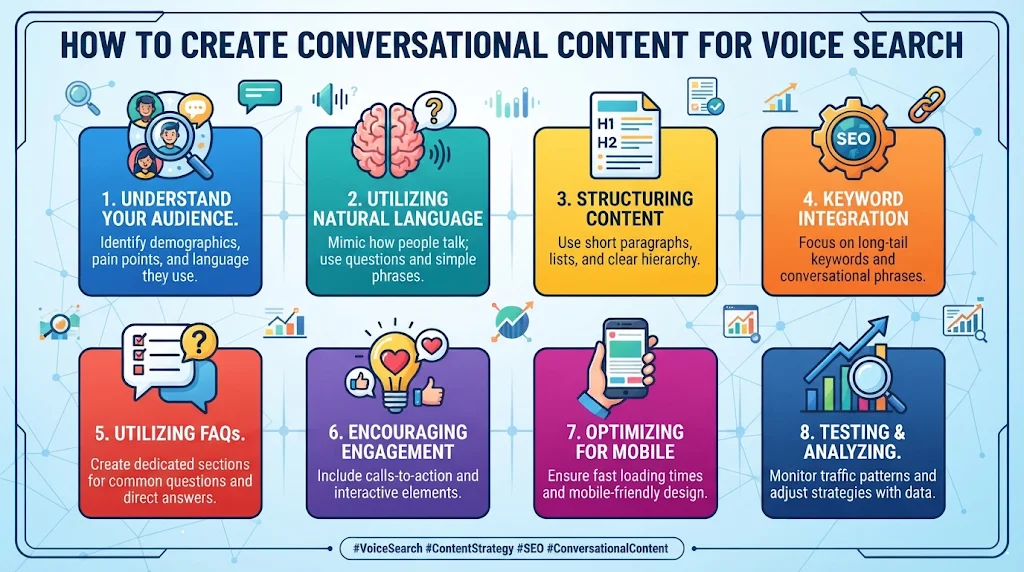
Creating content that resonates with voice search users is essential in today’s digital landscape. As the prevalence of voice-activated devices grows, so does the importance of producing conversational content. Whether you’re optimizing an existing webpage or drafting new content, focusing on a conversational tone increases your chances of success in voice search results.
To craft effective conversational content, consider the following strategies:
Understanding Your Audience
To create engaging conversational content, it’s crucial to know your audience. This means:
- Identifying demographics: Understand who your readers are, including age, location, and interests.
- Recognizing pain points: What problems do they have that your content can solve?
- Adapting your language: Use terminology and phrases that resonate with your target audience.
Utilizing Natural Language
When writing for voice search, mimic the way people naturally talk. Here’s how:
- Incorporate questions: Voice searches often begin with how, what, when, or where. For example, instead of “Best running shoes,” use “What are the best running shoes?”
- Prioritize clarity: Use simple language and straightforward phrases. Avoid jargon that might confuse readers.
Structuring Content for Voice Search
Proper structure can significantly enhance your content’s performance. Consider these strategies:
- Use short paragraphs: Break up text into digestible sections to enhance readability.
- Implement bulleted lists: Present information neatly to make it easier for users to scan your content quickly.
Keyword Integration
Voice search optimization hinges on effective keyword use. Here are tips for integrating keywords:
- Focus on long-tail keywords: These are phrases that reflect natural speech. For instance, instead of “best coffee maker,” use “What is the best coffee maker for home brewing?”
- Placement matters: Ensure primary keywords appear in the first 100 words to help search engines grasp the content quickly.
Utilizing FAQs
Frequently Asked Questions (FAQs) sections are perfect for voice search optimization. They will:
- Provide direct answers: Voice search users often seek quick, straightforward responses.
- Enhance visibility: Many voice search devices pull information directly from FAQ sections displayed online.
Encouraging Engagement
High engagement levels signal to search engines that your content is valuable. Here are ways to boost interactivity:
- Include call-to-action phrases: Encourage users to engage with your content, whether through comments or sharing.
- Utilize interactive content: Quizzes, polls, and surveys can make your content more captivating.
Optimizing for Mobile
With most voice searches happening on mobile devices, ensure your website is mobile-friendly. Take these steps:
- Responsive design: Ensure your site adapts to various screen sizes.
- Fast loading times: Users expect quick access to information, so minimize loading delays.
Testing and Analyzing Performance
To evaluate how well your content performs in voice search, use tools like Google Analytics. You can:
- Monitor traffic patterns: See how users arrive at your site and the common queries driving traffic.
- Adjust strategies: Use data insights to refine your content strategy effectively.
By implementing these strategies, you can significantly improve your website’s voice search optimization. You position your content for greater visibility and engagement.
Analyzing the Future of Voice Search and Its Trends
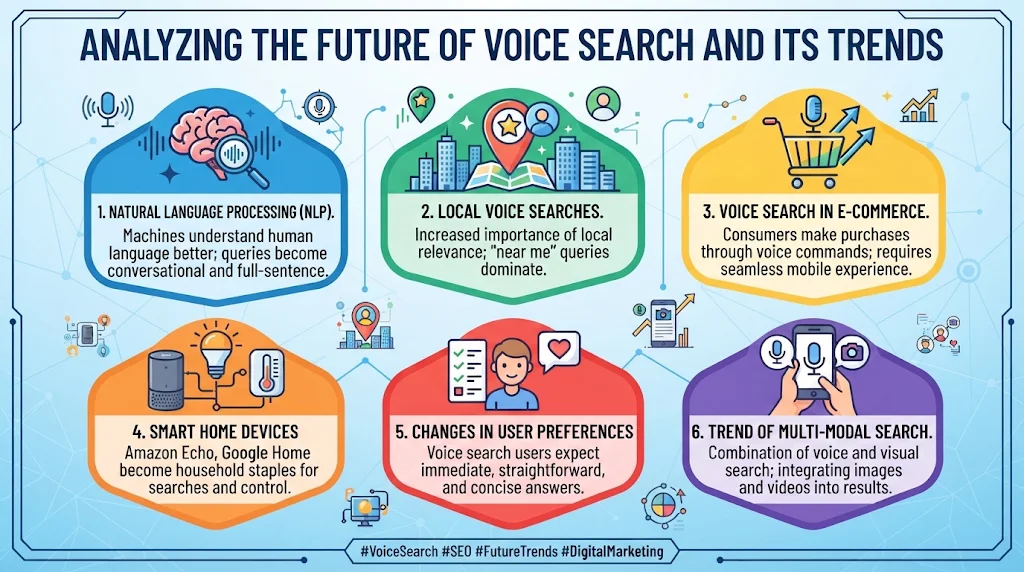
The landscape of voice search is rapidly evolving, driven by advancements in artificial intelligence (AI) and changes in user behavior. As more people adopt voice-activated devices like smartphones and smart speakers, it is crucial for businesses to understand and adapt to this trend. Analyzing the future of voice search can help companies optimize their online presence and enhance user experience.
Natural language processing (NLP)
One of the most significant trends is the increasing prevalence of natural language processing (NLP). This technology allows machines to understand human language better. Consequently, voice search queries are becoming more conversational. Users are no longer just searching for keywords; they’re making requests in full sentences. This shift means that businesses need to rethink their SEO strategies, focusing on long-tail keywords and phrases that mimic how people speak. For instance, instead of optimizing for “Italian restaurant,” businesses should consider phrases like “Where can I find a good Italian restaurant nearby?”
Local voice searches
Another trend is the rise of local voice searches. According to studies, nearly 75% of voice search users seek local information. Factors such as proximity and relevance have become critical for capturing local traffic. As a result, businesses must ensure their local SEO is up-to-date. Here are some strategies for optimizing local voice search:
- Claim your Google My Business listing and ensure the information is accurate.
- Incorporate local keywords in your website content.
- Encourage customer reviews to build credibility and improve visibility.
This focus on localized content can significantly enhance engagement, driving foot traffic and generating leads. Businesses that ignore these changes may find themselves falling behind.
Voice search in e-commerce
Another notable trend is the use of voice search in e-commerce. With the convenience of voice-activated shopping, many consumers are leaning towards making purchases through voice commands. It’s essential for e-commerce businesses to create voice search-friendly websites. This can be achieved by implementing structured data, which helps search engines understand a website’s content better, making it easier for them to provide relevant results. Some steps to optimize for voice search in e-commerce include:
- Utilizing schema markup to improve product visibility.
- Creating FAQ pages to address common customer queries.
- Ensuring a seamless mobile experience with fast-loading pages.
Smart home devices
The advent of smart home devices also plays a significant role in the future of voice search. Devices like Amazon Echo and Google Home are increasingly becoming household staples. Users are frequently using these gadgets to perform searches, control smart home features, and even make purchases. Marketers need to consider how they can leverage this technology to reach an even wider audience.
Changes in user preferences
As the voice search ecosystem becomes more competitive, businesses must also be attuned to changes in user preferences. Voice search users tend to expect immediate and straightforward answers. Websites that provide quick access to information via voice search are more likely to enhance user satisfaction. Therefore, short, concise answers to common queries should be a primary focus for web content.
Trend of multi-modal search
Additionally, the trend of multi-modal search is emerging. This concept combines voice search with visual search, enhancing the user experience. Users may ask for information verbally and receive visual content or video results. Thus, integrating visual elements into content will become increasingly important. Businesses should consider using images and videos along with text to address voice search queries more effectively.
For those interested in diving deeper into voice search optimization, resources such as Search Engine Journal and Neil Patel’s blog offer valuable insights and strategies.
| Trend | Implication | Action Steps |
|---|---|---|
| Conversational Queries | Shift from keywords to natural phrases | Focus on long-tail keywords |
| Local Search | Increased importance of local relevance | Optimize Google My Business and local keywords |
| E-commerce Integration | Voice-activated purchases | Implement structured data and mobile optimization |
| Smart Home Devices | Widespread use of voice search in homes | Enhance content for smart device queries |
| Visual Content | Combination of voice and visual search | Incorporate images/videos alongside text |
Businesses must keep an eye on these trends and continuously adapt their digital strategies. By understanding the future of voice search and implementing effective optimization techniques, they can stay ahead of the curve and better serve their customers’ needs.
For further information on voice search optimization, check out these resources:
- Search Engine Journal on Voice Search Optimization
- Moz’s Guide to Voice Search SEO
- Neil Patel’s Insights on Voice Search SEO
Conclusion
As voice search becomes an integral part of how users interact with the web, the importance of optimizing websites for this growing trend cannot be overstated. Implementing effective voice search optimization techniques such as using natural language, concise answers, and structured data can significantly enhance your site’s visibility. Mobile devices play a crucial role in this shift, with many users relying on their smartphones to make voice queries while on the go.
Understanding the ranking factors that influence voice search results is vital for any website owner. Factors like site speed, mobile-friendliness, and local SEO strategies can determine your site’s success in capturing voice search traffic. Additionally, crafting conversational content helps create a more engaging experience for users. By writing in a way that mimics natural speech patterns, you cater to the unique way people phrase their queries when using voice search.
Looking toward the future, the trends in voice search, including the rise of smart speakers and AI-driven technology, indicate significant growth. It’s essential to stay informed about these developments and continually adapt your strategies to meet changing user behaviors. By prioritizing voice search optimization, you ensure that your website remains relevant and accessible in an increasingly voice-oriented digital landscape.
Adapting to voice search is not merely a technical adjustment; it’s about enhancing user experience. By focusing on conversational content and understanding the nuances of voice search, you’ll be better equipped to connect with your audience and drive meaningful engagement. Embrace this evolution in search technology, and watch as your website reaps the benefits of increased visibility and user satisfaction.