
How To Improve E-commerce Product Descriptions


ATTENTION: Want to Learn Affiliate Marketing from Successful Affiliates?
In the competitive world of e-commerce, product descriptions play a crucial role in influencing purchasing decisions. Writing product descriptions that genuinely connect with potential buyers can dramatically boost your sales. Here are some strategies to improve your e-commerce product descriptions and grab your customers’ attention.
Understand Your Audience
The first step in crafting compelling product descriptions is knowing who you are writing for. Research your target audience to understand their preferences, pain points, and what they are looking for in a product. Consider creating buyer personas to visualize your ideal customers. Tailoring your descriptions to meet their needs will resonate more and drive higher engagement.
Use Clear and Concise Language
When it comes to product descriptions, clarity is key. Use language that’s easy to understand and avoids jargon. Most shoppers want quick information without wasting time deciphering complex terms. Aim for brevity by conveying essential details in a straightforward manner. Keeping your descriptions under 150 words often works well, as it provides enough information without overwhelming the reader.
Highlight Key Features and Benefits
When listing product details, prioritize key features that set your product apart. However, it’s not enough to simply state the features—you must also explain how these features benefit the customer. This creates a connection between your product and the buyer’s needs. For example:
- Feature: Adjustable straps
- Benefit: Provides a custom fit for maximum comfort.
Incorporate SEO Best Practices
Including relevant keywords in your product descriptions can enhance visibility in search engine results. Conduct keyword research to identify terms that potential buyers might use. Naturally weave these keywords into your text, focusing on the product name, main features, and descriptions. However, avoid keyword stuffing, as it can hurt readability and search engine ranking.
Create a Story Around Your Product
Telling a story can entice customers more than a simple listing of facts. Share the inspiration behind the product or how it can be used in everyday life. Crafting a narrative creates an emotional connection, making customers feel more invested in their purchase. For instance, if selling handmade jewelry, discuss the artisanship and the story behind each piece.
Use High-Quality Images and Videos
Visuals are just as important as written content. High-quality images and videos can greatly enhance your product descriptions by providing context and enticing visual appeal. Customers often prefer seeing a product in action or from different angles before making a purchase. Consider embedding videos that show the product’s features and benefits seamlessly.
Include Customer Reviews and Testimonials
Social proof can significantly influence a buyer’s decision. Including positive customer reviews or testimonials in your product descriptions can build trust and credibility. It reinforces your product quality and assures potential buyers they’re making the right choice.
Optimize for Mobile Users
The majority of online shopping is done via mobile devices, so ensure your product descriptions are mobile-friendly. Use shorter sentences and bullet points for key features to facilitate easy reading on smaller screens. Test your format on multiple devices to ensure an optimal viewing experience.
Test and Iterate
Always be open to testing different approaches to see what works best for your audience. Use A/B testing to experiment with variations of your product descriptions. Track engagement metrics, such as bounce rates and conversion rates, to refine your descriptions over time. Continuous improvement is vital to maintaining relevance and effectiveness.
Avoid Duplicate Content
To maximize SEO benefits and user experience, ensure each product description is unique. Duplicate content can confuse search engines and negatively impact your rankings. Take the time to craft individual descriptions reflecting each product’s characteristics and story.
By implementing these strategies, you’ll improve your e-commerce product descriptions and connect more effectively with your customers. Consider reading more on e-commerce best practices from Shopify for a deeper understanding. Leveraging these techniques can lead to higher conversions and long-term customer loyalty.
The Role of Storytelling in E-commerce Copywriting
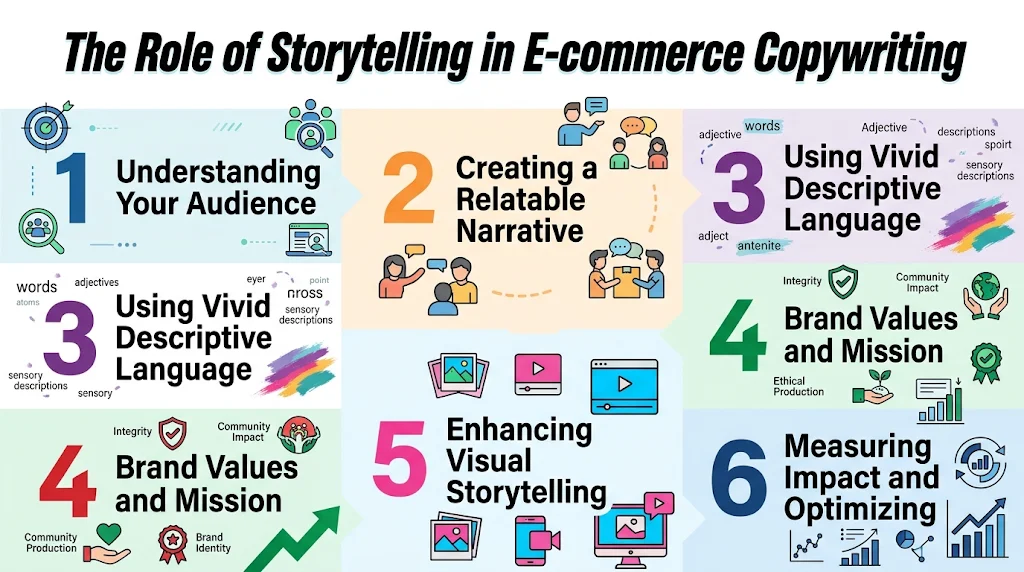
In e-commerce, the way you present your products can make a world of difference. Storytelling in e-commerce copywriting not only draws customers in but also helps to create a deeper connection between the buyer and the product. When consumers relate to a story, they are more likely to envision the product in their own lives, leading to increased engagement and higher sales. Let’s explore effective strategies to leverage storytelling to enhance your e-commerce product descriptions.
Understanding Your Audience
Before crafting a narrative, it’s crucial to know who you are talking to. Understand your target audience’s needs, preferences, and pain points. Here are some key aspects to consider:
- Demographics: Age, gender, location, and income level.
- Interests: What hobbies or activities do your customers engage in?
- Values: What causes or beliefs are important to them?
When you know your audience well, you can tailor your storytelling to suit their preferences. This will create a more personalized shopping experience.
Creating a Relatable Narrative
Once you have a grasp of your audience, focus on building a narrative that resonates with them. Here are some steps to weave a compelling story:
- Identify the product’s journey: How did the product come to life? Share the inspiration behind its creation.
- Highlight the benefits: Explain how the product solves a problem or improves the customer’s life. Use real-life scenarios to make it relatable.
- Showcase customer experiences: Include testimonials or user-generated content that shares authentic experiences related to the product.
This narrative approach helps customers visualize themselves using the product, ultimately leading to more conversions.
Using Vivid Descriptive Language
Incorporate sensory details into your product descriptions. Instead of saying a shirt is “comfortable,” you could describe it as “soft, breathable fabric that feels like a gentle hug against your skin.” By painting a vivid picture with words, you help your customers experience the product before they even make a purchase.
Brand Values and Mission
Align your storytelling with your brand’s values. When customers see that your brand stands for something meaningful, they feel connected to your story. Share how your products embody these values. For example:
- Sustainability: If your products are eco-friendly, tell the story of how you source materials responsibly.
- Community: Illustrate how purchases contribute to local communities or charities.
- Innovation: Describe the research and development process that led to the creation of the product.
By connecting your product story to your brand’s mission, customers may be motivated to support your business over others.
Enhancing Visual Storytelling
Images and videos can amplify your narrative. A well-placed image can evoke emotions that words alone may not capture. Consider utilizing:
- High-quality product images: Show the product from multiple angles and in various settings.
- Video demonstrations: Short clips that display the product in action can provide a powerful storytelling mechanism.
- Infographics: Use these to present key information in a visually engaging way.
Visual content coupled with your written story can keep customers engaged longer on your site.
Measuring Impact and Optimizing
It’s vital to track how your storytelling efforts are performing. Use tools like Google Analytics to monitor metrics such as:
- Conversion rates
- Time spent on product pages
- Customer return rates
Based on the insights gained, don’t hesitate to revise and refine your storytelling approach for the best results.
By making effective use of storytelling in e-commerce copywriting, you can transform simple product descriptions into compelling narratives that resonate with customers. To learn more about mastering e-commerce through storytelling, you can visit Shopify and BigCommerce.
How Visual Elements Enhance Product Descriptions
When it comes to eCommerce, product descriptions hold immense power. Yet, it’s not just your words that matter. The integration of visual elements can create a richer shopping experience. These enhancements give potential buyers a clearer picture of what they’re purchasing, increasing the likelihood of sales.
Why Visual Elements Matter
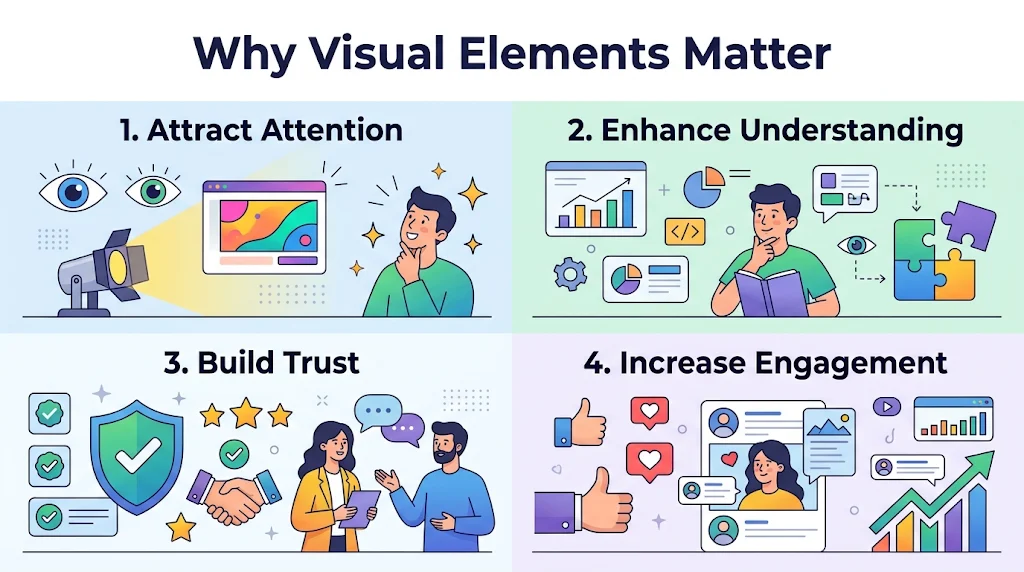
Visual elements complement text and can make or break a buyer’s decision. Here’s why they matter:
- Attract Attention: Images and videos can grab the user’s eye faster than text. In a crowded marketplace, visual content stands out.
- Enhance Understanding: Product images, diagrams, and videos clarify features and benefits, making it easier for consumers to understand the product.
- Build Trust: High-quality photos and professional presentations help create a trustworthy brand image.
- Increase Engagement: Visuals keep customers engaged, encouraging them to spend more time on your site and increasing the chances of conversion.
Types of Visual Elements to Implement
To maximize the effectiveness of your eCommerce product descriptions, consider adding the following types of visual content:
- High-Quality Images: Use multiple images showing various angles and perspectives.
- Zoom Features: Allow shoppers to zoom in on images to see details.
- Videos: Incorporate videos that demonstrate the product in use. This could be how-to guides or testimonials.
- Infographics: Use infographics to convey complex information simply and engagingly.
- 360-Degree Views: These allow consumers to see the product from all angles.
- Size Guide Tables: Make it easy for customers to understand sizing with informative tables.
Strategies to Enhance Product Descriptions with Visuals
To make the most of visuals in your product descriptions, follow these strategies:
- Consistent Style: Maintain a consistent aesthetic across all visual elements. Use similar photo styles and colors to create a cohesive look.
- Good Lighting: Ensure all images are well-lit. Natural light often works best to create appealing product photos.
- Contextual Imagery: Show products in real-life settings to help customers visualize their use.
- Interactive Visuals: Incorporate interactive elements that encourage user engagement, such as color options or customization.
The Impact of Visuals on Conversion Rates
Data suggest that the use of visual elements significantly affects shopping behavior. For instance, eCommerce websites that incorporate high-quality images witness an increase in conversion rates by up to 30%. Providing an engaging visual experience can also lower return rates, as customers know exactly what to expect.
| Visual Element | Impact on Sales (%) |
|---|---|
| High-Quality Images | 30% |
| Videos | 25% |
| 360-Degree Views | 20% |
| Interactive Features | 15% |
Optimizing Images for SEO
While visuals enhance user experience, they also should be optimized for search engines. Here are some SEO tips:
- File Names: Use descriptive file names with keywords relevant to the product.
- Alt Text: Add alt text to every image. This helps search engines understand what the image depicts.
- Image Compression: Optimize the image size to ensure quick loading times, which enhances user experience and SEO.
By combining these visual elements with well-crafted product descriptions, you can make your eCommerce site more appealing and user-friendly. Remember that each element should serve a purpose and enhance the overall shopping experience.
For more tips on improving your eCommerce strategies, visit Shopify, or check out resources from BigCommerce.
Utilizing Customer Reviews to Boost Product Appeal
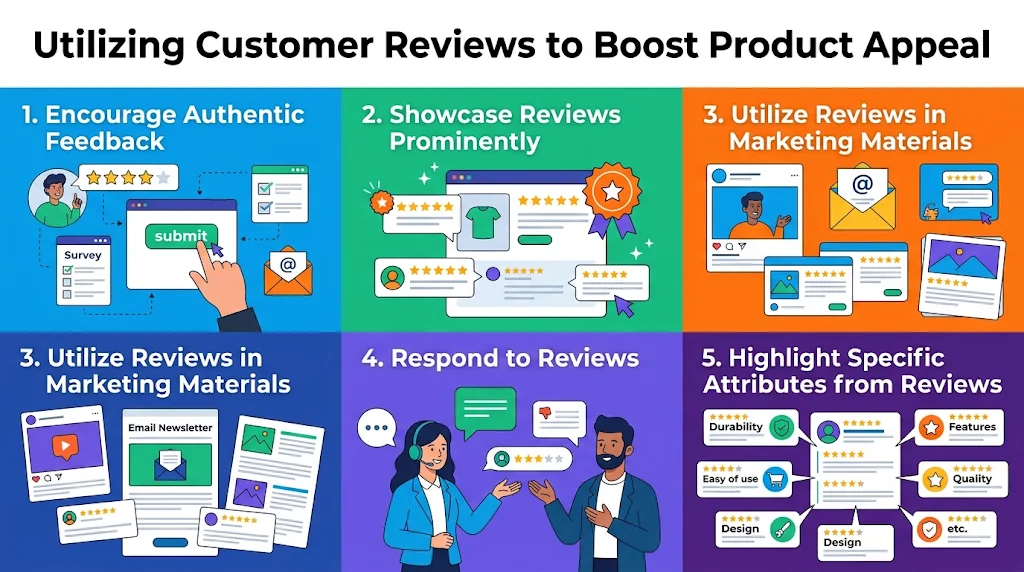
In the competitive world of eCommerce, gaining consumer trust is paramount. One effective way to enhance product appeal is by leveraging customer reviews. When potential buyers see authentic experiences from others, they are often more inclined to make a purchase. This strategy isn’t just beneficial for you; it’s an excellent way to foster a community around your products.
Customer reviews provide invaluable insights to new customers. They can highlight the strengths and weaknesses of a product that may not be apparent in standard descriptions. To maximize the impact of these reviews, consider the following techniques:
Encourage Authentic Feedback
Customers appreciate honesty. By encouraging them to share their real experiences, you generate content that resonates with new shoppers. Here are some ideas for gathering genuine reviews:
- Post-purchase emails: Send a friendly message after customers receive their products, asking them to share their thoughts.
- Incentives: Offer discounts or loyalty points for leaving detailed reviews.
- Social media prompts: Create engaging posts asking customers to share their experiences and tag your brand.
Showcase Reviews Prominently
Placement matters. Make sure customer reviews are easy to find on the product page. This visibility helps potential buyers quickly gauge product quality. Consider displaying reviews in these key areas:
- Near the product title: Placing a star rating display can draw immediate attention.
- Below the product images: After customers view visuals, reviews can further reassure them of their decision.
- In a dedicated section: Create a tab for reviews, allowing users to dive deeper into the experiences of other customers.
Utilize Reviews in Marketing Materials
Customer testimonials can be powerful marketing tools. Use excerpts of glowing reviews on your website, in email campaigns, and on social media. This practice not only enhances your brand’s credibility but also creates a personal touch that resonates with potential buyers.
Respond to Reviews
Engagement is vital. Responding to reviews, whether positive or negative, shows that you value feedback and care about customer experiences. Here’s how to approach responses:
- Thank customers for positive reviews to foster loyalty.
- Address issues in negative reviews. This demonstrates that you take complaints seriously and are committed to improving your products and services.
- Keep responses professional and concise, showing empathy and understanding where necessary.
Highlight Specific Attributes from Reviews
Lean into the strengths noted in customer reviews. If multiple reviews mention a specific feature, consider highlighting it. You can even create sections on your product pages that draw attention to customer-shared benefits. For example:
| Feature | Customer Feedback |
|---|---|
| Durability | “This product has lasted me over a year with daily use!” |
| Ease of Use | “I could set it up in minutes – so simple!” |
| Design | “It looks great in my living room!” |
When presenting positive reviews, ensure you are complying with relevant guidelines to maintain authenticity and transparency, which can be checked on reputable sites like Business.gov.au.
Many consumers seek validation from their peers before purchasing. By applying these strategies, you can effectively use customer reviews to increase product appeal. Always remember, the goal is to create a trustworthy environment that encourages more shoppers to click that buy button.
For more insights about enhancing e-commerce strategies, visit Shopify and learn how customer feedback can inform a better shopping experience.
Keyword Optimization Techniques for E-commerce Listings
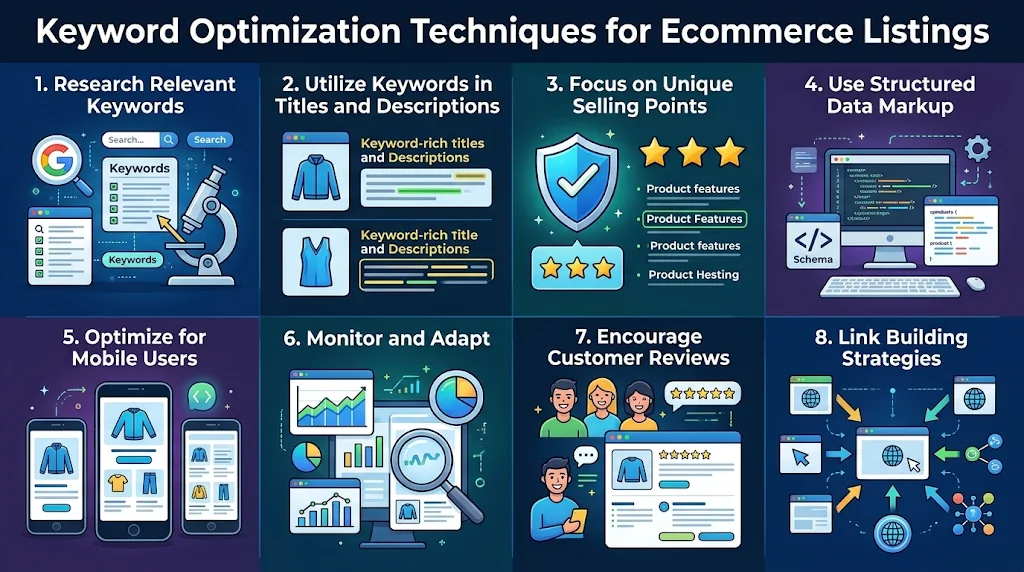
When it comes to selling products online, the way you optimize your e-commerce listings makes a big difference. Understanding and applying effective keyword optimization techniques can help your products stand out in the crowded online marketplace. Here’s how you can improve your listings and visibility.
Research Relevant Keywords
The first step is to identify the keywords that potential customers are using to search for your products. Tools like Moz Keyword Explorer or Ahrefs can help you discover keywords with good search volume and low competition.
- Brand Keywords: Include the name of the brand if it’s popular.
- Product Type Keywords: Use specific terms like “wireless headphones” or “blender for smoothies.”
- Long-tail Keywords: These are more specific and often less competitive, like “affordable wireless headphones for gym.”
Utilize Keywords in Titles and Descriptions
Make sure to seamlessly integrate your primary keywords into your product titles and descriptions. This not only helps with search engine optimization (SEO) but also gives customers a clear understanding of what you’re offering. Here are some tips:
- Title Structure: Start with the main keyword followed by additional details. For example, “Ergonomic Office Chair – Adjustable Height and Lumbar Support.”
- Product Descriptions: Write clear, informative descriptions that include both primary and secondary keywords naturally. Aim for at least 200-300 words per product description.
Focus on Unique Selling Points
Every product has features that set it apart. Highlight these unique selling points (USPs) in your descriptions. It helps the customer quickly understand why they should choose your product. Example USPs include:
- Warranty Information: Discuss product longevity and guarantees.
- Eco-friendly Materials: Attract environmentally conscious consumers.
- Special Features: Mention unique functionalities that add value.
Use Structured Data Markup
Implementing structured data markup (like Schema.org) can improve how search engines understand your product listings. This technique helps in displaying rich snippets on search results, such as pricing and availability. To implement structured data:
- Identify the type of data you want to include (price, manufacturer, reviews).
- Utilize Google’s Structured Data Testing Tool to validate your markup.
Optimize for Mobile Users
More customers are shopping on mobile devices than ever before. Make sure your ecommerce site is mobile-friendly. Key considerations include:
- Responsive Design: Ensure your site adapts to different screen sizes.
- Fast Loading Times: A lagging site can turn users away. Optimize images and streamline your code.
Monitor and Adapt
The world of keyword optimization is fluid. It’s important to regularly review your performance metrics and adapt your strategy. Consider these practices:
- Analytics Tools: Use platforms like Google Analytics to monitor traffic and conversions.
- A/B Testing: Experiment with different titles, images, and descriptions to see what resonates best with your audience.
Encourage Customer Reviews
Customer reviews not only build trust but can also improve your SEO ranking. Encourage satisfied customers to leave feedback and ratings. This content can include natural mentions of keywords that improve relevancy and authority in search engines.
Link Building Strategies
Building links to your product listings from reputable sites can boost your SEO efforts. Consider guest blogging on niche-related sites and collaborating with influencers to create backlinks.
By implementing these advanced keyword optimization techniques, you’ll enhance your e-commerce product listings and drive more traffic to your site. These strategies not only improve visibility but also create a better shopping experience for your customers.
Conclusion
Improving your e-commerce product descriptions can significantly enhance your online sales and customer engagement. By implementing effective strategies, you can create descriptions that resonate with your audience. Storytelling plays a crucial role in connecting with potential buyers, as it helps them envision how a product fits into their daily lives.
Visual elements such as high-quality images and videos makes your descriptions more appealing, allowing customers to see the product in action or understand it better. Customer reviews are another powerful tool; showcasing authentic feedback not only builds trust but also enhances the product’s appeal, as buyers often look to others’ experiences in their decision-making process.
Don’t overlook the importance of keyword optimization for your e-commerce listings. By carefully choosing relevant keywords, you can improve search visibility, drawing more traffic to your product pages. Balancing keywords with engaging content is essential to maintain a natural flow in your descriptions while targeting the right audience.
Ultimately, a well-crafted product description goes beyond just listing features; it should tell a story, engage the senses, and build trust. Emphasizing these elements ensures that your e-commerce site stands out in a crowded market, drives conversions, and creates loyal customers who return for more. As you refine your approach to writing product descriptions, keep the focus on helping your customers find exactly what they need, making their shopping experience both enjoyable and rewarding.