
Best Ways to Update Old Blog Posts

ATTENTION: Want to Learn Affiliate Marketing from Successful Affiliates?
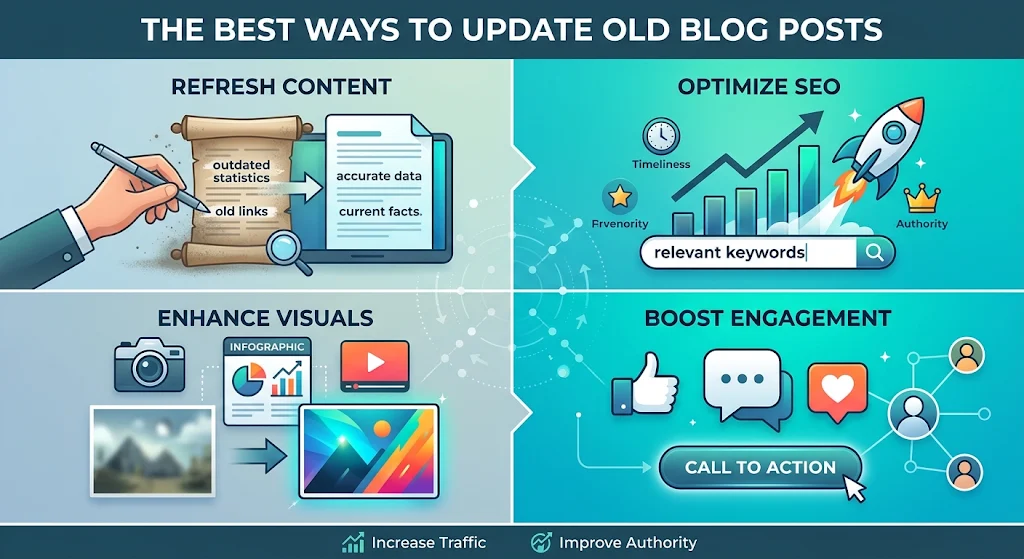
Updating old blog posts can breathe new life into your content and engage readers more effectively. The Best Ways to Update Old Blog Posts are straightforward yet impactful. Let’s explore the various strategies that you can implement to enhance your older content, making it more relevant and appealing.
Review and Refresh the Content
The first step in updating your old blog posts is thoroughly reviewing the existing content. As time passes, information may become outdated. Make sure to:
- Check facts, statistics, and links to ensure accuracy.
- Replace outdated information with current data.
- Add fresh insights or recent developments in your niche.
Updating these details not only helps maintain credibility but also improves user experience. For more insights on reviewing content, check out HubSpot’s guide on content audits.
Optimize for SEO
Search engine optimization should be a key aspect of your updating strategy. To enhance SEO, consider the following:
- Research and integrate relevant keywords that reflect current trends.
- Use header tags appropriately to improve readability and structure.
- Update meta descriptions to align with the new content.
With SEO becoming increasingly crucial, tools like Moz can help you identify optimal keywords for your audience.
Enhance Visuals
Visuals into your blog can significantly boost engagement. Consider the following enhancements:
- Replace old images with high-quality, relevant visuals.
- Add infographics that summarize points effectively.
- Integrate videos that support your content.
Images and videos break up text and make it easier for readers to digest information. Use tools like Canva to create eye-catching graphics.
Improve Readability
As you update your blog posts, enhance readability to keep your audience engaged. Simple strategies include:
- Shorten sentences and paragraphs for better flow.
- Use bullet points to make important information stand out.
- Limit jargon; aim for a conversational tone.
A readable blog post is more likely to retain the reader’s attention. Aim for a Grade 5 readability level to ensure accessibility.
Add Internal and External Links
Links can enhance your blog’s credibility and SEO. Here’s how to effectively incorporate them:
- Add internal links to related blog posts to keep readers engaged on your site longer.
- Include external links to authoritative sources that lend credibility to your content.
This not only helps with SEO but also builds a trusting relationship with your audience. For understanding the power of linking, visit Search Engine Journal’s linking strategies.
Encourage Reader Engagement
Don’t forget to encourage reader interaction. To boost engagement, consider:
- Adding a call to action (CTA) at the end of your blog post.
- Asking readers for their thoughts in the comments section.
This two-way communication fosters community and can provide valuable feedback on your content.
Monitor and Analyze Performance
After updating your posts, track how well they perform. Use analytics tools to measure:
- Page views
- Time spent on the page
- Engagement rates
These metrics help you understand the effectiveness of your updates and guide future changes. Tools like Google Analytics are essential for this process.
By following these best practices, you can revitalize your old blog posts and keep your audience engaged. Always prioritize providing value to your readers and stay updated on industry trends. This approach not only enhances your blog’s content but also boosts its overall performance in search engines.
The Importance of Fresh Content in Blogging
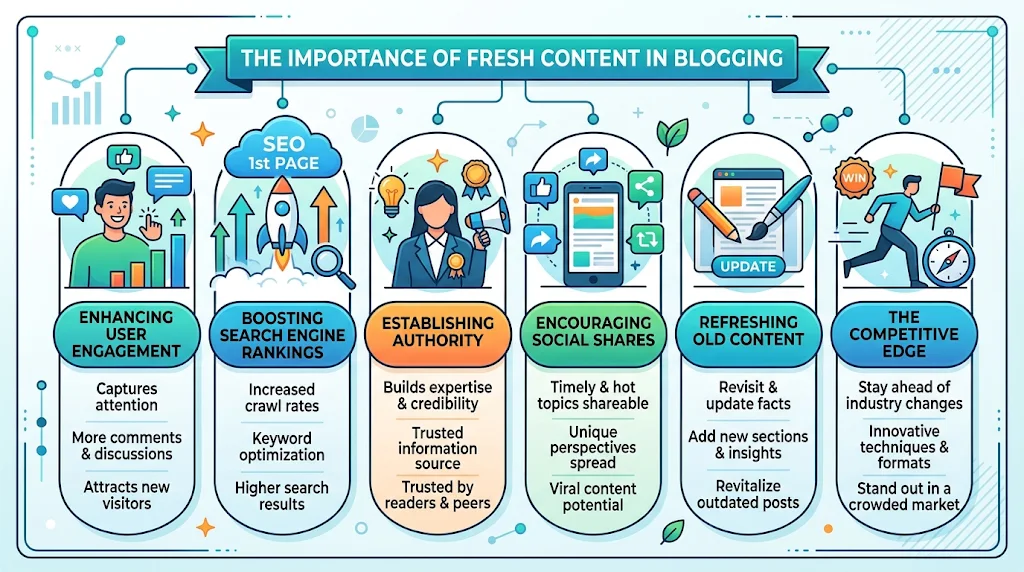
In the world of blogging, fresh content is vital to keep your audience engaged and to improve your visibility on search engines. Regularly updating your blog ensures that your readers receive accurate, up-to-date information. Furthermore, search engines tend to favor actively maintained websites. Let’s explore why maintaining fresh content is crucial for your blogging success.
Enhancing User Engagement
Fresh content captures the attention of your audience. When you offer new insights, solutions, or trends in your niche, your readers are more likely to return to your blog. Engaging content not only retains your current audience but also attracts new visitors interested in the latest updates. Here are ways fresh content enhances user engagement:
- Relevance: Readers want information that reflects the current state of the industry.
- Improved Interaction: Regular updates encourage more comments and discussions on your blog.
- Returning Visitors: Fresh posts can lead viewers to bookmark your site for future reference.
Boosting Search Engine Rankings
Search engines prioritize websites that consistently update their content. The frequency of updates indicates that the site is alive and providing valuable information. Here’s how fresh content can boost your search rankings:
- Increased Crawl Rates: Search engines like Google send bots to crawl updated websites more frequently.
- Keyword Optimization: Updated posts can be optimized with current keywords, improving visibility.
- Backlink Opportunities: New content attracts backlinks as other sites reference your latest ideas.
Establishing Authority
Regularly providing fresh and insightful content can shift your blog from being just another site to a trusted authority in your niche. As you share updated information, tips, or expert opinions, readers will view you as a reliable source. Here’s how this can happen:
- Expertise: Consistently sharing knowledge helps build your credibility.
- Trust and Loyalty: Readers are more likely to trust an authority figure, keeping them coming back.
- Networking: Authority can open doors to collaborative opportunities with other bloggers and industry experts.
Encouraging Social Shares
Fresh content increases the chances of your articles being shared across various social media platforms. Engaging posts that convey current trends or hot topics are more likely to resonate with readers, encouraging them to share with their social circles. Some points to consider include:
- Timeliness: Posts that discuss hot topics can quickly go viral.
- Visual Appeal: Freshly updated posts can include new images or videos, enhancing shareability.
- Sharable Insights: Unique perspectives or valuable tips are gold for social sharing.
Refreshing Old Content
Updating your old blog posts brings numerous benefits. While it’s tempting to focus solely on creating new content, refreshing existing posts can yield great returns. Consider these strategies for refreshing old content:
- Update Statistics: Ensure that any statistics or data in your post are still relevant.
- Add New Sections: Enrich the article with new insights or recent developments.
- Optimize for SEO: Revisit your SEO strategies and modify keywords as necessary.
- Improve Readability: Break down lengthy paragraphs or add bullet points for better flow.
The Competitive Edge
In a saturated blog landscape, fresh content gives you a competitive advantage. When you regularly update your blog, your peers and competitors remain in your shadows. Here’s how you can maintain that edge:
- Stay Current: Keep tabs on industry changes so you can be among the first to report them.
- Innovative Techniques: Experiment with new formats like podcasts or infographics to keep your content lively.
- Connect with Followers: Use social media platforms to engage with your audience, gaining feedback for your next post.
Adding fresh content is not just a choice; it’s a necessity for blogging success. Whether it’s keeping your audience engaged, improving search engine rankings or establishing credibility, the benefits of fresh content speak for themselves. To learn more about maintaining a successful blog.
Strategies for Repurposing Old Content Effectively
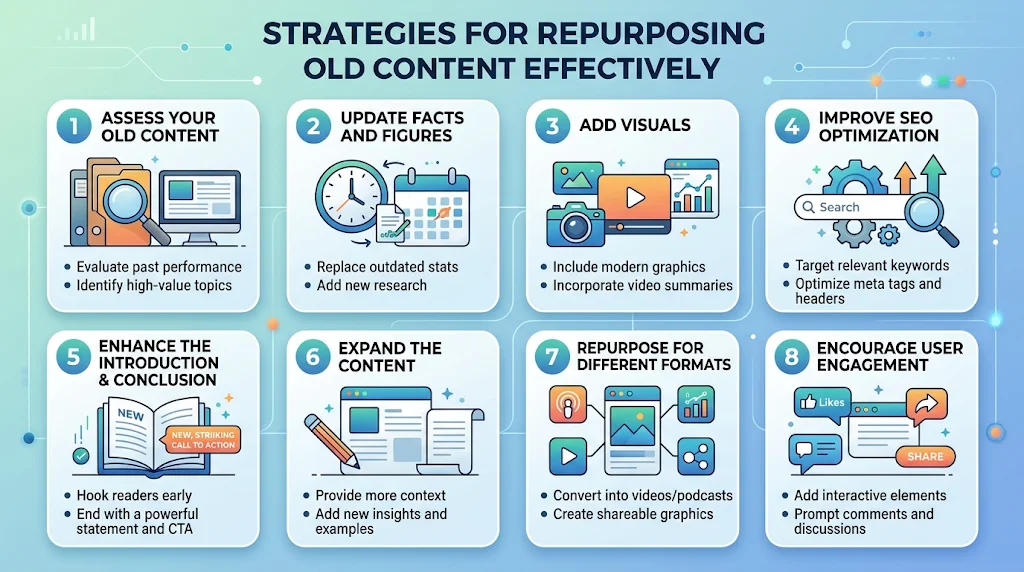
Updating old blog posts is not just about improving your content; it’s a strategic approach to increase your blog’s visibility and drive traffic. Here are some effective strategies for revitalizing your outdated posts.
Assess Your Old Content
Start by analyzing your existing blog posts. Identify which ones still resonate with your audience but may fall short in terms of information or engagement. Use tools like Google Analytics to determine which posts have received the most views and interactions. This insight can help you prioritize which articles to update first.
Update Facts and Figures
One of the simplest ways to refresh old content is to update any outdated statistics or facts. Research the latest data and trends relevant to your topic. Ensure your readers have access to current information, as this establishes you as an authority in your field. For example, if your post discusses market trends, use resources from Statista for the latest statistics.
Add Visuals
Images and videos can significantly enhance engagement. Incorporate infographics, charts, or relevant images to make your content more appealing. Use platforms like Canva to create customized visuals that complement your text. Visual content not only breaks up the text but also helps explain complex information clearly.
Improve SEO Optimization
Each old post should align with current SEO practices. Review and update your keywords to ensure they meet contemporary search trends. Use tools like Moz or Ahrefs to find relevant keywords for your content. Additionally, include internal links to other articles on your blog and external links to reputable sources.
Enhance the Introduction and Conclusion
Often, the beginning and end of a blog post are integral in retaining reader interest. Revamp your introduction to hook your audience right away. Use compelling questions or shocking statistics to grab attention. Similarly, make your conclusion robust by summarizing key points and including a clear call to action, encouraging readers to comment, share, or explore related content.
Expand the Content
If your old post is short or lacks depth, consider adding more information to provide additional value to your readers. Introduce new sections or segments, such as FAQs or case studies. This not only gives readers more useful content but also encourages them to spend more time on your site, positively impacting your SEO rankings.
Repurpose for Different Formats
Consider turning your blog posts into other content types. Here are some effective methods:
- Videos: Create a summary video of your blog post, adding a personal touch and engaging a different audience.
- Podcasts: Discuss your article’s topic in a podcast format, allowing listeners to absorb your insights on the go.
- Infographics: Summarize your post in an infographic that’s easy to navigate and share.
These adaptations can reach new audiences and bring fresh life to your existing content.
Encourage User Engagement
Foster a community around your blog. Encourage readers to leave comments, ask questions, and share their experiences related to your topic. Engage with them by responding to comments and showing appreciation for their insights. A blog with an active comment section attracts more visitors and encourages return visits.
Updating old blog posts is a crucial part of maintaining an engaging and functional content strategy. By assessing your content, making necessary updates, and diversifying your formats, you can breathe new life into your work and provide ongoing value to your audience.
For more information on content marketing strategies, visit Content Marketing Institute and explore their resources.
How to Use SEO Tools to Enhance Updated Blog Posts
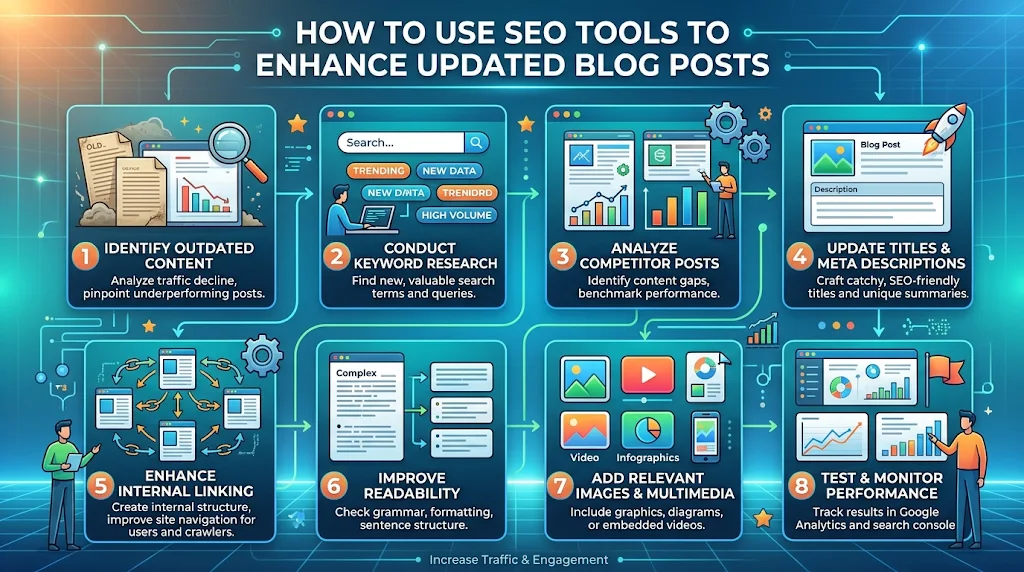
Updating old blog posts is a fantastic way to breathe new life into outdated content, enhance readability, and improve SEO performance. One of the best ways to do this is by leveraging SEO tools. By understanding how these tools can elevate your content, you can reengage readers and increase traffic. Here are the Best Ways to Update Old Blog Posts using SEO tools effectively when updating blog posts.
Identify Outdated Content
Your first step is to pinpoint which blog posts need help. Tools like Ahrefs and SEMrush allow you to analyze your entire blog’s performance. Search for posts with low traffic or poor engagement. Look for articles over a year old that haven’t been updated. Mark these for review.
Conduct Keyword Research
Once you have your list of antiquated posts, it’s time to do fresh keyword research. Tools such as Keyword Tool can help you discover relevant keywords that may have emerged since your post was published. Incorporate these keywords naturally into your content for better visibility. Ensure you’re not just stuffing keywords; they should fit seamlessly into your writing.
Analyze Competitor Posts
Check how competitors handle similar topics. Utilize tools like BuzzSumo to see which articles on similar subjects perform well. This can help you identify gaps in your content and inspire new ideas. Look for any unique points they covered or ways they structured their posts.
Update Titles and Meta Descriptions
Your blog post’s title and meta description significantly impact click-through rates. Use Yoast SEO or similar plugins to optimize these elements. Ensure they are catchy, include relevant keywords, and accurately represent the post’s content. Testing different titles might also help you find what resonates most with your audience.
Enhance Internal Linking
Creating strong internal links can help improve SEO and guide readers through your site. Use tools like LinkWhisper to identify related posts that can be linked within your updated blog. This not only helps search engines understand the structure of your site but also keeps readers engaged longer.
Improve Readability
Readability is crucial for retaining readers. Tools like Grammarly can help check for grammar and style adjustments. Aim for a conversational tone, break up long paragraphs, and use bullet points or lists when necessary. This makes the content easier to digest and more enjoyable to read.
Add Relevant Images and Multimedia
A post filled with text can be uninviting. Use tools like Canva to create engaging visuals that complement your content. Adding images, videos, or infographics not only makes your blog post more appealing but also supports diverse learning styles. Ensure all multimedia is optimized for SEO by using alt tags with relevant keywords.
Test and Monitor Performance
Once you’ve updated your blog posts, it’s essential to track their performance. Google Analytics can help you measure traffic changes and engagement levels. Regularly check if the updates are positively affecting your post’s ranking. If not, consider tweaking your keywords or content structure further.
| SEO Tool | Purpose |
|---|---|
| Ahrefs | Analyze site performance and find outdated posts |
| SEMrush | SEO analysis and keyword research |
| Keyword Tool | Discover new relevant keywords |
| BuzzSumo | Analyze competitors’ successful content |
| Yoast SEO | Optimize titles and meta descriptions |
| LinkWhisper | Strengthen internal linking |
| Grammarly | Enhance readability and grammar |
| Canva | Create engaging visuals |
Using SEO tools to enhance your blog posts can make a significant difference in their performance. With these strategies, you not only improve your blog’s visibility but also provide value to your readers. This is vital for converting your audience into loyal followers.
Measuring the Success of Your Updated Blog Content
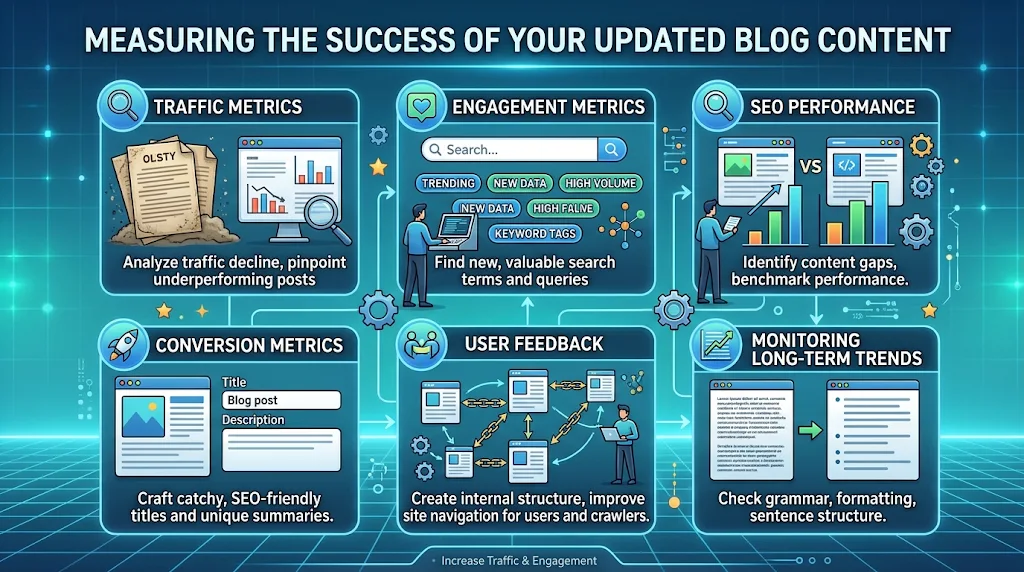
When you invest time and resources into updating your blog content, it’s crucial to gauge how successful these efforts are. Measuring the success of your updated blog content not only provides insights into what works and what doesn’t but also helps in adjusting your content strategy for future posts. Here are some effective ways to evaluate the performance of your updated blog content.
Traffic Metrics
One of the first indicators of success is the amount of traffic your updated blog posts receive. Keeping an eye on your blog’s analytics is vital for understanding audience engagement. Consider the following traffic metrics:
- Page Views: Track the total views on your updated blog post compared to its previous version.
- Unique Visitors: Evaluate the number of distinct users visiting your content.
- Bounce Rate: A lower bounce rate often indicates that readers find your content engaging and relevant.
Engagement Metrics
Beyond just traffic numbers, engagement metrics tell a deeper story about how readers interact with your content. Here are key engagement metrics to monitor:
- Average Time on Page: This reflects how long visitors are staying on your updated content. Longer duration often signals that your content is captivating.
- Comments and Social Shares: Increased interaction through comments or shares indicates that your audience finds the content valuable.
- Scroll Depth: Measure how far down the page users scroll to understand if they’re engaging with all the content.
SEO Performance
Updating old blog posts can boost their SEO performance significantly. To measure this, look for:
- Rankings in Search Engines: Use tools like Ahrefs or Moz to check if your updated posts rank higher in search results.
- Organic Traffic: Compare organic traffic before and after the updates to determine impact.
- Click-Through Rate (CTR): A high CTR suggests that your updated title and meta description are enticing clicks.
Conversion Metrics
If your blog aims to drive specific actions, such as signing up for a newsletter or purchasing a product, tracking conversion metrics is essential. Here’s what to analyze:
- Form Submissions: If you offer downloadable content, assess how many users complete forms after reading your updated posts.
- Sales or Leads Generated: Track whether the content directly affects sales or lead generation.
- Click Rates on CTAs: Monitor how frequently users are clicking on calls to action within your content.
User Feedback
Sometimes, the most valuable insights come directly from your readers. Consider creating a quick survey to gather feedback on your updated blog posts. Questions might include:
- Did you find the information useful?
- Was the content easy to read and understand?
- What topics would you like to see more of?
This feedback can guide future updates as well as inspire new content ideas.
Monitoring Long-Term Trends
While initial metrics can provide a snapshot of success, it’s equally important to monitor trends over time. Look for:
- Post Longevity: Are your updates continuing to attract traffic weeks or months later?
- Return Visitors: An increase in return visitors often indicates that your content is building a loyal audience.
Success in updating blog posts isn’t solely based on immediate metrics. It involves understanding the long-term impact and continuously adjusting your strategies based on data.
For additional resources on measuring blog performance, check out HubSpot’s blog on website analytics or refer to Social Media Examiner for insights on tracking social media engagement.
Conclusion
Updating old blog posts is a powerful way to breathe new life into your content and engage with your audience more effectively. By focusing on the Best Ways to Update Old Blog Posts to refresh your existing material, you not only improve your blog’s visibility but also strengthen your relationship with readers. Fresh content is essential in the ever-evolving digital landscape, keeping your blog relevant and dynamic.
Strategically repurposing old content allows you to present valuable information in fresh formats, catering to different audience preferences. graphics, infographics, or even turning a blog post into a video can increase appeal and shareability. Leveraging SEO tools helps ensure that your updates are optimized for search engines, making it easier for potential readers to find your enhanced post.
Monitoring the success of your updated content is crucial. Metrics such as page views, engagement rates, and social shares provide insights into what resonates with your audience. Use these analytics not just to measure success but also to guide your future content strategies.
By applying these tactics, you ensure your blog remains a source of valuable information while optimizing it for greater reach and impact. As you update and enhance your existing posts, remember that your primary goal is to offer the best possible experience for your readers. By doing so, you transform your blog into a go-to resource that continues to attract and retain followers in a fast-paced digital world.