
Keyword Clustering for Better Seo Rankings


ATTENTION: Want to Learn Affiliate Marketing from Successful Affiliates?
The Role of Keyword Clustering for Better SEO Rankings
In the digital world, the strategy of keyword clustering for better SEO rankings has emerged as an essential element for enhancing SEO rankings. Grouping related keywords into clusters can significantly streamline your content and improve user experience. This approach not only helps search engines understand your content better; it also positions your site as an authority in your niche. Here’s how you can leverage keyword clustering for better SEO rankings to boost your SEO efforts.
Keyword clustering involves organizing keywords into thematic groups. This method allows you to target several related terms with a single piece of content while maintaining relevance. By addressing a broader topic comprehensively, you satisfy user intent and engage your audience effectively.
Here’s how keyword clustering for better SEO rankings works in detail:
- Identify Core Topics: Begin by determining the broad themes you want to cover. Use tools like Ahrefs or SEMrush to explore popular topics in your niche.
- Research Keywords: Find keywords related to your core topics. Utilize tools such as Google Keyword Planner or Ubersuggest for in-depth keyword research.
- Group Related Keywords: Organize the keywords into clusters based on their semantic meanings and user intent. This makes it easier to create content that resonates with your audience.
- Create Targeted Content: Develop content that addresses all the keywords in a cluster. This will enhance user engagement and improve your chances of ranking higher.
- Monitor and Adjust: After publishing, track your content’s performance. Use analytics tools to see which keywords are driving traffic and adjust your strategy accordingly.
Utilizing this structured approach can lead to several benefits:
- Improved SEO Rankings: When you create comprehensive content around a cluster of keywords, you signal to search engines that your site is a credible source on the topic.
- Better User Experience: Clustering allows you to present information in an organized manner, making it easier for users to find what they are looking for.
- Higher Click-Through Rates (CTR): When content meets user expectations, it tends to attract more clicks, further boosting rankings.
Another vital aspect of keyword clustering for better SEO rankings is internal linking. By linking related content within your clusters, you enhance site navigation. This practice distributes link equity and helps search engines crawl your site more efficiently. Here’s how to implement effective internal linking:
- Link Relevant Articles: Ensure that you link to other articles within the same keyword cluster. This strengthens the thematic relevance.
- Use Descriptive Anchor Text: Make your anchor text informative and relevant to the target content. Avoid generic phrases like “click here.”
| Keyword Cluster | Primary Keyword | Secondary Keywords |
|---|---|---|
| Digital Marketing | SEO Strategies | SEO tips, SEO tools, On-page SEO |
| Content Writing | SEO Content | Content Creation, Blogging tips, Writing techniques |
Moreover, tools like Keyword Tool provide insights on long-tail keywords that can be beneficial for your clusters. Another helpful resource is the Moz website, which offers an array of tools and insights related to keyword research and clustering.
Employing keyword clustering for better SEO rankings can be a game-changer for your SEO strategy. It streamlines your content creation process, enhances the user experience, and establishes your authority in the niche. By focusing on clusters rather than individual keywords, you’ll increase your chances of securing optimal SEO rankings.
Utilize these strategies to get the most out of keyword clustering for better SEO rankings and ensure your content resonates with both your readers and search engines. As you refine your approach, keep adjusting your strategy based on performance metrics. With determination and an effective clustering method, your SEO success is well within reach.
How to Effectively Group Keywords for Content Strategy
When developing a content strategy, understanding and organizing your keywords is essential. Properly grouping keywords can enhance your search engine optimization (SEO) rankings and improve the relevance of your content. This method is known as keyword clustering for better SEO rankings, and it can significantly boost your content’s visibility online.
One effective way to start clustering your keywords is to conduct thorough keyword research. You can use tools like Ahrefs or Moz to discover which phrases your target audience is searching for. Look for keywords with varying search volumes and difficulty levels to get a balanced mix. By identifying these keywords, you can also spot relevant topics that resonate with your audience.
Once you have a suitable list of keywords, it’s time to categorize them. Here’s how you might approach it:
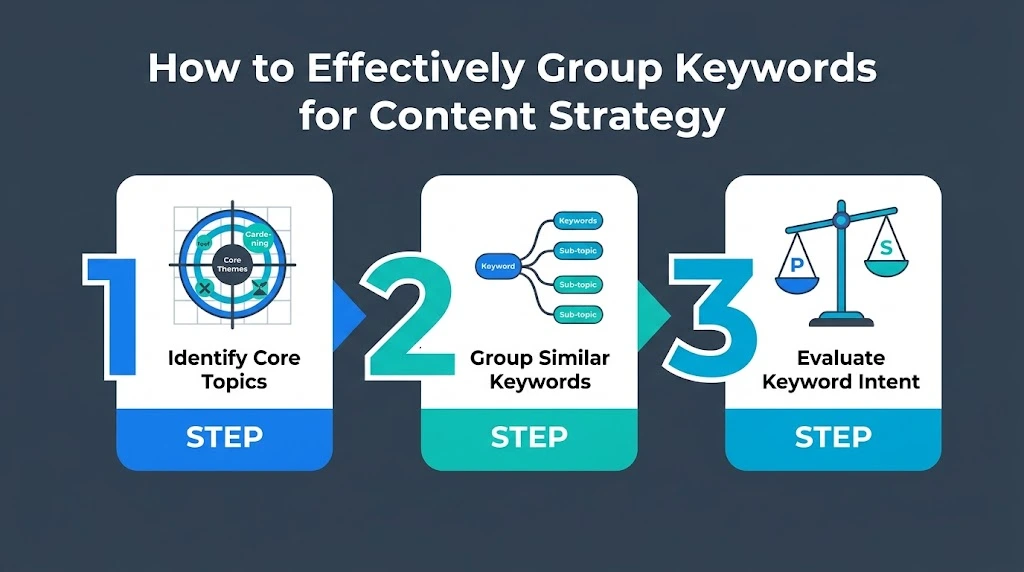
- Identify Core Topics: Start by identifying broader themes that relate to your business. For instance, if you run a gardening blog, potential core topics might include “vegetable gardening,” “flower gardening,” and “landscaping.”
- Group Similar Keywords: Once you have your core topics, group related keywords together. For example, under “vegetable gardening,” you could include keywords like “how to grow tomatoes,” “best soil for vegetables,” and “organic gardening tips.”
- Evaluate Keyword Intent: Not all keywords serve the same purpose. Determine whether keywords are aimed at generating sales, providing information, or building brand awareness. This will help you structure your content effectively.
Using spreadsheet tools can make the keyword clustering for better SEO rankings process easier to manage. You can create a table to visualize the categories and keywords that belong to them. An example layout could look like this:
| Core Topic | Grouped Keywords |
|---|---|
| Vegetable Gardening |
|
| Flower Gardening |
|
| Landscaping |
|
Now that you have your keywords organized, the next step is to create content that integrates these keywords naturally. Make sure to address the intent behind each keyword. This means that if someone searches for “how to grow tomatoes,” your article should provide valuable tips and information rather than merely including the keyword for the sake of optimization.
Another critical aspect of keyword clustering for better SEO rankings is internal linking. When writing related articles, link back to your core pages using the clustered keywords. This not only helps users navigate your site easily but also tells search engines that these keywords are connected. For example, link your tomato growing guide to your general vegetable gardening page to create a strong relationship between the keywords.
Additionally, monitor how well your keywords are performing. Use analytic tools like Google Analytics to track the traffic generated by your clustered keywords. Analyze click-through rates and engagement levels to understand what works and what needs improvement. By examining this data, you can further enhance your content strategy.
Be prepared to update your keyword clusters periodically. As trends shift and new keywords emerge, adapt your grouping to stay relevant. This proactive approach will ensure that your content remains fresh and aligned with what users are searching for.
Incorporating keyword clustering for better SEO rankings into your content strategy can pave the way for better SEO rankings. It allows you to create focused content that speaks directly to user intents, thus enhancing engagement and driving traffic to your website.
The Impact of Semantic Search on Keyword Clustering
In today’s digital landscape, understanding how search engines process information is key to successful online content strategies. One important element of this process is semantic search, which significantly affects how keyword clustering for better SEO rankings works and can enhance your SEO efforts.
Semantic search refers to the search engines’ ability to understand the intent and contextual meaning behind search queries. Rather than focusing solely on individual keywords, search engines like Google use advanced algorithms to analyze the relationships between words and phrases. This shift has led to a new way of thinking about organizing and grouping keywords.
Keyword clustering is a technique that organizes keywords into tightly themed groups. By focusing on clusters, rather than siloing keywords, you can create content that is not only rich in diverse topics but also aligns with user intent.
Benefits of Semantic Search on Keyword Clustering
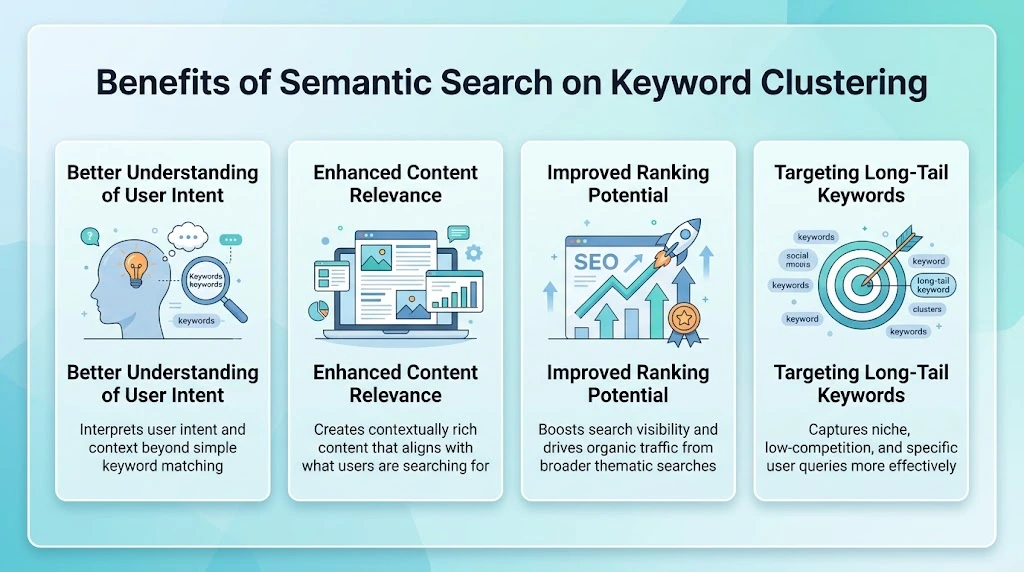
- Better Understanding of User Intent: Semantic search enhances your ability to discover the true needs of your audience. This allows you to group related keywords based on their underlying themes, ensuring that your content is tailored to what your users are actually searching for.
- Enhanced Content Relevance: By grouping keywords contextually, you create content that resonates better with readers. This can lead to higher engagement rates and lower bounce rates, improving overall SEO performance.
- Improved Ranking Potential: When you effectively use keyword clustering for better SEO rankings alongside semantic search principles, your chances of ranking higher increase. Search engines reward content that offers comprehensive and relevant information on a particular subject.
- Targeting Long-Tail Keywords: Keyword clustering paves the way to target long-tail keywords more effectively. This connects you with niche audiences who are often closer to making a purchase decision.
How to Implement Keyword Clustering with Semantic Search
To fully harness the power of semantic search in your keyword clustering for better SEO rankings strategy, consider these actionable steps:
- Conduct Thorough Keyword Research
Begin by using tools like Ahrefs or Moz to find relevant keywords. Look for common phrases that users are searching for, interested in, and discussing. - Identify Core Themes
Group keywords that share common themes or topics. For example, if you’re focusing on digital marketing, keywords could include “SEO strategies,” “content marketing,” and “social media advertising.” This clustering allows for a more coherent content strategy. - Create Content Based on Clusters
When you develop your content, make sure to cover all aspects of the keyword clusters. This could mean creating a comprehensive guide that touches on various facets of a topic, enhancing the user experience while providing detailed answers to popular queries. - Monitor and Adapt Your Strategy
Use analytics tools to track how your clusters are performing in terms of traffic, engagement, and rankings. If certain clusters are not performing well, don’t hesitate to revise your content or explore new clusters based on emerging search trends.
The Future of SEO with Semantic Search
The evolution of semantic search is reshaping SEO practices. Keyword clustering plays a crucial role in adapting to these changes and ensuring that your content remains relevant and effective. By understanding the relationship between keywords and user intent, you’re not just creating isolated pieces of content; you’re developing a comprehensive resource for your audience.
As you craft your keyword strategies, keep in mind that the aim is to make it easier for your audience to find the information they need. Offering value through your content will not only improve user satisfaction but also drive better results in search rankings.
For more insights on keyword clustering for better SEO rankings and SEO strategies, consider exploring resources from Search Engine Journal and SEMrush. These sites provide excellent tips and tools to stay ahead in the ever-changing digital landscape.
By embracing keyword clustering for better SEO rankings within the framework of semantic search, you’re setting yourself up for success. You’ll be better equipped to understand your audience, improve content relevance, and ultimately boost your SEO rankings.
Tools and Techniques for Effective Keyword Organization
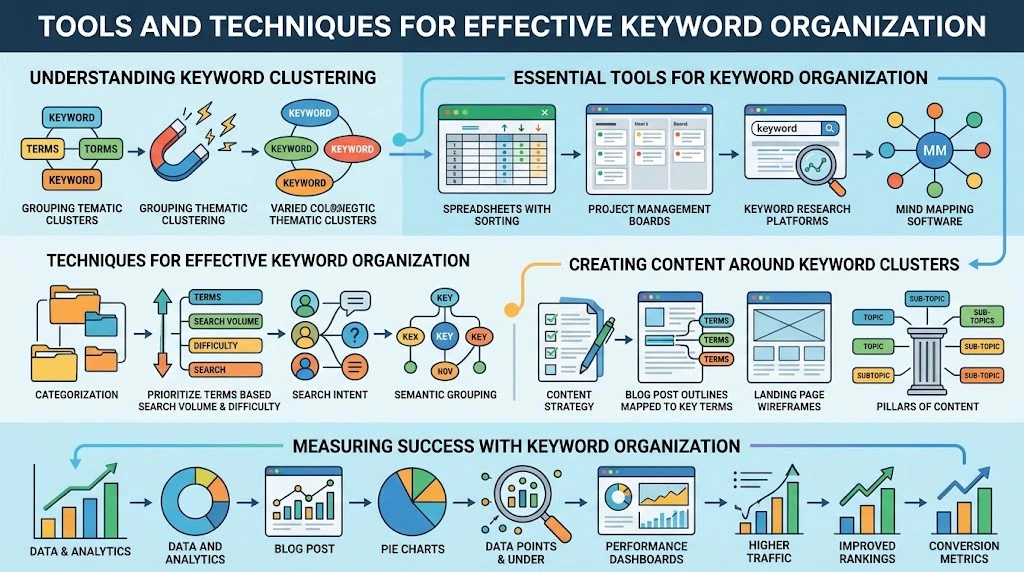
Effective keyword organization is crucial for enhancing your content strategy and improving search engine optimization (SEO). With the right tools and techniques, you can streamline your keyword research process, cluster your keywords strategically, and boost your online visibility. Here’s how you can achieve efficient keyword organization to maximize your SEO efforts.
Understanding Keyword Clustering
Keyword clustering involves grouping related keywords into clusters based on semantic relevance. This tactic allows you to create content that targets a broad set of related queries while still addressing user intent. By focusing on clusters, you can optimize for multiple keywords in a single piece of content, thus improving your chances of ranking higher on search engines.
Essential Tools for Keyword Organization
Using the right tools can significantly enhance your ability to research, monitor, and organize keywords effectively. Here are some top tools you can start using:
- Ahrefs: This tool not only provides keyword data but also helps you analyze competitor strategies.
- Moz: Known for its keyword explorer, this tool offers insights on keyword difficulty and opportunity.
- SEMrush: A comprehensive SEO tool that includes keyword tracking and clustering features.
- Ubersuggest: A user-friendly tool that helps identify keywords and their search volumes.
- Keyword Tool: Great for finding long-tail keywords from multiple search engines.
Techniques for Effective Keyword Organization
Here are some techniques to help you organize your keywords effectively:
- Brainstorming: Start with a brainstorming session to list down potential keywords related to your niche. Involve team members to gather diverse ideas.
- Grouping Related Keywords: Once you have your list, group related keywords together. This will help you identify which clusters to focus on for specific content pieces.
- Utilizing Spreadsheets: Create a spreadsheet to manage your keywords. Include columns for keyword volume, difficulty, and current ranking. This will help you visualize and track keyword performance over time.
- Competitor Analysis: Analyze the keywords your competitors are ranking for. Tools like SEMrush and Ahrefs can assist in this process, allowing you to spot gaps in your own keyword strategy.
- Adjusting and Updating: Keyword trends can shift over time, so make it a point to review and update your keyword clusters regularly. This ensures that your strategy stays relevant.
Creating Content Around Keyword Clusters
Once you have organized your keywords into clusters, the next step is content creation. Here’s how to proceed:
- Developing Pillar Content: Create comprehensive pillar pages that target broad topics, incorporating several keyword clusters. These pages serve as a foundation for more specific content.
- Writing Cluster or Supporting Content: After establishing pillar content, develop supporting articles that delve into each cluster. Link these articles back to your pillar content to create a robust internal linking structure.
- SEO Optimization: Ensure each piece of content is optimized for SEO. Use keywords in titles, headers, metadata, and throughout the content naturally.
Measuring Success with Keyword Organization
After implementing keyword clustering for better SEO rankings and organization strategies, it’s crucial to measure their effectiveness. Here are some metrics to track:
| Metric | Description |
|---|---|
| Organic Traffic | Monitor the increase in traffic to your site from search engines. |
| Keyword Rankings | Track keyword ranking positions for your grouped keywords. |
| Bounce Rate | Check the bounce rate on pages optimized with your clustered keywords. |
| Conversion Rate | Measure the percentage of visitors taking desired actions after landing on your content. |
By implementing effective keyword organization through clustering and using the right tools, you can enhance your SEO strategy. For further learning on this topic, visit resources like Search Engine Journal and Search Engine Watch.
The journey to mastering keyword organization may take time, but with persistence and the right strategies, you can see a significant boost in your SEO rankings and overall content performance.
Case Studies: Successful Keyword Clustering in Action

Keyword clustering is a powerful technique that can significantly enhance your SEO strategy. By grouping related keywords, businesses can streamline their content and improve their chances of ranking higher on search engine results pages (SERPs). Let’s explore real-world examples where keyword clustering for better SEO rankings has been applied successfully.
Real Estate Industry
A real estate agency aimed to improve its online visibility and attract more buyers. They identified multiple keywords related to “houses for sale,” “real estate listings,” and “property management.” Instead of optimizing each keyword individually, they clustered them into thematic groups:
- For Buyers: “townhouses for sale,” “luxury homes,” “first-time home buyer tips”
- For Sellers: “how to sell your home,” “market value of home,” “home staging tips”
- Rental Properties: “rental homes near me,” “property management services,” “tenant rights”
By implementing a clustering strategy, the agency could create dedicated landing pages for each cluster. This approach not only enhanced keyword relevance but also provided valuable content for users. Over six months, their organic traffic increased by 50%, showcasing how effective keyword clustering for better SEO rankings can lead to improved SEO rankings.
Health and Wellness Sector
A health blog specializing in nutrition noticed that their articles on various diets received great traffic. However, they were struggling to rank for specific keywords like “keto meal plans” and “paleo diet recipes.” After conducting keyword research, they decided to cluster keywords based on diet types:
- Keto: “keto snacks,” “keto meal ideas,” “keto grocery list”
- Paleo: “paleo meal prep,” “paleo dessert recipes,” “paleo eating out”
- Vegan: “vegan protein sources,” “vegan meal ideas,” “vegan grocery list”
This strategy allowed the blog to interlink articles within each cluster, providing readers with an entire suite of content around a specific diet. The site saw a 70% increase in page views per session, as readers engaged with related content easily.
E-commerce Success
An online clothing retailer faced stiff competition in the fashion industry. Recognizing the importance of keyword ranking, they clustered keywords around various product categories:
- Men’s Clothing: “men’s jackets,” “casual shirts,” “dress pants”
- Women’s Clothing: “summer dresses,” “formal wear,” “activewear”
- Accessories: “scarves,” “belts,” “hats”
Each category was optimized with a landing page targeting the cluster keywords. By using tools like SEMrush to analyze cluster performance, they refined their strategy further. Their site not only climbed in rankings but also led to a 40% boost in sales over three months, proving the effectiveness of meticulous keyword clustering for better SEO rankings.
Educational Institutions
A local university aimed to attract more students to its online courses. They realized that instead of focusing on single keywords like “online degree,” they could create clusters around fields of study:
- Business: “online MBA,” “business analytics courses,” “digital marketing programs”
- Technology: “online IT courses,” “data science degree,” “software development bootcamp”
- Health: “online nursing degree,” “public health certification,” “health education courses”
This focused approach enhanced the website’s ability to cater to different prospective students’ interests. After launching their keyword clusters, the university reported a 55% increase in course applications and better engagement metrics, validating the strategy’s impact on SEO rankings.
In all these cases, the emphasis on keyword clustering for better SEO rankings has proven to be a tactical move that not only supports better search engine rankings but also enriches user experience. If you’re interested in learning more about implementing effective SEO strategies, consider visiting Moz or Ahrefs Blog.
| Industry | Keyword Clustering Focus | Growth in Traffic |
|---|---|---|
| Real Estate | Buyers/Sellers/Rentals | 50% |
| Health and Wellness | Diet Types | 70% |
| E-commerce | Clothing Categories | 40% |
| Education | Fields of Study | 55% |
By embracing keyword clustering for better SEO rankings, businesses across sectors have successfully transformed their SEO performance, driving not only rankings but also genuine user engagement. The success stories illustrate that when keywords are strategically organized, the results can be remarkable.
Conclusion
Keyword clustering for better SEO rankings is a powerful technique that can significantly enhance your SEO strategy. By grouping related keywords, you create a more organized content structure that aligns with how search engines interpret user queries. This not only simplifies the user experience for your audience but also increases your site’s visibility in search results.
To effectively group keywords, it’s essential to understand the intent behind each keyword and how they relate to each other. This involves analyzing search volumes and competition to create content that speaks directly to user needs. Understanding semantic search further enriches this process, allowing you to tap into the broader context surrounding user queries to create comprehensive and relevant content.
Utilizing tools and techniques like keyword research software, content management systems, and mind mapping can streamline your keyword organization process. These resources can help you visualize relationships between keywords, making it easier to develop a focused content strategy.
The success stories from various case studies illustrate the tangible benefits of applying keyword clustering for better SEO rankings. Businesses that have adopted this strategy report improved rankings, increased organic traffic, and enhanced user engagement. By examining these real-world examples, you can glean practical insights into how keyword clustering for better SEO rankings can work for you.
Implementing keyword clustering for better SEO rankings into your SEO approach isn’t just about improving rankings; it’s about creating an engaging experience for your users. As you refine your content strategy with intelligently grouped keywords, you’ll find that both your audience and search engines will reward your efforts. Embrace the power of keyword clustering for better SEO rankings today to elevate your online presence.