
SEO Techniques for New Websites

ATTENTION: Want to Learn Affiliate Marketing from Successful Affiliates?
When you launch a new website, getting noticed can feel daunting. However, implementing effective SEO Techniques for New Websites can significantly boost your visibility. Here’s a guide to some essential strategies that will set the foundation for your website’s growth.
Keyword Research
Before anything else, you need to understand what words and phrases your audience is searching for. Start with the following steps:
- Use tools like Ahrefs or Moz to find relevant keywords.
- Focus on long-tail keywords, which often have less competition.
- Consider user intent; your keywords should match what users are looking for.
Optimize On-Page Elements
Once you have your keywords, it’s time to optimize your pages. Here are the key elements to focus on:
- Title Tags: Make sure each page has a unique and descriptive title that includes your primary keyword.
- Meta Descriptions: Craft engaging meta descriptions that encourage clicks from search results.
- Headings: Use headings (H3, H4) to structure your content, making it easier for both users and search engines to navigate.
- Content: Aim for high-quality, original, and useful content that genuinely assists your readers.
Improve Site Speed
Website speed is a critical ranking factor. A slow website can deter visitors and lead to higher bounce rates. To enhance your site speed, consider the following:
- Optimize images to reduce file sizes.
- Minimize the use of heavy scripts and plugins.
- Use a reliable hosting provider for better performance.
Mobile Optimization
With more users accessing websites via mobile devices than ever, ensuring your site is mobile-friendly is vital. Here’s how to keep your site accessible:
- Use responsive design to ensure your website looks good on all devices.
- Ensure buttons are easily clickable and text is readable without zooming.
Build Quality Backlinks
Backlinks play a significant role in how search engines evaluate your site’s authority. To build quality backlinks:
- Engage in guest blogging on reputable sites in your niche.
- Collaborate with influencers or industry leaders for cross-promotional opportunities.
- Utilize tools like SEMrush to monitor your backlink profile.
Utilize Social Media
Social media can amplify your reach and drive traffic to your website. Consider these tactics:
- Share your content across various platforms to engage with a larger audience.
- Encourage sharing by making it easy for users to distribute your content.
- Participate in relevant groups or forums to establish your presence.
Monitor and Analyze Performance
Regularly analyzing your website’s performance is crucial for ongoing success. Use tools to track important metrics:
- Google Analytics: Monitor traffic, user behavior, and conversion rates.
- Google Search Console: Check for errors, performance issues, and optimize for keywords.
Stay Updated with SEO Trends
SEO is an ever-evolving field. Stay informed about the latest trends and updates by following reputable sources. Websites like Search Engine Journal and Moz Blog can provide valuable insights and updates.
By focusing on these effective SEO Techniques for New Websites, you’ll be better equipped to create a strong foundation for your online presence. Keep testing, learning, and adapting to best meet the needs of your target audience.
Understanding the Role of Keyword Research in SEO Success
Every successful SEO strategy begins with effective keyword research. This process is essential for understanding what your target audience is searching for online. By identifying the right keywords, you can optimize your content to meet the specific interests and needs of your readers, thereby increasing your chances of ranking higher in search engine results.
To start, it’s crucial to know the different types of keywords you should consider. They can be broadly categorized into:
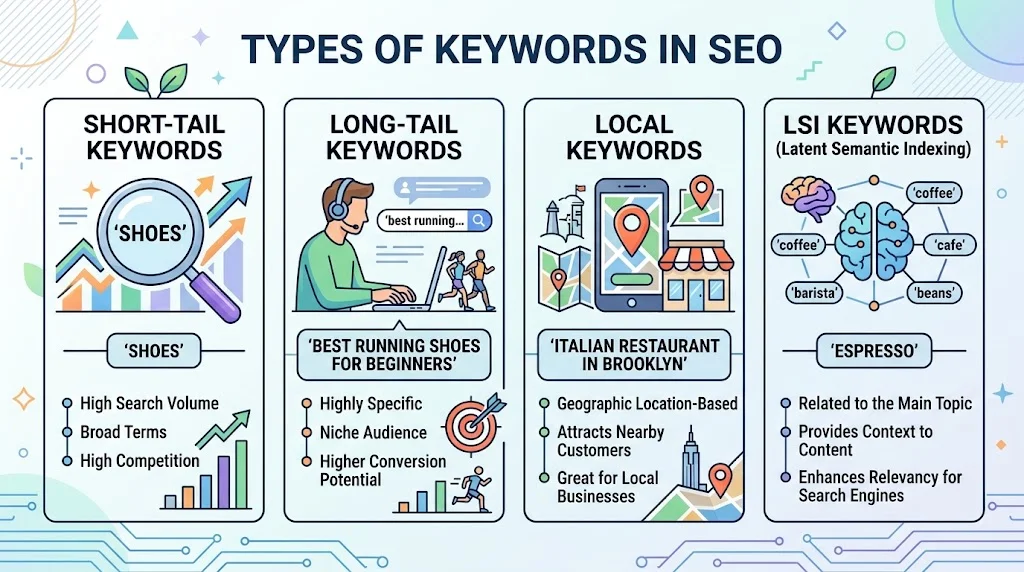
- Short-tail keywords: These are typically one or two words long, such as “shoes” or “SEO.” They usually have a high search volume but are quite competitive.
- Long-tail keywords: These phrases are three words or longer, like “best running shoes for beginners.” While they have lower search volumes, they often convert better because they target a more specific audience.
- Local keywords: Keywords that target specific geographic locations, such as “Italian restaurant in Brooklyn.” These are crucial for businesses looking to attract local customers.
- LSI keywords: Latent Semantic Indexing keywords are related terms that help Google understand the context of your content. For example, in an article about “coffee,” LSI keywords might include “brew,” “espresso,” or “caffeine.”
Once you’ve identified the types of keywords you want to target, the next step is to use effective tools for your research. Tools such as Google Keyword Planner, Ahrefs, and Moz Keyword Explorer can provide valuable insights into search volumes, keyword difficulty, and related terms. Utilizing these tools can make the process much easier and help ensure you’re making data-driven decisions.
Understanding user intent is also a critical part of keyword research. It’s essential to know whether users are looking for information, making a purchase, or seeking a specific service. By understanding this intent, you can tailor your content to answer their questions and meet their needs. Consider categorizing your keywords based on the searcher’s intent:
- Informational: Users are looking for information (e.g., “How to train for a marathon”).
- Navigational: Users intend to find a specific website (e.g., “Facebook login”).
- Transactional: Users are ready to make a purchase (e.g., “buy running shoes online”).
After compiling a list of well-researched keywords, it’s time to prioritize them. Focus on keywords that align with your business goals and content strategy. Consider factors such as search volume, competition, and relevance to your audience. This will help you create a more structured plan for your content.
Another vital aspect is to include keywords strategically in your content. Make sure to incorporate them naturally in the following areas:
- Title tags
- Meta descriptions
- Headings and subheadings
- Throughout the body content
- Alt text for images
Avoid “keyword stuffing,” which can lead to penalties from search engines. Instead, focus on providing valuable and informative content that genuinely benefits your readers.
Analyzing your performance is equally as important as conducting keyword research. Regularly monitor your website’s analytics to assess which keywords are driving traffic. This feedback will guide you in refining your SEO strategy over time. Tools like Google Analytics and Google Search Console are invaluable for tracking your SEO success.
Keep an eye on trends and updates within your industry. Staying ahead of the curve can give you an advantage over competitors. Regularly revisiting your keyword strategy can ensure your content remains relevant and engaging to your audience.
Effective keyword research is the foundation of any successful SEO strategy. By understanding your audience, using the right tools, and keeping your content relevant, you can significantly improve your chances of ranking higher in search engine results. Remember, the goal is to create valuable content that resonates with your target audience while naturally integrating keywords for SEO success.
On-Page SEO Strategies to Boost Your Website’s Visibility
Building a new website is an exciting journey, but to ensure your site doesn’t get lost in the vast digital landscape, utilizing effective SEO strategies is essential. On-page SEO focuses on the content and the structure of your website. By applying specific techniques, you can significantly boost your site’s visibility in search engine results. Here are some essential strategies to consider.
Optimize Your Titles and Meta Descriptions
The title of your page and its meta description are vital for both users and search engines. Your title should include the primary keyword related to your content. Aim for titles to be under 60 characters, making them concise yet informative. For meta descriptions, use around 150-160 characters to summarize your content. Include your target keywords naturally to attract clicks. Tools like Moz can help you analyze effective examples.
Utilize Header Tags Effectively
Header tags (H3, H4, etc.) break your content into scannable sections. Use them to improve readability and help search engines understand your content hierarchy. Include related keywords in your headers where appropriate, but keep it natural. This strategy creates a better user experience, leading to longer page visits and repeat traffic.
Focus on Quality Content
Creating valuable, high-quality content is at the core of any successful SEO strategy. Aim to create content that answers users’ questions, provides solutions, or entertains. Your content should be engaging, informative, and well-researched. The more quality content you have, the more likely people will link to your site, improving your authority and visibility. Use tools like Grammarly or Copyscape to ensure your writing is clear and unique.
Optimize Images for Better User Experience
Images enhance your content, but they need to be optimized for better performance. Use relevant, high-quality images and ensure they are compressed to reduce loading times. Add alt text to your images, describing the visual content while also including relevant keywords. This not only helps your SEO but also improves accessibility for users with disabilities.
Use Internal and External Links
Linking to other pages within your website can improve its navigation and help search engines index your site better. External links to reputable sources can also establish trust and authority. Aim to link to articles that relate directly to your content. For example, if you write about on-page SEO, link to articles from Search Engine Journal or Search Engine Land for deeper insights.
Improve Your URL Structure
A clean, descriptive URL structure is beneficial for both users and search engines. Keep URLs short and include relevant keywords. Avoid using complex parameters; instead, opt for straightforward formats. For example, instead of www.yoursite.com/page1?id=239, use www.yoursite.com/on-page-seo-strategies.
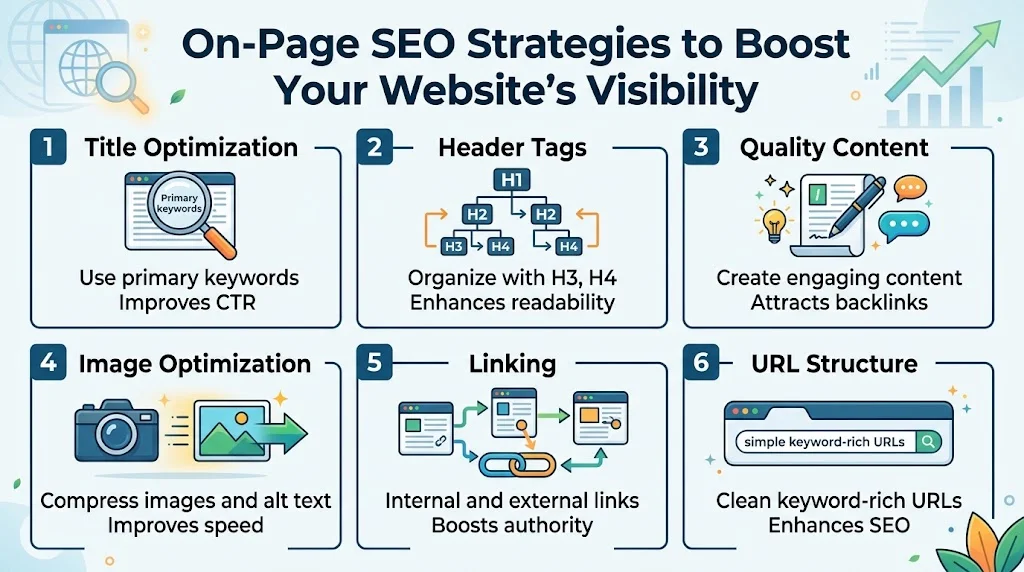
| SEO Technique | Description | Benefit |
|---|---|---|
| Title Optimization | Use primary keywords in page titles. | Improves click-through rates. |
| Header Tags | Organize content with H3, H4 tags. | Enhances readability and SEO. |
| Quality Content | Create helpful, engaging content. | Attracts more visitors and backlinks. |
| Image Optimization | Compress images and add alt text. | Improves loading times and accessibility. |
| Linking | Use internal and external links strategically. | Boosts site authority and navigation. |
| URL Structure | Create clean, keyword-rich URLs. | Enhances clarity and SEO. |
Monitoring your on-page SEO efforts is crucial. Utilize tools like Google Search Console and Google Analytics to track performance and make necessary adjustments. Regularly updating your content and strategies ensures continued visibility and success in the digital space.
By implementing these on-page SEO strategies, you will significantly improve your website’s visibility. Tailor your approach to meet your audience’s needs, and you’ll see meaningful growth in traffic and engagement. Start optimizing today!
Building Quality Backlinks: Why They Matter for New Websites
As a new website owner, you may wonder what factors can help improve your site’s visibility. One of the most significant strategies involves building quality backlinks. Backlinks are links from other websites pointing to your site. These links act as endorsements, signaling to search engines that your site is a credible source of information. Understanding why backlinks matter and how to build them can pave the way for your website’s success.
Why Quality Backlinks Are Important
Backlinks are a cornerstone of search engine optimization (SEO) and can dramatically impact your website’s performance in search results. Here are key reasons why quality backlinks are vital:
- Boosts Your Site’s Authority: Search engines, like Google, view backlinks from reputable sites as a vote of confidence. The more quality backlinks you acquire, the higher your site’s authority becomes.
- Improves Search Engine Rankings: High-quality backlinks can significantly improve your rankings on search engine results pages (SERPs). This visibility attracts more visitors to your site.
- Drives Referral Traffic: Relevant backlinks can lead visitors directly to your site. When users click on links from other domains, they might find your content useful and engage with it further.
- Helps with Indexing: Search engines discover new sites and pages through backlinks. If reputable websites link to your content, it increases the chances of your site being indexed swiftly.
- Builds Relationships in Your Niche: Engaging in backlink strategies often leads to connections with influencers and other key players in your industry.
How to Build Quality Backlinks
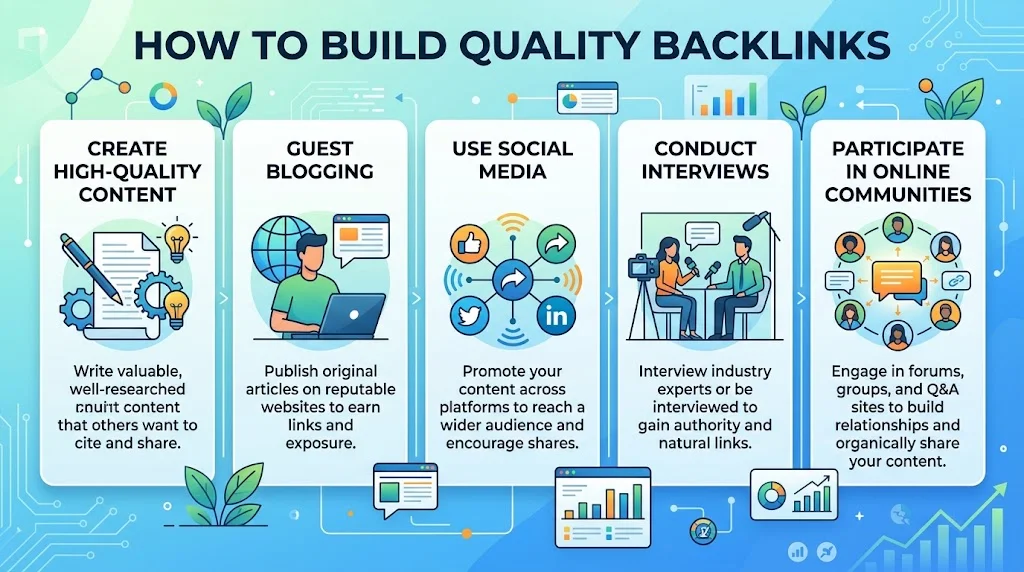
Building quality backlinks can be challenging, especially for new websites with little authority. Here are effective techniques you can apply:
- Create High-Quality Content: Focus on producing informative, engaging, and unique content. High-quality articles, blogs, and guides naturally attract backlinks as other sites want to share valuable resources.
- Guest Blogging: Identify blogs in your niche that accept guest posts. By contributing valuable articles to these sites, you can include a link back to your site in your author bio or the content itself.
- Use Social Media: Share your content on various social media platforms. Engaging with your audience can attract attention, encouraging users to link back to your site.
- Conduct Interviews: Reach out to industry experts for interviews. When published, these experts may link back to your site to promote their own interview, generating high-quality backlinks.
- Participate in Online Communities: Join forums and online communities relevant to your niche. Contributing useful insights can help build your reputation and drive backlinks to your site.
The Role of Anchor Text
When building backlinks, paying attention to anchor text is crucial. The anchor text is the visible, clickable text in a hyperlink. Here are some tips to enhance your anchor text strategy:
- Use descriptive keywords that relate to the linked content.
- Avoid over-optimization; keep a natural blend of various types of anchor text.
- Include branded anchor text for your domain along with generic and exact matches.
Measuring Backlink Success
It’s important to track and measure the success of your backlink strategy. Monitoring tools like Ahrefs, Moz, or SEMrush can help you analyze your backlinks and improve your strategy. Look at metrics such as domain authority, referred traffic, and the number of backlinks from reputable sources to gauge effectiveness.
Staying Updated on Best Practices
SEO is ever-evolving, and what may work today could change tomorrow. Keep yourself informed about the latest trends and best practices in backlink building. Subscribe to reputable SEO blogs, attend webinars, and participate in online forums to stay ahead of the curve.
Building quality backlinks is essential for new websites looking to enhance their online presence. By focusing on effective strategies and maintaining high-quality content, you can create a more authoritative website that ranks better in search engines and attracts valuable traffic.
Analyzing Website Performance: Tools and Metrics for SEO Improvement
Understanding how well your website is performing is crucial for enhancing its SEO potential. Analyzing website performance involves using various tools and metrics to gain insights into your site’s health, loading speed, and user experience. By focusing on these key elements, you can identify areas for improvement and implement effective strategies to boost your search engine rankings.
Essential Tools for Website Performance Analysis
There are several powerful tools available that can help you monitor and analyze the performance of your website:
- Google Analytics: A free tool that provides in-depth data on website traffic, user behavior, and conversion tracking. It’s essential for understanding your audience and their interactions.
- Google PageSpeed Insights: This tool analyzes the content of your web pages and offers suggestions to make them faster. It scores your page on speed and usability across devices.
- GTmetrix: A comprehensive performance analysis tool that provides detailed reports on your site’s speed and various performance metrics.
- SEMrush: A versatile tool that allows you to track SEO performance, analyze competitors, and gain insights into keyword rankings.
Key Metrics to Monitor
When analyzing your website performance, focus on these crucial metrics:
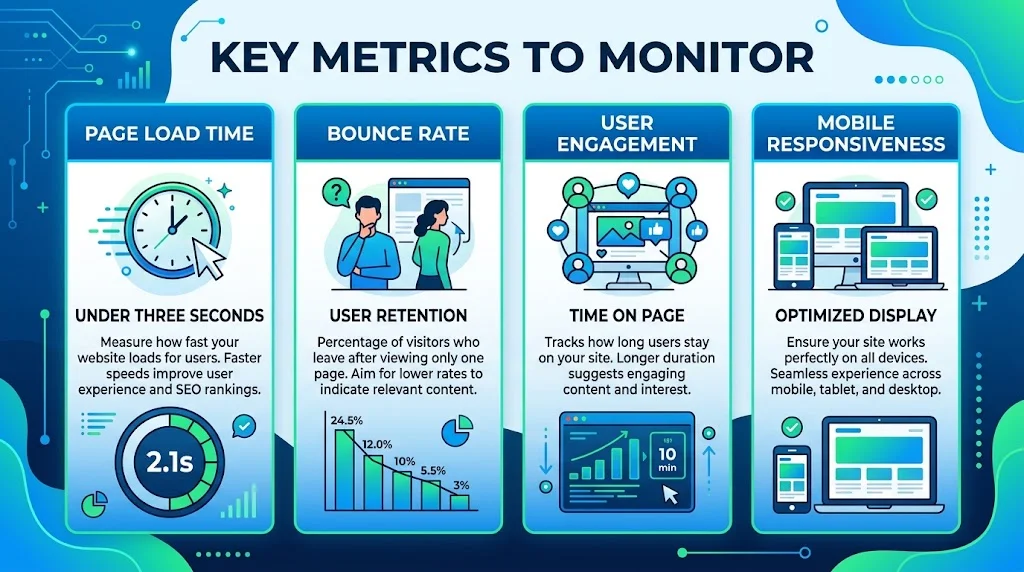
- Page Load Time: This is the time it takes for your page to fully load. Aim for a load time under three seconds to keep visitors engaged.
- Bounce Rate: This percentage indicates how many users leave your site without interacting. A high bounce rate may suggest that your content isn’t meeting visitor expectations.
- User Engagement: Metrics such as time on page and pages per session reflect how users are interacting with your site. Higher engagement typically leads to better rankings.
- Mobile Responsiveness: With more users accessing sites via mobile, ensuring your website is responsive can improve user experience and SEO.
Utilizing Data for SEO Improvement
Gathering data is just the first step. How you use this information is what matters. Here are some strategies:
- Optimize Images: Large images can slow down your site. Use image compression tools like TinyPNG to reduce their size without losing quality.
- Improve User Experience: Simplify navigation and improve the overall layout of your website to enhance user experience, encouraging visitors to stay longer.
- Implement Structured Data: Use schema markup to help search engines understand your content better, which can improve your visibility in search results.
- Regularly Update Content: Fresh content not only attracts users but also signals to search engines that your site is active. Consider starting a blog or updating existing articles.
Monitoring Performance Over Time
Analyzing your website’s performance is not a one-time task. Consistent monitoring is key to ongoing improvement. Set up a schedule to check your metrics regularly and stay on top of any necessary adjustments. Over time, tracking these metrics will allow you to see trends in your data, providing deeper insights into your SEO strategies.
| Metric | Ideal Value | Tools for Measurement |
|---|---|---|
| Page Load Time | Under 3 seconds | PageSpeed Insights |
| Bounce Rate | Under 40% | Google Analytics |
| User Engagement | 3+ pages/session | Google Analytics |
| Mobile Responsiveness | 100% mobile-friendly | Mobile-Friendly Test |
By utilizing the right tools and focusing on essential metrics, you can significantly enhance your website’s performance. With constant analysis and improvement, you will not only please your visitors but also improve your site’s SEO ranking over time.
Conclusion
Successfully launching a new website involves navigating the intricate landscape of SEO. By implementing effective SEO Techniques for New Websites, you set the groundwork for long-term visibility and growth. Understanding the importance of thorough keyword research is vital; it allows you to target the right audience and tailor content to their needs. Utilizing on-page SEO strategies effectively can significantly enhance your site’s appeal to both search engines and users alike. From optimizing meta tags to ensuring a user-friendly structure, these strategies play a crucial role in driving organic traffic.
Building quality backlinks remains an essential factor in establishing authority and trust in your niche. When reputable sites link to your content, search engines view that as a vote of confidence, elevating your site’s standing in SERPs. This trust can be the difference between obscurity and visibility in a crowded digital marketplace.
Analyzing your website’s performance using various tools is not just beneficial; it’s necessary for ongoing improvement. Monitoring key metrics helps you understand what works, what doesn’t, and where adjustments are needed. By regularly assessing your strategies, you empower yourself to stay ahead of the competition.
Implementing these SEO Techniques for New Websites consistently will not only boost your website’s visibility but also enhance user experience. As you embark on your journey in the online space, remember that patience and persistence are key. With these strategies in hand, you’re better equipped to create a strong online presence that attracts and retains visitors, turning your new website into a successful digital platform.