
SEO Reporting Tips for Agencies


ATTENTION: Want to Learn Affiliate Marketing from Successful Affiliates?
In today’s digital landscape, SEO Reporting Tips for Agencies are essential for agencies aiming to foster client engagement. Providing clear, concise, and actionable SEO reports not only helps clients understand the work done but also builds trust and strengthens the agency-client relationship. Here are some practical SEO reporting tips to enhance client engagement effectively.
Flawless Data Visualization
Using visual aids can simplify complex data and make insights more digestible. Graphs, charts, and infographics help visualize trends and performance metrics. Consider the following types of visual aids:
- Line Graphs: Ideal for showing traffic growth over time.
- Bar Charts: Effective for comparing keyword rankings across different periods.
- Pie Charts: Useful for illustrating traffic sources like organic vs. paid.
Tailor Reports to Your Audience
Each client may have different priorities. Customize your reporting to align with their specific goals. For instance, if a client is focused on lead generation, emphasize metrics like conversion rates and organic leads. Discussing keyword rankings or traffic numbers might be less relevant. Adaptive reporting builds stronger bonds by showing clients that you understand and care about their objectives.
Set Clear KPIs
Defining key performance indicators (KPIs) upfront is crucial. Outline objectives such as:
- Increased organic traffic
- Enhanced keyword rankings
- Improved conversion rates
- Higher engagement metrics
With clear KPIs, clients can easily track progress. During reporting sessions, compare current performance against these KPIs to demonstrate success or identify areas of improvement.
Provide Context and Insights
Data without context can be confusing. Always explain what the numbers mean. For instance, if organic traffic has increased, elucidate on why—such as successful content marketing campaigns or effective keyword targeting. This approach helps clients appreciate the value of your work.
Discuss Actionable Next Steps
Every report should end with actionable recommendations. Suggest practical steps clients can take based on the performance data. For example, if certain keywords are not performing well, recommend keyword optimization or content updates. Providing a clear roadmap helps clients understand what’s next and reinforces your role as a trusted advisor.
Schedule Regular Reporting
Consistency is key in SEO reporting. Regular updates keep clients informed and engaged. Whether it’s a monthly, bi-monthly, or quarterly report, ensure a routine schedule is established. This consistency also allows for timely discussions about any necessary adjustments in strategy.
Use Personalization for Enhancement
Elements of personalization can greatly enhance client engagement. Here are some ways to do this:
- Client-Specific Data: Highlight metrics that are relevant to the specific client, rather than using generic data.
- Customized Presentations: Adapt your approach in presentations to reflect the client’s own branding, goals, and preferences.
- Appropriate Terminology: Use language that resonates with the client, avoiding overly technical jargon that may confuse.
Incorporate Tools for Automation
Utilizing tools like SEMrush, Ahrefs, or Google Analytics can streamline the reporting process. Automated reports save time and ensure accuracy, making it easier to focus on strategy rather than data collection.
Create a Summary Section
A concise summary section at the beginning of your report can help clients quickly grasp the key takeaways. This should include:
- Overall performance highlights
- Key insights gleaned from the data
- Recommendations for the upcoming period
Encourage Two-Way Communication
SEO reporting should not be a monologue. Actively encourage feedback from clients on the reporting process. Ask them what they find helpful, what they’d like to see more of, or what they feel needs improvement. Implementing their suggestions can increase their investment in the process and foster a collaborative relationship.
The Importance of Clear Metrics in SEO Reporting
In the ever-evolving world of digital marketing, agencies must prioritize clear metrics in their SEO reporting. These metrics not only define the success of your SEO efforts but also help you communicate that success effectively to your clients. Here’s how focusing on clear metrics can significantly enhance your reporting strategy.
One of the primary benefits of clear metrics is the way they provide a tangible representation of progress. When you set out to optimize a client’s website, numerous factors come into play. You might track organic traffic, keyword rankings, and conversion rates, among others. However, without clarity, these metrics can easily become overwhelming. By simplifying and prioritizing metrics, you can present a focused narrative of progress that resonates well with clients.
Some key metrics to include in your SEO reporting may consist of:
- Organic Traffic: This is the total number of visitors coming from organic search results. High organic traffic indicates that your SEO strategy is effectively attracting users.
- Keyword Rankings: Tracking the position of your target keywords helps assess the effectiveness of your keyword strategy.
- Conversion Rate: This tells you how many visitors completed a desired action, such as signing up for a newsletter or making a purchase.
- Bounce Rate: Understanding the percentage of visitors who leave a site after viewing only one page can highlight content issues or site usability needs.
The clarity of these metrics offers a well-rounded picture of a campaign’s performance. However, metrics alone don’t tell the whole story. Context is key. Presenting metrics alongside actionable insights can significantly improve your reports. For instance, if organic traffic increases but conversion rates remain stagnant, it may indicate a need for more compelling content on landing pages.
Tailor reports
It’s essential to tailor reports according to each client’s unique goals. One client may be focused on local search visibility, while another is more concerned about national reach. Custom reports highlighting the metrics that matter most to each client not only demonstrate attention to their needs but also enhance trust in your agency. Employing tools like Moz and SEMrush can assist in gathering and reporting these key metrics effectively.
Importance of a narrative
Don’t overlook the importance of a narrative around the metrics. When presenting the data, tell a story. Explain the ‘why’ behind the numbers. If a campaign saw a spike in traffic after a certain blog post was published, highlight that achievement. Discuss how lessons learned will influence future strategies. This narrative turns your reports from plain data dumps into compelling insights that clients can understand and appreciate.
Leveraging clear metrics
Leveraging clear metrics in SEO reporting is essential for effective communication with clients and demonstrating the value of your services. By focusing on identifiable, relevant metrics, including visual aids, customizing reports, and narrating the story behind the data, you significantly enhance your agency’s reporting capabilities.
Leveraging Data Visualization for Better SEO Reports
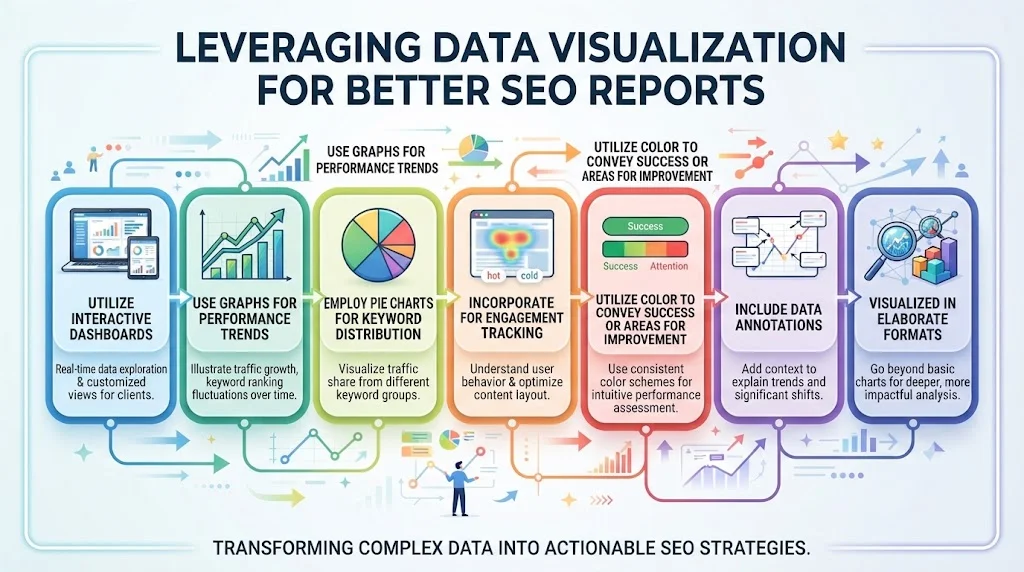
In the world of digital marketing, effective communication of data plays a crucial role in demonstrating the value of SEO efforts. Agencies often grapple with presenting complex information in a way that stakeholders can easily understand and act upon. One of the most effective methods for transforming intricate data into digestible insights is through data visualization. This technique not only enhances comprehension but also makes the data more engaging and memorable.
Data visualization allows agencies to translate numbers into visual formats like graphs, charts, and dashboards. These visuals can simplify the explanation of performance metrics and trends, making them more accessible to clients and team members alike. Here are some strategies to leverage data visualization for better SEO Reporting.
Utilize Interactive Dashboards
Interactive dashboards provide real-time data in a visually appealing manner. They allow users to explore data at their own pace, which can significantly enhance understanding. By integrating tools like Tableau or Google Data Studio, agencies can create customized dashboards that reflect key performance indicators (KPIs). Key considerations include:
- Highlighting metrics that matter most to your clients, such as organic traffic, conversion rates, and keyword rankings.
- Ensuring the data is updated regularly for accurate insights.
- Making the dashboard user-friendly for client access and interaction.
Use Graphs for Performance Trends
Graphs can be a powerful way to illustrate changes over time. Line graphs and bar charts are particularly useful for showing growth in organic traffic or keyword ranking fluctuations. When you include these visuals, clients can quickly grasp their growth patterns and make informed decisions accordingly. Here is an example of how a simple line graph can present organic traffic growth:
| Month | Organic Traffic |
|---|---|
| January | 2,500 |
| February | 3,000 |
| March | 4,500 |
| April | 6,000 |
Employ Pie Charts for Keyword Distribution
When discussing the performance of keywords, pie charts can provide a quick snapshot of how well certain keywords are performing relative to others. For instance, if a handful of keywords are driving the majority of traffic, a pie chart easily demonstrates this disparity, allowing stakeholders to focus their strategy effectively.
Incorporate Heatmaps for Engagement Tracking
For agencies focused on website performance, heatmaps can visualize user engagement levels across a site. By showing where visitors click most often, heatmaps help in understanding user behavior. This data can inform SEO strategies to optimize landing pages or improve content layout. Tools like Hotjar can assist in creating these useful visuals.
Utilize Color to Convey Success or Areas for Improvement
Color plays a significant role in data visualization. Colors can symbolize different levels of performance effectively. For example, green can indicate success, while red can highlight areas needing attention. Using a consistent color scheme allows for intuitive comprehension of results at a glance. This technique not only improves engagement but also drives the point home on where to focus efforts.
Include data annotations
Moreover, make it a practice to include data annotations or tooltips. Providing context within your visuals helps clarify attacks on trends and shifts. This practice can guide clients through the data, ensuring they understand the implications behind the numbers.
Visualized in elaborate formats
Remember that not every data point needs to be visualized in elaborate formats. Sometimes, simple visuals are more effective. Always consider your audience and tailor your reports to meet their needs. For valuable benchmarks and resources, check Moz, Ahrefs, and Neil Patel for further guidance and SEO reporting tools.
Leveraging data visualization can transform SEO reporting from a lengthy, complex narrative into a vibrant story illustrated with visuals. By focusing on delivering clear, engaging data, agencies can help clients make informed decisions that drive SEO success.
Common SEO Reporting Mistakes Agencies Make and How to Avoid Them
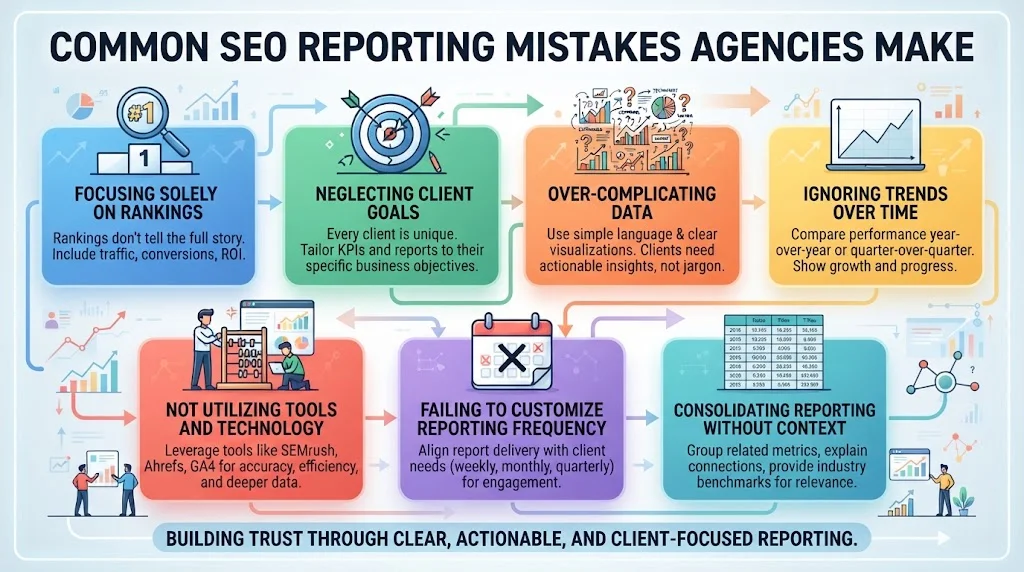
Effective SEO reporting is crucial for agencies looking to convey performance and value to clients. However, many agencies fall into common traps that weaken their reports. Here are several mistakes to watch out for and strategies to avoid them.
Focusing Solely on Rankings
Many agencies prioritize keyword rankings above all else. While rankings are important, they do not tell the full story of SEO performance. Instead, focus on delivering a comprehensive view by including metrics such as:
- Organic traffic trends
- Conversion rates
- Engagement metrics
- Return on investment (ROI)
This approach allows you to illustrate the tangible results of your SEO efforts, helping clients understand their website’s growth.
Neglecting Client Goals
Another frequent mistake is failing to align reports with the specific goals and objectives of the client. Each business has unique targets, and SEO reports should reflect those. To avoid this error, consider the following:
- Establish clear objectives with your client at the start of the project.
- Tailor your reporting framework to highlight how well you are meeting these goals.
- Regularly check in with clients to adjust reporting metrics as necessary.
By aligning your SEO efforts with client objectives, you ensure that your reports are both relevant and impactful.
Over-complicating Data
SEO data can be complex, but your reporting shouldn’t be. Many agencies fall into the trap of using technical jargon or complicated datasets, which can confuse clients. To improve clarity:
- Use simple language and visualize data with graphs or charts.
- Summarize key findings in bullet points.
- Highlight actionable insights that clients can easily understand and utilize.
This clarity helps clients grasp the value of your work and encourages ongoing collaboration.
Ignoring Trends Over Time
Reporting often focuses on snapshots rather than trends. While it’s essential to show current performance, understanding trends over time provides greater insight. To cultivate this habit:
- Incorporate year-over-year and quarter-over-quarter comparisons.
- Highlight any consistent upward or downward trends.
- Discuss changes alongside potential reasons for those trends.
By giving a historical context, you can help clients grasp the bigger picture of their SEO performance.
Not Utilizing Tools and Technology
There are numerous SEO tools available that can streamline the reporting process and enhance accuracy. Relying on spreadsheets alone risks errors and missed insights. To leverage technology effectively:
- Use tools like SEMrush or Ahrefs to gather and organize data efficiently.
- Automate reporting functions to reduce manual errors.
- Keep updated with the latest technologies to ensure your reporting methods remain cutting-edge.
Harnessing the right tools can save time and improve the quality of your reports.
Failing to Customize Reporting Frequency
Different clients have different needs regarding the frequency and format of their reports. For instance, a tech startup may require weekly insights, while a local business might prefer monthly updates. To accommodate varying preferences:
- Discuss reporting schedules upfront with your clients.
- Offer flexibility in how often you deliver reports based on the client’s project stage.
- Provide summaries for frequent reports and more in-depth analysis for less frequent ones.
This customization promotes client satisfaction and ensures that your efforts align seamlessly with their requirements.
Consolidating Reporting without Context
It can be tempting to present a consolidated view of all performance metrics without context. Doing so can lead to misunderstandings. To provide clarity:
- Group related metrics together while providing explanations for their interconnections.
- Include key performance indicators that are particularly relevant to your clients.
- Contextualize data with industry benchmarks when applicable, so clients can see where they stand.
By providing context, you enable clients to see the relevance of each metric effectively.
Avoiding these common reporting mistakes requires proactive communication, effective use of tools, and a clear focus on client needs. By implementing these strategies, agencies can create SEO reports that convey value, encourage client engagement, and drive better results.
How to Tailor SEO Reports for Different Client Needs
When working with clients, understanding their unique needs is crucial in crafting effective SEO reports. Each client may have different objectives, industries, and expectations. By tailoring your reports, you not only enhance client satisfaction but also demonstrate your agency’s value. This approach fosters trust and retention.
To effectively tailor SEO reports, it helps to follow several key strategies that resonate with your client’s specific goals. Start by determining what metrics matter most to them. Here are a few aspects to consider:
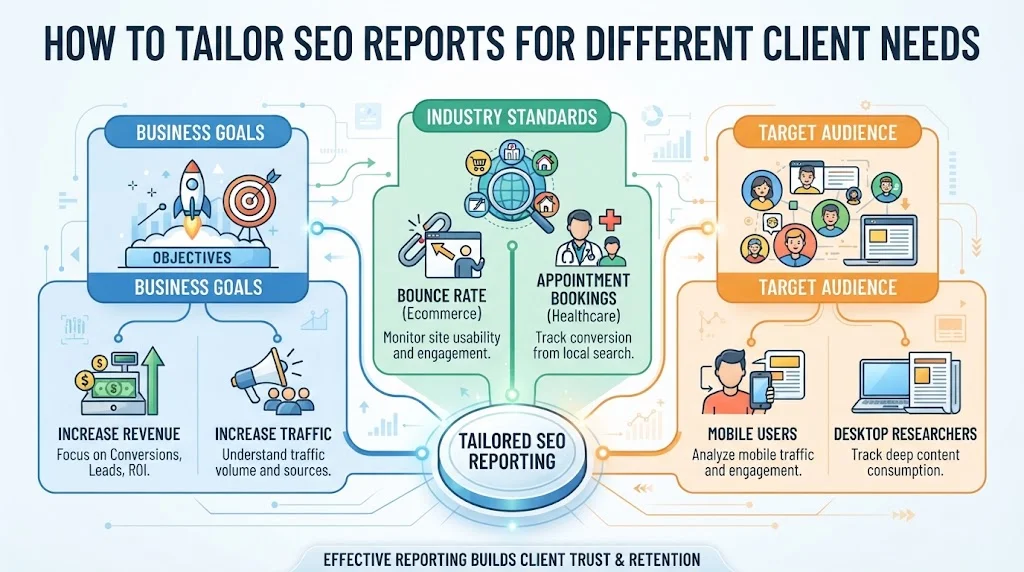
- Business Goals: Align SEO performance with business objectives. For example, if a client aims to increase revenue, focus on conversions, rather than just traffic.
- Industry Standards: Research metrics prevalent in your client’s industry. Certain industries may prioritize different metrics, like bounce rates for ecommerce.
- Target Audience: Understand who their audience is and how they engage with content online. This will aid in selecting metrics that matter.
Next, it’s essential to choose the right tools for data collection. Here are some effective tools you can leverage:
- Google Analytics: Track user behavior and analyze traffic sources.
- SEMrush: Ideal for competitive analysis and keyword tracking.
- Ahrefs: Great for backlink analysis and site audits.
- Moz: Useful for tracking rankings and domain authority.
When collecting data, ensure it is comprehensive but digestible. Avoid overwhelming clients with too much technical jargon. Aim for clarity by focusing on key performance indicators (KPIs) that reflect their goals. This way, your SEO reports will be perceived as valuable insights rather than just another detailed document.
To present data effectively, you can utilize visuals like charts and graphs. Visual data not only makes your points clearer but also engages clients. For example, showing a bar graph of organic traffic growth over time can illustrate success very clearly. You can create tables that compare different time frames or specific keywords to visualize progress.
| Month | Organic Traffic | Conversions | Conversion Rate |
|---|---|---|---|
| January | 1,200 | 150 | 12.5% |
| February | 1,400 | 175 | 12.5% |
| March | 1,600 | 200 | 12.5% |
Once you”ve compiled data, it’s crucial to match your reporting style to your client’s preferences. Some clients may prefer brief, bullet-point summaries, while others might appreciate detailed explanations and context. Understanding these preferences can help in establishing a meaningful dialogue around the reports.
Communication is key
Communication is key. After presenting your report, schedule a review meeting to discuss findings. This not only allows you to explain complex elements but also provides clients a platform to share their thoughts. Ask questions about what they value, and adjust future reports accordingly. This feedback loop will refine your approach and strengthen your client relationships.
Be proactive
Moreover, be proactive in suggesting actionable insights based on the report. Highlight opportunities for improvement or areas that may benefit from increased focus. A proactive approach reinforces your role as an advisor rather than just a service provider.
Adapt your reporting frequency
Adapt your reporting frequency to fit your client’s needs. Some clients might expect monthly reports, while others may only want quarterly updates. Tailoring the frequency will ensure you provide relevant information without overwhelming them.
By customizing SEO reports to meet the specific needs of your clients, you enhance the overall experience and efficacy of your services. This thoughtful approach not only deepens client trust but also drives continued success for both parties.
Conclusion
Effective SEO reporting is vital in building strong relationships with clients and driving their success. By implementing essential tips for enhancing client engagement, agencies can set themselves apart from competitors. Clear metrics are at the heart of successful SEO reports; they provide clients with straightforward insights into the value of their investment.
Utilizing data visualization techniques can further elevate the quality of your reports, allowing clients to grasp complex data easily and quickly. When clients can see trends and performance at a glance, they are more likely to understand the impact of your work and remain engaged.
It’s also crucial to beware of common SEO reporting mistakes. By recognizing and addressing these pitfalls, agencies can ensure reports are accurate, relevant, and resonate with their clients. Tailoring reports to meet different client needs is equally important; each client has unique goals and interests. Customizing your reports not only shows that you care about their individual objectives but also enhances their understanding of your strategies.
Ultimately, successful SEO reporting is about clear communication and delivering value. By focusing on what truly matters to each client and presenting data in an engaging way, you can boost client satisfaction and drive lasting results. Strive for reporting that empowers your clients, and you’ll foster trust, retain their business, and achieve mutual success over the long term.