
Content Marketing Strategy for E-commerce Brands


ATTENTION: Want to Learn Affiliate Marketing from Successful Affiliates?
To thrive in the competitive world of e-commerce, a strong Content Marketing Strategy for E-commerce Brands is essential. This strategy not only attracts potential customers but also nurtures them along their buying journey, turning interest into sales. Here’s how to craft an effective content marketing strategy tailored for e-commerce brands.
Understand Your Audience
Before creating any content, it’s crucial to know who your audience is. Gather insights through:
- Surveys and polls to gather direct feedback from customers.
- Analytics tools like Google Analytics to understand customer behavior on your site.
- Social media analytics to see what content resonates with your audience.
By understanding demographics, preferences, and pain points, you can create content that speaks directly to their needs, enhancing engagement.
Define Clear Goals
A successful content marketing strategy should have well-defined goals. Start by establishing what you want to achieve, such as:
- Increasing website traffic.
- Improving SEO rankings.
- Boosting conversion rates.
- Enhancing customer retention.
By having clear objectives, you can tailor your content and measure its effectiveness more accurately.
Create Compelling and Relevant Content
Your content should not only be engaging but also strategically planned. Consider the following types of content:
- Product Descriptions: Craft detailed and appealing descriptions. Utilize SEO keywords to help potential buyers find your products through search engines.
- Blogs: Write informative articles that provide value. For instance, if you sell kitchen appliances, create recipes or cooking tips.
- Videos: Create product reviews or demonstrations. Video content tends to have high engagement rates.
- Customer Testimonials: Highlight positive customer experiences through case studies or reviews.
Engaging content not only informs but also builds trust with your audience.
Utilize SEO Best Practices
Search engine optimization is critical in driving organic traffic to your e-commerce site. Incorporate these practices:
- Perform keyword research to uncover relevant terms that potential customers are searching for.
- Optimize on-page elements like titles, meta descriptions, and alt tags with your target keywords.
- Utilize header tags to structure your articles properly for better readability and SEO performance.
By following these practices, you can increase your visibility in search engine results, leading to more traffic.
Leverage Social Media Channels
Social media platforms provide an excellent opportunity to share your content and engage with your audience. Here are some strategies:
- Share your blog posts and videos on platforms like Facebook, Instagram, and Pinterest.
- Engage with users by responding to comments and messages promptly.
- Use eye-catching visuals to grab attention in crowded feeds.
- Consider running social media ads to promote your products and content.
Building a community around your brand fosters loyalty and boosts sales.
Measure Performance and Optimize
To ensure your content marketing strategy is effective, regularly analyze its performance. Use tools like Google Analytics and social media insights to track:
- Page views and unique visitors.
- Engagement rates, including likes, shares, and comments.
- Conversion rates from visitors to customers.
If something isn’t working, don’t hesitate to tweak your approach. Experiment with different formats and posting times to find what resonates best with your audience.
Collaborate with Influencers
Partnering with influencers can help expand your reach. Look for individuals who align with your brand values and have an audience that fits your target market. Through collaborations, you can create authentic content that showcases your products to a wider audience.
For additional resources on content marketing strategies, you may find helpful insights at Content Marketing Institute and HubSpot.
Succeeding in ecommerce requires more than just great products—it calls for a tailored Content Marketing Strategy for Ecommerce Brands that resonates with your audience, enhances engagement, and drives sales. By following these guidelines, you can create content that not only informs but also connects with potential customers, leading to long-term success.
Essential Elements of E-commerce Content that Drive Sales
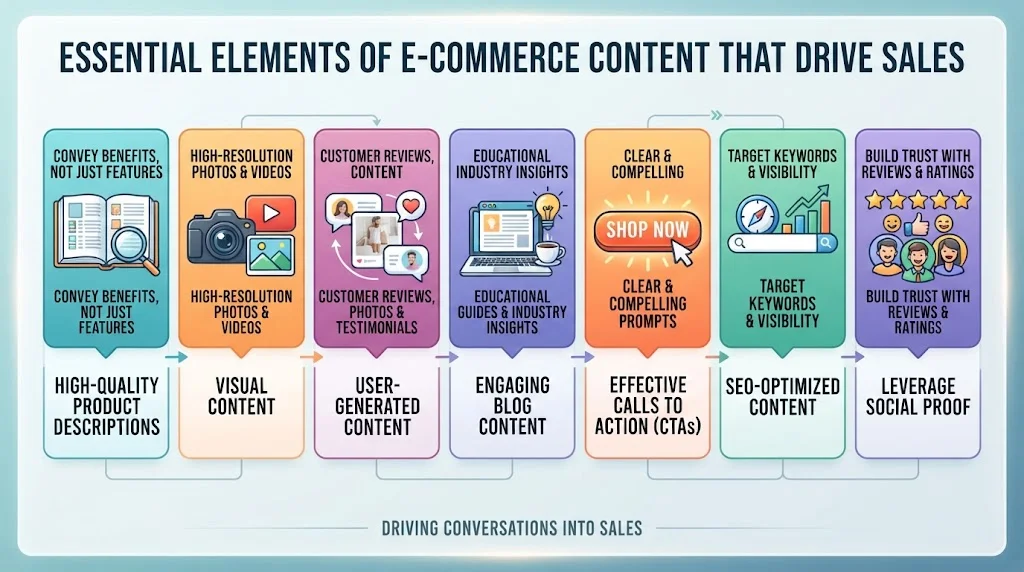
When it comes to driving sales for your e-commerce brand, content plays a vital role. It’s not just about having high-quality products; the right content can effectively engage your audience and nudge them toward purchasing. Understanding what makes ecommerce content compelling will help you build a strong strategy.
High-Quality Product Descriptions
Your product descriptions must be clear, engaging, and informative. They should not only highlight features but also convey the benefits of your products. Think about what your potential customers need to know before making a purchase. Here are some tips:
- Focus on Benefits: Explain how the product will improve the buyer’s life.
- Use Descriptive Language: Paint a picture in the reader’s mind.
- Keep it Short and Sweet: Present vital information concisely.
Visual Content
In e-commerce, visuals are just as crucial as text. High-quality images, videos, and infographics can capture attention and drive engagement. Make sure you follow these guidelines:
- Use High-Resolution Images: They help to build trust and show your products in detail.
- Incorporate Videos: Product demo videos can provide clarity and help in decision-making.
- Employ Infographics: Summarize complex information visually for quick understanding.
User-Generated Content
User-generated content (UGC) can be a game changer for e-commerce brands. Featuring real customers and their experiences can help foster trust. How can you incorporate UGC into your strategy?
- Encourage Reviews: Ask buyers to leave feedback and share their experiences.
- Showcase Customers: Use customer photos in your marketing materials.
- Social Media Shares: Create hashtags for customers to share their purchases online.
Engaging Blog Content
Blogging serves various purposes from educating your audience to driving traffic. Engaging content can also support your SEO efforts. Consider the following:
- Content That Solves Problems: Write posts that address common customer questions or concerns.
- Industry Insights: Share trends and insights related to your niche.
- How-To Guides: Create step-by-step guides related to your products, offering value to your readers.
Effective Calls to Action (CTAs)
Even the best content needs a strong call to action to drive conversions. A compelling CTA can make the difference between a visitor and a customer. Tips for creating effective CTAs include:
- Be Direct: Use clear language that tells customers what to do next.
- Create Urgency: Incorporate phrases like “limited time offer” to encourage quick decisions.
- Make It Stand Out: Use contrasting colors and eye-catching designs for buttons.
SEO-Optimized Content
Your e-commerce content must also be optimized for search engines. This will help you attract organic traffic and increase visibility. Consider implementing:
- Keywords: Use relevant keywords naturally throughout your content.
- Meta Tags: Ensure that your titles and descriptions are optimized for clicks.
- Internal and External Links: Link to other relevant content on your site and reputable sources, which helps with SEO.
Leverage Social Proof
Social proof can significantly influence purchasing decisions. Incorporate testimonials, endorsements, and case studies on your ecommerce site. Tips include:
- Feature Testimonials: Place customer reviews prominently on product pages.
- Case Studies: Share success stories that showcase how your products have solved problems.
- Display Ratings: Use star ratings to give a quick visual representation of product popularity.
Leveraging Social Media in E-commerce Content Marketing
Understanding the Role of Social Media in E-commerce
Social media has transformed the way e-commerce brands interact with their audience. It offers a unique platform for businesses to engage with customers, showcase products, and foster brand loyalty. By creating a smart Content Marketing Strategy for E-commerce Brands, brands can leverage social media to drive traffic and increase sales effectively.
Crafting Engaging Content for Social Media
To get the most from social media, you need to develop engaging content. Here are some effective types of content to consider:
- High-Quality Images: Visuals are crucial. High-quality photos of your products can captivate potential buyers.
- Videos: Create short, engaging videos that show your products in action. Consider using YouTube for video content that educates your audience about your brand.
- Live Streams: Use platforms like Instagram or Facebook to conduct live sessions. These can include product launches or Q&A sessions about your offerings.
- User-Generated Content: Encourage customers to share photos of themselves using your products. This adds authenticity and can attract new buyers.
- Polls and Surveys: Engage your audience by asking them questions about their preferences. This not only increases interaction but provides valuable insights for future marketing strategies.
Choosing the Right Platforms
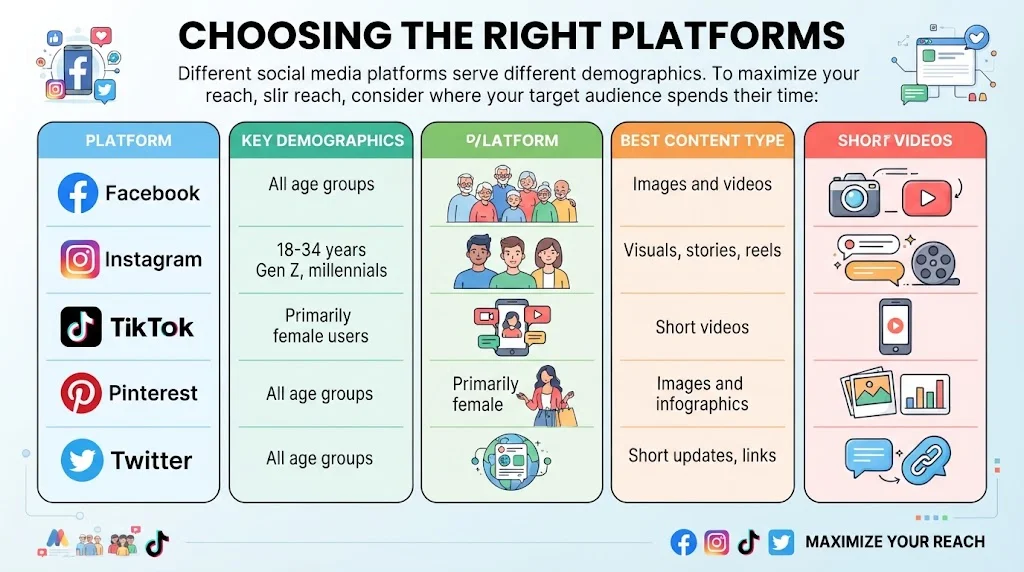
Different social media platforms serve different demographics. To maximize your reach, consider where your target audience spends their time:
| Platform | Key Demographics | Best Content Type |
|---|---|---|
| All age groups | Images and videos | |
| 18-34 years | Visuals, stories, reels | |
| TikTok | Gen Z, millennials | Short videos |
| Primarily female users | Images and infographics | |
| All age groups | Short updates, links |
Using Influencer Marketing
Partnering with influencers can amplify your content marketing efforts. Influencers have established credibility and a dedicated following. Here’s how to effectively collaborate with influencers:
- Identify Relevant Influencers: Look for those who align with your brand values and have a similar target audience.
- Negotiate Collaborations: Discuss how they can promote your products through their content, whether that’s through sponsored posts, giveaways, or product reviews.
- Monitor Performance: Use tools to track the engagement and conversion rates brought in by influencer content.
Measuring Your Impact
To refine your content marketing strategy, it’s essential to measure its effectiveness. Consider tracking the following metrics:
- Engagement Rate: Monitor likes, shares, and comments to gauge interest.
- Traffic Sources: Use analytics tools like Google Analytics to track traffic from your social media channels.
- Conversion Rate: Analyze how many leads convert to sales as a direct result of your social media presence.
Utilizing Social Media Ads
Paid advertisements on social platforms can significantly boost your reach. Consider investing in targeted ads on platforms like Facebook and Instagram to increase visibility and conversions:
- Custom Audiences: Create ads targeted at users similar to your existing customers.
- Retargeting Ads: Target users who have previously engaged with your content or visited your site to bring them back.
By leveraging social media effectively in your content marketing strategy, your ecommerce brand can significantly enhance visibility, engage with potential customers, and ultimately drive more sales. Always stay updated with trends and consumer behavior to keep your strategy relevant and effective.
The Role of SEO in Optimizing E-commerce Content
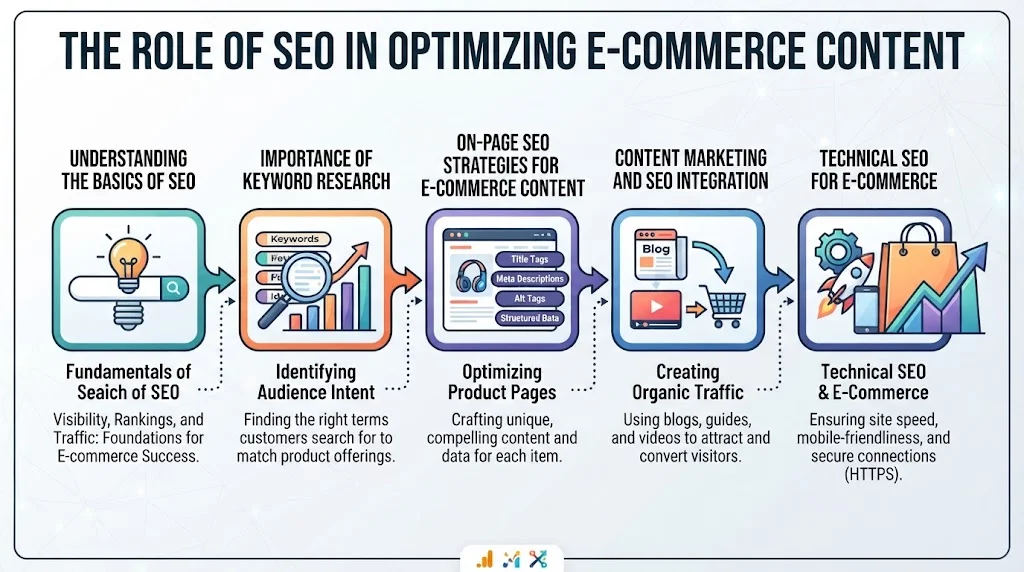
In the ever-changing world of e-commerce, having a robust content strategy is more than just a necessity; it’s crucial for success. Among the tools available, Search Engine Optimization (SEO) plays a pivotal role in refining e-commerce content. When implemented correctly, SEO enhances visibility, attracts quality traffic, and ultimately drives conversions. Let’s dive deeper into how SEO optimizes e-commerce content effectively.
Understanding the Basics of SEO
SEO involves various tactics and techniques that help your website rank higher in search engine results. For an ecommerce brand, this includes optimizing product descriptions, blog content, and even images. Using targeted keywords relevant to your products ensures that when customers seek what you offer, they can find it easily.
Importance of Keyword Research
To harness the power of SEO, start with thorough keyword research. This process involves identifying words and phrases your audience uses to find products similar to yours. Here’s how you can conduct effective keyword research:
- Utilize tools like Ahrefs and Moz to discover relevant keywords.
- Analyze competitor websites to find keywords they rank for.
- Consider long-tail keywords, as they are less competitive and often indicate purchase intent.
On-Page SEO Strategies for E-commerce Content
Once you have your keyword list, it’s time to implement on-page SEO strategies. This involves optimizing different elements of your ecommerce site’s pages to boost rankings.
Product Descriptions
Your product descriptions should be informative and engaging. Incorporate primary keywords naturally while providing detailed information about the product. Avoid duplication; instead, create unique descriptions that address what makes your product stand out.
Title Tags and Meta Descriptions
Title tags and meta descriptions serve as the first interaction with potential customers on search engine results pages. Make sure these include your primary keywords and a compelling reason for users to click on your link. An enticing meta description can significantly increase your click-through rate (CTR).
Image Optimization
High-quality images are essential in e-commerce, but they can impact loading speed. Optimize images by reducing their file size without compromising quality. Use descriptive file names and alt text that reflects the content of the image, incorporating relevant keywords.
Content Marketing and SEO Integration
The synergy between content marketing and SEO is invaluable for e-commerce brands. By creating valuable content, you not only engage customers but also improve your SEO standing. Blogs, guides, and how-tos related to your products can attract organic traffic.
Consider these elements when crafting your content:
- Prioritize quality over quantity—well-researched articles resonate more.
- Incorporate internal and external links for additional context and authority. For authoritative linking, consider reputable sites like Search Engine Journal and Content Marketing Institute.
- Maintain a consistent publishing schedule to keep your audience engaged.
Technical SEO for E-commerce
Technical SEO often flies under the radar, yet it’s incredibly significant for e-commerce sites. This includes ensuring your site is mobile-friendly, has a fast loading speed, and features a secure connection (HTTPS). Here’s a checklist to enhance your technical SEO:
| Technical Aspect | Best Practices |
|---|---|
| Site Speed | Minimize redirects, leverage browser caching, and optimize images. |
| Mobile Optimization | Utilize responsive web design for optimal viewing on all devices. |
| Secure Connection | Use HTTPS to protect user data and improve trust. |
Measuring Success
Tracking the success of your SEO efforts is essential. Tools like Google Analytics and Google Search Console provide insights into traffic, bounce rates, and conversion metrics. Regularly analyzing this data helps you refine your strategies continuously.
Optimizing e-commerce content through SEO not only enhances visibility but also fosters a stronger connection with potential customers. By employing robust SEO strategies, from keyword research to technical enhancements, e-commerce brands can create a competitive edge in a crowded marketplace.
Measuring the Success of Your E-commerce Content Marketing Efforts
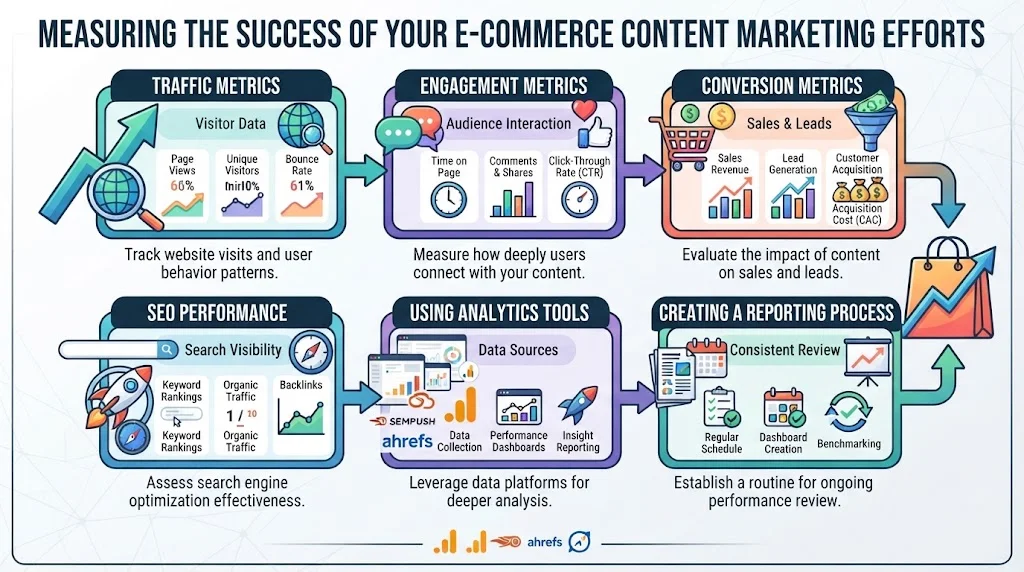
To truly understand how effective your e-commerce content marketing initiatives are, it’s essential to gauge the right metrics. Measuring success can help you understand what strategies are working and which ones need adjustments. By focusing on appropriate data, you can make informed decisions that will propel your brand forward.
Traffic Metrics
Monitoring website traffic is a fundamental step in measuring the success of your content marketing efforts. Key traffic-related metrics include:
- Page Views: This metric indicates how many times your content has been viewed. An increase in page views suggests that your content is attracting interest.
- Unique Visitors: This shows the number of individual users visiting your site over a specific period. Tracking unique visitors helps you understand your audience’s reach.
- Bounce Rate: The bounce rate indicates the percentage of visitors who leave after viewing just one page. A high bounce rate may signal that your content isn’t engaging enough.
Engagement Metrics
Engagement is a crucial indicator of how well your content resonates with your audience. To measure engagement, consider the following:
- Time on Page: Longer time spent on your pages generally indicates that users are finding your content valuable. Aim to create content that keeps readers on the page.
- Comments and Shares: Interactions such as comments on blog posts or shares on social media demonstrate that your audience is invested in your content.
- Click-Through Rate (CTR): This shows the percentage of users who click on your calls-to-action. A higher CTR often indicates strong content that drives users to take action.
Conversion Metrics
Your ultimate goal is to convert visitors into paying customers. Therefore, keeping track of conversion metrics is essential. Here are some key metrics to monitor:
- Sales Revenue: Analyze the revenue generated from your content marketing efforts. This will give you a clear picture of how effective your strategies are in driving sales.
- Lead Generation: For e-commerce brands that also collect leads (email subscribers, etc.), assess how many leads have come through your content.
- Customer Acquisition Cost (CAC): Measure how much you spend to acquire a new customer through your content marketing. Lowering your CAC can be a sign of effective strategies.
SEO Performance
Another vital aspect of measuring success lies in your SEO performance. Evaluate the following metrics:
- Keyword Rankings: Track how well your targeted keywords are performing in search engine results. Improved rankings can lead to increased organic traffic.
- Organic Traffic: Monitor the amount of traffic coming to your site through organic search results. A boost in organic traffic typically indicates that your content is optimized well.
- Backlinks: Assess the quality and quantity of backlinks your content receives. Backlinks are a strong sign of credibility and can lead to increased traffic.
Using Analytics Tools
Utilizing the right tools will make tracking your metrics easier and more efficient. Here are some recommended tools for evaluating your e-commerce content marketing efforts:
Creating a Reporting Process
Set up a routine for reporting your metrics. This can help you identify trends over time. Consider the following tips for creating a reporting process:
- Regular Schedule: Decide whether you want to review performance weekly, monthly, or quarterly.
- Dashboard Creation: Use dashboards to visualize data for quicker analysis.
- Benchmarking: Compare your current metrics with past performance to gauge growth.
By carefully measuring these aspects of your content marketing efforts, you can continuously refine your approach. This empowers your e-commerce brand to better engage with customers and drive sales effectively.
Conclusion
Successfully implementing a Content Marketing Strategy for E-commerce Brands requires a thoughtful approach that weaves together various elements. By crafting engaging and informative content, you can showcase your products while addressing the needs and interests of your target audience. Including essential elements like high-quality visuals, compelling product descriptions, and informative blog posts can drive sales and nurture customer relationships.
Leveraging social media platforms amplifies your reach and allows you to connect with potential customers in a more personal way. It’s important to create shareable content that resonates with your audience, encouraging them to spread the word about your brand. Social media also offers an excellent venue for user-generated content, which can build trust and further enhance your brand’s credibility.
Optimizing your e-commerce content with effective SEO strategies will help ensure that potential customers find you when searching for relevant products. Using targeted keywords, optimizing meta descriptions, and crafting engaging title tags are all essential steps in this process. Remember, higher visibility leads to increased traffic and, ultimately, sales conversions.
To gauge the effectiveness of your e-commerce content marketing efforts, employ metrics such as engagement rates, click-through rates, and conversion rates. Regularly analyzing these metrics gives you insights into what works and what doesn’t, allowing you to refine your strategy over time.
By merging these strategies, you create a robust Content Marketing Strategy for E-commerce Brands that not only attracts visitors but also converts them into loyal customers. It’s all about consistently delivering value while adapting to changes in consumer behavior and market trends. Keep refining your approach, and watch your e-commerce brand thrive.