
How To Create Shareable Content


ATTENTION: Want to Learn Affiliate Marketing from Successful Affiliates?
Creating content that people want to share is key to growing your audience and increasing engagement. Shareable content can create a ripple effect, bringing in more readers and expanding your reach. Here are some strategies to help you develop content that resonates with your audience.
Know Your Audience
Before you create any content, it’s essential to understand who your audience is. Conduct surveys, engage in social media interactions, and study analytics to gather insights about their interests and preferences. This information allows you to tailor your content to meet their needs.
Create High-Quality Visuals
People are naturally drawn to visuals. Use images, infographics, and videos to make your content more attractive. Well-designed visuals can capture attention and make your message more memorable. Tools like Canva can help you create stunning graphics even if you’re not a designer.
Utilize Storytelling
Humans have always connected with stories. Craft narratives around your content that maintain readers’ interest and evoke emotions. Personal anecdotes or case studies can illustrate points effectively and make your writing relatable. When you tell a story, you invite your readers in, encouraging them to share their experiences.
Engage with Interactive Content
Interactive content, such as quizzes, polls, and surveys, can significantly boost engagement. Not only does this type of content allow readers to interact directly with your material, but it encourages them to share their results with others. Consider using tools like Typeform for creating interactive experiences.
Focus on Value and Utility
Your content should offer real value to your audience. Whether it’s how-to guides, tips, or industry insights, ensure that your readers leave with useful information. Here are some ideas to provide value:
Step-by-step tutorials on trending topics.
Checklists for quick reference.
Free resources or tools that assist in completing tasks.
Craft Compelling Headlines
Headlines are your first chance to grab attention, so make them count. Use clear and compelling language that sparks curiosity. Consider using numbers, questions, or emotive language to make your headline irresistible. Tools like Answer The Public can help you find effective headline ideas based on your keywords.
Emphasize Shareability
Make it easy for your audience to share your content. Include social sharing buttons on your posts, making it effortless for readers to share your work across their favorite platforms. Optimize your content for different social media channels, ensuring it appears appealing and fits each platform’s style.
Leverage User-Generated Content
User-generated content (UGC) can be an excellent way to build community and encourage sharing. Promote collaboration by encouraging your audience to submit their content, such as reviews, photos, or stories related to your brand. Highlighting UGC can create a sense of belonging and make your audience more likely to share your content with their networks.
Stay On-Topic With Trends
Keep an eye on current trends in your industry. Create timely content that addresses hot topics or ongoing discussions. Use tools like Google Trends to monitor what’s popular and develop content that takes advantage of these trends. Engage with your audience by providing your perspective on relevant news, making your content shareable.
Encourage Engagement
At the end of your content, encourage readers to share their thoughts or experiences. Pose questions that provoke discussion and invite comments. The more engaged your readers feel, the more likely they are to share your content with their friends and followers.
The Role of Visuals in Enhancing Content Shareability
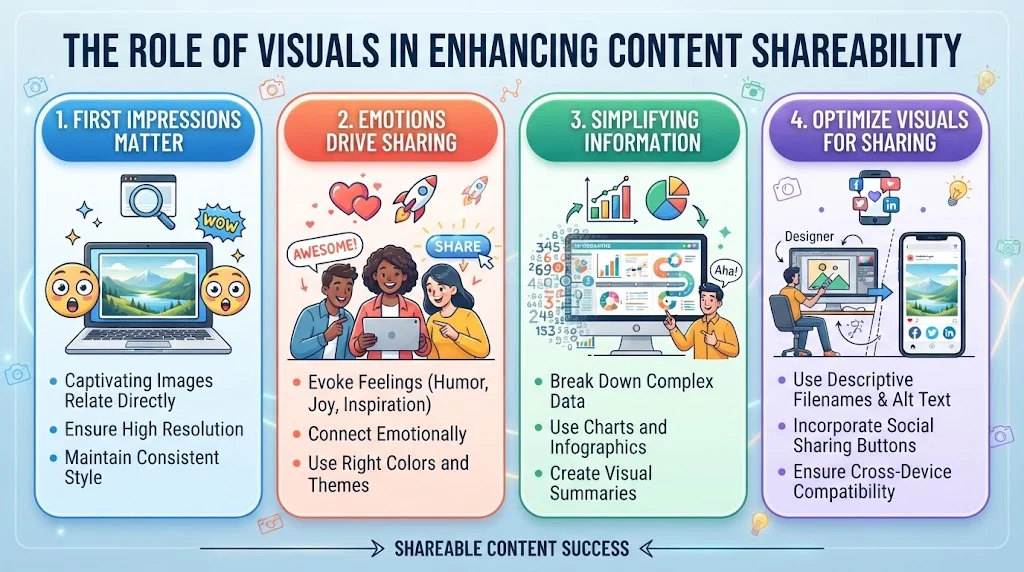
Visuals are an essential part of online content that can significantly enhance its shareability. When you create content, think of how images, videos, infographics, and other visual elements can impact the way your audience engages with it. Shareable content often thrives on visual appeal, capturing attention and driving engagement. Here are some vital insights into the role of visuals in content shareability.
The Power of Visuals
Research indicates that articles with visuals are much more likely to be shared. A study from Buffer shows that posts with images receive 94% more views than those without. This highlights just how crucial visuals are for engaging your audience.
1. First Impressions Matter
When users land on your page, the first thing they notice is often the visuals. High-quality images or videos can make a positive first impression. If your visuals are appealing, users are more likely to explore further. Here’s what to consider:
Use captivating images that relate directly to the content.
Ensure graphics are high resolution to avoid a blurry appearance.
Maintain a consistent style to build brand recognition.
2. Emotions Drive Sharing
Visuals can evoke emotions. Whether it’s humor, nostalgia, or inspiration, if a visual connects emotionally with your audience, they’re more likely to share it. Try to work with visuals that resonate with your target demographic. Use the right colors and themes to convey the desired emotions.
3. Simplifying Information
Complicated data can confuse readers. Visuals help simplify these concepts. Charts and infographics break down complex information into digestible pieces. This approach makes it easier for your audience to understand the content, promoting shares. Here’s how to present data visually:
- Use infographics to organize statistics in a clear and attractive way.
- Create video summaries for lengthy articles to present the key points visually.
- Design visually engaging tables that present data concisely.
Types of Visuals to Consider
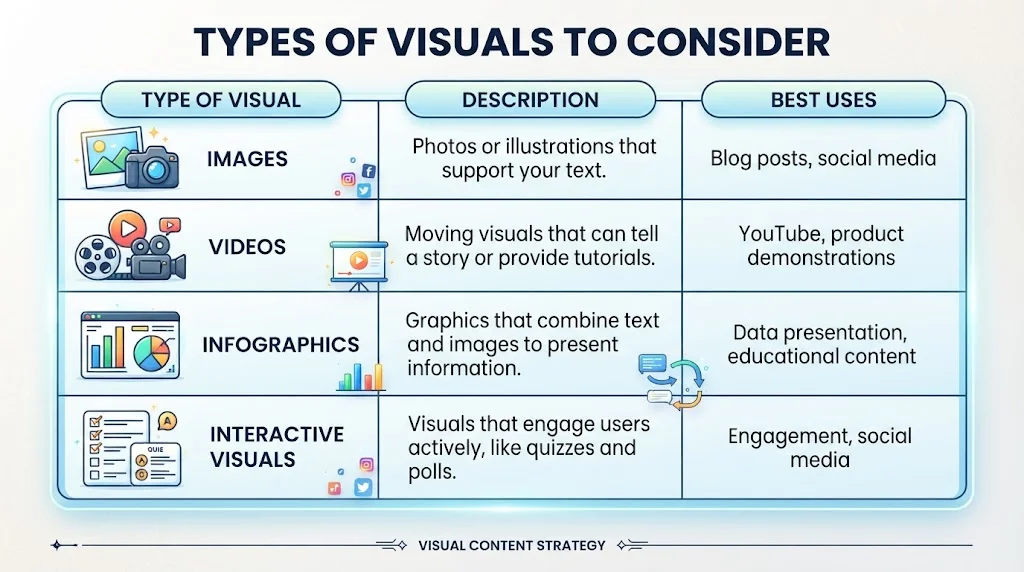
It’s crucial to choose the right type of visuals to match your content goals. Here are some popular types:
| Type of Visual | Description | Best Uses |
|---|---|---|
| Images | Photos or illustrations that support your text. | Blog posts, social media |
| Videos | Moving visuals that can tell a story or provide tutorials. | YouTube, product demonstrations |
| Infographics | Graphics that combine text and images to present information. | Data presentation, educational content |
| Interactive Visuals | Visuals that engage users actively, like quizzes and polls. | Engagement, social media |
4. Optimize Visuals for Sharing
Once you’ve created visuals, it’s crucial to optimize them for sharing. Here are a few strategies:
- Use descriptive filenames and alt text for images to improve SEO.
- Incorporate social sharing buttons next to visuals for easy access.
- Ensure the visuals look good on all devices, from phones to tablets.
- The Role of Branding
Branding plays an essential role in the visuals you choose. Consistent branding across visuals can help establish trust and recognition. Ensure that:
- Your logo is subtly incorporated into graphics.
- The color scheme matches your branding elements.
- Fonts and styles are consistent across different types of content.
Visuals are not just embellishments; they are critical components of content strategy. Remember, every visual you use should serve a purpose in engaging your audience and encouraging them to share your content. The more shareable your content, the wider its reach and impact will be.
How Emotional Triggers Influence Content Sharing Behavior
In the digital landscape, sharing content has become a vital way to engage audiences and expand reach. One key factor that drives people to share content is emotion. When you understand how emotional triggers influence sharing behavior, you can craft messages that resonate deeply with your audience. Here, we’ll explore the connection between emotions and content sharing and how you can leverage this understanding to create shareable content.
Understanding Emotional Triggers
Emotional triggers are psychological stimuli that provoke an emotional response. These responses vary vastly from joy, fear, anger, to sadness. When people come across content that evokes strong emotions, they are more likely to share it with others. Here are some common emotional triggers that encourage sharing:
- Joy: Content that brings happiness or amusement often gets shared. Laughter is contagious, and funny videos or uplifting stories garner significant engagement.
- Surprise: Unexpected twists or jaw-dropping revelations compel people to react quickly. Surprising facts or unique perspectives tap into curiosity.
- Fear: Content that raises awareness about potential danger can lead to sharing. Informative articles that highlight risk factors or threats often spread quickly.
- Sadness: Heartbreaking stories or tragic events can evoke sympathy. When readers feel compassion, they often share content as a form of voice to help others.
- Trust: Content that builds credibility and resonates with personal values can create deeper connections, leading users to share with their networks.
How To Create Shareable Content
Creating content that connects with emotions requires a thoughtful approach. Here are some strategies to consider:
1. Tell Compelling Stories: Storytelling is a powerful tool in any content format. Whether through video, blog posts, or infographics, weaving a narrative with relatable characters can evoke emotions. Personal stories or testimonials can have a profound impact.
2. Use Visuals Effectively: Images and videos can evoke emotions instantly. Consider adding high-quality pictures, illustrations, or video clips that enhance the message you want to share. Content with visuals tends to be shared more often, as they capture attention quickly.
3 Create a Sense of Urgency: Incorporate elements that encourage immediate action. This could be through limited-time offers or pressing social issues. Urgency can lead to higher shares as people want to spread the information quickly.
4. Encourage User Interaction: Prompting your audience to engage, whether it’s through comments, shares, or reactions, can increase the chances of content being shared. Craft questions or polls within your content that urge users to dive into discussions or share their own stories.
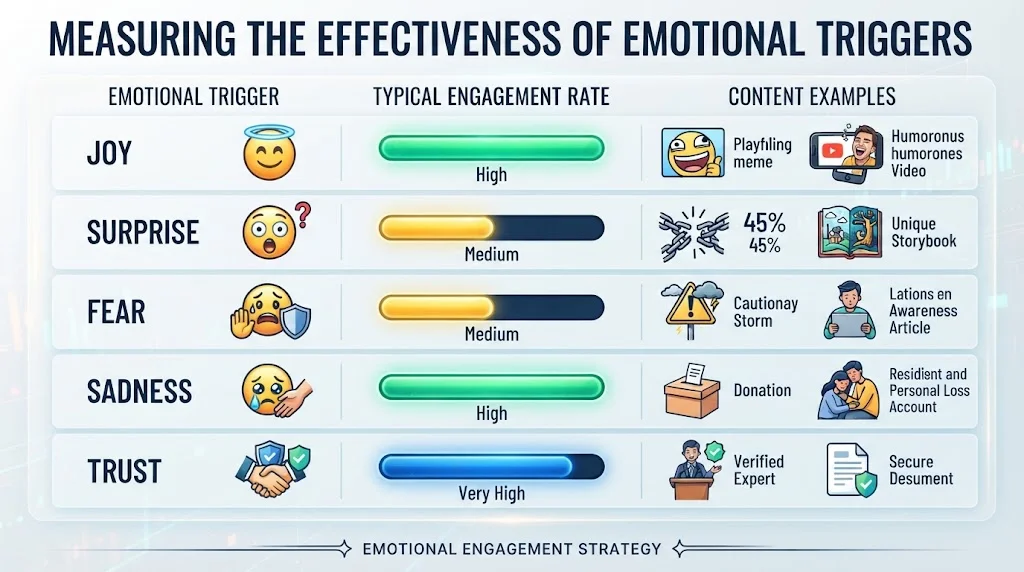
Measuring the Effectiveness of Emotional Triggers
| Emotional Trigger | Typical Engagement Rate | Content Examples |
|---|---|---|
| Joy | High | Humorous videos, playful memes |
| Surprise | Medium | Shocking statistics, unique stories |
| Fear | Medium | Awareness campaigns |
| Sadness | High | Charity stories, personal loss accounts |
| Trust | Very High | Expert opinions, verified information |
To delve deeper into the psychological aspects of sharing, you might explore resources like HubSpot or Content Marketing Institute that provide various insights about effective content creation.
By focusing on emotional triggers, you create content that not only informs but also resonates with your audience. Remember, emotional content encourages sharing, turning passive readers into active participants in the conversation.
Leveraging Social Media Trends to Boost Content Engagement
In today’s digital age, leveraging social media trends can significantly enhance your content engagement. By understanding current trends and how they resonate with your audience, you can create more shareable content that captivates and retains viewers. Here’s how you can do this effectively.
Understand Trending Topics
To create engaging content, you need to stay updated on trending topics within your audience’s interests. Use social media platforms like Twitter, Instagram, and TikTok to monitor what’s popular right now. Utilize tools such as Google Trends to identify what people are talking about, including relevant hashtags and viral challenges.
Engage with User-Generated Content
User-generated content (UGC) is one of the most effective ways to increase engagement. Encourage your audience to share their content related to your brand. This not only builds community but also provides authentic content that resonates with your followers. Remember to share UGC on your social media channels, giving credit to the original creator.
Utilize Current Social Media Features
Each social media platform frequently updates its features to enhance user engagement. Make sure you are utilizing the latest options available, such as:
- Polls and Surveys: Engage your audience by asking for their opinions.
- Reels and Stories: Short videos and ephemeral content can capture attention quickly.
- Live Videos: Hosting live sessions encourages real-time interaction.
Capitalize on Visual Content
Humans are visual creatures, and data shows that posts with images or videos attract more engagement than text-only posts. Consider these strategies to enhance visuals in your content:
| Type of Visual Content | Engagement Rate Increase |
|---|---|
| Images | 94% |
| Videos | 120% |
| Live Streams | 200% |
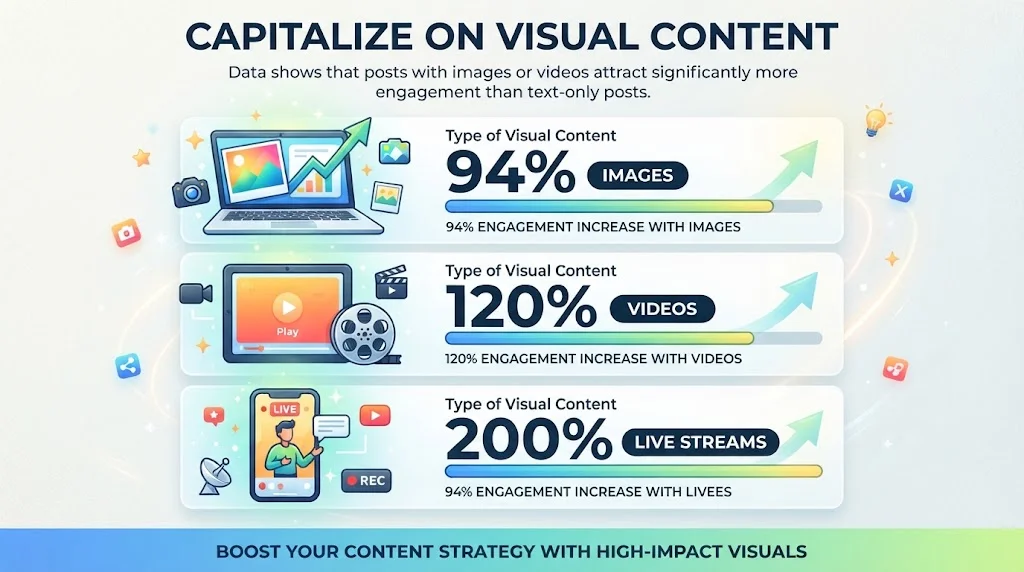
By incorporating high-quality images and engaging video content, you can significantly increase your engagement metrics.
Encourage Sharing through Call-to-Actions
Every piece of content you produce should include a clear call to action (CTA). Whether it’s asking followers to share, comment, or click a link, a strong CTA prompts your audience to take direct action. Make your CTAs clear, concise, and easy to follow.
Experiment with New Formats
Don’t hesitate to try out new formats to see what resonates best with your audience. This could include:
- Infographics: Great for sharing statistics or complex information.
- Podcasts: Engaging audio content can enhance your reach beyond just visual platforms.
- Webinars: Interactive sessions allow in-depth discussions on relevant topics.
Cater Content Timing to Trends
Timing plays a crucial role in content engagement. Post content when your audience is most active. Social media analytics tools can provide insights into when your followers are online. Aligning your content schedule with peak engagement times ensures that your posts get the attention they deserve.
Analyze and Adapt
Always analyze the performance of your content. Use tools like Google Analytics to track which posts drove the most engagement. Adapt your content strategy based on this data to refine your approach continuously.
By integrating these strategies, you can maximize your content engagement through social media trends. Whether you’re an established brand or just starting, keeping pace with digital trends can significantly enhance your visibility and growth. Stay informed and keep experimenting to discover what uniquely resonates with your audience!
Measuring the Impact of Shareable Content on Your Brand’s Reach
Creating shareable content can significantly amplify your brand’s reach. However, measuring the impact of this content is vital. By understanding how your audience reacts, you can refine your strategy and produce even more engaging material. Here’s how you can measure the impact of your shareable content.
Identify Key Metrics
To measure the effectiveness of your shareable content, start by identifying key metrics that align with your brand goals. Some important metrics to consider include:
- Engagement Rate: This includes likes, comments, shares, and overall interaction with your content.
- Traffic Sources: Where are your visitors coming from? Analyze if they found your content through social shares, organic search, or referrals.
- Conversion Rate: Track how many visitors completed desired actions, such as signing up for a newsletter or making a purchase.
- Brand Mentions: Monitoring how often your brand is mentioned in social media or blogs helps gauge your visibility.
- Audience Growth: Measure how much your audience grows on different platforms after sharing your content.
Utilize Analytics Tools
Using analytics tools will provide you with valuable data to measure your content’s performance. Here are a few tools you can explore:
- Google Analytics: Great for understanding traffic sources and user behavior.
- Buffer: This tool helps track engagement across different social media platforms.
- Sprout Social: Offers comprehensive reporting on social media performance.
- Hootsuite: Allows you to manage and analyze your social media presence in one dashboard.
Track Social Shares
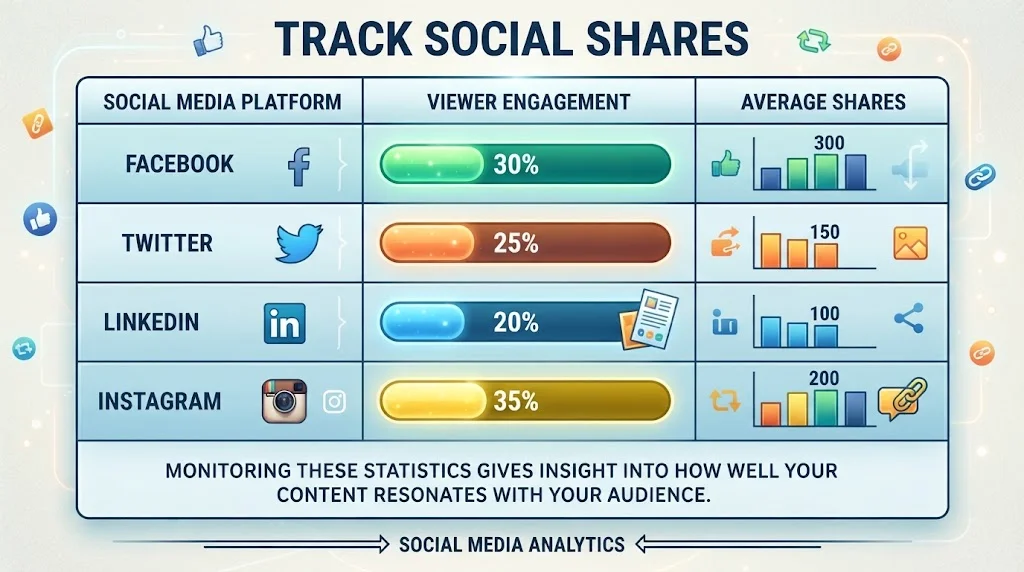
One clear indicator of shareable content’s success is the number of times it’s shared. Monitoring these statistics gives insight into how well your content resonates with your audience. You can use social media analytics or specific plugins to analyze shares on platforms like Facebook, Twitter, and LinkedIn.
| Social Media Platform | Viewer Engagement | Average Shares |
|---|---|---|
| 30% | 300 | |
| 25% | 150 | |
| 20% | 100 | |
| 35% | 200 |
Feedback and Surveys
Engaging directly with your audience can provide deeper insights into your content’s impact. Consider running surveys or soliciting feedback. Ask your audience what they liked, what resonated, and what could be improved. This information can help shape your future content strategy.
Analyze Audience Behavior
Monitoring how your audience interacts with your content can reveal valuable insights. Are users clicking through to your website? Are they staying to read for longer periods? Using heat maps and session recordings can provide further clarity on user behavior.
Experiment with A/B Testing
Another way to measure the impact is through A/B testing. Create two versions of your content and compare their performance. This can help you identify which headlines, images, or calls to action are most effective in generating shares and engagement.
Adjust Your Strategy
After gathering data and insights, the next step is to adjust your content strategy. Creating content is not a one-time task. It’s an evolving process. Focus on what attracts more shares and engagement, and align future content with those preferences.
Remember, the goal is to create content that not only resonates with your audience but also encourages them to share it with their network. Leverage the insights you gain to enhance your overall brand strategy and reach.
By strategically measuring the impact of your shareable content, you can develop a powerful marketing approach that will boost your brand’s visibility and engagement.
Conclusion
Creating shareable content is essential for boosting your brand’s reach and engagement. By understanding the strategies that resonate with your audience, you can craft messages that encourage sharing and interaction. Visual elements play a crucial role, as they not only attract attention but also enhance the overall experience of your content. eye-catching images, infographics, and videos can make your material much more appealing.
Emotional triggers also hold significant power in driving sharing behavior. When your content evokes feelings—be it joy, surprise, or even nostalgia—you create a connection that motivates readers to share it within their networks. By tapping into these emotions, you can make your content more memorable and impactful.
Moreover, staying updated with social media trends is vital. Whether it’s a trending topic, format, or hashtag, leveraging these elements can amplify your message and help it resonate with the right audience. Engaging with current trends can increase the likelihood that your content will be seen and shared.
Measuring the impact of your shareable content is critical for understanding its effectiveness. Analyzing metrics such as shares, likes, and comments will provide valuable insights into what works and what doesn’t. This feedback loop allows you to refine your approach and continuously improve.
By combining engaging strategies, strong visuals, emotional resonance, social media savvy, and ongoing measurement, you can create content that not only gets shared but builds a lasting connection with your audience. This holistic approach ensures your brand thrives in an ever-evolving digital landscape.