Best Ways to Improve Click Through Rates

ATTENTION: Want to Learn Affiliate Marketing from Successful Affiliates?
Improving your click-through rates (CTR) is essential for the success of any digital marketing campaign. Higher CTR means more users engaging with your content, resulting in increased traffic and potentially higher conversions. Whether you are running paid search ads, crafting email newsletters, or optimizing organic search results, mastering CTR is crucial. In this comprehensive guide, we will explore effective strategies to enhance your CTR, backed by practical methods, tables, and deep analytical insights.
Every single digital marketer understands that getting traffic is only half the battle. Once your link, ad, or piece of content appears in front of a user, the primary obstacle is convincing them to take action. This friction point is precisely where click-through rate optimization becomes your most valuable asset. Throughout this extensive article, we will examine the psychological triggers, technical implementations, design principles, and data-driven testing methods required to maximize your click metrics across every available channel.
Craft Compelling Headlines
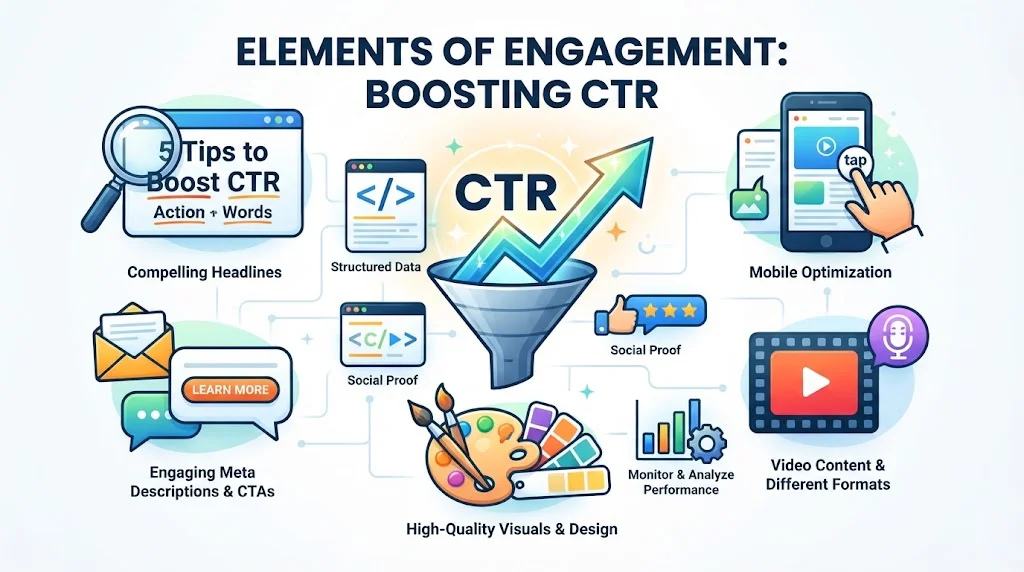
Your headlines are the first thing users will notice. Make them catchy and intriguing. A well-crafted headline can draw readers in immediately, setting the tone for the entire content piece. Use action words and numbers to grab attention effectively. When optimizing your headlines, consider different formats that naturally trigger curiosity:
- Listicles: “5 Tips to Boost Your CTR Today!”
- Questions: “Are You Making These Common CTR Mistakes?”
- How-to’s: “How to Achieve a 50% Increase in Click-Through Rates”
Using power words and clear value propositions ensures that searchers immediately recognize the relevance of your page. Furthermore, pairing these headlines with content monetization strategies can yield long-term benefits for publisher networks. Crafting a headline is not merely an artistic endeavor; it is a calculated psychological exercise. You must address the user’s latent pain points, offer an irresistible promise, and reduce the friction of decision-making. When readers see precise numbers, such as “5 Tips” or “50% Increase,” their brains instantly process the content as structured, digestible, and actionable. Avoid vague titles that leave readers guessing. Instead, make the core benefit front and center so that even the most hurried scroller feels compelled to stop and click.
Additionally, building variations of your core headline allows you to test what linguistic angles resonate best with specific demographics. For instance, B2B audiences might respond better to efficiency-driven titles like “Streamline Your Workflow,” whereas B2C consumers often react more strongly to urgency and exclusivity, such as “Unlock Hidden Savings Today.” Testing these variations continuously is what separates mediocre campaigns from industry-leading ones.
Utilize Engaging Meta Descriptions
Meta descriptions are snippets that appear below your title in the search results. They provide a brief overview of your content. Make sure your descriptions are enticing and informative. Use active language and include a call to action (CTA) to encourage clicks. For instance:
“Discover innovative strategies to Improve Click Through Rates and watch your traffic soar!”
A compelling meta description acts as ad copy for your organic listing. When users see clear value, they are far more likely to click through from search engine result pages. While meta descriptions do not directly influence search engine rankings, they exert a massive influence on user behavior. Think of your meta description as your elevator pitch to potential visitors browsing search results. If your snippet is dull, generic, or cut off prematurely, users will bypass your listing entirely in favor of a competitor who took the time to write an engaging description. Incorporating modifiers like “free guide,” “step-by-step,” or “proven framework” can dramatically shift user perception and drive higher click volumes.
Moreover, keeping your descriptions within the optimal character limit (typically around 150 to 160 characters) ensures that your full message remains visible across desktop and mobile screens alike. Always align the promise made in your meta description with the immediate content found above the fold on your landing page to maintain high user trust and prevent immediate bounces.
Leverage High-Quality Images
Images can significantly enhance your CTR. Use relevant, eye-catching visuals that relate to your content. Infographics, screenshots, or custom graphics can make your post more appealing. Ensure your images have proper alt attributes for SEO purposes. You can learn more about the impact of images on CTR from HubSpot.
Visual assets break up text blocks and provide immediate context, making content much more attractive across social media and blog posts alike. Human psychology is heavily wired for visual processing. We process images a fraction of a second faster than text, meaning a striking graphic is often the primary driver behind whether someone engages with your social media share or blog post preview card. When selecting visuals, avoid generic stock photos that look artificial. Instead, opt for custom screenshots, authentic behind-the-scenes photography, or clean, branded infographics that deliver instant educational value.
Create Clear Calls to Action
CTAs should be prominent and clear. Users need to understand what action you want them to take. Use phrases like “Download Now,” “Get Started,” or “Learn More.” Experiment with different placements and colors to see what resonates best with your audience. A weak or ambiguous call to action can completely derail an otherwise exceptional piece of marketing copy. If a user finishes reading your article or advertisement and is left wondering what to do next, you have lost them.
Effective CTAs utilize direct, imperative verbs that command attention while clearly stating the value exchange. For example, telling a user to “Get Your Free Checklist” is infinitely more powerful than a generic “Submit” button. Placing these CTAs strategically—both above the fold and at the natural conclusion of your content—ensures that no matter where a user decides to convert, the pathway is clear, intuitive, and frictionless.
Optimize for Mobile Users
More people are accessing content through mobile devices than ever. Ensure your website is mobile-friendly. A responsive design enhances user experience and keeps visitors engaged. If your site struggles on mobile, users are likely to leave before clicking. Mobile optimization is no longer an optional luxury; it is a fundamental requirement of modern digital survival. With the vast majority of web traffic originating from smartphones and tablets, any friction in your mobile layout—such as unreadable font sizes, cramped touch targets, or slow-loading scripts—will immediately tank your click-through rates.
Responsive design frameworks ensure that your layout fluidly adapts to any screen size, preserving visual hierarchy and making navigation seamless. Additionally, interactive elements like buttons and forms must be engineered with generous padding so that mobile users can easily tap them without accidental misclicks. Prioritizing a mobile-first philosophy guarantees that your audience enjoys a frictionless journey from discovery to conversion.
Test Different Formats
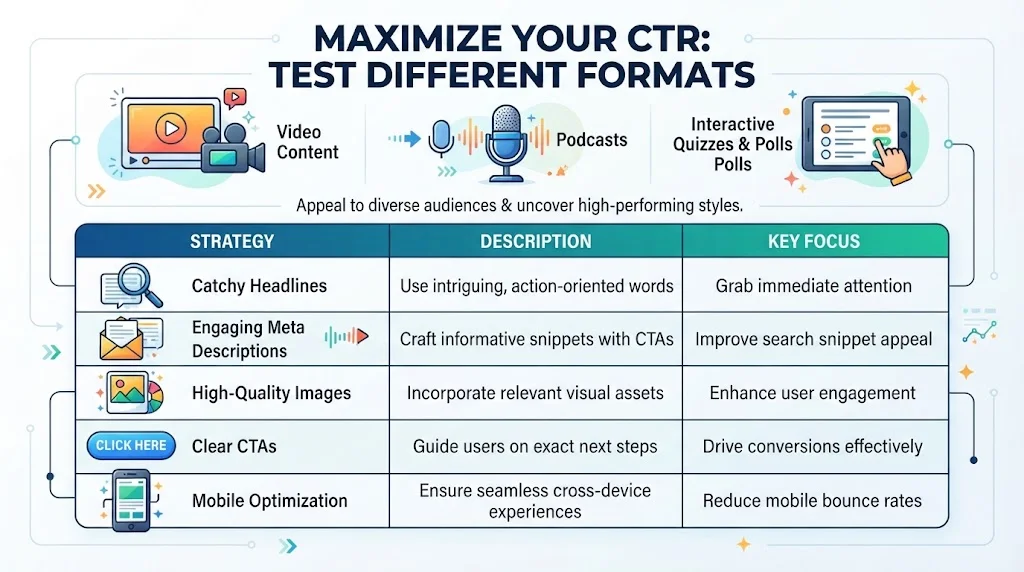
Different formats may appeal to different audiences. Vary your content style by including video content, podcasts, or interactive quizzes and polls. Experiment with A/B testing to determine which formats generate the highest CTR.
| Strategy | Description | Key Focus |
|---|---|---|
| Catchy Headlines | Use intriguing, action-oriented words | Grab immediate attention |
| Engaging Meta Descriptions | Craft informative snippets with CTAs | Improve search snippet appeal |
| High-Quality Images | Incorporate relevant visual assets | Enhance user engagement |
| Clear CTAs | Guide users on exact next steps | Drive conversions effectively |
| Mobile Optimization | Ensure seamless cross-device experiences | Reduce mobile bounce rates |
By implementing these strategies, you can significantly Improve Click Through Rates. Remember, the goal is not just to get clicks but to engage your audience effectively.
Understanding Audience Behavior to Boost Engagement
Understanding how your audience behaves is key to creating content that resonates with them. By tapping into their preferences, habits, and needs, you can boost engagement and make your messaging more effective. A well-informed approach to audience behavior can enhance your marketing strategies, improve customer satisfaction, and increase overall conversion rates.
Define your target audience
To start, it is essential to define your target audience clearly. Determine their demographics, including age, gender, income, interests, and geographical location. Once you have a clear picture, you can tailor your content to appeal to those specific groups. Utilize tools like Google Analytics to gather data about who visits your site and how they interact with your content.
Segmenting your audience
Segmenting your audience based on behavior is another powerful tactic. For instance, you can categorize them by their interaction with your previous content, such as whether they are first-time visitors, regular readers, or customers. This segmentation allows you to personalize your messaging, sending tailored content that speaks directly to each group’s interests.
Audience behavior analysis
Audience behavior analysis also involves monitoring psychological triggers and micro-moments. When a user lands on your site, their navigation path reveals what they value most. By tracking scroll depth, click heatmaps, and exit rates, you can pinpoint exact areas where engagement drops and recalibrate your presentation. Tailoring your messaging to match these behavioral insights ensures that every visitor feels understood and valued, leading directly to higher long-term engagement metrics.
Utilizing Audience Feedback and Timing
Encouraging your readers to share their thoughts through surveys, comments, and social media interactions helps gauge what your audience enjoys. Consider using platforms such as SurveyMonkey to create simple surveys that identify pain points and content desires.
Timing and frequency of your content
Furthermore, consider the timing and frequency of your content. Different audiences engage at different times of the day or week. Analyze your website or social media metrics to find out when your posts receive the most interactions. Balancing your publishing schedule ensures you maintain momentum without overwhelming your subscribers.
Timing your campaigns effectively
Timing your campaigns effectively can mean the difference between a high-performing broadcast and a complete ghost town. For example, B2B email campaigns often perform best during mid-week morning hours, whereas consumer promotions may see spikes during evening relaxation windows. Regular review of your platform analytics will uncover these unique behavioral patterns, allowing you to schedule your content releases for maximum visibility and immediate engagement.
The Role of Visual Content in Driving Clicks
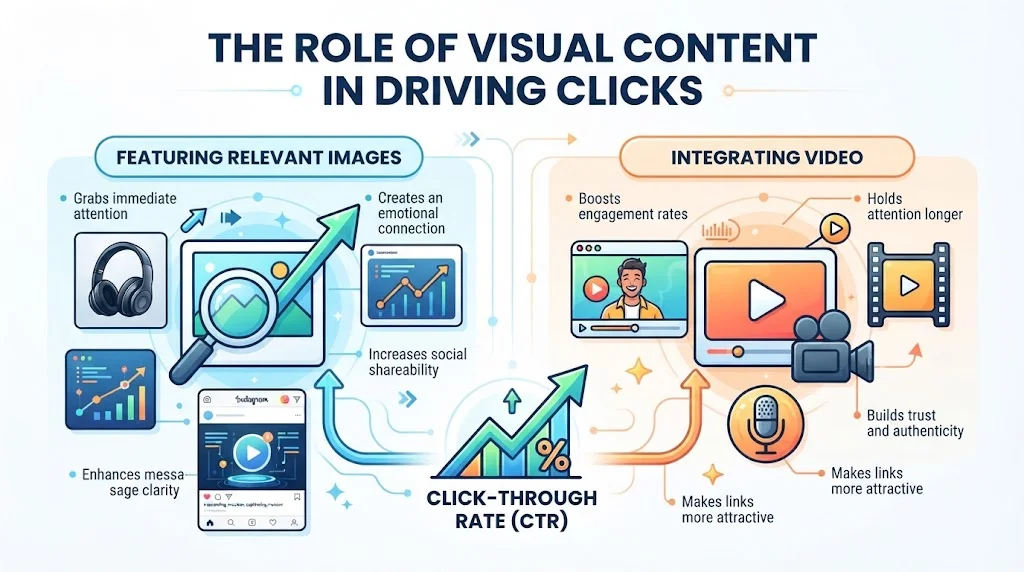
Visual content is more than just decoration; it’s a powerful tool that can significantly improve your click-through rates. In today’s fast-paced digital environment, where attention spans are short, using compelling visuals can make all the difference in grabbing audience attention and driving engagement.
Featuring relevant images
Research shows that content featuring relevant images tends to receive significantly more views than text-only posts. High-resolution, contextually relevant images help create an immediate connection with the reader. Adding videos to your content strategy can also lead to higher click-through rates. Video content is particularly engaging and can hold attention more effectively than static text.
Integrating video
When integrating video into your digital assets, ensure that your video thumbnails are striking and accurately represent the core topic. A compelling thumbnail featuring a human face expressing emotion or a clear title card dramatically increases click propensity across video hosting networks and email embeds alike. Coupled with robust infographics and clean formatting, visual assets transform static reading experiences into dynamic interactive journeys.
Crafting Compelling Headlines for Higher Click Through Rates
Creating headlines that grab attention is essential for increasing your CTR. A well-crafted headline can make the difference between a user scrolling past your content and clicking to learn more. Before you write a headline, think carefully about your target audience. What interests them? What problems do they want to solve?
- Use numbers to capture attention: Lists convey specific information in an easily digestible format.
- Incorporate strong adjectives: Words like “ultimate,” “easy,” “proven,” and “essential” create excitement.
- Ask questions: Questions provoke curiosity and encourage the audience to click for answers.
- Create urgency: Words like “now,” “today,” or “limited time” compel users to click immediately.
Refining your headline architecture requires constant experimentation. By testing different psychological angles—such as fear of missing out versus aspiration—you can discover precisely which triggers motivate your niche audience to click. Remember that clarity should never be sacrificed for cleverness; your headline must deliver an honest preview of the value waiting inside.
Analyzing A/B Testing Results to Enhance Click Performance
Analyzing A/B testing results can significantly enhance your click performance. A/B testing allows marketers to compare two versions of a webpage or ad to see which one performs better. To enhance your click performance effectively, keep an eye on several key metrics:
- Click-Through Rate (CTR): Measures how often people click on your link versus how often it appears.
- Conversion Rate: Tracks the percentage of users who complete a desired action after clicking.
- Bounce Rate: Indicates if visitors leave your page quickly without interacting.
- Average Time on Page: Reflects content relevance and user depth.
| Test Element | Control Version | Variant Version | CTR Gain |
|---|---|---|---|
| Headline | Discover Great Deals! | Unbeatable Offers Await You! | +2.7% |
| CTA Button | Blue Background | Green Background | +3.0% |
| Meta Text | Standard Description | Action-Oriented Snippet | +1.8% |
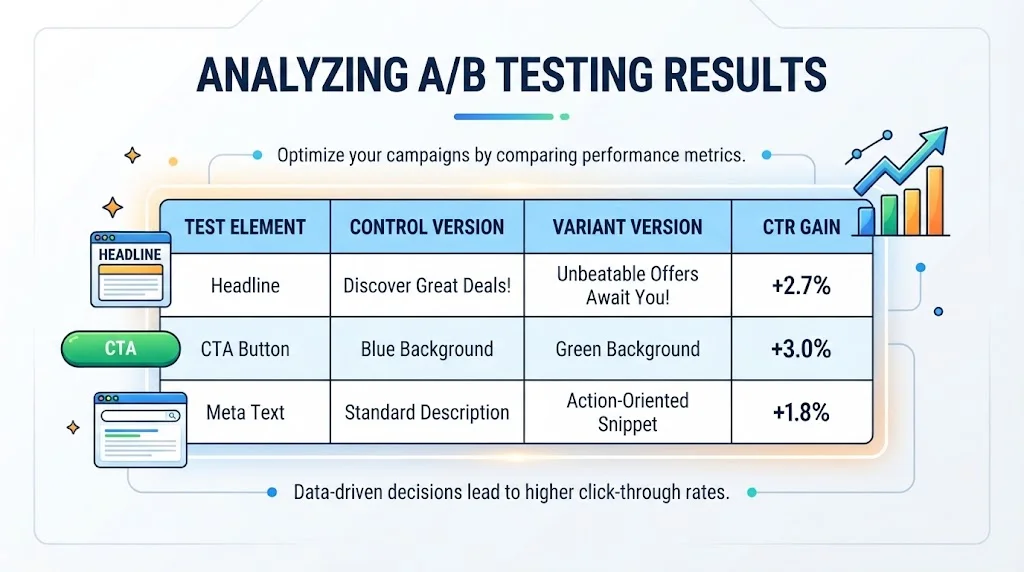
By continuously running tests and tracking data-driven metrics, you ensure that your campaigns remain agile, adapting seamlessly to new market trends and user preferences over time. A/B testing removes guesswork from digital marketing by letting your audience vote with their actions. When conducting these experiments, isolate a single variable at a time—such as button color, headline phrasing, or image placement—to ensure your conclusions are statistically sound. Achieving a high confidence level before rolling out winning variants company-wide protects your ROI and guarantees continuous performance improvement.
Conclusion
Improving your click-through rates is a journey that combines a deep understanding of your audience, engaging visuals, and compelling headlines. By implementing effective strategies, you not only enhance your campaign efficiency but also foster a stronger relationship with your audience. Understanding audience behavior is crucial because it allows you to tailor your content and offerings to meet the needs and preferences of your readers. Visual elements, data-backed A/B testing, and structured optimization all work hand in hand to drive lasting engagement and superior click performance.
Mastering these principles takes time, consistency, and a commitment to data analysis. As digital landscapes shift and user habits evolve, maintaining flexibility and a willingness to test new concepts will keep your campaigns ahead of the curve. Implement these techniques systematically, monitor your metrics closely, and watch your digital engagement reach unprecedented new heights.