
How to Rank Higher on Google

ATTENTION: Want to Learn Affiliate Marketing from Successful Affiliates?
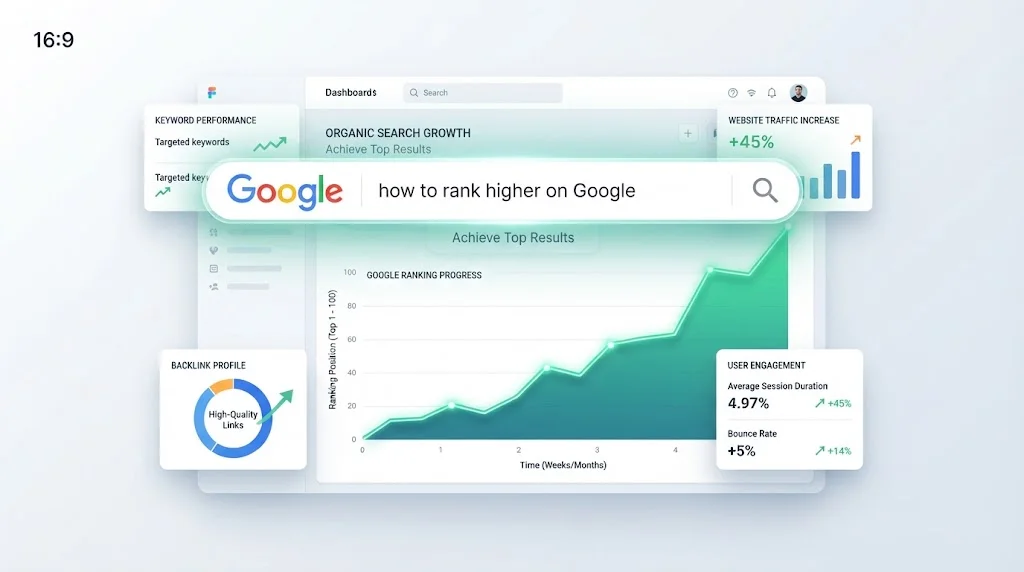
To improve your chances of achieving a higher rank on Google, it’s essential to adopt effective strategies focused on optimizing your website and content. Here are some concrete steps you can take:
Understand Search Engine Optimization (SEO)
SEO is the backbone of ranking higher on Google. It involves various techniques to help search engines understand and value your content. Key aspects of SEO include:
- Keyword Research: Identify relevant keywords that your audience searches for. Tools like Ubersuggest can assist you in this process.
- On-Page SEO: Optimize your title tags, headings, and images with targeted keywords. Ensure each page has meta descriptions that compel clicks.
- Technical SEO: Enhance site speed, mobile-friendliness, and overall site structure. Use tools like Google PageSpeed Insights to evaluate performance.
Create High-Quality Content
Google rewards informative, engaging, and relevant content. To create content that resonates with users:
- Answer User Intent: Understand the questions your target audience asks. Use tools like AnswerThePublic to gather ideas.
- Use Engaging Formats: Incorporate videos, infographics, and lists to make content visually appealing.
- Keep It Updated: Regularly refresh your content to keep it current. Google favors content that reflects the latest information.
Utilize Link Building Strategies
Building backlinks to your site is crucial for credibility and visibility. Here’s how you can effectively attract high-quality links:
- Guest Blogging: Write valuable guest posts for reputable sites to earn backlinks. Look for sites in your niche that accept guest contributions.
- Engage in Outreach: Connect with influencers and relevant websites for collaborations and mentions. Use tools like BuzzSumo to find influencers in your niche.
- Create Shareable Content: Produce unique content that others want to share. Original research, case studies, and comprehensive guides often attract natural backlinks.
Optimize for Mobile
With most searches happening on mobile devices, ensuring your website is mobile-friendly is essential for Ranking Higher on Google. Consider the following:
- Implement responsive design so that your site adapts to various screen sizes.
- Improve loading speeds on mobile devices by compressing images and leveraging browser caching.
- Use Google’s Mobile-Friendly Test to assess your site’s compatibility.
Leverage Local SEO
If you operate a local business, optimizing for local search is essential:
- Create a Google My Business Account: Ensure your business is listed with accurate information, including hours and contact details.
- Collect Reviews: Encourage customers to leave reviews on Google. Positive reviews can significantly boost local rankings.
- Target Local Keywords: Use keywords that represent your services and location, as they can improve visibility in local search results.
Monitor Performance and Adjust Strategies
Regularly assess your website’s performance through analytics tools:
- Use Google Analytics to track visitors, bounce rate, and user behavior.
- Monitor your rankings using tools like SERP Checker to see if your changes are effective.
- Be ready to adapt your strategies based on performance data and search engine algorithm updates.
By implementing these strategies consistently, you’ll have a solid foundation to improve your chances of Ranking Higher on Google. Engaging content and strategic optimization will set you on the path to SEO success.
The Importance of Quality Content in SEO Success
In the digital landscape, the quality of your content plays a significant role in determining how well your website performs in search engines. When seeking ways on How to Rank Higher on Google, understanding the value of quality content is crucial. Quality content goes beyond mere word count; it encompasses relevance, depth, and user engagement.
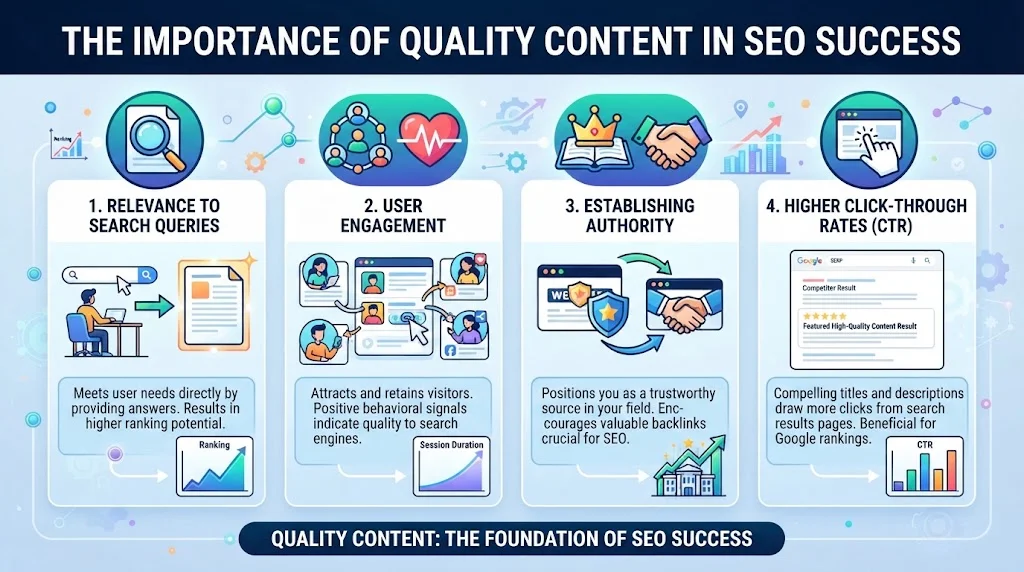
Search engines are designed to help users find the most useful and relevant information. Therefore, they favor websites that provide quality content. Here are key reasons why quality content is essential for SEO success:
- Relevance to Search Queries: Quality content directly relates to the queries users input in search engines. By focusing on creating relevant content, you’re more likely to meet user needs and, consequently, rank higher.
- User Engagement: High-quality content attracts and retains visitors. Content that resonates with your audience encourages them to stay longer on your site, click on links, and share your posts. This behavioral signal is critical since search engines interpret these actions as indicators of quality.
- Establishing Authority: Providing in-depth and valuable insights positions you as an authority in your field. When users perceive you as a trustworthy source, they are more likely to cite your content, building backlinks that are essential for SEO.
- Higher Click-Through Rates: Quality content leads to compelling meta titles and descriptions. This improves your click-through rate (CTR), which is beneficial for your rankings on Google. Engaging headlines that promise value will draw clicks from search engine results pages (SERPs).
To create quality content, consider the following steps:
- Conduct Thorough Research: Understand your audience’s needs and interests. Use tools like AnswerThePublic to find popular queries related to your topic.
- Create Comprehensive Content: Provide detailed, informative, and well-structured articles. Use lists, bullet points, and tables to enhance readability and retention.
- Optimize for SEO: Use relevant keywords naturally within your content. Ensure your primary keyword appears in the title, introduction, and throughout the text without keyword stuffing.
- Engage with Visuals: Including original images, infographics, and videos can enhance user experience. Visual content helps break up text and can convey information more effectively.
- Update Regularly: Content freshness matters. Regularly review and update your articles to ensure they are still relevant. Google rewards websites that keep their information up to date.
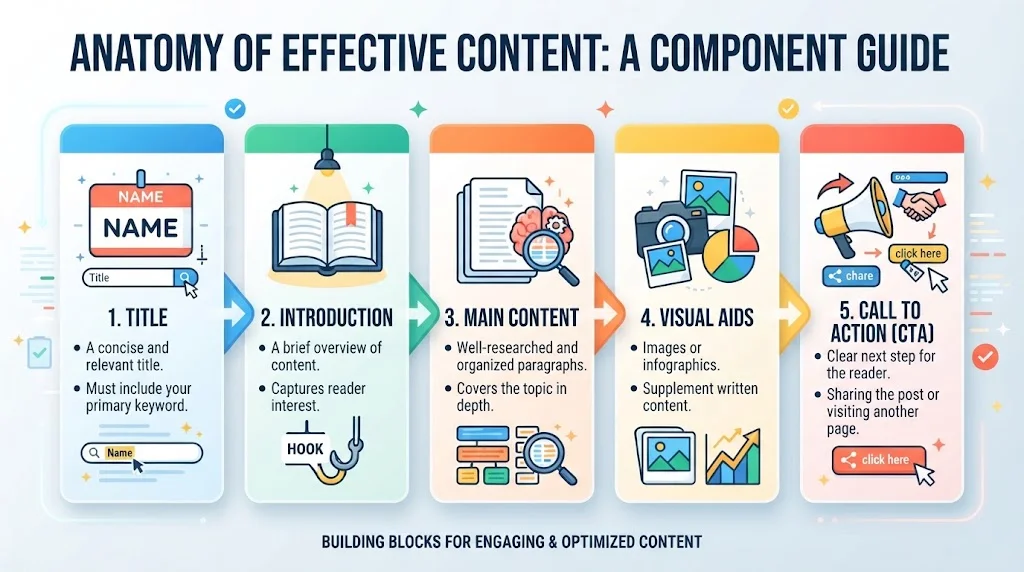
Additionally, structuring your content for easier navigation can significantly increase user satisfaction. Consider adding a table of contents for longer articles, allowing readers to quickly find what they’re looking for. Here’s an example structure:
| Content Component | Description |
|---|---|
| Title | A concise and relevant title that includes your primary keyword. |
| Introduction | A brief overview of what the content will cover, capturing reader interest. |
| Main Content | Well-researched and organized paragraphs that cover the topic in depth. |
| Visual Aids | Images or infographics that supplement the written content. |
| Call to Action | A clear next step for the reader, such as sharing the post or visiting another page on your site. |
Internal links to other relevant articles on your site can also enhance user experience and SEO. For instance, if you have an article on SEO basics, link to it when discussing keyword tactics. Likewise, if you touch on social media influence, you might connect to a piece about social media strategies.
Understanding Google’s Algorithm: Key Factors for Ranking
To achieve a higher ranking on Google, it’s essential to grasp the core elements of Google’s algorithm. Google’s algorithm is a sophisticated set of rules and processes that determines how websites are ranked in search results. Understanding these factors can significantly boost your visibility online and enhance traffic to your site.
Quality Content
The first step to learning How to Rank Higher on Google is to ensure your content is engaging and informative. Google prioritizes quality content that provides valuable information to users. Here are some key aspects to focus on:
- Relevance: Ensure your content directly addresses the needs and queries of your target audience.
- Originality: Create unique content that offers new insights, perspectives, or information.
- Readability: Write in a clear, concise manner that is easy for readers to understand. Using short paragraphs and bullet points can help.
- Engagement: Include interactive elements such as videos, images, or infographics to keep visitors engaged.
Keywords and SEO
Choosing the right keywords is fundamental for SEO. These are the terms users type into Google when searching for information. Follow these strategies to optimize for keywords:
- Keyword Research: Use tools like Keyword Tool or Ahrefs to find relevant keywords for your niche.
- Placement: Naturally incorporate keywords in your titles, headings, and throughout the content. Do not overstuff keywords, as this can harm your ranking.
- Long-Tail Keywords: Focus on longer phrases that target specific queries, as they often have less competition.
Technical SEO
Technical elements of your website play a crucial role in its performance and ranking. Consider the following:
- Site Speed: A fast-loading site enhances user experience and is favored by Google. Use tools such as PageSpeed Insights to check and improve your speed.
- Mobile Optimization: Ensure your site is mobile-friendly, as a significant amount of web traffic comes from mobile devices.
- Secure Sockets Layer (SSL): Google favors sites that use HTTPS. Make sure your website is secure to build trust and improve ranking.
Backlinks
Backlinks are links from other websites to your content. They act as a vote of confidence, signaling to Google that your content is authoritative. Strategies include:
- Guest Blogging: Write articles for reputable websites in your industry, including links back to your site.
- Creating Shareable Content: Produce infographics, reports, or studies that others find valuable enough to link to.
- Networking: Build relationships with influencers and other content creators to encourage them to link to your content.
User Experience (UX)
A positive user experience is crucial for mastering to Rank Higher on Google. Consider the following elements:
- Intuitive Navigation: Ensure that users can easily find their way around your website. A well-structured site keeps visitors engaged longer.
- Low Bounce Rate: Create compelling content that keeps users reading instead of bouncing away after a few seconds.
- User Feedback: Respond to user comments and questions, showing that you value their input and fostering a community around your content.
Regular Updates
Keeping your content fresh can positively influence your rankings. Google favors websites that regularly update their content to reflect new information or trends.
- Content Audits: Regularly review and update existing content to ensure it remains relevant.
- New Articles: Consistently publish new blog posts or articles to keep your audience engaged and attract search engines.
By focusing on these key factors of Google’s algorithm, you can create a strategy that not only improves your ranking on search results but also enhances the overall user experience on your site. For more in-depth information on SEO strategies, visit Moz or Search Engine Land.
Engaging Your Audience: Best Practices for User Experience
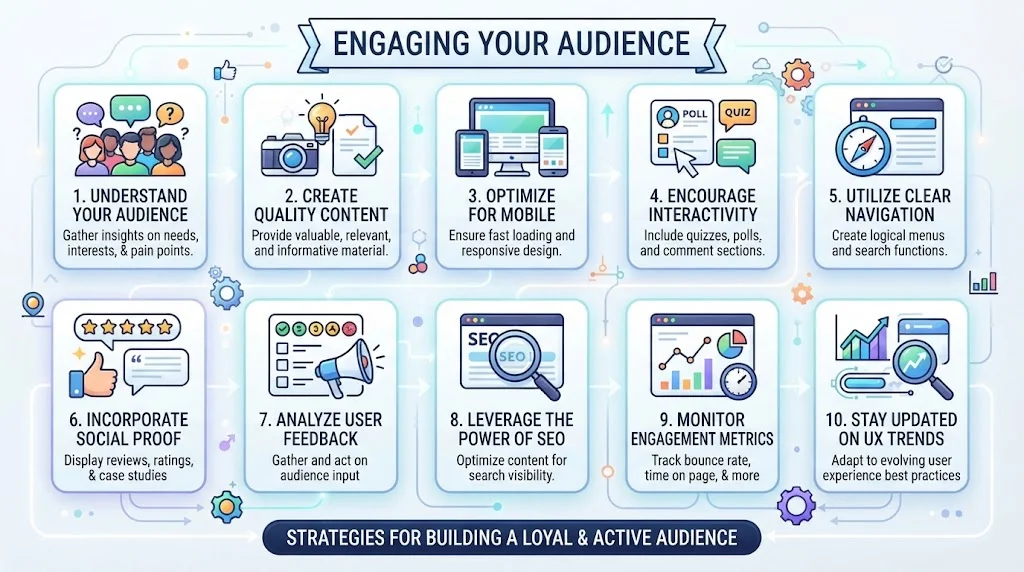
Engaging your audience effectively requires intentional strategies that prioritize user experience. By focusing on your audience’s needs and preferences, you can create content that resonates deeply. Here are some best practices to enhance user engagement.
Understand Your Audience
Knowing who your audience is crucial. Use tools such as audience analysis to gather valuable insights. Identify demographics, interests, and pain points. This information helps tailor your content and improve user experience.
Create High-Quality and Relevant Content
Your content needs to be engaging, informative, and relevant. Here’s how you can ensure its quality:
- Conduct thorough research to provide accurate information.
- Utilize visuals, such as images and videos, to break up text and enhance understanding.
- Make use of storytelling techniques to create an emotional connection with your audience.
- Focus on clear, actionable tips that your readers can implement.
Optimize for Mobile
With more users accessing content on mobile devices, having a responsive design is essential. Here are some mobile optimization tips:
- Ensure fast loading times; prioritize speed for a better user experience.
- Utilize large buttons and readable fonts to enhance navigation.
- Test your content on various mobile devices to ensure compatibility.
Encourage Interactivity
Engagement increases when users can actively participate. Incorporate interactive elements such as:
- Quizzes that provide personalized feedback.
- Polls and surveys to gather opinions and preferences.
- Comment sections for readers to share thoughts and engage with others.
Utilize Clear Navigation
Making it easy for users to find what they’re looking for is critical. Ensure your website has:
- Logical menu structures for easy navigation.
- Search functionalities to help users quickly locate specific content.
- Breadcrumbs to allow users to backtrack easily.
Incorporate Social Proof
Social proof, such as testimonials or case studies, enhances credibility. Consider displaying:
- User reviews and ratings.
- Success stories that illustrate the effectiveness of your offerings.
- Influencer endorsements, if applicable.
Analyze User Feedback
Regularly gather feedback from your audience to identify areas of improvement. Tools for collecting feedback include:
- Google Forms for simple surveys.
- UserTesting for in-depth usability testing.
- Hotjar for tracking user behavior through heatmaps.
Leverage the Power of SEO
To reach your audience effectively, search engine optimization is imperative. Implement strategies such as:
- Using relevant keywords within your content to enhance visibility.
- Creating meta tags that accurately describe your content.
- Building backlinks from reputable websites to increase authority.
Monitor Engagement Metrics
Understanding how users interact with your content can direct your strategy. Important metrics to track include:
- Bounce rate: the percentage of users leaving your site after viewing only one page.
- Time on page: how long users spend on your content.
- Conversion rates: how many visitors take a desired action, like signing up or purchasing.
Using tools like Google Analytics, you can analyze these metrics to improve your approach.
Stay Updated on UX Trends
The field of user experience is always evolving. Stay informed by visiting websites like Smashing Magazine and UX Design. Regularly consuming this information can help you adapt and improve your strategies.
Ultimately, creating a positive user experience involves understanding your audience, providing valuable content, and maintaining an engaging online presence. Incorporate these best practices into your strategy, and you will see an increase in user engagement.
The Role of Backlinks in Improving Your Search Engine Visibility
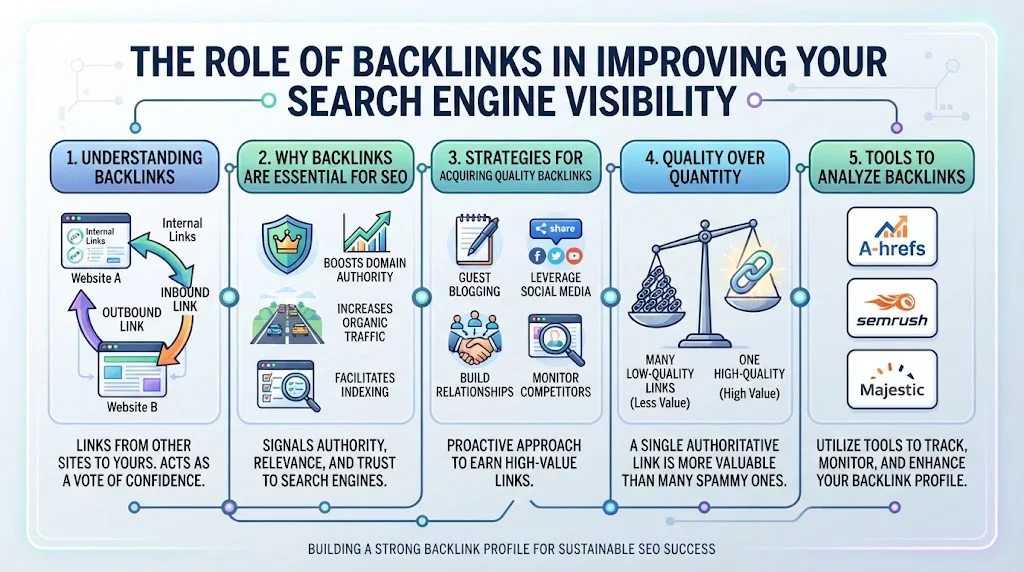
When you think about boosting your visibility on search engines, the role of backlinks cannot be underestimated. These links, which direct users from one website to another, are crucial for establishing authority and relevance in your field. In simple terms, a backlink is like a vote of confidence from another website. The more quality backlinks you have, the more trustworthy search engines perceive your site to be. Let’s delve deeper into how backlinks work and why they matter for your search engine optimization (SEO) strategy.
Understanding Backlinks
Backlinks come in various forms, each with its own significance:
- Inbound Links: These are links from other websites pointing to yours.
- Outbound Links: These are links you create that direct to other sites.
- Internal Links: These links connect different pages within your own website.
Among these, inbound links play the most pivotal role in improving your search engine visibility. They signal to search engines that your content is valuable and worth sharing. Not all backlinks carry the same weight, though; links from authoritative, relevant, and high-traffic sites are more beneficial than those from lesser-known sources.
Why Backlinks Are Essential for SEO
Backlinks serve several purposes when it comes to SEO:
- Boosting Domain Authority: Backlinks from reputable sources enhance your website’s domain authority, making it easier for you to rank higher on search engines.
- Improving Organic Traffic: As your site gains credibility through backlinks, you’ll likely notice an uptick in organic traffic, which can result in higher conversions.
- Facilitating Indexing: Links help search engines crawl your website more efficiently. This means when your site is linked from reputable sources, you can get indexed faster.
Strategies for Acquiring Quality Backlinks
Developing a strong backlink profile requires a proactive approach. Here are some proven strategies:
- Create Valuable Content: Write informative blog posts like guides or how-tos that other sites will want to link to.
- Guest Blogging: Offer to write articles for other blogs in your niche. In exchange, you can include a link back to your site.
- Leverage Social Media: Share your content on social platforms. If it resonates, others may link to it.
- Build Relationships: Networking with influencers and industry leaders can lead to backlinks from their websites.
- Monitor Competitors: Use tools to analyze the backlink profiles of your competitors. Identify where they are earning backlinks and consider similar approaches.
Quality Over Quantity
While it may be tempting to accumulate as many backlinks as possible, remember that quality is far more important than quantity. A single link from a respected authority in your industry can be more valuable than hundreds of links from less reputable sites. Focus your efforts on obtaining high-quality backlinks that align with your niche and audience.
Tools to Analyze Backlinks
Utilizing the right tools can help you track and enhance your backlink strategy. Consider these options:
| Tool | Description | Website |
|---|---|---|
| Ahrefs | Comprehensive link analysis and monitoring tool | ahrefs.com |
| SEMrush | Competitor backlink analysis and tracking | semrush.com |
| Majestic | Unique metrics to evaluate link quality and strength | majestic.com |
By consistently acquiring high-quality backlinks and monitoring your efforts, you can greatly enhance your search engine visibility. Understanding why and how to secure these links is vital for anyone looking to succeed in the digital landscape. Remember, the ultimate goal is to provide value to your audience, which will naturally foster those valuable links to your site.
Conclusion
Achieving higher rankings on Google is a multifaceted journey that requires dedication and a strategic approach. Implementing effective strategies, such as optimizing your content for relevant keywords, can significantly enhance your visibility. However, it’s essential to remember that quality content remains king. Producing engaging, informative, and original material not only attracts readers but also signals to Google that your site is a reliable source of information.
Understanding Google’s algorithm is crucial for any SEO effort. Key factors such as page load speed, mobile-friendliness, and user engagement metrics play a vital role in determining where your site ranks. Focusing on these elements ensures that you align your website with best practices that search engines favor.
User experience is another critical dimension. Engaging your audience through interactive content, clear navigation, and responsive design keeps visitors on your page longer and encourages them to return. This, in turn, can boost your rankings as Google rewards sites that offer valuable experiences to users.
Don’t underestimate the power of backlinks. Building a robust network of quality backlinks enhances your site’s authority and trustworthiness in the eyes of search engines. It’s about creating relationships with other reputable sites that can lead to mutual benefits.
By combining these strategies, focusing on high-quality content, understanding search engine algorithms, improving user experience, and leveraging backlinks, you can effectively improve your chances of How to Rank Higher on Google. Remember, consistent effort and a commitment to excellence will pay off in the long run.