
How to Increase Website Conversions

ATTENTION: Want to Learn Affiliate Marketing from Successful Affiliates?
Boosting website conversions is a top priority for any online business or content creator. When more visitors take action on your site—be it making a purchase, signing up for a newsletter, or requesting a demo—you increase your revenue and grow your brand. Here are some effective strategies you can implement to enhance your Website Conversions.
Understand Your Audience
Knowing your audience is key to increasing conversions. Spend time analyzing who visits your site and what their needs are. Use tools like Google Analytics to gather data on user behavior. Pay attention to demographics, interests, and how users interact with your pages.
Improve User Experience
A smoother user experience can significantly influence conversions. Make sure your website is easy to navigate. This means:
- Having a clear layout
- Fast loading times
- Responsive design for mobile devices
Test your site regularly to catch any issues that might frustrate users. Tools like UserTesting can provide insights into real user experiences.
Utilize Compelling CTAs
Calls to action (CTAs) are essential for guiding users toward the actions you want them to take. Use action-oriented language and make your CTAs stand out. Consider these tips:
- Use contrasting colors for buttons
- Position CTAs strategically throughout your pages
- Keep the message clear and straightforward
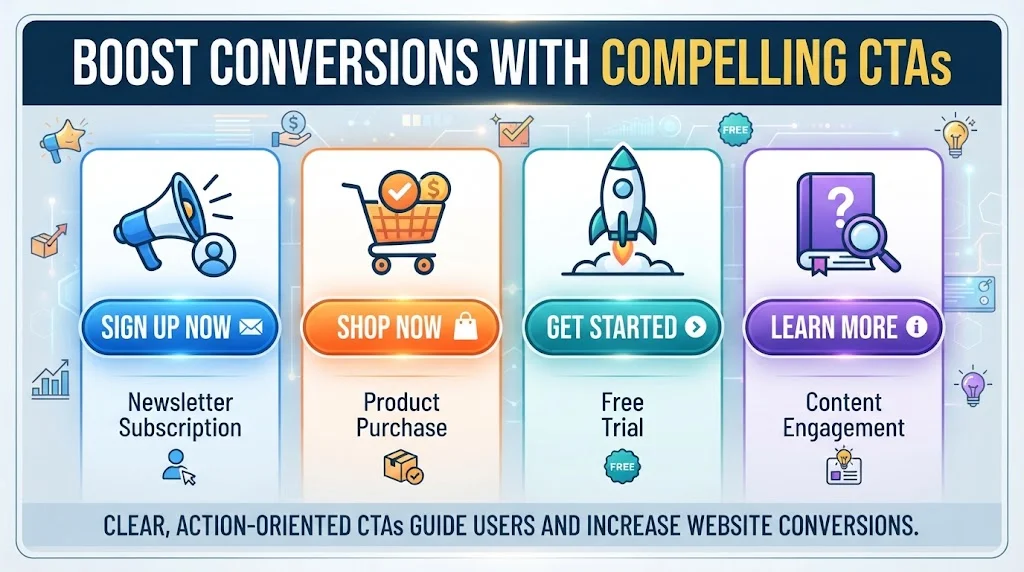
| CTA Text | Action Encouraged |
|---|---|
| Sign Up Now | Newsletter Subscription |
| Shop Now | Product Purchase |
| Get Started | Free Trial |
Leverage Social Proof
Showcasing testimonials, reviews, and case studies builds trust with potential customers. You can display social proof in several ways:
- Add a testimonials section on your landing pages
- Include star ratings near product descriptions
- Share customer success stories
For more on leveraging social proof, check out Social Proof.
Offer Value Through Content
Provide value to your visitors by creating engaging content. Articles, guides, and videos that address your audience’s pain points can establish your authority and encourage users to convert. Engaging blog content on sites like HubSpot or Moz can help you gain valuable insights into producing impactful content.
Test and Optimize
Regularly testing elements on your site can lead to increased conversions. A/B testing allows you to compare two versions of a page. You can test:
- Different headlines
- Button colors
- Image placements
Using platforms like Optimizely makes it easy to run A/B tests and optimize your website based on real data.
Reduce Cart Abandonment
If you run an e-commerce site, cart abandonment is a major challenge. Here are ways to reduce it:
- Streamline the checkout process
- Offer guest checkout options
- Send follow-up emails reminding users of their cart
For insights into cart abandonment strategies, visit Shopify. Implementing these strategies can significantly improve your website conversions. Remember, it takes time to find what works best. Keep testing and adjusting your approach to see the best results.
The Importance of User Experience in Driving Conversions
User experience (UX) is a crucial factor that greatly influences website conversions. When visitors arrive at your site, their interaction with your content, layout, and overall functionality can make or break their decision to take action. A well-designed user experience can lead to increased trust, higher engagement rates, and ultimately, more conversions. Let’s explore how UX drives conversions and what strategies can enhance this experience.
Importance of site speed
One of the first things to consider is the importance of site speed. When your site takes too long to load, potential customers may leave before they even see what you have to offer. Research shows that 47% of users expect a web page to load in two seconds or less. If your site exceeds this expectation, you risk losing potential conversions. To address this, ensure your images are optimized, utilize browser caching, and choose a reliable hosting provider. For more insights into how speed affects conversions, you might check Kissmetrics.
A clear and intuitive navigation
A clear and intuitive navigation system is another essential element of user experience. When visitors can easily find what they’re looking for, they are more likely to stay on your site and complete desired actions. Utilizing a top navigation bar along with a well-defined structure encourages users to explore without feeling lost. Implementing breadcrumb navigation can also provide users with context and an easy way to backtrack. For tips on optimizing navigation, refer to UX Design.
Visual appeal
Visual appeal plays a major role in user experience as well. Your website should be visually engaging and reflect your brand identity. Colors, typography, and images should be chosen carefully to create a harmonious look that resonates with your target audience. Make sure your website is mobile-responsive, as over half of all web traffic now comes from mobile devices. A responsive design adapts your content to any screen size, making it accessible to all users. For best practices in responsive design, check out Smashing Magazine.
Build trust
Building trust is vital to drive conversions, and a solid UX can help with this. social proof, like customer reviews and testimonials, establishes credibility. When visitors see that others have had positive experiences, they are more likely to proceed with their purchases. Additionally, including security badges during the checkout process can alleviate any fears regarding the safety of their personal information. For more on building trust through UX design, visit Interaction Design Foundation.
Strong call-to-action (CTA)
Effective call-to-action (CTA) buttons are crucial to conversions. Your CTAs should stand out and clearly communicate the action you want users to take. Use contrasting colors, concise language, and place buttons strategically throughout your website. Test different CTAs to see which resonates best with your audience. A/B testing can provide valuable insights, as you can adjust based on actual performance metrics. Resources like Optimizely offer guidance on effective A/B testing strategies.
User feedback
Continuously gather user feedback to maintain and improve your website’s user experience. Tools like surveys, heatmaps, and user recordings can offer insights into where users may be encountering issues. Analyzing this data helps you to make informed decisions on how to enhance usability and, by extension, website conversions.
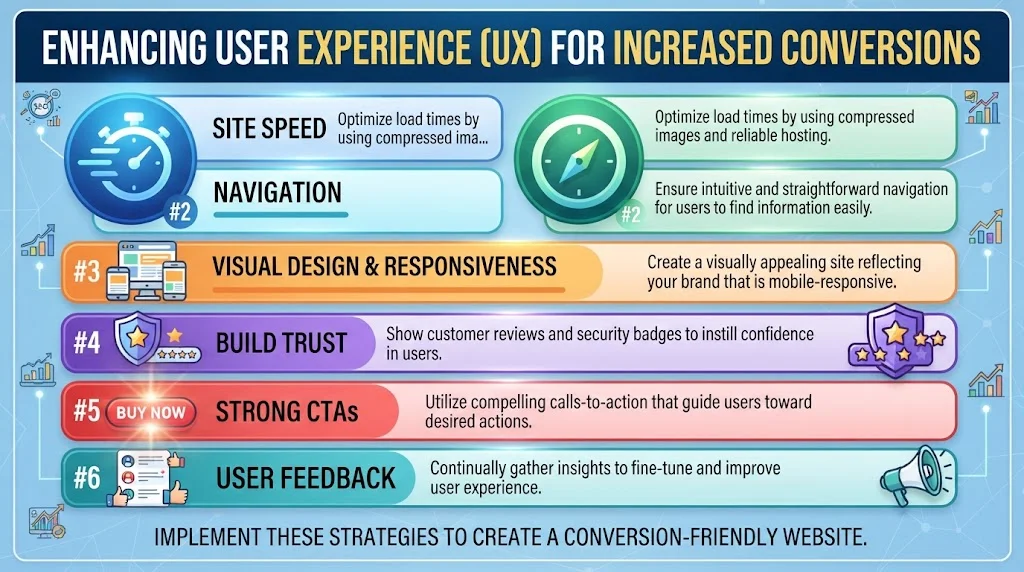
| UX Strategies | Description |
|---|---|
| Site Speed | Optimize load times by using compressed images and reliable hosting. |
| Navigation | Ensure intuitive and straightforward navigation for users to find information easily. |
| Visual Design | Create a visually appealing site reflecting your brand that is mobile-responsive. |
| Build Trust | Show customer reviews and security badges to instill confidence in users. |
| Strong CTAs | Utilize compelling calls-to-action that guide users toward desired actions. |
| User Feedback | Continually gather insights to fine-tune and improve user experience. |
In essence, a positive user experience is not just nice to have; it is essential for increasing website conversions. By focusing on site speed, clear navigation, visual design, trust-building, effective CTAs, and responsive feedback loops, you can create an engaging and conversion-friendly website. Start implementing these strategies today to see tangible results in your conversion rates.
Crafting Compelling Calls-to-Action That Work
Creating effective calls-to-action (CTAs) is crucial for increasing website conversions. A well-crafted CTA can guide your visitors smoothly through their journey, encouraging them to take the next step, whether that be signing up for a newsletter, downloading a free resource, or making a purchase. Let’s delve into how you can create compelling CTAs that resonate with your audience.
Understanding Your Audience
Before crafting your CTA, it’s essential to understand your audience’s needs and pain points. Consider the following steps:
- Identify Your Target Audience: Determine who your ideal customers are.
- Know Their Preferences: Understand what motivates them to take action.
- Analyze Behavior: Use tools like Google Analytics to track how users interact with your website.
By gathering this information, you can tailor your CTAs to better align with what your audience values.
Clarity is Key
Your CTA needs to be clear and concise. Users should understand exactly what will happen when they click the button. Here are some tips to ensure clarity:
- Use Direct Language: Phrases like “Download Now” or “Get Your Free Trial” leave no room for confusion.
- Be Specific: Specify what users can expect after the action, such as “Subscribe to Get Weekly Tips.”
- Keep it Short: Ideally, your CTA should be a few words long, making it easy to digest.
Design Matters
The visual aspect of your CTA is vital for grabbing attention. Consider these design elements:
- Color Contrast: Use a color that stands out against your website’s background.
- Size: Make your CTA button large enough to catch the eye but not so large that it seems overwhelming.
- Placement: Position your CTA prominently on the page, ideally above the fold or at the end of engaging content.
Emotional Triggers
Engaging your audience on an emotional level can significantly increase the effectiveness of your CTAs. Utilize the following strategies:
- Create Urgency: Phrases like “Limited Time Offer” encourage users to act quickly.
- Use Power Words: Words such as “Exclusive,” “Instant,” and “Free” can trigger positive reactions.
- Make it Personal: Address users directly by using “you” in your CTAs to create a sense of connection.
A/B Testing
To find out what works best, A/B testing is a powerful tool. Create two variations of a CTA, and test them against one another. You can experiment with different:
- Text phrases
- Colors
- Button sizes or shapes
- Placement on the page
By analyzing which variant performs better, you can refine your calls-to-action, ensuring they continuously drive conversions.
Monitor and Adjust
Always monitor your CTA performance and be ready to make adjustments. Use analytics tools to track Google Analytics data, focusing on metrics like click-through rates and conversion rates. Make it a habit to review and analyze data monthly to spot trends and identify opportunities for improvement. Crafting compelling calls-to-action is an ongoing process that can significantly impact website conversions. By understanding your audience, ensuring clarity, focusing on design, triggering emotions, A/B testing, and continuously monitoring performance, you can create CTAs that not only draw visitors in but also compel them to take meaningful action. For further insights on effective CTAs, consider checking resources from OptiMonk or visit Unbounce for advanced strategies. These platforms provide great resources that can help refine your approach and improve user engagement.
Analyzing Website Data to Enhance Conversion Rates
Enhancing website conversion rates is a critical goal for any business with an online presence. One of the most effective ways to achieve this is by analyzing website data. By diving deep into the numbers, you can uncover insights that lead to actionable changes. Here are essential steps to effectively analyze your website data and use it to boost conversions.
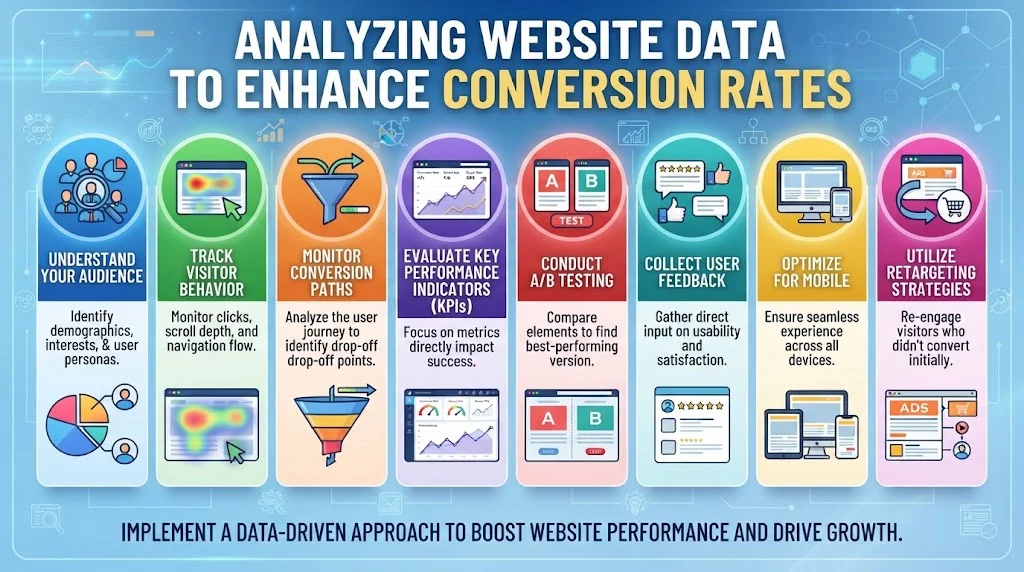
Understand Your Audience
Before you can improve conversions, you need to understand who your visitors are. Analyzing demographic data such as age, gender, location, and interests can provide key insights. Tools like Google Analytics can help you gather and analyze this information. Knowing your audience allows you to tailor your messaging and offers.
Track Visitor Behavior
Understanding how visitors interact with your website is crucial. Use heatmaps, session recordings, and tools like Hotjar to gain a visual representation of visitor behavior. This can show which areas of your site capture attention and which may need improvement. Key areas to focus on include:
- Click patterns
- Scroll depth
- Form engagement
Monitor Conversion Paths
Every conversion journey is different. By analyzing the paths visitors take before converting, you can identify the most effective routes. Create a conversion funnel in Google Analytics to visualize these paths. Look for drop-off points where users are exiting without converting. This information helps you understand what needs tweaking.
Evaluate Key Performance Indicators (KPIs)
Focus on critical KPIs that directly relate to conversions. These may include:
- Conversion rate
- Bounce rate
- Average session duration
- Pages per session
Tracking these metrics over time allows you to see the impact of your changes. It’s essential to set specific goals for each KPI and adjust strategies based on the data you collect.
Conduct A/B Testing
A/B testing is a powerful method to determine which variations of your website perform better. By comparing two or more versions, you can identify elements that lead to higher conversions. Some key aspects to test include:
- Call-to-action (CTA) buttons
- Landing page layouts
- Content and copy variations
Using tools like Optimizely can streamline this process, allowing you to implement changes quickly and effectively.
Collect User Feedback
Direct feedback from your users can provide insights that data alone may not reveal. Consider using surveys or feedback forms to gather opinions from your audience. Questions could include:
- What do you think of the website design?
- Was the information easy to find?
- What could improve your experience?
By addressing the concerns of your users, you can enhance their experience and drive more conversions.
Optimize for Mobile
With increasing numbers of users accessing websites via mobile devices, it’s critical to ensure your site is mobile-optimized. Analyze your mobile traffic separately using Google Analytics. Pay attention to:
- Mobile bounce rates
- Load times on mobile devices
- Mobile-specific user behavior
Implement responsive design and fast-loading pages to enhance the mobile user experience. For more details on mobile optimization, visit Search Engine Journal.
Utilize Retargeting Strategies
Not every visitor will convert on their first visit. By using retargeting strategies, you can keep your brand in front of those who showed interest but didn’t convert initially. Platforms like AdRoll provide tools to retarget visitors, reminding them of the products or services they viewed. By diligently analyzing website data and implementing the strategies mentioned, you can significantly enhance your website’s conversion rates. Remember, the key is to continuously analyze and adapt based on your findings. Success in conversion optimization is an ongoing process that requires attention, adjustment, and innovation.
The Role of Social Proof in Boosting Online Conversions
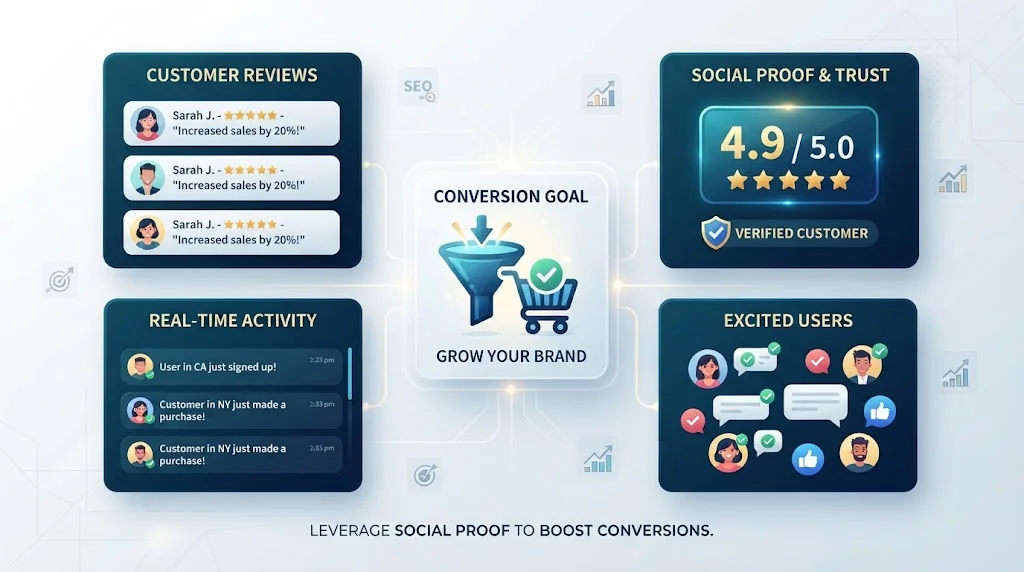
In today’s digital landscape, users are inundated with choices. To stand out from competitors, online businesses need to establish trust and credibility. One effective way to achieve this is through social proof. Social proof can significantly impact your website conversions, influencing potential customers in their decision-making process.
Social proof refers to the concept that people tend to follow the actions of others. When potential customers see others engaging with your brand—through reviews, testimonials, or even social media interactions—they are more likely to feel comfortable making a purchase. This enhances their confidence in your offerings, leading to higher conversion rates.
Here’s how social proof can benefit your website:
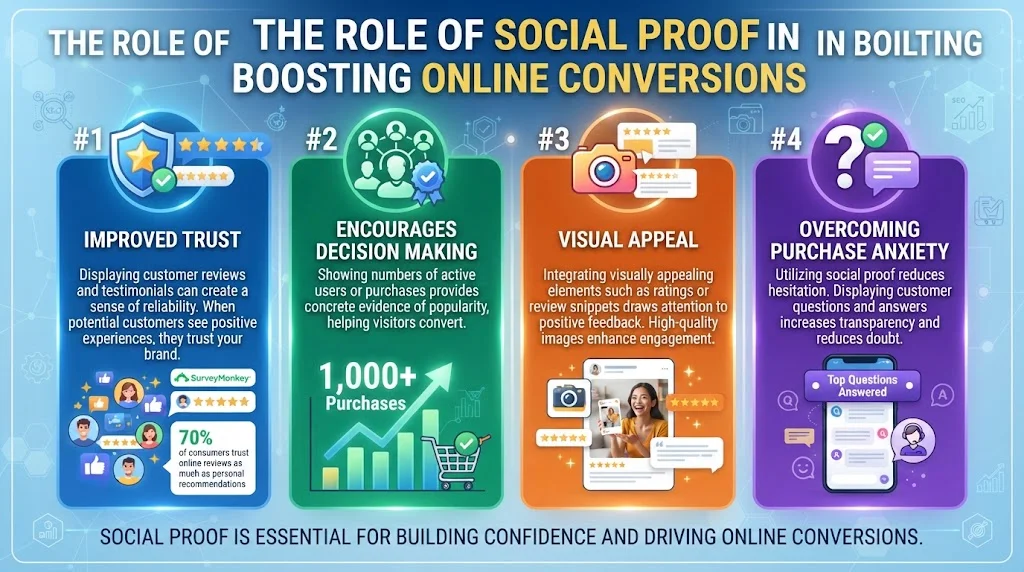
- Improved Trust: Displaying customer reviews and testimonials can create a sense of reliability. When potential customers see that others have had positive experiences with your products or services, they are more inclined to trust your brand. According to a study by SurveyMonkey, 70% of consumers trust online reviews as much as personal recommendations.
- Encourages Decision Making: Showing numbers, such as the number of active users or purchases, provides concrete evidence of your product’s popularity, helping visitors feel more inclined to convert. For example, if visitors see that 1,000 others have bought a particular item, they may feel more inclined to do the same.
- Visual Appeal: Integrating visually appealing elements such as ratings or review snippets can draw attention to positive feedback. High-quality images of customers using your products can also enhance engagement.
- Overcoming Purchase Anxiety: Many visitors face hesitation before finalizing a purchase. Utilizing social proof can reduce this anxiety. For instance, you can display customer questions and answers, increasing transparency and reducing doubt.
One effective form of social proof is showcasing user-generated content. Encourage your customers to share photos and experiences on social media platforms and feature this content on your site. Not only does this provide authentic testimonials, but it also creates an interactive community around your brand. Displaying hashtags in your marketing materials can also encourage this behavior.
Another powerful component of social proof is leveraging expert endorsements or influencer marketing. Partnering with individuals who have established credibility in your industry can enhance your brand’s reputation. When potential customers see respected figures endorsing your products, they’re more likely to convert.
Consider using A/B testing to analyze different variations of social proof elements on your website. For example, you could test a page with product reviews against one without them. By observing which version leads to higher conversions, you can tailor your website for maximum effectiveness.
You may want to consider the following tools to help implement social proof effectively:
| Tool | Description | Link |
|---|---|---|
| Yotpo | Collects and displays customer reviews and ratings to enhance trust. | Visit Yotpo |
| Trustpilot | Offers a platform for businesses to collect reviews from customers. | Visit Trustpilot |
| Fomo | Displays real-time customer activity notifications to create urgency. | Visit Fomo |
Social proof into your marketing strategy isn’t just a trend; it’s a fundamental approach to increasing website conversions. By showcasing customer testimonials, leveraging influencer endorsements, and utilizing user-generated content, you can create an inviting, trusting online environment. Remember, potential customers seek validation before making online purchases. Ensuring they see that others have had positive experiences with your brand can be the key to enhancing conversions.
Ultimately, social proof strategically guides potential customers through the conversion funnel. By adhering to this practice, businesses can not only increase their conversion rates but also build long-lasting relationships with their clients. As you move forward, invest time in understanding which aspects of social proof resonate best with your audience, and watch your website conversions soar.
Conclusion
As you implement effective strategies to increase website conversions, remember that creating a seamless user experience is paramount. When visitors find your site easy to navigate and engaging, they are more likely to take the desired action. A well-crafted user interface not only keeps their interest but also encourages them to explore further.
Don’t underestimate the power of compelling calls-to-action; these are pivotal in guiding users toward conversion. Experiment with different wording, colors, and placements to see what resonates best with your audience. An actionable prompt can significantly increase the likelihood of users engaging with your content.
Analyzing website data is another crucial step. By tracking user behavior, you gain insights into what works and what doesn’t. Tools like heatmaps and conversion tracking can help you identify bottlenecks and optimize your site accordingly, leading to improved conversion rates.
Social proof is equally important. Testimonials, reviews, and user-generated content help build trust and credibility for your brand. When visitors see that others have successfully engaged with your product or service, they are more likely to follow suit, enhancing your conversion potential.
By focusing on these aspects—strategies, user experience, calls-to-action, data analysis, and social proof—you create a holistic approach to boosting conversions. Each element plays a significant role in guiding your audience through the customer journey, ultimately leading to higher engagement and increased sales. Embrace these approaches and watch your website’s conversion rates soar.