
Search Engine Optimization for Ecommerce Stores


ATTENTION: Want to Learn Affiliate Marketing from Successful Affiliates?
Are you looking to boost your ecommerce store’s visibility? Effective Search Engine Optimization for Ecommerce Stores strategies can help you attract more customers and increase sales. Here are some proven techniques that can enhance your ecommerce site’s SEO.
Keyword Research
Understanding what your potential customers are searching for is a critical first step. Use tools like Moz or Ahrefs to identify keywords relevant to your products. Focus on:
- Long-tail keywords: These are specific phrases that often convert better than broader terms.
- Search intent: Understand whether users are looking to buy, learn, or explore.
- Competitors’ keywords: Analyze what keywords your competitors rank for to find gaps or opportunities.
On-Page SEO Optimization
On-page SEO is about optimizing the elements on your ecommerce pages. Here’s what you need to do:
- Title tags and meta descriptions: Include keywords naturally. Make them compelling to improve click-through rates.
- Header tags: Use H3, H4, and other headings to structure your content. This helps search engines understand your content better.
- Image optimization: Use relevant file names and alt text for images to help them rank in search engines.
- Descriptive URLs: Create easy-to-read URLs that include keywords, making them more user-friendly and SEO-friendly.
Product Descriptions
Your product descriptions play a vital role in SEO. Writing unique, engaging content can help your pages rank higher. Here are tips to improve them:
- Focus on benefits and features.
- Use storytelling to connect with your customers.
- Add customer reviews for authenticity and user-generated content.
Technical SEO
Technical aspects of your site can impact its performance. Pay attention to the following factors:
- Website speed: A faster site improves user experience and search rankings. Use tools like Google PageSpeed Insights to check your speed.
- Mobile responsiveness: Ensure your site is mobile-friendly. Google prioritizes mobile-first indexing.
- Sitemap: Create and submit a sitemap to search engines to help them index your pages faster.
- SSL Certificate: Secure your ecommerce site with an SSL certificate to build trust and improve rankings.
Link Building Strategies
Building a quality backlink profile is crucial for SEO success. Here are effective approaches:
- Guest blogging: Write articles for reputable sites in your niche.
- Partnerships: Collaborate with influencers to reach a broader audience and gain backlinks.
- Content marketing: Create valuable content that encourages other websites to link back to your products.
Local SEO for Ecommerce
If you have a physical location, enhancing your local SEO can drive foot traffic. Consider the following:
- Google My Business: Create a GMB listing to improve local search visibility.
- Local keywords: Use location-based keywords throughout your website.
- Local citations: List your business on local directories to gain credibility and visibility.
Utilizing Analytics
Keep track of your SEO progress using analytics tools like Google Analytics and Google Search Console. Monitor your:
- Traffic sources and user behavior.
- Keyword rankings to identify what works and adjust accordingly.
- Conversion rates to measure the effectiveness of your SEO strategies.
By applying these effective Search Engine Optimization for Ecommerce Stores strategies, you’re well on your way to improving your site’s visibility and attracting more potential customers. Stay updated with industry trends and continually refine your approach to maximize your store’s potential.
The Role of Product Descriptions in SEO for Online Retail
In the world of online retail, product descriptions play a crucial role not only in informing potential buyers but also in enhancing search engine optimization (SEO) efforts. Crafting detailed and engaging product descriptions elevates a store’s visibility on search engines and can lead to improved conversion rates. Let’s delve into the reasons why you must prioritize product descriptions in your SEO strategy.
Effective product descriptions should be informative and crafted to resonate with your target audience. Here are several key elements to focus on:
- Keyword Integration: Research relevant keywords that potential customers are likely to use when searching for products. Make sure to incorporate these keywords naturally in your descriptions. This helps search engines understand what your pages are about.
- Unique Content: Avoid duplicating product descriptions from manufacturers or other websites. Unique content not only helps to stand out but is also favored by search engines. Consider highlighting unique features or benefits of your products.
- Length Matters: While there’s no hard and fast rule for product description lengths, aim for around 150 to 300 words. This length allows you to provide valuable information without overwhelming the reader.
Additionally, well-structured product descriptions enhance the user experience. Break up text by using bullet points, numbered lists, or short paragraphs. This makes scanning easier and allows potential buyers to absorb information quickly.
Using engaging language is equally important. Describing the product vividly creates a connection with potential customers. Instead of just stating the facts, paint a picture of how the product can enhance the buyer’s life. For example, instead of saying “blue t-shirt,” you might say “a refreshing, sky-blue t-shirt that’s perfect for summer outings.”
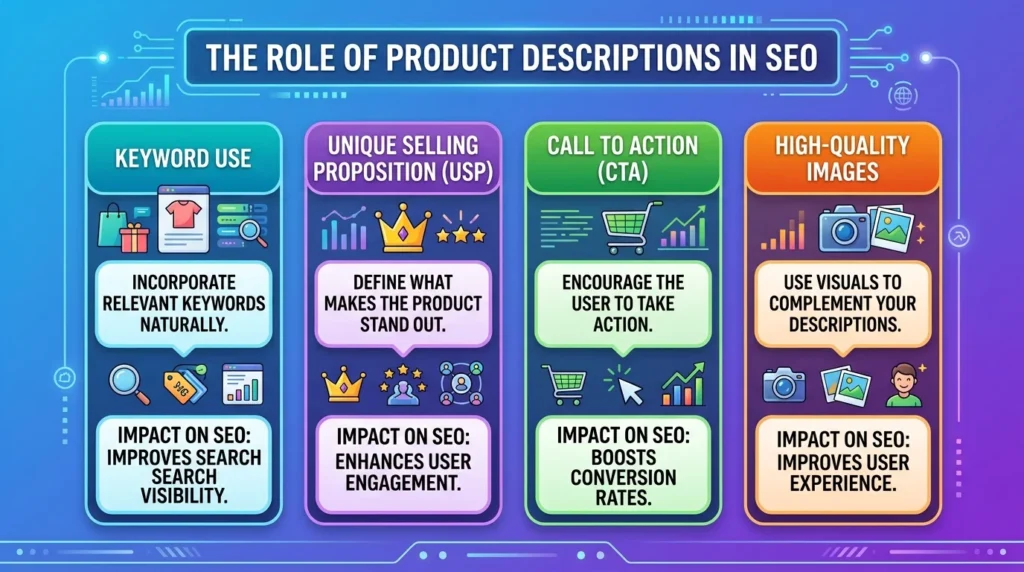
The following table outlines essential components for creating strong product descriptions:
| Component | Description | Impact on SEO |
|---|---|---|
| Keyword Use | Incorporate relevant keywords naturally. | Improves search visibility. |
| Unique Selling Proposition (USP) | Define what makes the product stand out. | Enhances user engagement. |
| Call to Action (CTA) | Encourage the user to take action (e.g., “Buy Now!”). | Boosts conversion rates. |
| High-Quality Images | Use visuals to complement your descriptions. | Improves user experience and SEO. |
Another essential aspect of product descriptions is technical SEO. Ensure you utilize meta tags properly. For each product description, you should create a unique title and meta description that include relevant keywords. This not only enhances SEO but also influences click-through rates from search engine results pages (SERPs).
Utilizing structured data, such as Schema.org markup, can also improve the way search engines understand your product offerings. By marking up your product pages with this rich data, you can help search engines display relevant information like prices and availability directly in SERPs, enhancing visibility.
Remember that mobile optimization is vital. With a significant number of customers shopping using mobile devices, your product descriptions should be mobile-friendly. Ensure that your formatting is clean and easy to read on smaller screens. This includes using short paragraphs and clear, simple language.
Don’t underestimate the power of user-generated content. Encouraging customers to leave reviews can enrich your product descriptions and provide fresh content regularly, which is valuable for SEO. You could ask customers for feedback post-purchase and showcase their reviews directly on the product pages.
These strategies into your product descriptions can significantly improve Search Engine Optimization for Ecommerce Stores. By providing valuable, engaging, and SEO-optimized descriptions, you not only attract more visitors but also convert them into loyal customers. For further reading and tips on enhancing your online store’s visibility, you may refer to Moz’s Beginner’s Guide to SEO and Ahrefs SEO Basics.
Optimizing Ecommerce Site Architecture for Better Search Visibility
Creating an ecommerce site that stands out requires more than just great products and attractive designs. A well-organized architecture enhances user experience and improves search engine optimization (SEO). When your ecommerce store is architected correctly, it becomes easier for search engines like Google to crawl your site, index your products, and deliver relevant results to potential customers.
Understanding Site Architecture
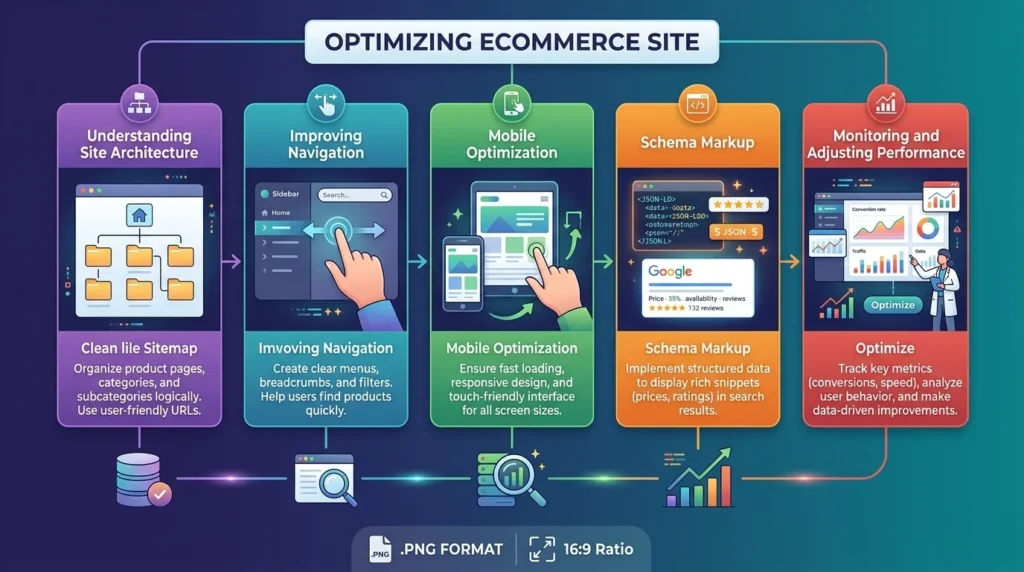
Site architecture refers to the way your website’s pages are organized and linked together. A clear and logical structure makes it easier for users and search engine bots to navigate. Here are the key components to focus on for optimizing your ecommerce site architecture:
- Hierarchy: Start with a clear hierarchy that flows from general to specific. Your homepage should link to main category pages, which in turn link to subcategories and product pages.
- URL Structure: Use SEO-friendly URLs that are descriptive and concise. For example, instead of /product12345, opt for /shoes/running-shoes/brand-name.
- Internal Linking: Aid discovery by creating internal links between related pages, boosting the visibility of lesser-known products.
- Breadcrumbs: Utilize breadcrumb navigation to help users trace their path back to the homepage, enhancing both usability and SEO.
Improving Navigation
Good navigation is at the heart of effective ecommerce site architecture. Implementing a well-structured menu can significantly enhance user experience.
- Primary Menu: Keep your primary navigation simple with categories relevant to your products.
- Search Functionality: Incorporate a robust search feature that helps customers find products quickly.
- Filters and Sorting: Allow users to filter and sort products based on attributes like price, popularity, or reviews.
Mobile Optimization
With an increasing number of users shopping on mobile devices, it’s crucial to optimize your site for mobile experiences. Ensure that your ecommerce architecture supports responsive design, allowing seamless navigation on all screen sizes. Here are tips for mobile optimization:
- Mobile-Friendly Navigation: Use collapsible menus to save space on smaller screens.
- Touch-Friendly Elements: Ensure buttons and links are large enough for users to tap easily.
- Fast Loading Times: Optimize images and minimize code to improve loading times on mobile devices.
Schema Markup
Schema markup into your ecommerce site can significantly enhance your visibility in search engine results. Schema helps search engines understand your content and improves how your pages appear in search results, often leading to rich snippets. Implement product schema to provide details such as:
| Schema Type | Details Included |
|---|---|
| Product | Name, image, price, availability, and reviews |
| BreadcrumbList | Hierarchy of the product page |
For more information on how to implement schema markup, you can visit the Schema.org documentation.
Monitoring and Adjusting Performance
Regularly monitor your ecommerce site’s performance using tools like Google Analytics and Search Console. These platforms provide valuable insights into user behavior and help identify any structural issues that may impact SEO. Key metrics to track include:
- Session Duration
- Bounce Rate
- Conversion Rate
Adjust your architecture based on the insights gathered. If certain pages are underperforming, analyze their structure and improve links or content to increase visibility.
Optimizing your ecommerce site architecture is crucial for enhancing search visibility. Focus on creating a logical hierarchy, improving navigation, ensuring mobile optimization, using schema markup, and regularly monitoring performance. With these strategies in place, you can ensure that your ecommerce store is both user-friendly and optimized for search engines.
Utilizing Keyword Research to Drive Ecommerce Traffic
When you operate an ecommerce store, driving traffic to your website is crucial for sales growth. Utilizing keyword research can significantly enhance this process. By focusing on the right keywords, you can attract your target audience and elevate your store’s visibility in search results. Here’s how you can use keyword research effectively in your ecommerce strategy.
Understanding Keyword Research
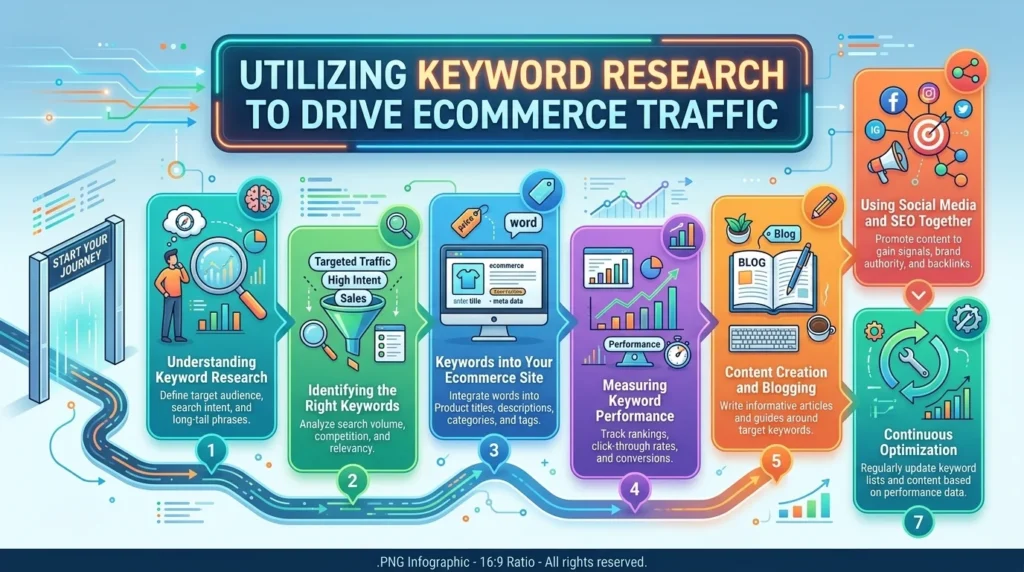
Keyword research involves identifying the keywords and phrases that potential customers use when searching for products. This helps you align your content with consumer intent. For ecommerce stores, it’s vital to find keywords relevant to your products and services. Start by brainstorming topics related to your niche, then use tools like Keyword Tool or Moz Explorer to discover popular search terms.
Identifying the Right Keywords
Focus on long-tail keywords. These are phrases containing three or more words that often make it easier for customers to find what they’re looking for. For example, instead of targeting “shoes,” aim for “comfortable running shoes for women.” Here are a few strategies for identifying effective keywords:
- Create Buyer Personas: Understand who your ideal customers are, including their demographics and shopping habits.
- Analyze Competitors: Look at the keywords your competitors are ranking for using tools like Ahrefs or SEMrush.
- Use Google Autocomplete: Start typing potential keywords into Google’s search bar to see what suggestions come up.
Keywords into Your Ecommerce Site
Once you have a list of relevant keywords, it’s time to integrate them into your store. Here are key places to include keywords:
- Product Titles: Ensure product titles include primary keywords to help them rank better.
- Product Descriptions: Write unique and detailed descriptions that naturally incorporate keywords.
- Meta Tags: Optimize your meta titles and descriptions to include relevant keywords that will improve click-through rates.
- Image Alt Text: Use descriptive alt tags for images containing your keywords to improve visibility in image search results.
Measuring Keyword Performance
After implementing your keywords, track their performance regularly. Use tools like Google Analytics and Google Search Console to analyze traffic sources and keyword rankings. By tracking keyword performance, you can optimize your strategy and refine your keyword list to ensure continuous improvement.
Content Creation and Blogging
A blog into your ecommerce store can be a powerful way to utilize keyword research. By creating valuable content around your products, you can attract visitors through search engines. Write blog posts that provide solutions to potential customer problems, including targeted keywords naturally within the content. A blog about the “Top 10 Running Shoes for Beginners” could capture traffic from those searching for more information before making a purchase.
Using Social Media and SEO Together
Promote your content on social media platforms to further drive traffic to your ecommerce site. Use relevant hashtags and keywords in your posts to enhance visibility. The synergy between social media and your SEO efforts can yield great results.
Continuous Optimization
Keyword research isn’t a one-time task. Regularly refine your keyword strategy based on market trends and consumer behavior. Here’s a simple table to guide your optimization efforts:
| Action | Frequency |
|---|---|
| Update Keyword List | Monthly |
| Review Product Pages | Quarterly |
| Analyze Blog Performance | Every 2 Months |
Leveraging keyword research is vital for driving traffic to your ecommerce store. By identifying the right keywords, optimizing your content, and continuously monitoring performance, you can significantly enhance your online presence. Aim to create an engaging user experience that is tailored to what your customers are searching for, and watch your traffic grow.
Enhancing User Experience and Its Impact on SEO for Ecommerce Sites
In the competitive landscape of ecommerce, enhancing user experience (UX) is crucial for driving traffic and boosting sales. A seamless, engaging user experience not only keeps visitors on your site longer but also positively impacts your search engine rankings. Google considers user engagement metrics like bounce rate and time on site when determining ranking positions. Therefore, optimizing UX should be a significant focus for any ecommerce store owner.
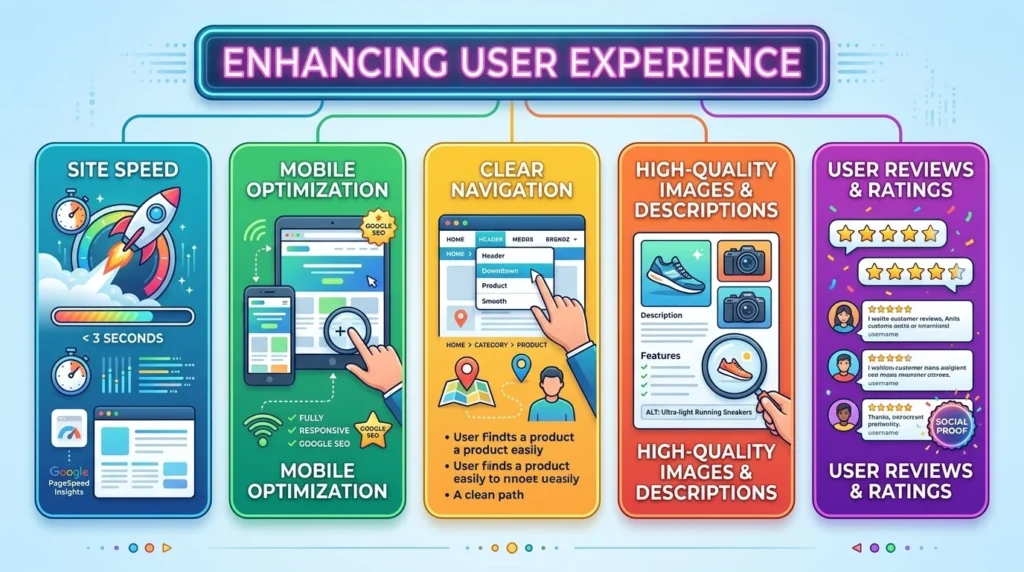
To enhance user experience, consider the following key factors:
- Site Speed: Slow-loading websites can deter potential customers. Aim for a loading time of under 3 seconds. Tools like Google PageSpeed Insights can help analyze and improve site speed.
- Mobile Optimization: With more consumers shopping on mobile devices, ensure your site is fully responsive. This not only helps with user experience but also directly influences your ranking in mobile search results.
- Clear Navigation: Easy navigation allows users to find products without frustration. Consider using a dropdown menu or breadcrumb navigation to enhance usability.
- High-Quality Images and Descriptions: Use clear, high-resolution images and detailed product descriptions. This not only engages users but also helps your SEO since search engines index image alt texts and page content.
- User Reviews and Ratings: Include customer reviews and ratings on your product pages. These elements add social proof and can improve click-through rates from search results.
The next step is understanding how these factors directly impact SEO. Google uses algorithms that prioritize good user experiences. If users are happy, they spend more time on your site, click on your links, and are less likely to bounce back to the search results. Here’s how a superior user experience contributes to better SEO:
- Reduced Bounce Rate: A well-designed UX keeps users engaged, minimizing the chances they will leave the site quickly. A lower bounce rate signals to search engines that your site is valuable.
- Increased Time on Site: The longer users stay on your site, the better it looks to search engines. Focus on creating engaging content that holds their attention.
- Enhanced Conversion Rates: A good user experience often leads to increased sales. Higher conversion rates can boost your overall site authority in the eyes of search engines.
Another important aspect of UX is the checkout process. A complicated or lengthy checkout can cause users to abandon their carts. To optimize this, consider the following:
| Checkout Optimization Techniques | Benefits |
|---|---|
| 1. Simplified Forms | Encourages users to complete their purchases |
| 2. Guest Checkout Options | Reduces friction for new customers |
| 3. Clear Progress Indicators | Keeps users informed of how many steps remain |
| 4. Multiple Payment Options | Caters to customer preferences |
Offering a variety of payment methods increases the likelihood that customers will complete their purchases. By improving the checkout experience, you not only facilitate transactions but also enhance overall user satisfaction, which in turn can positively influence your SEO.
Furthermore, you can boost user engagement with interactive elements such as quizzes and chatbots that provide personalized recommendations. This level of interactivity can hold users’ attention longer and encourage them to explore more of your offerings.
Consider optimizing your local SEO if you have a physical presence. This includes claiming your Google My Business listing and ensuring that your NAP (name, address, phone number) information is consistent across platforms. This can have a significant impact on how your ecommerce site ranks in local search results.
Enhancing user experience is not just about satisfying customers; it’s a vital cog in the wheel of Search Engine Optimization for Ecommerce Stores. By focusing on site speed, mobile optimization, user-friendly navigation, rich content, and streamlined checkout processes, you can raise the quality of user interaction on your site. This, in turn, will help you climb the SERPs and boost overall sales.
For more detailed strategies on ecommerce SEO and user experience, consider visiting resources like Shopify’s Blog and Moz.
Conclusion
Implementing Search Engine Optimization for Ecommerce Stores is a multifaceted endeavor that can greatly enhance visibility and drive sales. By embracing effective SEO strategies tailored to your online retail space, you can position your products in front of the right audience. Crafting compelling product descriptions is key, as they not only inform potential buyers but also serve as valuable tools for search engines. Make sure your descriptions are rich in relevant keywords while remaining engaging for customers.
Site architecture plays an essential role in how well your ecommerce site is optimized. A clear and user-friendly layout not only helps search engines crawl your site effectively but also enhances the shopping experience for your customers. Meanwhile, comprehensive keyword research is a necessity; understanding what terms your target audience is searching for allows you to tailor your content, making it easier to attract the right visitors.
User experience significantly influences SEO performance. A seamless shopping process encourages users to stay longer and engage with your products, which search engines reward with higher rankings. By optimizing for both SEO and user experience, you create a synergy that benefits your online store.
Ultimately, the quest for high search engine rankings should go hand in hand with providing an excellent shopping experience. The more you focus on your customers’ needs and preferences, the more your ecommerce store will thrive in search results. Keep refining your strategies and adapting to evolving SEO practices, and your online business will unlock its full potential.