
Link Building Techniques for New Websites


ATTENTION: Want to Learn Affiliate Marketing from Successful Affiliates?
Building a strong link profile is essential for new websites aiming to improve their search engine rankings. Here are several effective techniques that can help you foster quality backlinks and increase your website’s visibility.
Start with High-Quality Content
Creating remarkable and relevant content is your first step in attracting organic backlinks. The better your content, the more likely others are to link to it. Focus on:
- Blog posts: Write in-depth articles that provide value to your audience.
- Infographics: People love visual content. Share infographics to convey complex information simply.
- Guides and Tutorials: Comprehensive guides are often linked back to as resources.
Guest Blogging
Guest blogging is a potent link building technique for new websites. By contributing to established blogs in your niche, you can earn backlinks and set your brand as an authority. Here are key steps:
- Research websites that accept guest posts in your industry.
- Pitch unique ideas that provide value to their audience.
- Include a link back to your website in your author bio.
Utilize Social Media Platforms
Promoting your content on social media can help in gaining visibility and backlinks. Sharing your posts can attract attention from influencers who may link to your website. Make sure to:
- Engage with your audience.
- Share noteworthy posts regularly.
- Participate in industry-related discussions to expand your reach.
Build Relationships with Influencers
Establishing connections with industry influencers can be invaluable. Consider the following steps:
- Follow them on social media and engage with their content.
- Reach out to collaborate on projects or content.
- Request mentions of your content from credible influencers.
Directories and Local Listings
Submitting your website to relevant online directories can lead to quality backlinks. Focus on:
- Industry-specific directories.
- Local listings to improve visibility within your community.
- Check out Yelp and Yellow Pages for local options.
Broken Link Building
Finding broken links on websites and suggesting your content as a replacement can be an effective strategy. Here’s how:
- Use tools like Ahrefs to find broken links.
- Contact the site owner and let them know about the broken link.
- Suggest your relevant content as an excellent alternative.
Leverage Online Forums and Communities
Participating in online forums related to your niche can lead to organic link opportunities. Here’s what to do:
- Join platforms like Reddit or Quora.
- Provide valuable insights and link to your content when relevant.
Collaborate with Other Website Owners
Reaching out to other website owners for collaboration can yield great results. Consider these points:
- Host webinars or collaborative content pieces.
- Create resource lists that include links to multiple sites.
- Exchange testimonials with other businesses and link back to your site.
Monitor and Analyze Your Backlink Profile
Regularly analyzing your backlink profile can help you understand what works best for your site. Use tools like Moz or SEMrush to track your backlinks. Keep an eye out for:
- The quality of backlinks.
- The source of the links.
- Your overall visibility on search engines.
By employing these Link Building Techniques for New Websites, new websites can pave the way for increased visibility and authority in their niche. Remember to focus on quality over quantity and engage genuinely with your target audience for the best results.
Understanding the Importance of Backlinks in SEO
Backlinks play a critical role in search engine optimization (SEO). These links from other websites to yours act as votes of confidence, demonstrating to search engines that your content is valuable and credible. The more quality backlinks you have, the higher your site is likely to rank in search results, attracting more organic traffic. Let’s explore the significance of backlinks and how they enhance your website’s performance.
Why Backlinks Matter
Backlinks serve multiple essential functions in SEO:
- Authority and Trust: When reputable sites link to your content, it signals to search engines that your website is trustworthy. This trust enhances your site’s authority.
- Improved Rankings: Backlinks are a major ranking factor in search algorithms. Pages with high-quality backlinks rank better than those without.
- Referral Traffic: Backlinks can drive direct traffic to your website as visitors click on these links. This can result in a higher conversion rate.
- Indexing: Search engines discover new pages through backlinks. Having links from established sites can help ensure your content gets indexed quickly.
Types of Backlinks
Understanding the different types of backlinks is crucial for building a successful link profile:
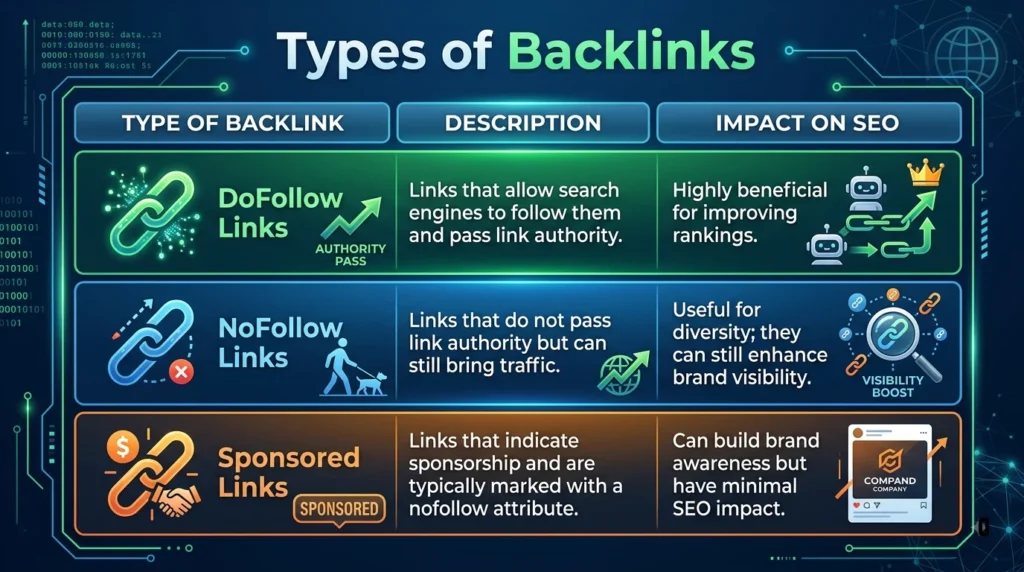
| Type of Backlink | Description | Impact on SEO |
|---|---|---|
| DoFollow Links | Links that allow search engines to follow them and pass link authority. | Highly beneficial for improving rankings. |
| NoFollow Links | Links that do not pass link authority but can still bring traffic. | Useful for diversity; they can still enhance brand visibility. |
| Sponsored Links | Links that indicate sponsorship and are typically marked with a nofollow attribute. | Can build brand awareness but have minimal SEO impact. |
How to Acquire Quality Backlinks
Building a solid backlink profile requires strategic approaches. Here are some effective techniques to acquire quality backlinks:
- Create High-Quality Content: The foundation of backlinks is great content. Write articles that solve problems, provide valuable insights, or are entertaining. This increases the likelihood of getting shared and linked to.
- Guest Blogging: Reach out to bloggers in your niche and offer to write a guest post. Include a link back to your site within the article to drive traffic and build authority.
- Broken Link Building: Find broken links on other websites and reach out to the site owners. Offer them a replacement link to your content that fits their needs.
- Engage on Social Media: Share your content on social platforms to increase visibility. Engaging with your audience can lead to more shares and links.
- Collaborate with Influencers: Partnering with influencers can amplify your reach. They may link to your content if they find it valuable to their followers.
Measuring Your Backlink Profile
Regularly measuring your backlink profile is essential for understanding its health and effectiveness. Use tools such as:
- Ahrefs – A robust tool offering insights on backlinks and overall SEO performance.
- Moz – Provides a comprehensive analysis of your site’s link profile.
- SEMrush – Allows you to track backlinks, and monitor competitor strategies.
Focusing on quality rather than quantity is vital when it comes to backlinks. Aim for links from authoritative sources to ensure you’re building a reputation that search engines will recognize.
Backlinks remain a cornerstone of effective SEO strategies. By understanding their importance and implementing robust acquisition strategies, you can significantly enhance your website’s authority, visibility, and traffic over time.
The Role of Content Quality in Link Acquisition
When it comes to link acquisition, the quality of your content plays a pivotal role. Quality content doesn’t just engage your audience; it also builds trust and credibility with other websites. This trust is crucial when you’re a new website looking to establish your online presence. High-quality content increases the likelihood that other websites will reference and link to your pages, leading to a robust link profile over time.
One significant factor is the concept of providing value. If your content answers specific questions, solves problems, or provides unique insights that aren’t readily available elsewhere, you position yourself as an authority in your niche. This recognition can lead to organic backlinks from reputable sources, ultimately improving your site’s search engine rankings.
Here are some effective strategies for using quality content to enhance your link acquisition efforts:
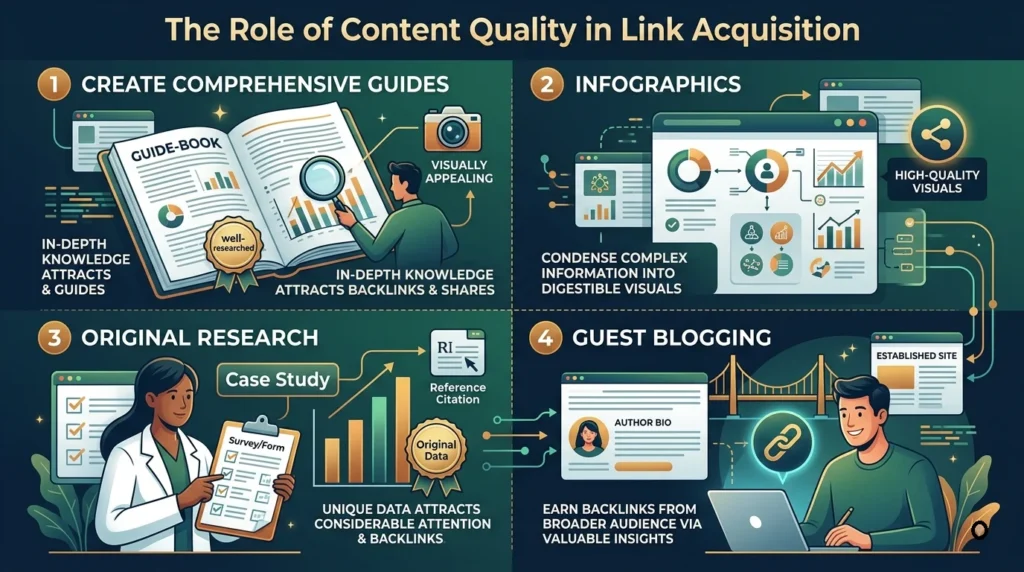
- Create Comprehensive Guides: In-depth guides are excellent for acquiring links. Readers looking for detailed knowledge are likely to share resources that help them learn. Consider creating a comprehensive guide related to your niche, and ensure it’s well-researched and visually appealing.
- Infographics: Visual content like infographics can captivate audiences and encourage sharing. Infographics condense complex information into digestible visuals that are easy to understand. High-quality visuals are more likely to be linked back to as sources of information.
- Original Research: Publishing original research, statistics, or case studies can attract considerable attention and backlinks. Websites often reference such unique data to support their content, creating an opportunity for you to gain links.
- Guest Blogging: While this technique isn’t solely about content quality, writing guest posts for established sites in your niche helps you reach a broader audience. When your guest post contains valuable insights, the host website is more likely to allow a backlink to your own site.
Another important aspect is consistency. Regularly publishing high-quality content builds a content library on your site that serves as a resource for visitors and is more likely to catch the attention of other content creators. Establishing a consistent schedule can also keep your audience engaged and encourage repeat visits, further solidifying your standing online.
SEO-friendly content is designed for people first and search engines second. Search engines reward valuable, user-friendly content with better rankings, making them more discoverable and likely to be linked to. Here’s a list of vital characteristics that make your content truly stand out:
- Relevance: Content must resonate with your target audience. Know what they’re looking for and deliver exactly that.
- Clarity: Avoid jargon and complex language. People appreciate easy-to-read guidance that they can quickly execute.
- Engagement: Pose questions and invite comments. Engaging readers can lead to increased shares and references.
- Timeliness: Cover current events or updates in your niche. Timely content that relates to trending topics can boost visibility.
Moreover, the distribution of high-quality content is equally significant. Once you’ve created your valuable content, promote it through social media, newsletters, and forums related to your niche. Engaging with communities can lead to organic links from users who find your content helpful.
Leveraging Social Media for Link Building Success
In today’s digital world, link building is a crucial part of any successful SEO strategy. For new websites, leveraging social media can play a significant role in establishing authority and driving traffic. Here are several effective strategies to harness social media for link building.
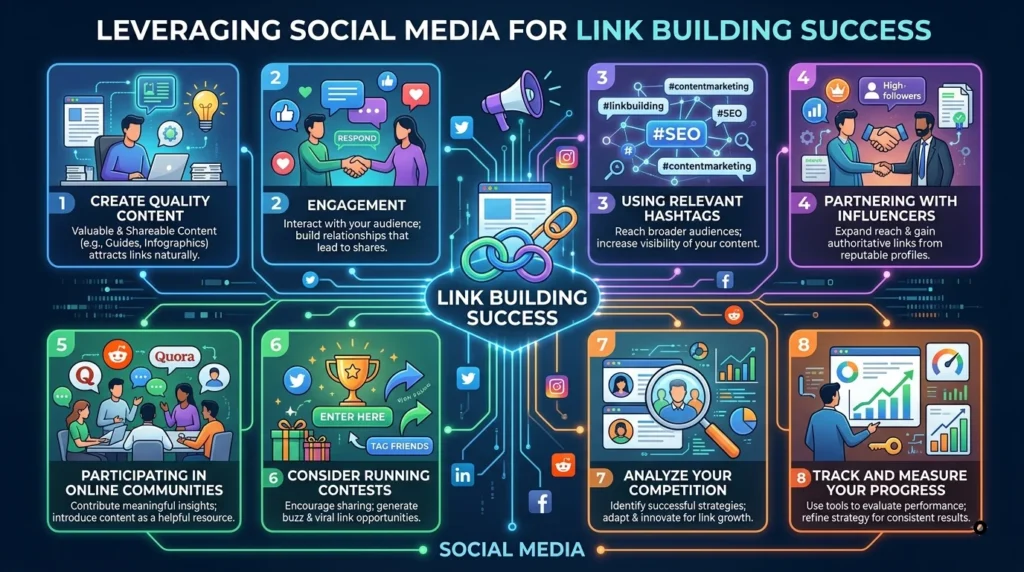
Create quality content
One of the first steps is to create quality content. Valuable and shareable content such as blog posts, infographics, and videos will attract attention. When users find your content useful, they are more likely to share it and link back to your website. Think about what information your audience is seeking and provide solutions. Articles that answer common questions or address pain points can become popular on social platforms.
Engagement
Engagement is another key factor. Interacting with followers on platforms like Twitter, Facebook, and Instagram helps build relationships. When you engage with your audience, you increase the likelihood that they will share your content. Respond to comments, ask questions, and ensure your presence is active. This not only builds a community but also increases the chances of attracting backlinks.
Using relevant hashtag
Using relevant hashtags can also boost your visibility. When you include trending or niche-specific hashtags in your posts, more people can discover your content. Tools like Hashtagify or RiteTag can help you find the most effective hashtags to use. More visibility often translates into more backlinks as others find and link to your content.
Partnering with influencers
Partnering with influencers can produce great results. Reach out to social media influencers in your niche and propose collaborations, whether it’s guest blogging, interviews, or sharing each other’s content. Influencers have established audiences, and when they share your work, you may gain new links and traffic. Utilize platforms like BuzzSumo or Followerwonk to identify key influencers relevant to your industry.
Participating in online communities
Participating in online communities or forums can also be advantageous. Websites such as Reddit, Quora, or niche-specific forums allow you to share your expertise while providing links back to your content. However, it’s vital to contribute meaningfully rather than spamming links. Build a reputation for quality contributions first, and then introduce your content as a helpful resource.
Consider running contests
Consider running contests or giveaways. This strategy encourages sharing and can create a buzz around your brand. Offer a valuable prize and require users to share your post or tag their friends for entry. This can dramatically increase your reach and lead to more backlinks as participants share your contest and refer their networks.
Analyze your competition
Analyze your competition. Keep an eye on how your competitors are using social media for their link building efforts. Tools like SEMrush or Ahrefs can provide insights into their backlink profiles. By understanding their successful strategies, you can adapt and innovate your own link building process.
Track and measure your progress
Track and measure your progress. Utilize analytics tools like Google Analytics and social media insights to assess what types of content are performing well. By reviewing which posts garner the most engagement or shares, you can refine your strategy and focus on content that resonates with your audience.
Social media
Social media can enhance your link building strategy significantly. By creating valuable content, engaging actively with your audience, leveraging influencers, and participating in communities, you can drive traffic to your new website and build valuable backlinks over time. Explore platforms like Social Media Examiner for additional tips on enhancing your social media presence.
Embrace these techniques, and you’ll not only build links but also create a community around your brand. Social media is more than a promotional tool; it’s a powerful ally in your quest for increased visibility and authority online.
Common Mistakes to Avoid in Link Building Strategies
When diving into link building for your new website, it’s crucia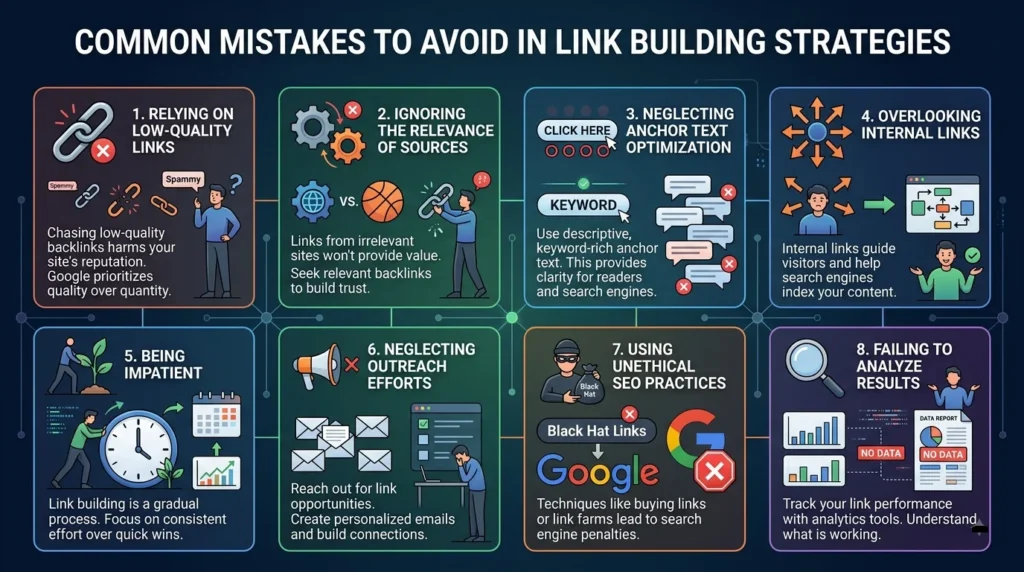 to understand common pitfalls that can hinder your success. By avoiding these mistakes, you can create an effective link building strategy that enhances your site’s authority and visibility. Here are some key mistakes to watch out for:
Relying on Low-Quality Links
One of the biggest missteps is chasing low-quality or spammy backlinks. While they might seem attractive due to their easy acquisition, these links can harm your site’s reputation. Search engines like Google prioritize quality over quantity. Focus on earning links from reputable websites in your niche that can genuinely enhance your authority.
Ignoring the Relevance of Sources
Linking to irrelevant sites won’t provide much value, either for your audience or search engines. Always seek links from websites that relate to your content. Relevant backlinks demonstrate to search algorithms that your site is a trustworthy source of information within your industry. To find relevant sites, consider using tools like Ahrefs or Moz to analyze potential link sources.
Neglecting Anchor Text Optimization
The anchor text you use when linking to and from your site is crucial. If the anchor text is generic or used inconsistently, it won’t help your SEO efforts. Use descriptive, keyword-rich anchor text that reflects the content of the linked page. This provides clarity for readers and helps search engines understand the context of the link.
Overlooking Internal Links
Many new site owners focus solely on external links, forgetting the power of internal linking. Internal links guide visitors through your site, enhancing user experience and boosting page views. Additionally, search engines use internal links to discover and index your content. Ensure you include relevant internal links in your articles; they can significantly improve your site’s SEO.
Being Impatient
Link building is a gradual process. One significant mistake is expecting immediate results. It often takes time for links to impact your rankings. Focus on consistent efforts rather than quick wins. Develop relationships with other sites and continuously seek high-quality link opportunities. Be persistent, and remember that a robust backlink profile is built over time.
Neglecting Outreach Efforts
Failing to reach out for link opportunities can limit your growth. Many website owners underestimate the power of a simple email outreach campaign. Create a well-crafted email introducing yourself and explaining why your content is valuable for them to link to. Personalize your messages and follow up where necessary. Building those connections can lead to fruitful link building.
Using Unethical SEO Practices
Engaging in black-hat SEO practices can lead to severe repercussions. Techniques such as buying links or participating in link farms can result in penalties from search engines. Focus on ethical link building strategies that foster trustworthiness. Sustainable practices not only protect your site but also develop lasting connections in your industry.
Failing to Analyze Results
One of the most critical mistakes is not analyzing your link building efforts. Without proper analytics, it’s challenging to understand what works and what doesn’t. Use tools like Google Analytics and SEMrush to track your link performance. Look at referral traffic, search rankings, and the overall effectiveness of your link strategy.
Link Building Checklist for New Websites
- Focus on acquiring high-quality, relevant links.
- Optimize anchor text to be descriptive and keyword-rich.
- Include internal links to enhance navigation and search indexing.
- Be patient; effective link building takes time.
- Engage in personalized outreach for link opportunities.
- Avoid unethical practices that could harm your site.
- Regularly analyze your link building performance for adjustments.
By avoiding these common mistakes, you’re poised to create a successful link building strategy for your new website. Remember that each link should enhance your site’s authority and provide real value to your audience. For more strategies on effective link building, consider visiting Search Engine Journal or Backlinko.
Conclusion
Building a robust link profile is essential for new websites aiming to succeed in search engine rankings. By utilizing effective Link Building Techniques for New Websites, you can establish credibility and authority in your niche. Understanding the importance of backlinks in SEO can’t be overstated; they act as endorsements that signal to search engines the trustworthiness of your site. High-quality backlinks, in particular, can significantly enhance your online visibility.
Creating valuable and engaging content is the cornerstone of successful link acquisition. When your content resonates with readers, it naturally attracts links from other websites and influencers. Moreover, leveraging social media platforms gives you the power to share your content widely and connect with more potential link sources. Engaging with your audience on these platforms can lead to organic link building opportunities that you might not have otherwise encountered.
However, it’s crucial to avoid common pitfalls in your link building strategies. Rushing into link acquisition or focusing solely on quantity over quality can harm your website’s reputation and ranking. Take your time to craft thoughtful approaches, curate your links, and always prioritize genuine engagement over manipulative tactics.
With a solid understanding of these aspects, you are now equipped to implement effective link building practices. By prioritizing high-quality content, tapping into social outreach, and steering clear of common mistakes, your new website can lay a strong foundation for long-term SEO success. Embrace these strategies, and watch your online presence flourish as you attract valuable backlinks and grow your audience.