
AI Tools for Content Creation


ATTENTION: Want to Learn Affiliate Marketing from Successful Affiliates?
In today’s digital world, AI tools for content creation are transforming how writers produce and share information. These tools harness the power of artificial intelligence to streamline writing processes, improve content quality, and enhance creativity. Understanding these tools and their impact can significantly change modern writing practices.
One of the exciting features of AI tools is their ability to generate ideas quickly. Tools like Storybird and Canva empower writers to brainstorm and visualize concepts effortlessly. They provide templates and design elements to help craft engaging stories or presentations. By reducing the time spent on preliminary research and brainstorming, writers can focus more on delivery and connection with their audience.
Content personalization is another major advantage of AI tools. Programs like Zyro use data-driven insights to tailor content to specific audience preferences. This means your writing can resonate better with readers. Personalization increases engagement and encourages a deeper connection with your audience, ensuring they find relevant and valuable content that speaks directly to their interests.
AI tools also play a vital role in enhancing the editing process. Advanced writing assistants, such as Grammarly and ProWritingAid, provide real-time feedback on grammar, punctuation, and style. This instant feedback can greatly improve writing accuracy and clarity. Writers, both novice and experienced, benefit from these tools by producing polished work that requires less time for revisions.
Automating repetitive tasks is another way these tools assist writers. For example, platforms like HubSpot offer content management systems that schedule posts, analyze performance, and optimize SEO effortlessly. This level of automation allows writers to focus on content creation, planning, and strategy rather than getting bogged down with menial tasks.
Furthermore, AI tools can analyze trends and audience engagement in real-time. Tools like SEMrush provide insights into what topics are trending, which keywords are performing well, and how readers are interacting with content. Armed with this data, writers can adapt their strategies to stay relevant and maintain audience interest.
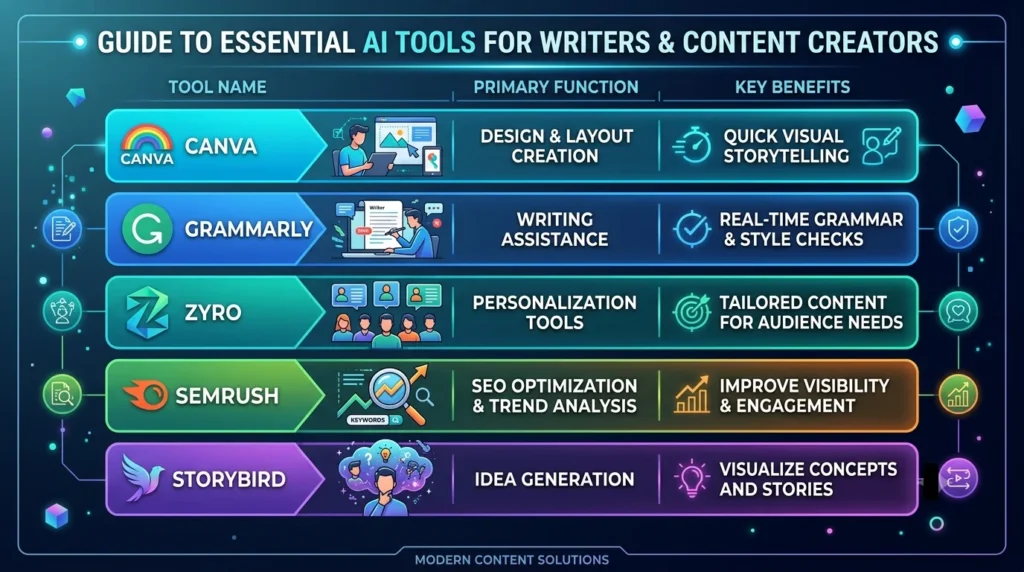
| AI Tool | Function | Benefits |
|---|---|---|
| Canva | Design and layout creation | Quick visual storytelling |
| Grammarly | Writing assistance | Real-time grammar and style checks |
| Zyro | Personalization tools | Tailored content for audience needs |
| SEMrush | SEO optimization and trend analysis | Improve visibility and engagement |
| Storybird | Idea generation | Visualize concepts and stories |
These advances in AI-driven tools for content creation not only foster creativity but also enhance productivity. Writers can produce content more efficiently while maintaining high standards of quality. As these tools evolve, they will continue to revolutionize content creation by making the writing process accessible and efficient for everyone.
Integrating AI tools for content creation into your writing routine can enhance your strategy and execution, leading to better results. Whether you’re creating blog posts, marketing content, or engaging stories, these AI resources can help you connect with your audience effectively. The future of writing is here, and it’s powered by AI.
How AI Can Enhance Creativity in Content Development
In the modern landscape of content development, creativity is more valuable than ever. With the introduction of artificial intelligence (AI) tools, content creators can unlock new avenues of imagination and streamline their workflow. These innovative resources are transforming how we approach content creation, enabling writers, marketers, and creatives to generate higher-quality work in less time.
Idea generation
AI tools can enhance creativity in various ways. One standout method is through idea generation. Whether you are crafting blog posts, videos, or social media updates, brainstorming can sometimes feel overwhelming. By using AI-driven platforms like Copy.ai or HubSpot’s Blog Ideas Generator, you can quickly generate topic ideas tailored to your audience’s interests. These tools often provide suggestions based on trending topics and consumer behavior.
Storytelling
Storytelling is another vital aspect of content creation where AI can play a crucial role. For instance, tools such as Storybird and Narrative Science use natural language processing to help structure stories more effectively. By analyzing data and identifying patterns, these AI resources can suggest narrative arcs that resonate more deeply with audiences, improving engagement and emotional connection.
Writing process
Furthermore, AI can optimize the writing process itself. Tools like Grammarly and Scribens offer instant grammar checks and style suggestions, allowing you to enhance clarity and readability. This real-time assistance reduces the time spent editing drafts and allows content creators to focus more on developing their unique voice and creative ideas.
Visual content
Visual content is critical in today’s digital world, and AI can also assist in this realm. Platforms such as Canva and Designify leverage AI to provide smart design suggestions. They can recommend color palettes, layouts, and graphic elements based on current design trends. This capability ensures that your visual content not only looks professional but also aligns with your brand identity.
Enhances creativity
Another fascinating way AI enhances creativity is through personalized content experiences. For instance, AI-driven analytics can assess user preferences and behavior patterns to tailor content recommendations. By utilizing tools like Optimizely or Google Analytics, creatives can craft content tailored to their audience’s preferences, leading to increased satisfaction and conversions.
It’s also essential to remember that while AI can assist in the content creation process, it complements rather than replaces human creativity. Here are a few key aspects of how to effectively integrate AI into your content creation process:
- Collaborative brainstorming: Use AI-generated ideas as a springboard for your creative thoughts.
- Real-time feedback: Leverage AI tools for content creation for grammar and style editing to refine your content efficiently.
- Audience analysis: Utilize AI analytics to understand what content resonates best with your audience.
- Visual enhancement: Implement AI-driven design tools to create compelling visuals that enhance your storytelling.
Deepen your creative output
AI tools are not just about automating tasks; they can deepen your creative output and make the content development process more dynamic. By embracing these technologies, you empower yourself to explore new ideas, craft compelling narratives, and ultimately connect better with your audience.
As you delve into the world of AI-assisted content creation, consider experimenting with different platforms to find the ones that best suit your style and needs. Whether you’re a seasoned content strategist or just starting out, these tools can significantly augment your creativity and efficiency in content development. Consider visiting websites like Content Marketing Institute to learn more about integrating AI into your content strategy for continual growth and innovation.
Comparing Popular AI Content Creation Tools: Features and Benefits
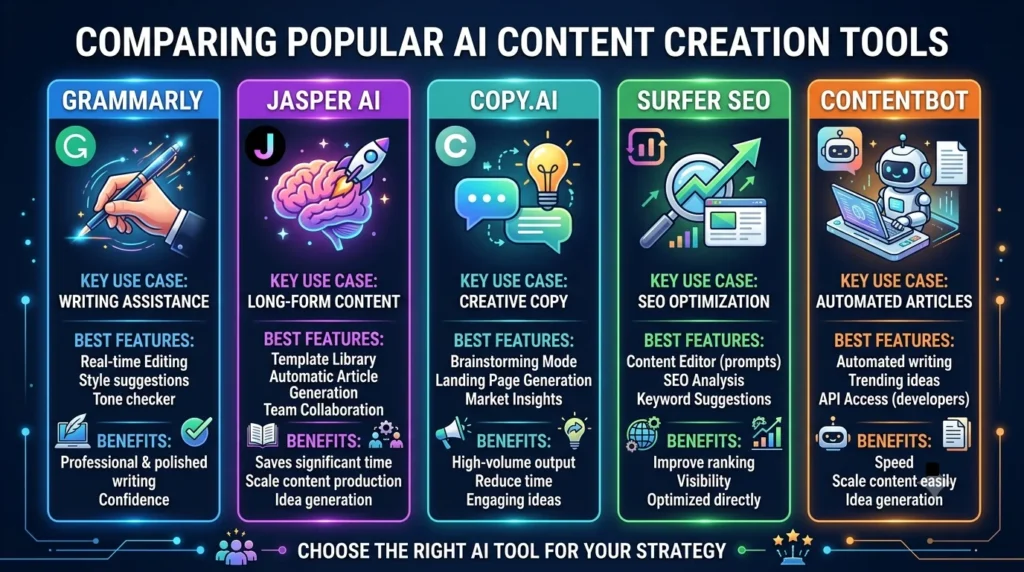
In today’s digital landscape, AI tools for content creation have revolutionized the way marketers, writers, and brands produce written material. With a myriad of options available, each tool offers unique features and benefits that cater to different needs. Understanding these distinctions can help you choose the right tool for your content creation strategy.
Grammarly
Grammarly is not just a simple grammar checker; it is an AI-powered tool that enhances your writing. Here are some of its standout features:
- Real-Time Writing Feedback: Grammarly provides suggestions as you type, which helps improve your writing quality instantly.
- Style and Tone Suggestions: This tool offers guidance on how to adjust your tone based on the target audience.
- Plagiarism Detection: Grammarly checks your content against billions of web pages to ensure originality.
The benefits of using Grammarly are significant, especially for those who want clearer, more professional writing. The premium version unlocks even more features, including advanced feedback on more nuanced writing issues like engagement and delivery. You can learn more about Grammarly at Grammarly.
Jasper AI
Jasper AI is designed specifically for marketers and creators who require high volumes of content quickly. Its primary features include:
- Content Templates: Jasper offers many templates tailored for different types of content, including blog posts, emails, and social media updates.
- Long-Form Content Creation: This tool can generate long articles and blogs automatically, saving you a significant amount of time.
- Collaboration Features: Jasper allows teams to work together on content projects seamlessly.
This tool is ideal for brands looking to scale their content efforts intelligently. Learn more about Jasper AI at Jasper AI.
Copy.ai
Copy.ai simplifies content creation with its robust features, perfect for both beginners and seasoned writers. Notable features include:
- AI-Powered Copy Generation: Generate innovative and engaging copies for landing pages, ad campaigns, and more.
- Brainstorming Mode: Use this feature to come up with creative ideas and angles for your content.
- Market Research: Copy.ai helps in generating insights about industry trends and customer needs.
The benefit here is that you can quickly produce captivating content that resonates with your audience, without spending hours brainstorming. To explore more about this tool, visit Copy.ai.
Surfer SEO
While Surfer SEO focuses primarily on optimizing content for search engines, it integrates AI tools for content creation seamlessly. Key features include:
- Content Editor: Create content directly within the platform with prompts based on a specific keyword.
- SEO Analysis: Surfer provides insights on how to improve your content for better search engine rankings.
- Keyword Suggestions: Get a list of related keywords to enhance content relevance.
Using Surfer SEO helps not only in content creation but also in ensuring that your writing is visible to more readers online. For more information, check out Surfer SEO.
ContentBot
ContentBot is an effective solution for generating automated content. Its primary features include:
- AI Content Writing: Create blog posts and articles tailored to your specifications quickly.
- Idea Generation: ContentBot helps generate content ideas based on trending topics.
- API Access: For developers, API access allows the integration of ContentBot capabilities into existing platforms.
This tool is great for marketers who need high volumes of content to stay competitive. You can visit ContentBot for more details.
AI tools for content creation are increasingly becoming vital for anyone serious about content marketing. Each of these tools comes with its own set of features that cater to different content needs. Evaluating which features align with your goals will help streamline your writing process and effectively engage your target audience.
The Future of Content Creation: AI’s Role in Evolving Workflows
The landscape of content creation is rapidly changing, and artificial intelligence (AI) is at the forefront of this transformation. With the rise of AI tools, content creation is becoming more efficient and effective, allowing creators to focus on their core message instead of getting bogged down by the intricacies of the writing process. Let’s explore how AI tools for content creation play a significant role in evolving workflows in the content creation sphere.
Understanding AI Tools
AI tools for content creation encompass a wide array of technologies designed to assist writers and marketers. These tools use algorithms and data analysis to enhance the quality and efficiency of content generation. By leveraging AI, creators can save time and resources while still delivering engaging and informative content. Common AI tools include:
- Content Generators: These tools can create drafts from a few prompts or keywords, making it easier to kickstart the writing process.
- Grammar and Style Checkers: Tools that help polish writing by suggesting grammatical corrections and style improvements.
- SEO Optimization Tools: Applications that analyze content to improve its search engine visibility by suggesting keywords and optimizing structure.
- Data Analysis Tools: AI tools that analyze audience engagement, helping creators tailor content to meet the needs of their target demographic.
The Benefits of AI in Content Creation
The integration of AI tools for content creation in content workflows presents several benefits that can enhance your writing process.
| Benefit | Description |
|---|---|
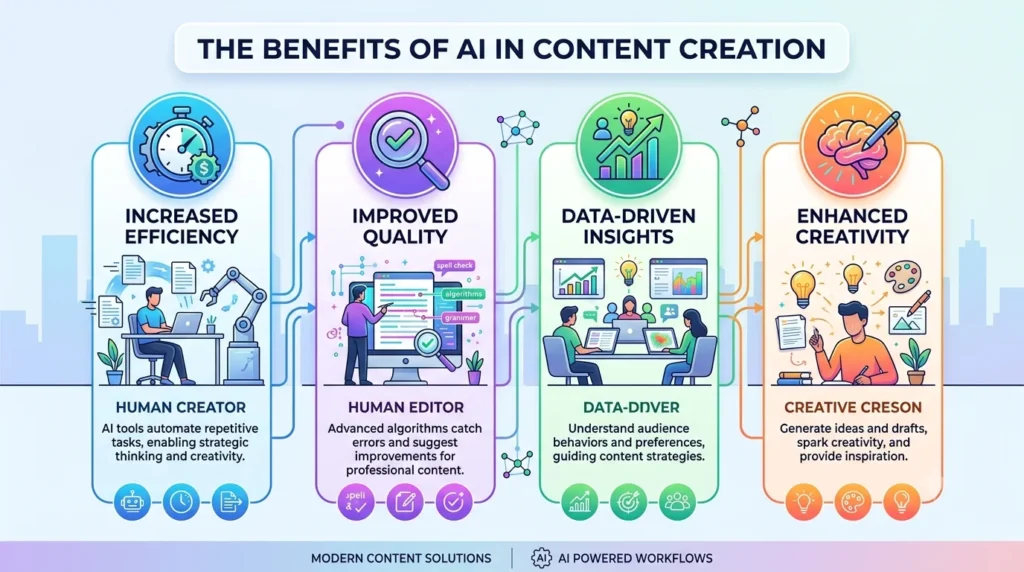
| Increased Efficiency | AI tools for content creation can automate repetitive tasks, allowing creators to spend more time on strategic thinking and creativity. |
| Improved Quality | With advanced algorithms, AI can help catch errors and suggest improvements, leading to polished and professional content. |
| Data-Driven Insights | AI tools for content creation provide valuable analytics, enabling creators to understand audience behaviors and preferences, which can guide content strategies. |
| Enhanced Creativity | By generating ideas and drafts, AI tools for content creation can spark creativity and provide inspiration that may not have been considered otherwise. |
Real-World Applications of AI Tools
Many businesses are already embracing AI tools for content creation to streamline their content creation processes. For example:
- Automated Blogging: Companies like Jasper utilize AI to generate blog posts based on identified keywords and topics.
- Social Media Management: Tools such as Buffer can analyze your audience engagement to craft better social media content.
- Video Content Creation: Platforms like Designs.ai use AI to assist in video editing and scriptwriting based on popular trends and user data.
The Future Landscape
As technology continues to evolve, the impact of AI on content creation will only deepen. We can expect:
- More Advanced AI: Future AI tools will likely feature machine learning capabilities, allowing them to adapt and improve over time based on user feedback.
- Wider Adoption: Businesses of all sizes will increasingly implement AI tools for content creation to enhance their content strategies.
- Personalization: AI will facilitate hyper-personalized content, targeting individual user preferences with greater accuracy.
The rise of AI tools for content creation signals a new era in the way we produce and consume content. Embracing these tools allows creators to enhance their productivity, improve content quality, and gain deeper insights into their audiences. As you consider integrating AI tools for content creation into your content creation process, be sure to explore resources like Content Marketing Institute for insights and strategies in leveraging technology for effective content marketing.
Ethical Considerations in Using AI for Content Generation
As artificial intelligence (AI) continues to evolve, its use for content generation is on the rise. Writers, marketers, and companies are increasingly turning to AI tools for content creation to streamline their processes and enhance creativity. However, as exciting as these developments are, they raise important ethical considerations. Understanding these issues is vital for ensuring that the use of AI tools for content creation remains responsible and beneficial.
Transparency
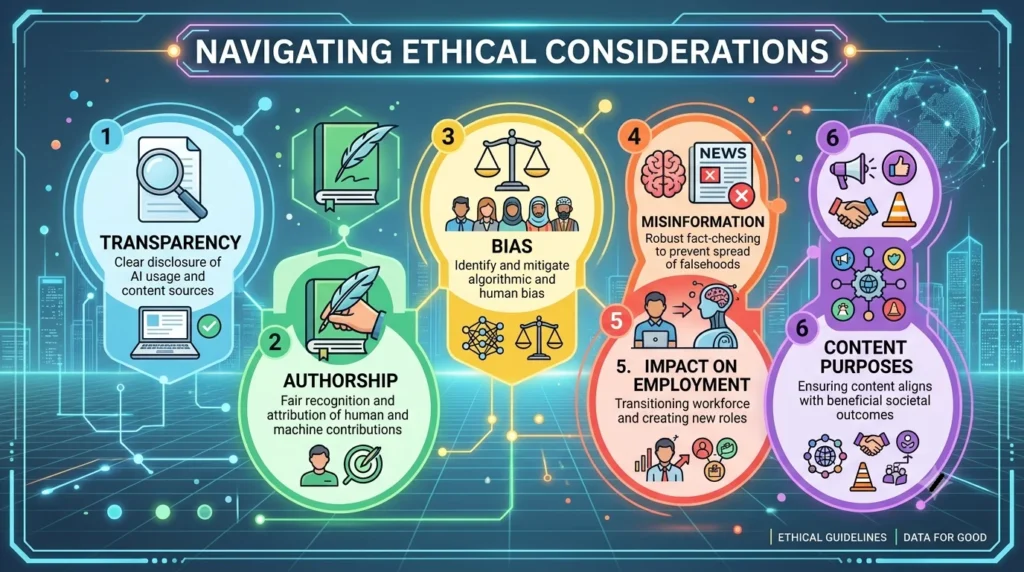
One of the primary ethical concerns relates to transparency. When using AI to produce content, it is crucial to be clear about the tools being employed. Readers have the right to know if a piece of content was generated or significantly influenced by AI. Failing to disclose this information can lead to a breach of trust.
Authorship
Additionally, considering authorship plays a central role in ethical content generation. When AI creates a piece of writing, who owns the content? The developer of the AI? The user who prompted the AI? This gray area can complicate issues of intellectual property, making it essential to establish clear guidelines around content ownership.
Bias
Another important consideration is bias. AI systems are trained on large datasets, which can include biased information. If not addressed, this can lead to the perpetuation of stereotypes or misinformation within generated content. It’s necessary to critically evaluate the training data used and take steps to minimize bias to ensure fair representation in every piece of content.
Misinformation
Moreover, the potential for misinformation is another ethical challenge. AI tools can generate content that sounds plausible but may not be accurate or truthful. It is crucial for users to fact-check and verify the information before publication. Relying solely on AI without human oversight can contribute to the spread of false information.
Here are some actionable steps you can take to mitigate ethical concerns when using AI tools for content creation:
- Be Transparent: Clearly indicate when AI has played a role in creating content.
- Define Ownership: Develop a clear framework for content ownership and rights.
- Address Bias: Review and critically assess the datasets used for training AI models.
- Fact-Check: Always verify the information generated by AI before publication.
- Solicit Feedback: Encourage audience feedback to identify potential biases or inaccuracies.
The responsibility does not end with the content creator. Developers and organizations producing AI tools must also uphold ethical standards. They should ensure that their algorithms are regularly audited for bias and that they promote inclusiveness. As users, it’s worth considering which AI tools for content creation best align with your ethical values.
Impact on employment
Another key aspect is the impact on employment. While AI can enhance productivity, it also poses risks to traditional jobs in content creation. Writers may feel threatened by the capabilities of AI writing tools. Fostering a dialogue among content creators and tech developers is essential to navigate these changes and find balance. Exploring collaborative avenues where AI assists creators rather than replaces them can lead to beneficial outcomes for everyone.
Content purposes
For organizations implementing AI for content purposes, it’s important to establish usage policies that reflect their commitment to ethical practices. By setting guidelines that prohibit plagiarism, misinformation, and biased content, you can create a more trustworthy digital landscape.
In the end, responsible use of AI tools for content creation hinges on balancing innovation with ethical considerations. By holding ourselves accountable, both individually and as an industry, we can harness the power of AI while ensuring that it serves as a positive force in content creation.
Remember, the future of AI in content generation is not just about what we can do; it’s also about what we should do. By adopting ethical practices, we can ensure a responsible approach that enhances the digital world for all.
Conclusion
The rise of AI tools for content creation has significantly transformed modern writing practices, reshaping how content is developed and presented. These advanced technologies are not just tools; they are partners in the creative process. By enhancing creativity, AI allows writers to explore new ideas and perspectives, unlocking potential that may have gone untapped without these innovations.
When comparing popular AI content creation tools, it’s clear that each offers unique features and benefits, catering to various writing needs. From streamlining research to aiding in editing, these tools pave the way for more efficient workflows. Embracing AI in content creation not only speeds up production but also enriches the quality of work produced, allowing for a more diverse range of voices in the digital landscape.
Looking ahead, AI is poised to play a crucial role in evolving content workflows. As these technologies become more intuitive and accessible, they will continue to redefine how we think about writing and storytelling. However, with great power comes responsibility. It’s essential to navigate the ethical considerations surrounding AI usage, ensuring that content remains genuine and original.
Ultimately, the integration of AI tools for content creation opens new doors for writers everywhere, encouraging collaboration between humans and machines. As you explore these tools, remain mindful of how they can enhance your creativity while staying true to your unique voice. This balance will be key to thriving in an ever-evolving content creation landscape.