How to Automate Your Affiliate Marketing Social Media Posts?


ATTENTION: Want to Learn Affiliate Marketing from Successful Affiliates?
Automating your affiliate marketing social media posts is a smart move that can save you time and enhance your marketing efforts. With platforms designed to automate posting, you can focus more on content creation and less on manual posting. Here’s a detailed look at effective strategies to help you get started.
Choose the Right Automation Tools
To automate your affiliate marketing social media posts effectively, select the right tools. Here are some popular options:
- Buffer: A simple tool that allows you to schedule posts in advance. It also provides analytics to track engagement.
- Hootsuite: A versatile platform that enables you to manage multiple social accounts and offers extensive scheduling options.
- Later: Best for visual planning, ideal for Instagram-focused marketing.
These tools will help streamline your process and ensure consistent posting.
Develop a Content Calendar
Create a content calendar that outlines when and what to post. This makes planning much easier and helps maintain consistency in your marketing. Your calendar should include:
- Post date and time
- Type of content (blog link, image, video)
- Target platform (Facebook, Twitter, Instagram)
- Any seasonal or promotional events
By visualizing your content schedule, you can automatically determine peak times for engagement.
Craft Quality Content
Your posts should be engaging and relevant. Focus on creating quality content that resonates with your audience. Consider the following tips:
- Use Engaging Visuals: Images and videos can significantly increase engagement rates. Make sure they are relevant to your affiliate products.
- Write Compelling Captions: Use active voice and straight-to-the-point messaging to invite user action.
- Include CTAs: Always add a call-to-action that guides users on what to do next, such as “Click the link below to learn more!”
Integrate Your Affiliate Links Wisely
When sharing content, ensure your affiliate links are integrated effectively. Here are some strategies:
- Use link shorteners like Bitly to create tidy, trackable links.
- Consider using a landing page that consolidates your affiliate offers, making it easier for followers to browse and shop.
- Prominently display affiliate links in high-traffic areas of your posts, like the beginning or end of your captions.
Track Your Performance
Analytics are vital in gauging what works best for your audience. Most social media automation tools offer insights on engagement rates and click-through rates. Pay attention to:
- Which posts get the most likes, shares, and comments
- The number of clicks on your affiliate links
- Conversion rates resulting from your social media efforts
This data will help you refine your strategy, significantly improving your affiliate marketing efforts.
Consistency is Key
For your automation strategy to be effective, it’s essential to remain consistent. Regularly posting ensures that you stay on top of your audience’s mind, increasing the likelihood that they will engage with your content and make purchases through your affiliate links.
Utilize User-Generated Content
Encourage your followers to share their experiences with the products you promote. User-generated content can be a powerful tool to build community. To leverage this:
- Host contests or giveaways that require users to share your product or tag you in their posts.
- Share testimonial posts from customers who have used the products you promote.
- Repost your followers’ content that features affiliate products.
Automating your affiliate marketing social media posts may seem complex, but by following these steps and utilizing the right tools, you can create an efficient, effective strategy that maximizes your reach and engagement. Remember, the goal is to build genuine connections while promoting products you believe in.
For more insights and resources, check out Smart Passive Income and Affilorama for expert advice on maximizing your affiliate marketing efforts.
The benefits of using scheduling tools for social media automation
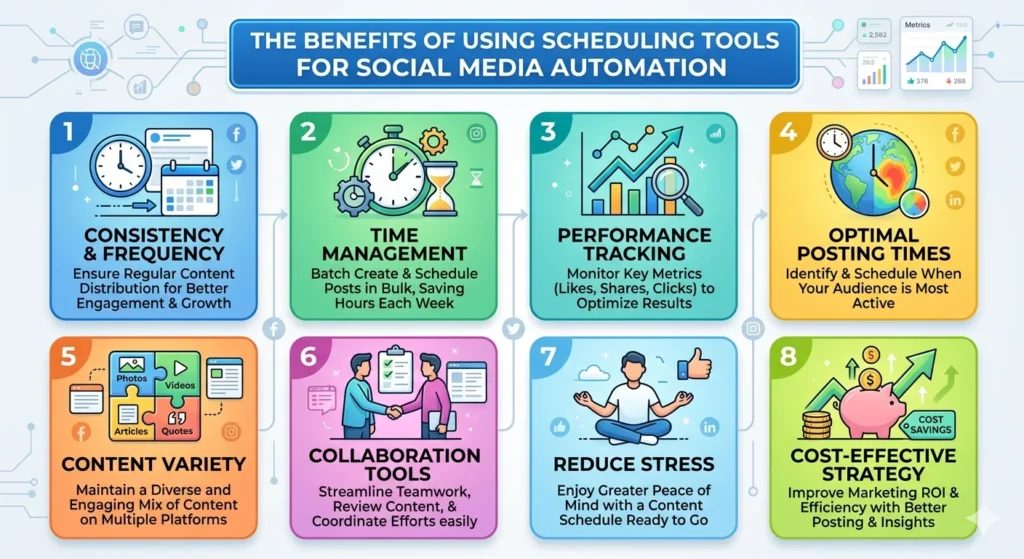
In today’s fast-paced digital world, managing social media effectively is crucial for anyone involved in affiliate marketing. Automating your social media posts can be a game changer. Here’s how scheduling tools can benefit your marketing strategy.
Consistency and Frequency
One of the most significant advantages of using scheduling tools is the ability to maintain consistency in your posting. Regular posts help build trust and engagement with your audience. When you schedule posts in advance, you can ensure that your content is distributed evenly throughout the week or month, keeping your brand active in your followers’ feeds. Consistent posting can lead to better audience retention and allow you to reach a broader range of potential customers.
Time Management
Managing multiple social media platforms can be time-consuming. By using a scheduling tool, you can dedicate just a few hours each week to create and schedule all your posts. This way, you free up your time to focus on creating quality content or engaging directly with your audience in real time. Tools like Hootsuite or Buffer help streamline this process efficiently.
Performance Tracking
Most scheduling tools come with analytics features that allow you to track the performance of your posts. This can include metrics like engagement rates, click-through rates, and overall reach. By examining these metrics, you gain insights into what content resonates best with your audience, enabling you to refine your strategy. With platforms like Sprout Social, you can easily access these analytics and make data-driven decisions.
Optimal Posting Times
Different audiences are active at different times. Scheduling tools can analyze when your followers are most engaged and suggest optimal posting times. This ensures that your posts have the potential to reach maximum visibility and interaction. By aligning your posting schedule with these peak times, you enhance your chances of boosting engagement and conversions.
Content Variety
When you schedule your posts, you can plan for a more diverse mix of content. This might include promotional posts, informative articles, and engaging imagery. A varied content strategy keeps your audience interested, which is essential for affiliate marketing success. Tools allow you to see your content calendar at a glance, enabling you to balance different types of posts effectively.
Collaboration Tools
If you work with a team, scheduling tools offer collaboration features. You can assign tasks to team members, review posts before they go live, and maintain a cohesive brand voice. Platforms like CoSchedule facilitate teamwork by allowing multiple users to easily interact with the content calendar, streamlining the overall process.
Reduce Stress
For many marketers, the pressure to always be “on” can lead to burnout. Automated scheduling removes that constant worry. Knowing you have a plan and content ready to go can alleviate feelings of stress and make managing your marketing efforts feel more manageable. Furthermore, you can take necessary breaks without sacrificing your online presence.
Cost-Effective Strategy
Investing in a scheduling tool may seem like an additional expense, but it can save you money in the long run. By improving your posting efficiency and performance, you can see a higher return on your investment in affiliate marketing. Many scheduling tools offer free trials or tiered pricing models, allowing you to choose a plan that fits your budget. For example, Later provides an affordable option with a user-friendly interface.
| Tool | Key Feature | Price Range |
|---|---|---|
| Hootsuite | Multi-platform management | Starts at $19/month |
| Buffer | Simple user interface | Starts at $15/month |
| Sprout Social | In-depth analytics | Starts at $99/month |
| Later | Visual content scheduling | Free plan available |
Social media scheduling tools into your affiliate marketing strategy can significantly enhance your effectiveness. By increasing consistency, saving time, and allowing for performance analysis, you can create a more focused and engaging approach to your online marketing. Start using scheduling tools today and watch your affiliate marketing efforts grow!
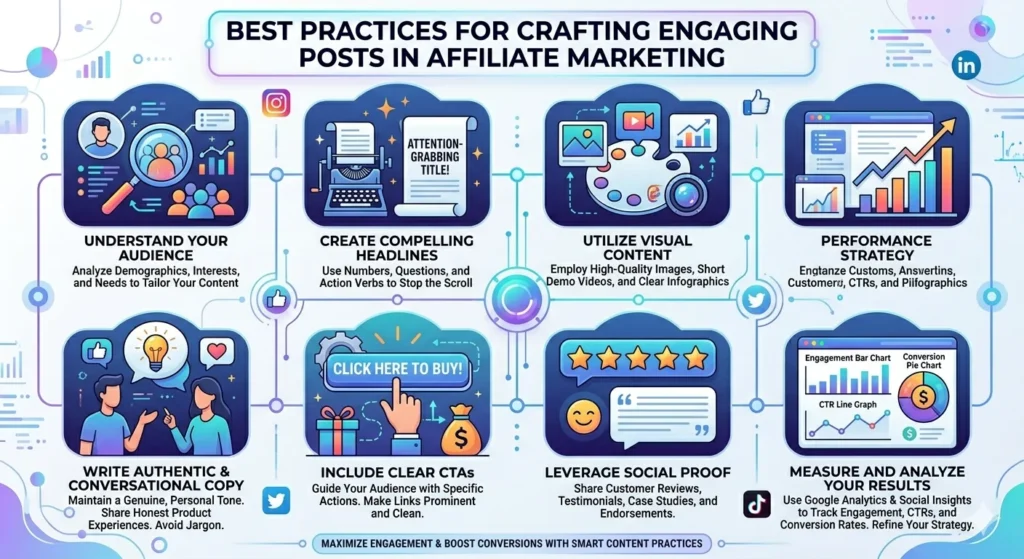
Creating engaging posts in affiliate marketing is vital for capturing your audience’s interest and driving conversions. The key to successful affiliate marketing lies in how you craft your messages. When you make your posts engaging and informative, you offer value, which in turn cultivates trust and encourages readers to take action. Here are some best practices to consider.
Understand Your Audience
The first step in crafting engaging posts is to know who your audience is. Understanding their needs, preferences, and pain points allows you to tailor your content specifically for them. Consider these aspects:
- Demographics: What is the age, gender, and location of your audience?
- Interests: What topics resonate with them the most?
- Pain Points: What challenges do they face that your affiliate products can solve?
Create Compelling Headlines
Your headline is the first part of your post that readers will see. A strong, engaging headline can stop readers from scrolling and encourage them to read more. Here are some tips for crafting compelling headlines:
- Use numbers or lists: For example, “5 Tips to Boost Your Online Sales”
- Incorporate action verbs: Words like “Discover,” “Master,” or “Unlock” can stir curiosity.
- Ask questions: For instance, “Are You Making These Affiliate Marketing Mistakes?”
Utilize Visual Content
People are more likely to engage with posts that contain visuals. Here’s how to effectively use images, videos, and infographics in your affiliate posts:
- Images: Use high-quality images that relate to your product or service. Ensure they are optimized for quick loading times.
- Videos: Create short demo videos or testimonials that showcase the product in use.
- Infographics: Present complex information in a concise, graphical manner. They are highly shareable and can boost engagement.
Write Authentic and Conversational Copy
Using a conversational tone makes your posts feel more personal and relatable. When writing, aim to engage your readers as if you’re having a direct conversation with them:
- Use “you” and “your” frequently to create a direct connection.
- Avoid jargon or overly technical language; keep it simple and straightforward.
- Inject your personality into your writing. This openness builds trust and rapport.
Include Clear Calls to Action (CTAs)
Once you’ve engaged your audience with your content, it’s crucial to guide them toward the next step. Clear CTAs can significantly influence conversion rates. Here are examples of effective CTAs:
- Join our newsletter for exclusive deals!
- Click here to discover more about this product.
- Get your free trial today!
Leverage Social Proof
Showing potential customers that others trust and endorse your affiliate products can increase your credibility. Use testimonials, reviews, and case studies to provide social proof:
| Source | Type | Content |
|---|---|---|
| Customer Testimonials | Text | “This product changed my life!” – Jane D. |
| Expert Reviews | Video | “A must-have for beginners!” – John P. |
Measure and Analyze Your Results
It’s essential to analyze the performance of your posts. Use tools like Google Analytics or social media insights to track engagement metrics. Understanding what works will allow you to refine your strategy. Look for:
- Engagement rates (likes, shares, comments)
- Click-through rates (CTRs) on affiliate links
- Conversion rates of promoted products
By following these best practices for crafting engaging posts in affiliate marketing, you can enhance your online presence and achieve better results. Always remember that generating genuine interest and providing value should be your primary goals. Try these methods now, and see how they transform your affiliate marketing strategy!
Analyzing performance metrics to optimize automated social media content
Understanding the performance metrics of your automated social media content is essential for refining your affiliate marketing strategy. By analyzing these metrics, you can identify what resonates with your audience, allowing you to optimize your posts for better engagement and higher conversion rates.
When you automate your social media posts, tools like Hootsuite and Buffer can save you time. However, without analyzing how each post performs, you may miss valuable insights. Metrics such as engagement, reach, clicks, and conversions can provide a clearer picture of your content’s effectiveness.
Key Performance Metrics to Monitor
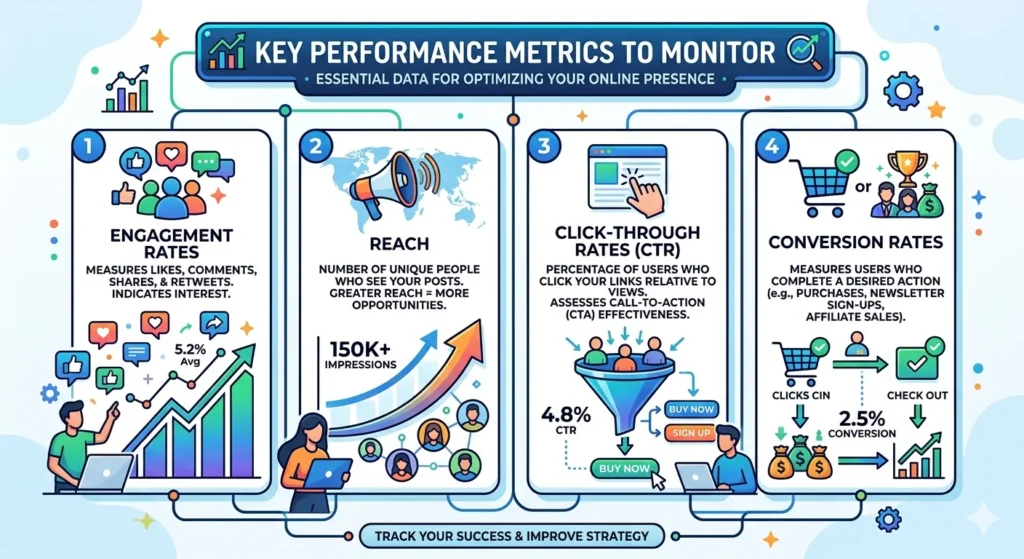
- Engagement Rates: This includes likes, comments, shares, and retweets. Higher engagement typically suggests your audience finds your content interesting.
- Reach: Indicates how many people have seen your post. A larger reach means more opportunities for engagement.
- Click-Through Rates (CTR): The percentage of users who click on your links relative to the number of users who view your posts. This is crucial for evaluating the effectiveness of your call to action.
- Conversion Rates: This metric measures how many users completed a desired action, such as signing up for a newsletter or making a purchase through your affiliate link.
Data Analysis Strategies
To effectively analyze these metrics, you can implement various strategies:
- Set Clear Goals: Before analyzing data, determine what specific outcomes you aim to achieve. Whether it’s increasing followers or boosting sales, having clear goals helps focus your efforts.
- No. of Posts: Track how many posts you publish over a defined period. This will help you compare performance across different time frames.
- Content Type: Analyze which types of posts (videos, images, long-form content) perform best. This analysis will allow you to tailor your future content effectively.
- Optimal Timing: Assess when your audience is most active on social media platforms. Adjust your scheduling to maximize visibility and engagement.
Tools for Performance Analysis
Utilizing various tools can make analyzing performance metrics more straightforward:
| Tool | Description | Website |
|---|---|---|
| Google Analytics | Tracks website traffic and user behavior, offering insights into referral sources from social media. | Google Analytics |
| Hootsuite | Manages and analyzes posts across multiple social media platforms, providing engagement statistics. | Hootsuite |
| Buffer | Helps automate and analyze social media posts, enabling users to see performance metrics easily. | Buffer |
Applying Insights to Optimize Content
Once you analyze the relevant metrics, apply your findings to improve future posts. Here are ways to optimize your automated social media content:
- Adjust Content Strategies: If certain content types are underperforming, pivot your strategy towards formats that garner more engagement.
- Refine Targeting: Use demographic and geographic data to tailor your posts to specific audience segments.
- A/B Testing: Regularly test different versions of posts by changing one variable (e.g., image, caption, or time of posting) to discover what works best.
Thoroughly analyzing performance metrics allows you to refine your automated social media content effectively. By setting clear goals, utilizing the right tools, and applying data-driven insights, you can enhance your affiliate marketing strategy and achieve better outcomes across your social media channels.
For more tips on optimizing your social media strategy, visit Social Media Examiner for in-depth guides and resources.
Balancing automation and authenticity in your affiliate marketing strategy
In the fast-paced world of affiliate marketing, the need to balance automation with authenticity is critical. While automation tools can save you time and help maintain a consistent online presence, there’s a fine line between being efficient and losing the personal touch that engages your audience.
To effectively blend both aspects, consider these strategies:
- Understand Your Audience: Knowing who your audience is will help you create content that resonates with them. Analyze their behavior and preferences to make automated posts feel more personalized.
- Choose the Right Tools: Utilize social media management tools that allow you to schedule posts but also give you flexibility to add a personal touch. Tools like Hootsuite and Buffer can help you automate while still allowing room for authentic interaction.
- Engage in Real Time: While automation is helpful, it’s essential to be present. Engage with comments, questions, and direct messages in real time to humanize your brand and build trust.
- Maintain a Conversational Tone: Even in automated responses, strive for a friendly and engaging tone. This will help keep your brand relatable and personable.
- Use Insights to Optimize Content: Regularly check the performance metrics of your posts. This will help you understand what content works best, allowing you to adjust your automated efforts accordingly.
Quality content is pivotal in maintaining authenticity in your affiliate marketing strategy. Here are ways to ensure your content remains genuine:
- Share Personal Experiences: Use stories or anecdotes related to your experiences with the affiliate products you promote. This adds value and relatability to your posts.
- Encourage Reviews: Invite your audience to share their experiences with the products. User-generated content will enhance authenticity and bolster your credibility.
- Post Behind-the-Scenes Content: Share snippets of your day-to-day life or the research process for your affiliations. This transparency builds trust and connection with your audience.
Let’s explore the importance of consistency in your automated strategy. Keeping a regular posting schedule is key to maintaining visibility and engagement. You can utilize a simple content calendar to help plan your posts effectively. Here’s a basic example of a weekly social media calendar:
| Day | Post Type | Content |
|---|---|---|
| Monday | Product Review | In-Depth Review of Product X |
| Wednesday | Engagement Post | Poll: Which Feature Do You Value Most? |
| Friday | User-Generated Content | Share a Customer Story or Review |
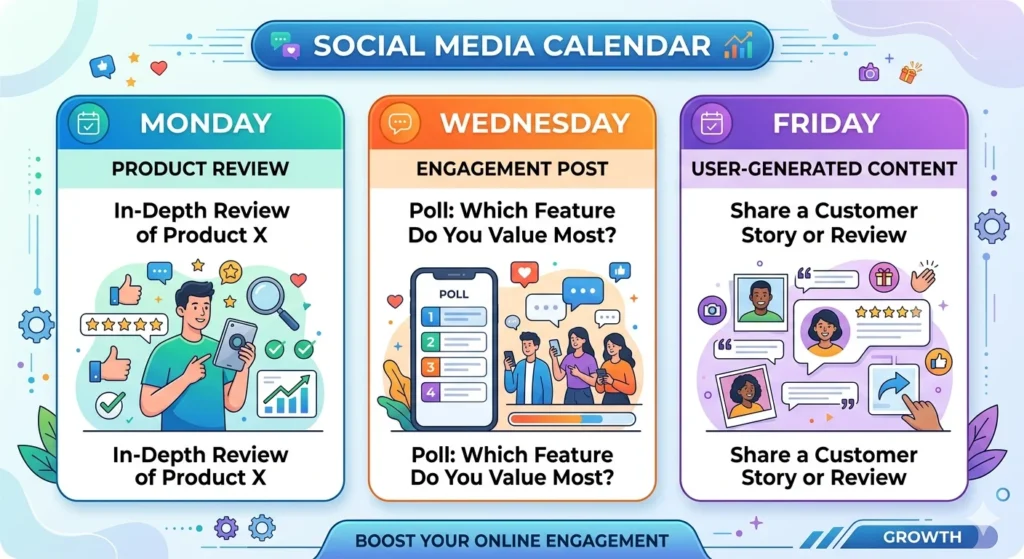
By maintaining a structured calendar, you can ensure that your automated posts align with your strategic goals, while still engaging your audience authentically. Also, consider diversifying your content types. Mixing up posts can keep your audience interested and enhance engagement.
If you want to delve deeper into the world of affiliate marketing, helpful resources include AffiliateMarketing.com and Blogging Tips, which provide valuable insights on how to fine-tune your approach.
Always remember to analyze the feedback from your audience. Listen to their needs and adjust your automated posts accordingly. This interaction not only sharpens your strategy but also fosters community building around your brand.
These strategies will help you manage your affiliate marketing efforts effectively while still preserving the authenticity that connects you with your audience. A thoughtful blend of automation and genuine human interaction is the gold standard in creating a successful affiliate marketing strategy.
Conclusion
Automating your affiliate marketing social media posts can significantly streamline your workflow while enhancing your outreach. By effectively using scheduling tools, you can ensure a consistent presence across various platforms, freeing up time for you to focus on other key aspects of your business. The benefits of these tools extend beyond just time-saving; they also allow for optimal timing of content, enabling you to reach your audience when they are most active.
Crafting engaging posts is essential in affiliate marketing. Utilizing eye-catching visuals, compelling calls-to-action, and personalized content can significantly increase user engagement. Always remember to maintain a human touch in your automated content. Balancing automation with authenticity ensures that your audience feels connected to your brand, fostering trust and loyalty over time.
Analyzing performance metrics is crucial to understanding what resonates with your audience. Regularly review analytics to determine which posts drive traffic and conversions. Use this data to optimize your future automated content, tweaking your strategy based on real-world results.
Ultimately, successful affiliate marketing on social media hinges on a blend of savvy automation and genuine engagement. By applying the strategies covered, you can maximize your marketing efforts, reaching more potential customers while preserving the authenticity that builds lasting relationships. Embrace automation without losing sight of the human element, and watch your affiliate marketing endeavors thrive.