
Affiliate Marketing with Comparison Articles

ATTENTION: Want to Learn Affiliate Marketing from Successful Affiliates?
Affiliate marketing thrives on the ability to connect consumers with products that meet their needs. One effective method to achieve this is through comparison articles. These articles not only help users make informed decisions but also boost sales for affiliate marketers. Understanding the nuances of Affiliate Marketing with Comparison Articles is key to maximizing revenue opportunities.
Before delving into how you can leverage comparison articles, it’s essential to clarify what they entail. Comparison articles allow readers to evaluate multiple products side by side. They typically showcase similar features, prices, and benefits, catering to users looking for the best options. This method aligns perfectly with the principles of affiliate marketing, which aims to drive conversions through well-informed purchasing decisions.
Benefits of Comparison Articles
Using comparison articles in your affiliate marketing strategy comes with several notable advantages:
- Informed Decisions: Readers appreciate the transparency and comprehensive details provided in comparison articles. This makes it easier for them to select the right product based on their preferences.
- Higher Engagement: These articles tend to increase user engagement as customers spend more time on the page reviewing options.
- Boosted Conversions: When users clearly see the differences and benefits, they are more likely to make a purchase through your affiliate links.
- Authority Building: By providing meticulous comparisons, you position yourself as an authority in your niche, gaining trust from your audience.
Creating Effective Comparison Articles
Crafting a quality comparison article is not just about listing products side by side. It requires a strategic approach:
- Choose Relevant Products: Focus on products that share similar features but cater to different customer needs. For instance, if you are reviewing headphones, compare budget, mid-range, and premium options.
- Focus on User Needs: Understand what your audience values. Are they looking for durability, sound quality, or customer service? Tailor the comparison to address these specific points.
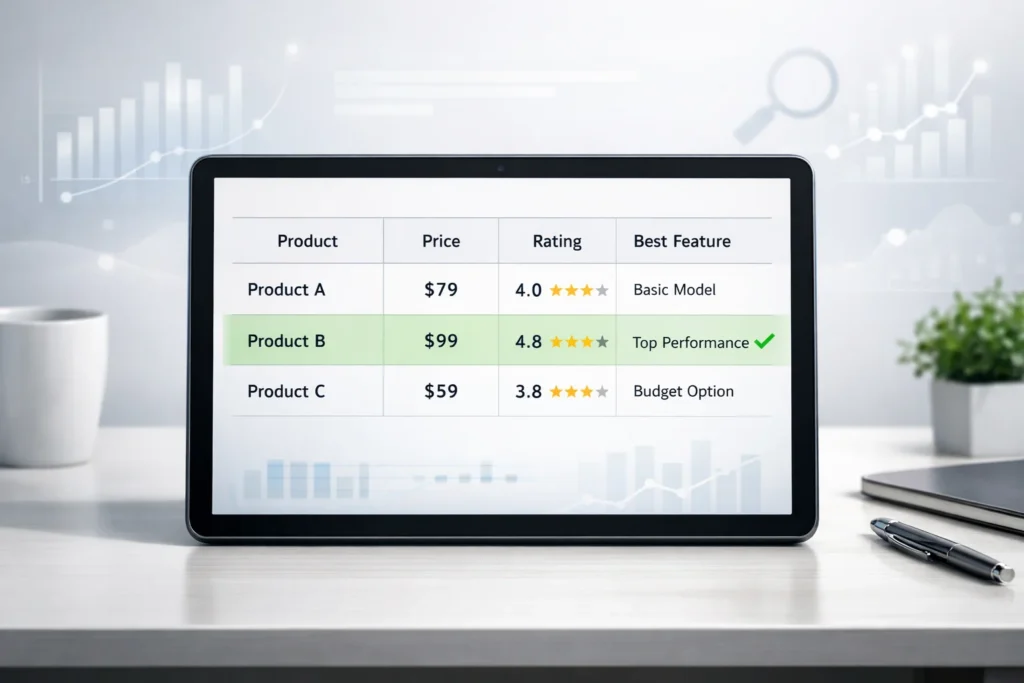
- Visual Aids: Include tables or charts for easier comparison. Users can quickly identify differences in pricing, specifications, and user ratings at a glance.
Improving SEO for Comparison Articles
Making your comparison articles visible in search engines is crucial for driving traffic:
- Use Targeted Keywords: Integrate relevant keywords throughout your article, such as “best headphones comparison” or “smartphone comparison guide.”
- Optimize Meta Descriptions: Write compelling meta descriptions that encourage clicks. Include the main keyword and hint at the benefits of reading your article.
- Use Internal and External Links: Link to other relevant articles on your site and high-authority sites. For more insights on affiliate marketing and SEO strategies, refer to Backlinko and Neil Patel’s blog.
Examples of Effective Comparison Articles
Let’s consider a scenario where you are writing about kitchen appliances. A well-structured comparison article can look like this:
| Product | Price | Rating | Best Feature |
|---|---|---|---|
| Instant Pot Duo | $89.99 | 4.8/5 | Multi-functionality |
| Cosori Air Fryer | $89.99 | 4.7/5 | Healthy frying |
| Ninja Foodi | $199.99 | 4.5/5 | Pressure cooking and air frying |
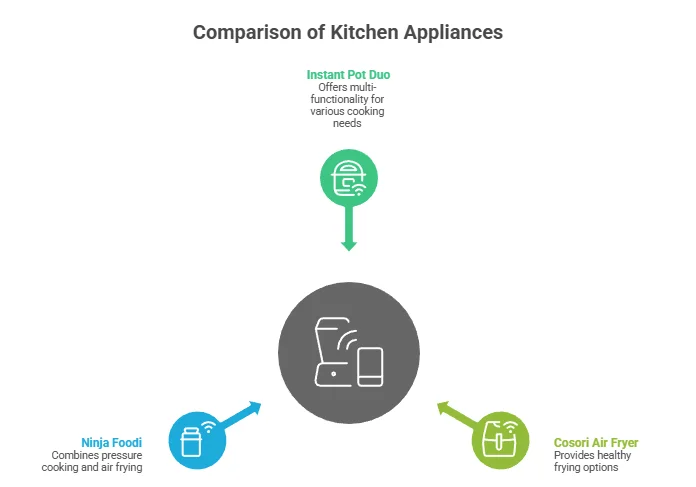
The above table provides a clear overview of each product’s strengths, making it easy for readers to make a choice. Furthermore, linking to each product through your affiliate program will facilitate tracking and commission earnings.
You can harness the power of Affiliate Marketing with Comparison Articles to significantly enhance user experience and drive sales. A well-crafted comparison article not only helps readers but also builds your authority, thereby increasing your chances of affiliate success. Remember, the key is to provide value to your readers, ensuring they have the information necessary to make informed purchasing decisions.
How to Structure Comparison Articles for Maximum Reader Engagement
Creating comparison articles can be a powerful way to engage readers, especially in the realm of affiliate marketing. When structured properly, these articles provide valuable information while encouraging readers to make informed purchasing decisions. Here’s how to structure your comparison articles effectively for maximum reader engagement.
Understand Your Audience
Before crafting your comparison article, it’s crucial to know who your audience is. Different groups have varying needs and preferences. Consider the following:
- Demographics: Age, gender, income levels, and interests.
- Shopping habits: Are they bargain hunters or quality seekers?
- Knowledge level: Do they need basic explanations or advanced insights?
By understanding your audience, you can tailor content that resonates with them, increasing the likelihood that they will engage with your article.
Choose the Right Products to Compare
Select products that not only align with your audience’s needs but also have a solid affiliate potential. Use tools like SimilarWeb to analyze traffic and popularity. Here are a few tips for selecting products:
- Look for growing trends within your niche.
- Consider products that have received positive reviews.
- Check the commission rates to ensure you benefit financially.
Create a Clear Comparison Format
A well-structured comparison article typically includes the following components:
- Introduction: Briefly explain what the article covers and what readers can expect.
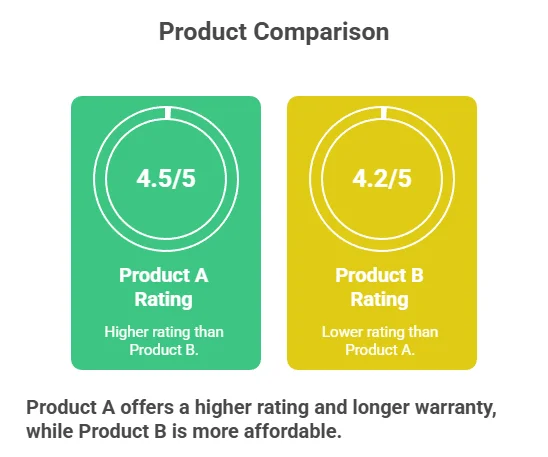
- Product Overview: Provide essential details like price, features, and pros and cons. Consider using a comparison table for clarity:
| Feature | Product A | Product B |
|---|---|---|
| Price | $50 | $45 |
| Rating | 4.5/5 | 4.2/5 |
| Warranty | 2 years | 1 year |
Use Engaging Language
Your writing style can make a significant impact on reader engagement. Use an active voice and write as if you are speaking directly to your audience. This makes the content feel more personal and relatable. Here are some tips:
- Ask questions to elicit thought: “Have you ever wondered why Product A is preferred over Product B?”
- Use vivid descriptions: Instead of saying “good features,” explain why those features stand out.
- Incorporate stories or scenarios that your audience can relate to.
Add Call-to-Actions (CTAs)
Encouraging readers to take the next step is vital in affiliate marketing. After presenting your comparisons, include CTAs that guide them clearly. You might say:
- “Click here to check the price of Product A!”
- “Want to see more reviews? Visit our comparison page!”
This not only keeps the reader engaged but can also enhance your conversion rates.
Optimize for SEO and Readability
To ensure your comparison articles reach a broad audience, you need to optimize for search engines while maintaining readability. Here are essential tips:
- Include relevant keywords throughout the article without overstuffing.
- Utilize bullet points and tables to break up text and enhance readability.
- Use subheadings judiciously to help readers scan the article efficiently.
Remember that your primary goal is to assist readers in making informed decisions. By providing clear, concise, and valuable comparison articles, you’ll foster trust and increase engagement with your audience.
If you want to explore more about crafting engaging comparison articles and affiliate marketing strategies, check out resources from Blogging Wizard or Affilorama for detailed guides and insights.
Best Practices for SEO in Affiliate Marketing with Comparison Articles
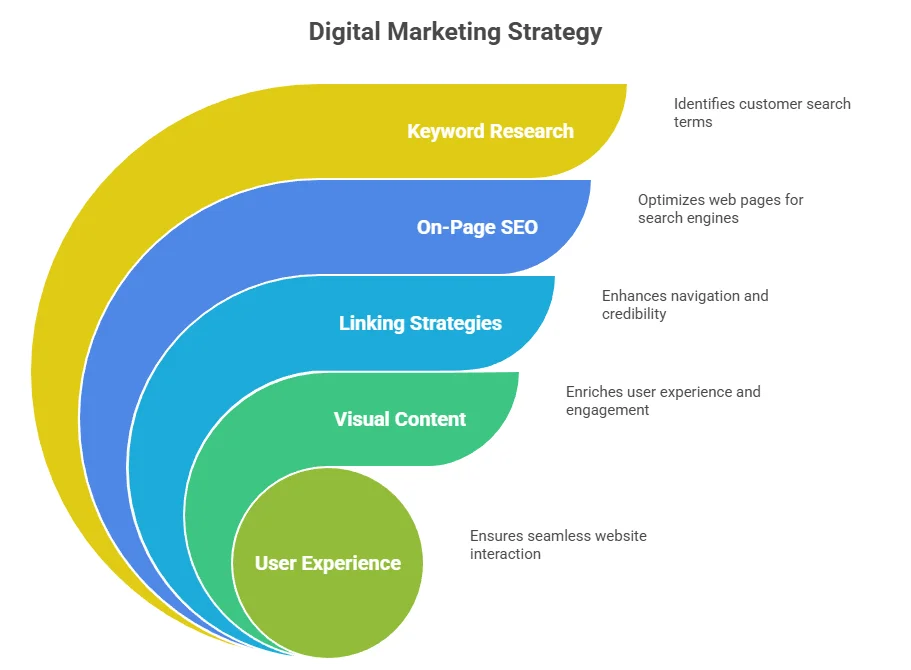
When it comes to maximizing your affiliate marketing efforts, employing effective SEO strategies is key, especially when you’re using comparison articles. These articles can guide your audience toward making informed purchasing decisions while also aiding your visibility on search engines. Here, you’ll discover the best practices to enhance your SEO and drive traffic through comparison articles.
Keyword Research
Effective keyword research lays the foundation for successful SEO. When creating comparison articles, focus on targeting keywords that potential customers are actively searching for. Use tools like Ahrefs or Google Trends to identify high-ranking and relevant keywords. Consider long-tail keywords as well—these are often less competitive and can attract highly interested readers.
Unique Content Creation
Your comparison articles should contain unique, engaging, and informative content. Avoid duplicating information from other sources, as this can harm your search rankings. Instead, delve into detailed comparisons and provide your readers with value. Highlight the pros and cons of each product, include personal experiences or testimonials, and use statistics or data to back your claims.
On-Page SEO Elements
On-page SEO is crucial for ensuring your comparison articles are optimized for search engines. Here are key elements to consider:
- Title Tags: Make sure your title clearly reflects the content and includes your primary keyword.
- Meta Descriptions: Write persuasive meta descriptions for your articles, incorporating relevant keywords.
- Header Tags: Use header tags (H3, H4) effectively to structure the content and include keywords where appropriate.
- Alt Text for Images: Add descriptive alt text to images to improve accessibility and SEO.
Internal and External Linking
Both internal and external links can significantly enhance your SEO strategy. Internal links will keep users on your site longer while navigating between related articles. For instance, if you write a comparison article about two cameras, you might link to another article about photography tips. External links to reputable sites like Forbes or Consumer Reports can add credibility to your content, demonstrating that you’re knowledgeable and reliable.
User Experience Optimization
The user experience on your site is a critical factor in how well your articles will perform in search engine results. Make sure your site is mobile-friendly, as many readers will browse from their mobile devices. Additionally, optimize your page loading speed. A slow website can lead to high bounce rates, negatively affecting your SEO rankings.
Visual Content Integration
Visual content can make your comparison articles more appealing and engaging. Use relevant images, infographics, or comparison tables to help readers digest information more easily.
Regular Content Updates
Keeping your comparison articles updated is essential for maintaining their relevance. Regularly check on the products you’ve compared, and update your content as needed. If a new model comes out or if there are changes in pricing, reflect that in your article. This not only helps in SEO but also establishes trust with your audience.
Implementing these best practices will enhance your SEO for Affiliate Marketing with Comparison Articles. By focusing on quality content, optimizing for search engines, and engaging with readers, you’ll not only attract traffic but also convert leads effectively. Stay informed and adaptable to strategies and trends to continue improving your affiliate marketing results.
Common Mistakes to Avoid in Affiliate Marketing Comparison Articles
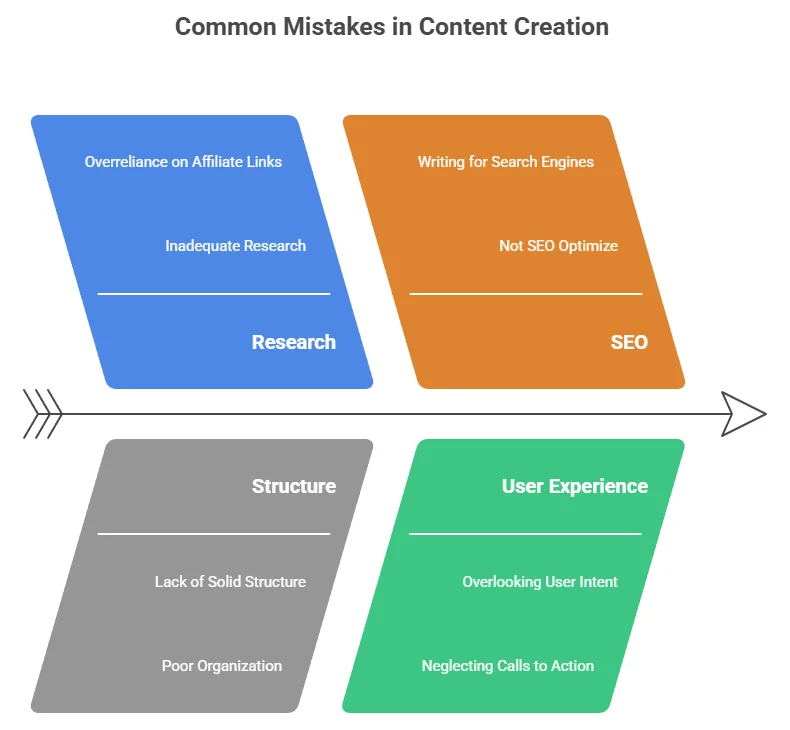
Affiliate marketing comparison articles can be a powerful tool for generating income, but they often miss the mark due to common pitfalls. Avoiding these mistakes can greatly enhance your effectiveness and boost your results. Let’s explore key errors to sidestep in your affiliate marketing efforts, especially when it comes to creating comparison articles.
Failing to research adequately
First, a frequent misstep is failing to research adequately. Choosing the right products to compare is crucial. Make sure you understand the market and the products you’re discussing. In-depth research will lead to more informative content, allowing you to present real value to your audience. For instance, not all products serve the same purpose; knowing their strengths and weaknesses helps your readers make better decisions.
Overloading with affiliate links
Another mistake is overloading your articles with affiliate links. While it’s natural to want to include links for the products you promote, excessive linking can frustrate readers. It might come off as salesy rather than helpful. Aim for a balance by providing valuable insights while subtly integrating your affiliate links. Aim for 2-4 links per article, depending on its length.
Writing for search engines
Next, avoid the trap of writing for search engines instead of your audience. While using relevant keywords is essential, forcing them into your article can lead to awkward phrasing. Your primary goal should be to engage your readers. Ensure that your content flows naturally and feels conversational. For optimal engagement, use an active voice and differ your sentence lengths.
Steering clear of personal experiences
Also, steering clear of personal experiences can dim the quality of your content. Readers appreciate authenticity and real-world experiences. Sharing your own usage or insights about the products you compare can elevate your articles. This personalized touch not only builds trust but also enriches the content, making it more relatable.
Not choosing a solid structure
It’s also vital to choose a solid structure for your articles. Using a clear format helps readers navigate through comparisons easily. Consider employing bullet points or tables to present data. For example, you can make product features or pricing details clearer. Here’s a basic structure you might follow:
- Product Name: Brief description
- Price: Current price
- Best Feature: Highlight the standout element
- Pros and Cons: Briefly outline the advantages and disadvantages
Not SEO optimize
Another key mistake is not SEO optimizing the comparison articles. Use titles, meta descriptions, and alt tags thoroughly to improve search engine visibility. However, don’t stuff keywords; place them where they make sense contextually. Google values quality; well-optimized articles that still read well will rank higher in search results.
Overlooking user intent
Furthermore, overlooking user intent can sabotage your content’s effectiveness. Understand what your audience is searching for when they look for comparison articles. If someone is comparing products, they likely want to know which is better and why. Focus on providing that analysis clearly and concisely. Avoid vague information that doesn’t provide actionable insights.
Neglecting calls to action
Neglecting calls to action (CTAs) is another missed opportunity. Always include a strong, clear CTA directing readers on what to do next. Whether it’s visiting a link, signing up for a newsletter, or leaving a comment, a good CTA can significantly enhance interaction and conversions.
Not updating content regularly
Don’t forget to update your content regularly. The affiliate marketing landscape changes rapidly with new products, prices, and trends. What was relevant last month might not hold up today. Regular updates keep your articles fresh and retain their value over time. This practice not only benefits your readers but also maintains your article’s search engine ranking.
By being aware of these common mistakes in affiliate marketing comparison articles, you can enhance your content’s effectiveness significantly. For more insights on writing engaging articles, visit Copyblogger and for detailed strategies focused on affiliate marketing practices, check Niche Pursuits.
Conclusion
Affiliate marketing through comparison articles offers a unique opportunity to connect with your audience while driving sales. By effectively showcasing products side by side, you help readers make informed decisions, enhancing their shopping experience and boosting your credibility. To maximize reader engagement, structuring your comparison articles with clear headings, concise points, and engaging visuals is essential. This approach not only makes your content more digestible but also encourages longer reading times, which can positively affect your SEO performance.
Implementing best practices for SEO is crucial for visibility. Implementing these best practices will enhance your SEO for Affiliate Marketing with Comparison Articles. Using relevant keywords naturally, optimizing meta descriptions, and utilizing internal and external links can significantly improve your search rankings. Learning from successful comparison articles can provide valuable insights, revealing what works in terms of layout, voice, and call to action.
Beware of common pitfalls, such as overloading your articles with information or neglecting to maintain an authentic voice. Your readers will appreciate straightforward, honest comparisons, so prioritize transparency and clarity throughout your content.
By effectively embracing these strategies, you can harness the power of Affiliate Marketing with Comparison Articles to not only enhance your online presence but also drive conversion rates. Ultimately, the goal is to create a win-win: providing value to your audience while achieving your marketing objectives. With continued attention to quality and reader engagement, you can pave the way for long-term success in your affiliate marketing efforts.